
BuddhistCatholicContemplativeEvangelicalGeneral ChristianHinduJewishLatter-day SaintMuslimNew VisionsProgressive Christian
Beliefs
- Buddhist
- Catholic
- Contemplative
- Evangelical
- General Christian
- Hindu
- Jewish
- Latter-day Saint
- More Voices
- Muslim
- New Visions
- Pagan
- Progressive Christian
Topics
- Religion News
- Food and Religion
- Sports and Religion
- Religious Art
- Religious Music and Entertainment
- Religious Events
- History and Religion
- Style and Religion
- Politics and Religion
- Women in Religion
- Recreation Outdoors and Religion
- Business Finance and Religion
- Careers Workplace and Religion
- Education and Religion
- Family Parenting and Religion
- Health Fitness and Religion
- Home and Religion
- Relationships and Religion
- Technology and Religion
- Travel and Religion
Columnists
- Buddhist Columnists
- Business Finance and Religion Columnists
- Careers Workplace and Religion Columnists
- Catholic Columnists
- Contemplative Columnists
- Education and Religion Columnists
- Evangelists Columnists
- Family Parenting and Religion Columnists
- General Christian Columnists
- Health Fitness and Religion Columnists
- Hindu Columnists
- History and Religion Columnists
- Home and Religion Columnists
- Jewish Columnists
- More Voices Columnists
- Latter Day Columnists
- Muslim Columnists
- New Visions Columnists
- Nonreligious Columnists
- Pagan Columnists
- Politics and Religion Columnists
- Progressive Columnists
- Recreation Outdoors and Religion Columnists
- Relationships and Religion Columnists
- Religion News Columnists
- Religious Art Columnists
- Religious Events Columnists
- Religious Music and Entertainment Columnists
- Sports and Religion Columnists
- Style and Religion Columnists
- Technology and Religion Columnists
- Travel and Religion Columnists
- Women in Religion Columnists
Resource Library
- 2026 Calendar
- Library of World Religions
- The 100 Most Holy Places on Earth
- Patheos Answers
- Podcasts
- Videos
- Faith Leaders Database
- Anglican Episcopalian
- Bahai
- Baptist
- Buddhism
- Christianity
- Confucianism
- Eastern Orthodoxy
- Hinduism
- Holiness and Pentecostal
- ISKCON
- Islam
- Judaism
- Lutheran
- Methodist
- The Church of Jesus Christ of Latter-day Saints
- New Age
- Paganism
- Presbytarian and Reformed
- Protestantism
- Religion Behind the Scenes
- Roman Catholic
- Scientology
- Shia Islam
- Sikhism
- Sufism
- Sunni Islam
- Taoism
- Zen
- See all religions
Research Tools
 Ad-Free & Subscriber Log-In Subscription Support
Ad-Free & Subscriber Log-In Subscription Support
Follow Patheos 

- Trending:
- Forgiveness
- |
- Marriage
- |
- Consciousness
- |
- Death Penalty
- |
- Election
- |
- Halloween

- Home
- General Christian
- Four Things My Newborn Taught Me About God
Four Things My Newborn Taught Me About God
Last updated on: December 7, 2021 at 7:54 pm by Guest Contributor
Four Things My Newborn Taught Me About God 2021-12-07T19:54:44-05:00 Guest Contributor
Patheos Explore the world's faith through different perspectives on religion and spirituality! Patheos has the views of the prevalent religions and spiritualities of the world.
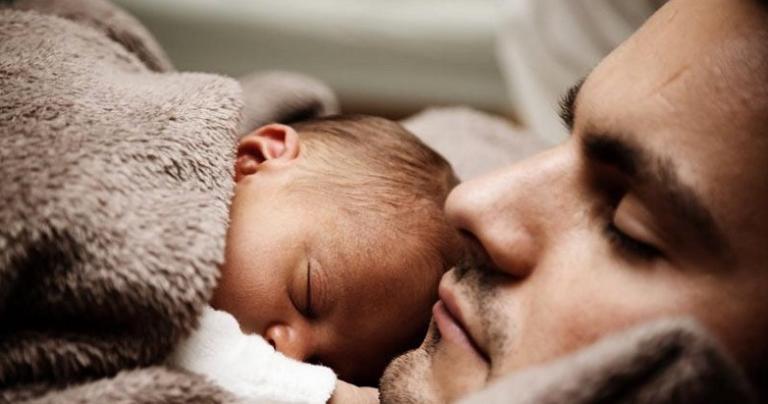
Pexels
by M.P. Antoine
When my partner and I discovered we were having a baby, it didn’t take us long to formulate a battle plan: do a bunch of reading, find the best deals on baby supplies and then, when the time came, endure the newborn phase with gritted teeth until our little one began to emerge from the infamous “fourth trimester” and develop a bit of personhood for himself. I did not pin my hopes on some breathtaking ‘bonding moment’, understanding that such things would come in their own time.
We kept our expectations managed and prayed during the pregnancy simply for a healthy child. Nothing more, nothing less. But the old saying about battle plans is true: they never survive first contact with the opposing force.
I work with children professionally, finding it to be one of the few career pathways that, even when exhausting, I can genuinely derive joy from. But the kids at my workplace are no younger than three, and mostly range from five to ten years old – not exactly miniature adults but old enough to have their own personalities, quirks and interests. You can reason with them. When feeling particularly desperate, you can even bribe them.
You can’t rhetoric your way out of a problem with a newborn. And so, as I waited during the long delivery process on the day my baby was born, I asked God only for the wisdom I would need to be a competent caregiver during this earliest phase of my son’s life. Imagine my surprise when, in addition to answering my prayer in full, God also treated me to theology lessons courtesy of a seven-pound squirmy potato.
Here are those four lessons my newborn taught me about God’s presence and work in the world.
1. All humans carry within them a spark of divinity
It’s easy to forget given our tremendous capacity for evil and harm, but humanity was created in the image of God – and called “very good.” The unparalleled love our Creator holds for us, exemplified in the person of Jesus Christ, is the philosophical underpinning for the commandment to “love the Lord with all your heart and strength, and love your neighbor as yourself.” (Mark 12:31) Daily living in our fallen world obscures this reality, but looking into my son’s eyes for the first time was a potent reminder. I held him in my arms less than a minute after his birth, and the feeling I got when his eyes met mine – vibrant, alert, and most of all alive – was nothing less than an encounter with the divine. Although my partner and I made him using the traditional biological process, there is something in those eyes that did not, indeed could not have come from us alone.
That spark of divinity animating the human person is easiest to see in a baby or a small child but is present in every person, if we’re willing to look. And it’s much harder to act with cruelty or dehumanize someone when you can see that divinity which lives behind their eyes… yes, even your rude neighbor. Even those people.
2. Breath is the Spirit in motion
“The Spirit of God has made me,
the breath of the Almighty gives me life.”
-Job 33:4
Those of us who read our Bibles in English miss the profound nuance of the Hebrew word Ruach, a word translated depending on its context as breath, wind, spirit (of humanity), or Spirit (of God.) As Christians we believe in a Holy Spirit that unites us and runs through us, for “we were all baptized into one body—Jews or Greeks, slaves or free—and all were made to drink of one Spirit” (1 Corinthians 12:13).
This is one of those concepts that’s easy for me to ponder as a cool intellectual proposition but quite difficult to grasp. That changed when I heard my son draw his very first breath: a heavy silence followed by a sharp inward gasp and a loud cry, as if to announce “here I am!”
That moment, hearing the first breath of life where previously there was none, was an encounter with the Holy Spirit. Of course, we have all (hopefully!) felt the Spirit moving among us during worship or prayer. But this experience is a reminder that the Spirit lives elsewhere, too. It is among and between us in every gentle breeze and every living creature’s breath. Knowing this, I’m more open to looking for where the Spirit is at work outside of Sunday mornings.
3. Joy is a renewable resource
My partner and I don’t live anywhere near our blood relatives, on either side of the family. In fact, relations can be rather strained. My son’s birth has been a way to mend bonds between estranged people, to share in the joy that accompanies new life. In doing so I’ve been reminded that, whatever happened in the past to weaken family ties, it feels good to reconnect. Picking up the phone (or Zoom call, as it were) is something that seems like climbing a mountain until you actually do it. Joy begets more joy.
You can take an opportunity in your life to rebuild those run-down bridges even if you don’t have any cute baby pictures to grease the wheels. We live in lonely, anxious times. Reaching out to old friends and loved ones is a simple act that can spread a lot more joy than the effort invested to do it.
4. Not everything must be said to be heard
This one is a hard lesson for me to learn. I’m a words person. I love a good back-and-forth debate and a well-reasoned argument. A part of me believes that every problem in the world, whether interpersonal or social, can be solved if only one can find the right combination of words… But deep down, I know that isn’t true.
You can’t verbally explain to a newborn why kicking me during a diaper change is counterproductive. You can’t engage in a discourse on relaxation techniques while he’s having a meltdown and expect it to work. I’ve had to learn how to rely less on words and more on presence. Instead of telling I can show love, letting my actions speak for me, projecting the energy of a kind, protecting guardian. When he’s upset, I can even lend him some of my peace.
That basic demonstration of parental love tells us something about God too: lending us peace in times of distress, nourishing us not only physically but with spiritual presence as well. Jesus spoke of his desire to gather us together “as a hen gathers her brood under her wings” (Matthew 23:37) – yet we are often too preoccupied in selecting the right words for our prayers, or the right doctrine to support our belief systems, to accept the offer and be gathered under God’s wing. Knowing what my son needs from me is a reminder to look for the same from God, those statements of love that cannot be said but only felt.
Previous Post

November 24, 2021
Clanging Cymbals and a 21st Century Pandemic
Next Post

December 20, 2021 The Broken Heart
Browse Our Archives
Select a Category Uncategorized
Select a Month November 2025 April 2025 March 2025 February 2025 October 2023 July 2022 May 2022 April 2022 March 2022 February 2022 January 2022 December 2021 November 2021 October 2021 September 2021 August 2021 July 2021 May 2021 April 2021 March 2021 February 2021 January 2021 December 2020 November 2020 October 2020 September 2020 August 2020 July 2020 June 2020 May 2020 April 2020 March 2020 February 2020 October 2018 March 2018
TAKE THE
Religious Wisdom Quiz
How many letters (epistles) did Paul write in the New Testament?
Select your answer to see how you score.
12 10 14 13
Related posts from Christians in General
CEO Crisis: What New Data Reveals About Belief...

6 Trends in Modern Christian Persecution

3 Ways to Keep the Parables Alive

TRENDING AT PATHEOS General Christian

Seventy and Five Years Old: God Still Starts...
There is a small detail tucked into Genesis 12 that I skipped...

A Biblical Vision of Success in Christian Life...
The Concern and Quest Recent trends and tendencies I note around me...

Indigenous Peoples’ Day and the Church
Indigenous' Peoples Day or Columbus Day? Depending on where you live...

When Spiritual Growth Looks Like Losing Ground
Four Passive Spiritual Disciplines: An Introduction When I was a college freshman,...

Faith and Finding Your Current Season
“To everything there is a season,” Ecclesiastes tells us, “and a time...

Did Jesus Fear God's Wrath in Gethsemane?
That Time Jesus Was Terrified Before we begin, let me say at...
view all General Christian blogs
Ad-Free & Subscriber Log-In Subscription Support
- About Us
- 2026 Calendar
- Videos
- Podcasts
- Library of World Religions
- Faith In Media Tracker
- Advertise With Us
- Write for Us
- Privacy Policy
- Terms of Service
- Do Not Sell My Data
- Contact Us
- Radiant Digital
- Manage Newsletter Subscriptions
- Unsubscribe From Notifications
- Sitemap
Copyright 2008-2026, Patheos. All rights reserved.
Subscription Support Ad-Free & Subscriber Log-In
Follow Patheos