
BuddhistCatholicContemplativeEvangelicalGeneral ChristianHinduJewishLatter-day SaintMuslimNew VisionsProgressive Christian
Beliefs
- Buddhist
- Catholic
- Contemplative
- Evangelical
- General Christian
- Hindu
- Jewish
- Latter-day Saint
- More Voices
- Muslim
- New Visions
- Pagan
- Progressive Christian
Topics
- Religion News
- Food and Religion
- Sports and Religion
- Religious Art
- Religious Music and Entertainment
- Religious Events
- History and Religion
- Style and Religion
- Politics and Religion
- Women in Religion
- Recreation Outdoors and Religion
- Business Finance and Religion
- Careers Workplace and Religion
- Education and Religion
- Family Parenting and Religion
- Health Fitness and Religion
- Home and Religion
- Relationships and Religion
- Technology and Religion
- Travel and Religion
Columnists
- Buddhist Columnists
- Business Finance and Religion Columnists
- Careers Workplace and Religion Columnists
- Catholic Columnists
- Contemplative Columnists
- Education and Religion Columnists
- Evangelists Columnists
- Family Parenting and Religion Columnists
- General Christian Columnists
- Health Fitness and Religion Columnists
- Hindu Columnists
- History and Religion Columnists
- Home and Religion Columnists
- Jewish Columnists
- More Voices Columnists
- Latter Day Columnists
- Muslim Columnists
- New Visions Columnists
- Nonreligious Columnists
- Pagan Columnists
- Politics and Religion Columnists
- Progressive Columnists
- Recreation Outdoors and Religion Columnists
- Relationships and Religion Columnists
- Religion News Columnists
- Religious Art Columnists
- Religious Events Columnists
- Religious Music and Entertainment Columnists
- Sports and Religion Columnists
- Style and Religion Columnists
- Technology and Religion Columnists
- Travel and Religion Columnists
- Women in Religion Columnists
Resource Library
- 2026 Calendar
- Library of World Religions
- The 100 Most Holy Places on Earth
- Patheos Answers
- Podcasts
- Videos
- Faith Leaders Database
- Anglican Episcopalian
- Bahai
- Baptist
- Buddhism
- Christianity
- Confucianism
- Eastern Orthodoxy
- Hinduism
- Holiness and Pentecostal
- ISKCON
- Islam
- Judaism
- Lutheran
- Methodist
- The Church of Jesus Christ of Latter-day Saints
- New Age
- Paganism
- Presbytarian and Reformed
- Protestantism
- Religion Behind the Scenes
- Roman Catholic
- Scientology
- Shia Islam
- Sikhism
- Sufism
- Sunni Islam
- Taoism
- Zen
- See all religions
Research Tools
 Ad-Free & Subscriber Log-In Subscription Support
Ad-Free & Subscriber Log-In Subscription Support
Follow Patheos 

- Trending:
- Forgiveness
- |
- Marriage
- |
- Consciousness
- |
- Death Penalty
- |
- Election
- |
- Halloween

- Home
- General Christian
- Twenty Years
Twenty Years
Last updated on: September 9, 2021 at 11:27 am by Guest Contributor
Twenty Years 2021-09-09T11:27:13-04:00 Guest Contributor
Patheos Explore the world's faith through different perspectives on religion and spirituality! Patheos has the views of the prevalent religions and spiritualities of the world.
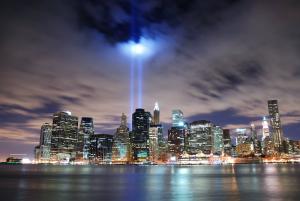 I remember flying over the Manhattan skyline shortly after 9/11. I, like so many other people, had watched the horrific events unfold on TV. After watching the news, I knew I had to address the situation. Our church staff called for a special service, as did many of the churches around the nation. Some of my thoughts shared that evening were published in a booklet, A Biblical Response to Terror. At the service that evening, I reminded people that our framework for life is the Bible, that faith overcomes fear, that God is not the author of evil, and we, as Christians, have an eternal foundation unshakeable by terrorism.
A few days after the service, I got a phone call from a friend, Mike MacIntosh. He asked me to join him as a chaplain at Ground Zero. I hopped on a plane. As I looked at the altered New York landscape, I couldn’t escape a single, polarizing thought: the world has changed.
Not only did 9/11 change the physical, emotional, and spiritual landscape of Manhattan and the United States, it changed the public’s understanding of word we’ve now become all too familiar with: terrorism.
Prior to 9/11, most Americans thought of terrorism as something that happened in other parts of the world. And yet, both in the United States and around the world, terrorism was alive and well. Just a few years before 9/11, on April 19, 1995, Timothy McVeigh detonated a truck full of explosives outside of a federal building in Oklahoma City. The explosion killed 168 people and wounded hundreds more. The blast was felt sixteen blocks away.
You could even go back further into history: September 16, 1920, when a Wall Street bombing killed 38 people; or to Los Angeles in 1910, when a union worker planted dynamite at the Los Angeles Times building, killing 21 people. The fact is, even in America, terrorism is nothing new. Historically, a case could be made that the first terrorist attack was Satan’s rebellion against God (see Isaiah 14:12-14 and Ezekiel 28:12-18).
Yet, it was the impression made by hijacked airplanes crashing into the Pentagon, the Twin Towers, and a field near Shanksville, Pennsylvania, on September 1, 2001, that helped shape and define our modern understanding of terrorism.
Now, twenty years later—how should we respond to the terrorist attacks and terrorists? As I wrote a few years ago, Jesus loves terrorists.
Terrorists Can Be Transformed
While most of our ministry opportunities will be to victims of terrorism, it’s important to bear in mind that God can change any heart, even that of a terrorist. Former Muslim and Israeli informant, Mosab Hassan Yousef, wrote a bestselling book called “Son of Hamas: A Gripping Account of Terror, Betryal, and Political Intrigue, and Unthinkable Choices.” Yousef wrote, “As long as we continue to search for enemies anywhere but inside ourselves, there will always be a Middle East problem. Religion is not the solution. Religion without Jesus is just self-righteousness. Freedom from oppression will not resolve things either. Delivered from the oppression of Europe, Israel became the oppressor. Delivered from persecution, Muslims became persecutors. Abused spouses and children often go on to abuse spouses and children. It is a cliché, but it’s still true: hurt people, unless they are healed, hurt people.”
This is a truth all people need to understand: terrorists hurt people. But there’s another, equally important truth: a terrorist can be transformed by the power of the Gospel. Simply put, Jesus loves terrorists; He yearns for them to turn from their sin, to recognize God’s work in Christ, and surrender to the Holy Spirit.
As Mosab Yousef points out, the solution is not religion. What people, terrorists included, need is a relationship with God through Christ. Terrorists need help for their personal hatred and hurt as well as the hurt they’ve inflicted on others. And the only true healing comes through Christ.
Terrorist Tendencies
To a certain extent, we’re all terrorists. Not in the political sense—but in the sense that we’ve rebelled against God (the fall of man), we’ve enacted terrorist tendencies in our life and actions; we’re sinners. Terrorists inflict terror to try and achieve power and control. Their methods and ideology are extreme and shocking, but you don’t have to share their specific beliefs and practices to want to exert control over your life or others’ lives. I’m not talking about control in the sense of taking positive steps to improve your life—getting an education, working hard, seeking counsel in trials. I’m talking about trying to take ultimate control for your life out of God’s hands, and away from God’s principles and commandments. Once you move away from God’s Word, His plan, His promises, His principles, you are capable of anything. Think about what I’m saying. What I mean is that you are capable of any thoughts, any deeds, because you refuse to let God be in charge of your life.
Please understand, there’s no accusation here. Most of you reading this could never be a terrorist in the sense of suicide bombers or plane hijackers. It’s hard to imagine that anyone could be capable of the kinds of things we see far too often on the news—and yet, clearly, some people are. Stunned by terrorism’s callous horror, we ask not only why but how such deeds can even be imagined, much less enacted. I suggest that, beyond the political or religious agenda itself, there is a serious and sinister spiritual agenda.
On a very real, physical level, terrorism spawns destruction for its own sake. But in the midst of chaos, disorder, and fear, people can lose their emotional and spiritual bearings and be swallowed by pain and despair. Satan would love nothing better than to have people believe that their situation is beyond God’s help or attention. And yet, behind the act of terror is a human heart. It’s a heart disfigured by hatred, ignorance, desperation, and self-righteousness, but it’s a human heart. And because it is, it can be transformed by its creator, God. And similarly, hearts that have been injured by terrorist acts can be healed, their hope renewed, their faith in God’s love and sovereignty generated or restored. The point here is that we need to turn our lives over to the Great Controller—Christ.
Transformed Terrorist
Only Jesus can change a heart, and yet, Jesus can change any heart. Because of this, anyone—including every terrorist in the world, including all of humanity—can be transformed by the love of God in Christ.
One terrorist who was transformed went on to become one of Christ’s greatest apostles: Saul of Tarsus. If the basic definition of terrorism is “one who brings terror for political or ideological reasons,” Saul of Tarsus—later known as the Apostle Paul—was one of the harshest terrorists in the history of the church. He pursued, sought, and, it appears, oversaw the killing of Christians. As a devout Pharisee, Saul felt called to defend the Jewish faith but ended up “breathing murder” (see Acts 9:1) against the body of Christ. This was Terrorism 101: Saul brought fear, dread, and death to the early church. But God had other plans. From dread, God raised Saul from the dead—spiritual speaking: God interrupted Saul’s murderous agenda and saved him, changing his name to Paul.
Themes from a Transformed Terrorist
In teaching on Paul’s conversion, I recognize four themes that God took in transforming him into far more than an ex-terrorist. We find in Paul’s conversion an interruption (see Acts 9:3-4), an interrogation (see Acts 9:4), a conviction (see Acts 9:5), and a resignation (see Acts 9:6).
These four themes are good prayer points in dealing with modern terrorists.
First, pray for an interruption of the terrorist’s actions and life. Pray that God would intervene in their misdeeds. As God interrupted Paul on the road to Damascus, pray that the modern terrorist would have his or her own Damascus Road experience.
Second, pray that God would interrogate the terrorist, showing the truth of God’s love found in Christ. God is able to convict a heart, even the hardest. Pray that God would speak clearly to the terrorist—in any way possible and before others get hurt.
Third, pray for a conviction in the life of the terrorist—turning to Christ for salvation, forgiveness, and hope. Like Paul turned to Christ, ask God for the transformation of the terrorist’s heart and life.
Finally, pray for resignation in the life of the terrorist. Ask God to give him or her a submissive heart, acknowledging sin, yearning to live for Christ. As you know, many terrorists—particularly those motivated by religion—may be persecuted due to conversion to Christ. Ask God to give these men and women strength, a strong resilience to follow Christ under harsh, hostile circumstances.
Several years back, I was able to sit with a former terrorist in Ireland. This man—once part of an Irish terrorist outfit—did everything you’d expect a terrorist to do: elicit fear, enact violence, and promote his brand of political and religious propaganda. Yet, God did something marvelous in his life—He transformed his soul. God took the terrorist from the darkness of his inner den, and delivered him to the glorious light of day. His transformation was exactly as Paul described in his letter to the Colossians: God “has delivered us from the dominion of darkness and brought us into the kingdom of the Son He loves” (Colossians 1:13).
My prayer for all terrorists is that they find a new kingdom to fight for: God’s kingdom. And unlike the physical violence of terrorist warfare, our war is not with flesh and blood, but against the spiritual authorities of this world (see Ephesians 6:12). For those affected by terrorism, I pray for their comfort and strength in suffering, that their struggles would draw them closer to the God who loves them, and that we as God’s church would respond to His call to “love the least of these” (see Matthew 25:41), to reach out to those most in need of our help and the love of Jesus.

About Skip Heitzig
Skip Heitzig is the senior pastor of Calvary Church in New Mexico and is the author of numerous books and publications. His radio and television broadcast, Connect with Skip Heitzig, is available throughout the United States and around the world. You can read more about the author here.
Previous Post

August 31, 2021
The Eucharistic Vision of Psalm 96
Next Post
September 9, 2021 Teresa and the Forgiveness Game
Browse Our Archives
Select a Category Uncategorized
Select a Month November 2025 April 2025 March 2025 February 2025 October 2023 July 2022 May 2022 April 2022 March 2022 February 2022 January 2022 December 2021 November 2021 October 2021 September 2021 August 2021 July 2021 May 2021 April 2021 March 2021 February 2021 January 2021 December 2020 November 2020 October 2020 September 2020 August 2020 July 2020 June 2020 May 2020 April 2020 March 2020 February 2020 October 2018 March 2018
TAKE THE
Religious Wisdom Quiz
What is the Christian teaching about truth-telling?
Select your answer to see how you score.
Say nothing Lie if necessary Speak the truth Flatter often
Related posts from Christians in General
CEO Crisis: What New Data Reveals About Belief...

6 Trends in Modern Christian Persecution
3 Ways to Keep the Parables Alive
TRENDING AT PATHEOS General Christian

A Biblical Vision of Success in Christian Life...
The Concern and Quest Recent trends and tendencies I note around me...

Indigenous Peoples’ Day and the Church
Indigenous' Peoples Day or Columbus Day? Depending on where you live...

When Spiritual Growth Looks Like Losing Ground
Four Passive Spiritual Disciplines: An Introduction When I was a college freshman,...

Faith and Finding Your Current Season
“To everything there is a season,” Ecclesiastes tells us, “and a time...

Did Jesus Fear God's Wrath in Gethsemane?
That Time Jesus Was Terrified Before we begin, let me say at...

A Generation Searching for God in All the...
Revival Begins With God’s People! Holidays Are Upon Us! Welcome to October!...
view all General Christian blogs
Ad-Free & Subscriber Log-In Subscription Support
- About Us
- 2026 Calendar
- Videos
- Podcasts
- Library of World Religions
- Faith In Media Tracker
- Advertise With Us
- Write for Us
- Privacy Policy
- Terms of Service
- Do Not Sell My Data
- Contact Us
- Radiant Digital
- Manage Newsletter Subscriptions
- Unsubscribe From Notifications
- Sitemap
Copyright 2008-2026, Patheos. All rights reserved.
Subscription Support Ad-Free & Subscriber Log-In
Follow Patheos