
BuddhistCatholicContemplativeEvangelicalGeneral ChristianHinduJewishLatter-day SaintMuslimNew VisionsProgressive Christian
Beliefs
- Buddhist
- Catholic
- Contemplative
- Evangelical
- General Christian
- Hindu
- Jewish
- Latter-day Saint
- More Voices
- Muslim
- New Visions
- Pagan
- Progressive Christian
Topics
- Religion News
- Food and Religion
- Sports and Religion
- Religious Art
- Religious Music and Entertainment
- Religious Events
- History and Religion
- Style and Religion
- Politics and Religion
- Women in Religion
- Recreation Outdoors and Religion
- Business Finance and Religion
- Careers Workplace and Religion
- Education and Religion
- Family Parenting and Religion
- Health Fitness and Religion
- Home and Religion
- Relationships and Religion
- Technology and Religion
- Travel and Religion
Columnists
- Buddhist Columnists
- Business Finance and Religion Columnists
- Careers Workplace and Religion Columnists
- Catholic Columnists
- Contemplative Columnists
- Education and Religion Columnists
- Evangelists Columnists
- Family Parenting and Religion Columnists
- General Christian Columnists
- Health Fitness and Religion Columnists
- Hindu Columnists
- History and Religion Columnists
- Home and Religion Columnists
- Jewish Columnists
- More Voices Columnists
- Latter Day Columnists
- Muslim Columnists
- New Visions Columnists
- Nonreligious Columnists
- Pagan Columnists
- Politics and Religion Columnists
- Progressive Columnists
- Recreation Outdoors and Religion Columnists
- Relationships and Religion Columnists
- Religion News Columnists
- Religious Art Columnists
- Religious Events Columnists
- Religious Music and Entertainment Columnists
- Sports and Religion Columnists
- Style and Religion Columnists
- Technology and Religion Columnists
- Travel and Religion Columnists
- Women in Religion Columnists
Resource Library
- 2026 Calendar
- Library of World Religions
- The 100 Most Holy Places on Earth
- Patheos Answers
- Podcasts
- Videos
- Faith Leaders Database
- Anglican Episcopalian
- Bahai
- Baptist
- Buddhism
- Christianity
- Confucianism
- Eastern Orthodoxy
- Hinduism
- Holiness and Pentecostal
- ISKCON
- Islam
- Judaism
- Lutheran
- Methodist
- The Church of Jesus Christ of Latter-day Saints
- New Age
- Paganism
- Presbytarian and Reformed
- Protestantism
- Religion Behind the Scenes
- Roman Catholic
- Scientology
- Shia Islam
- Sikhism
- Sufism
- Sunni Islam
- Taoism
- Zen
- See all religions
Research Tools
 Ad-Free & Subscriber Log-In Subscription Support
Ad-Free & Subscriber Log-In Subscription Support
Follow Patheos 

- Trending:
- Forgiveness
- |
- Marriage
- |
- Consciousness
- |
- Death Penalty
- |
- Election
- |
- Halloween

- Home
- General Christian
- Teresa and the Forgiveness Game
Teresa and the Forgiveness Game
Last updated on: September 9, 2021 at 4:38 pm by Guest Contributor
Teresa and the Forgiveness Game 2021-09-09T16:38:04-04:00 Guest Contributor
Patheos Explore the world's faith through different perspectives on religion and spirituality! Patheos has the views of the prevalent religions and spiritualities of the world.

Pexels.com
by Anthony Baker
Many of us who have said the Our Father countless times in common or in private prayer have noted in passing a little theological puzzle around the forgiveness petition. “Forgive us our sins as we forgive those who sin against us.” How ought we understand the “as?” Does it imply that God’s forgiveness comes to us “in the same way” as our forgiveness to others? Or perhaps “at the same time?” It doesn’t take long to feel the pressure of the Reformation debates here: does the prayer suggest that something humans do, namely offering forgiveness to one another, has some effect on the grace of forgiveness God desires to give?
Teresa of Avila (1515-1582) lived through the years of Reformation upheaval, mostly from her Carmelite monastery in Spain. In her commentary on the Our Father, a part of her larger work called The Way of Perfection, Teresa hints at an ordering of human and divine action that makes our efforts a kind of playful experience of God’s grace. Mutual love, she says, is the thing God most wants us to experience on earth—“How greatly the Lord must esteem this mutual love of ours for one another!” (241). But giving and receiving love—good, true, authentic love– is both what we most long for and also the virtue most difficult for us to acquire. That’s why we need to also get in some practice at forgiving and being forgiven. To allow this practice that in turns allows us to love well, God makes it into a kind of game. I’ll call it the forgiveness game. And here is how you play:
A person sins against me. I pray the Our Father and find myself stuck on the forgiveness line. (For a difficult and rich expression of just this sticking point, see Emmanuel Katongole’s account of Ugandan mothers attempting to pray for the warlords who had kidnapped their children.) Teresa notes that the line reads “as we forgive,” como perdonamos, but intentionally takes it a step further: “because we forgive,” porqué perdonamos. Forgive us because we forgive. You can already feel Martin Luther’s acid reflux welling up. Is God withholding forgiveness from me until I “cause” God to give it to me by forgiving this person?
But there’s something important here that Luther misses, likely because he’s looking for the Rolaids. Teresa knows that nothing we can do can earn God’s gracious gift of forgiveness. In fact, that is why she pins the gift exactly here, on the very virtue of mutual love that God is wanting to give us:
The good Jesus might have put everything else before our love for one another, and said: ‘Forgive us, Lord, because we are doing a great deal of penance, or because we are praying often, and fasting, and because we have left all for Thy sake and love Thee greatly.’ But he never said [any of that]. He simply says: “Because we forgive.” (241)
The granting of forgiveness is not pinned on works that we do, as wages suitable to a job, but neither is it given as a free gift to those who couldn’t possibly recognize what it was that they were receiving. It is given to me because I have “played” forgiver, and can recognize that act as a little way of sharing in the agency of God.
Part of the challenge here is the way that we read the word “because,” which was a problem for the debates during the Reformation as well. They lost track of a classical philosophical distinction between kinds of causality, and so made every cause into an efficient cause, which is to say a cause that is directly or indirectly responsible for an effect that it brings about. Strong updrafts of wind carrying moisture high in the atmosphere cause hail to fall in the summer. Or think of driving a car: I took a drive yesterday because I wanted to. My will is the thing that moves my body into action. If this is the only way to understand the word “cause” or “because,” then it only makes sense to say that I attain forgiveness because God forgives me, and be done with it.
For Teresa, though, there is another kind of causality at work here. Perhaps more than one other kind, but for now I will say at least one: what medieval theology called the “formal cause.” The formal cause is the pattern or structure of thing. It is what makes it the sort of thing it is. A stone is a stone because heat and pressure cooked a lot of dust (efficient cause), but it is only a stone because it is stony (formal cause). I drove the car yesterday because I chose to (efficient), but also because I am the sort of being who has the skills and capacities, most of the time, to drive (formal). This is also “why” I drove the car. I drove because I have been formed as a driver.
What God wants is to give us the supernatural gift of mutual love among one another and between us and God that only God can give. God is the efficient cause of my experience of being forgiven. But God, as a good giver of gifts, does not want to give us something we have no idea how to use, any more than a grandparent would want to give a toddler the keys to a new Dodge Charger. First we need to play at driving, so that when we have matured, we will have some vague idea of what this gift is that God is giving. We are forgiven, formally, because we have become the kind of people who are shaped by forgiveness. We have the qualities of those who do not hold sins against one another, and express gratitude to one another when we show mercy.
It’s a long haul, being forgiven, since for most of us it’s a far more difficult skill to acquire than driving a car. But because of its very difficulty, Jesus hinged the reception of God’s mercy on this practice. Only by participating in the gift can I receive it.
To borrow an example from human growth and development, you might imagine the way that parents and caregivers enculturate children into a world of adult responsibilities. A child tries to sweep the floor, and the parent no doubt stands for a moment wondering whether to take over or walk away and come back later to do it again when the child isn’t watching. Child psychologists Stephen Glenn and Jane Nielsen hope that we will choose the latter, since only by allowing the child to feel like a functional part of a world of grown up responsibilities will he or she actually one day become one. “Here, let me do that for you, you’re making a bigger mess” is the quickest way to ensure that the child never learns to sweep. And also, I would add, never learns the challenges of getting under the refrigerator, negotiating the lip of the dustpan, never feels the frustration of the dog or the little brother walking through the dirt pile. The child grows into the form of a floor sweeper, a mature person capable of caring for common spaces, by playing at sweeping before she even can effectively handle the broom.
We become shaped as mutually loving people by playing at the virtue of forgiveness before we even know what we’re doing. We learn the difficult moments and the tricky angles—what about the person who hurt me and isn’t sorry? What about the person who didn’t hurt me, but hurt someone I love? What about the person whose sins are tangled up in addiction, and so not in any obvious way under their control?— so that we can come to appreciate how great a gift forgiveness is.
And then, when we realize we are learning the game, and mutual love is growing in and among us, we notice with gratitude that we are also being forgiven: that God has forgiven our sins. Because God makes that sort of effect happen, and also because we have become the sorts of people who know forgiveness when we see it.
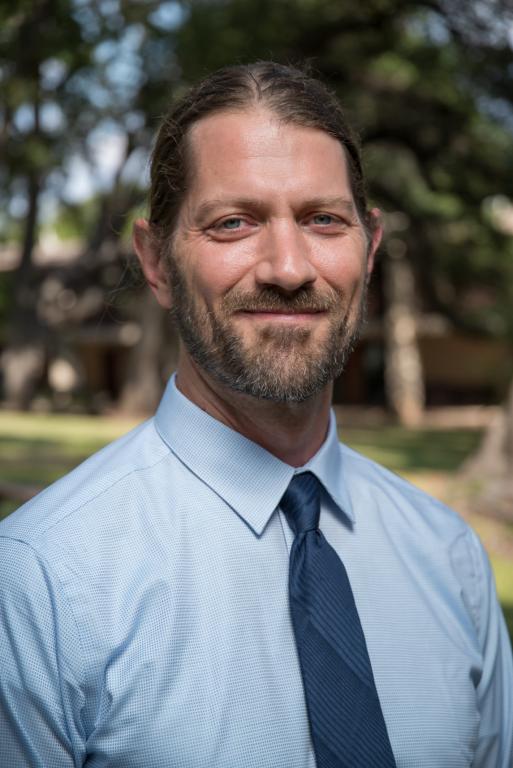
About Dr. Anthony D. Baker
Dr. Anthony D. Baker (Tony) is the systematic theologian at Seminary of the Southwest, an Episcopal school in Austin, Texas. He teaches courses in constructive theology, ecotheology, patristics, and theological writing. Tony is the author of Diagonal Advance: Perfection in Christian Theology (SCM, 2011), Shakespeare, Theology, and the Unstaged God (Routledge, 2020), and Leaving Emmaus: A New Departure in Christian Theology (Baylor University Press, 2021). His interests range from Russian literature to baseball to southwestern cooking. He is the theologian in residence at Saint Julian of Norwich Episcopal Church in north Austin, where he and his family worship. You can read more about the author here.
Previous Post

September 9, 2021
Twenty Years
Next Post

September 22, 2021 I Won't Ask If They Were Saved
Browse Our Archives
Select a Category Uncategorized
Select a Month November 2025 April 2025 March 2025 February 2025 October 2023 July 2022 May 2022 April 2022 March 2022 February 2022 January 2022 December 2021 November 2021 October 2021 September 2021 August 2021 July 2021 May 2021 April 2021 March 2021 February 2021 January 2021 December 2020 November 2020 October 2020 September 2020 August 2020 July 2020 June 2020 May 2020 April 2020 March 2020 February 2020 October 2018 March 2018
TAKE THE
Religious Wisdom Quiz
Who is credited with writing much of Proverbs?
Select your answer to see how you score.
Solomon David Agur Hezekiah
Related posts from Christians in General
CEO Crisis: What New Data Reveals About Belief...

6 Trends in Modern Christian Persecution
3 Ways to Keep the Parables Alive

TRENDING AT PATHEOS General Christian

Indigenous Peoples’ Day and the Church
Indigenous' Peoples Day or Columbus Day? Depending on where you live...

When Spiritual Growth Looks Like Losing Ground
Four Passive Spiritual Disciplines: An Introduction When I was a college freshman,...

Faith and Finding Your Current Season
“To everything there is a season,” Ecclesiastes tells us, “and a time...

Did Jesus Fear God's Wrath in Gethsemane?
That Time Jesus Was Terrified Before we begin, let me say at...

A Generation Searching for God in All the...
Revival Begins With God’s People! Holidays Are Upon Us! Welcome to October!...

Faith and End of Life Planning
The Psalmist's prayer to “teach us to number our days, that we...
view all General Christian blogs
Ad-Free & Subscriber Log-In Subscription Support
- About Us
- 2026 Calendar
- Videos
- Podcasts
- Library of World Religions
- Faith In Media Tracker
- Advertise With Us
- Write for Us
- Privacy Policy
- Terms of Service
- Do Not Sell My Data
- Contact Us
- Radiant Digital
- Manage Newsletter Subscriptions
- Unsubscribe From Notifications
- Sitemap
Copyright 2008-2026, Patheos. All rights reserved.
Subscription Support Ad-Free & Subscriber Log-In
Follow Patheos