
BuddhistCatholicContemplativeEvangelicalGeneral ChristianHinduJewishLatter-day SaintMuslimNew VisionsProgressive Christian
Beliefs
- Buddhist
- Catholic
- Contemplative
- Evangelical
- General Christian
- Hindu
- Jewish
- Latter-day Saint
- More Voices
- Muslim
- New Visions
- Pagan
- Progressive Christian
Topics
- Religion News
- Food and Religion
- Sports and Religion
- Religious Art
- Religious Music and Entertainment
- Religious Events
- History and Religion
- Style and Religion
- Politics and Religion
- Women in Religion
- Recreation Outdoors and Religion
- Business Finance and Religion
- Careers Workplace and Religion
- Education and Religion
- Family Parenting and Religion
- Health Fitness and Religion
- Home and Religion
- Relationships and Religion
- Technology and Religion
- Travel and Religion
Columnists
- Buddhist Columnists
- Business Finance and Religion Columnists
- Careers Workplace and Religion Columnists
- Catholic Columnists
- Contemplative Columnists
- Education and Religion Columnists
- Evangelists Columnists
- Family Parenting and Religion Columnists
- General Christian Columnists
- Health Fitness and Religion Columnists
- Hindu Columnists
- History and Religion Columnists
- Home and Religion Columnists
- Jewish Columnists
- More Voices Columnists
- Latter Day Columnists
- Muslim Columnists
- New Visions Columnists
- Nonreligious Columnists
- Pagan Columnists
- Politics and Religion Columnists
- Progressive Columnists
- Recreation Outdoors and Religion Columnists
- Relationships and Religion Columnists
- Religion News Columnists
- Religious Art Columnists
- Religious Events Columnists
- Religious Music and Entertainment Columnists
- Sports and Religion Columnists
- Style and Religion Columnists
- Technology and Religion Columnists
- Travel and Religion Columnists
- Women in Religion Columnists
Resource Library
- 2026 Calendar
- Library of World Religions
- The 100 Most Holy Places on Earth
- Patheos Answers
- Podcasts
- Videos
- Faith Leaders Database
- Anglican Episcopalian
- Bahai
- Baptist
- Buddhism
- Christianity
- Confucianism
- Eastern Orthodoxy
- Hinduism
- Holiness and Pentecostal
- ISKCON
- Islam
- Judaism
- Lutheran
- Methodist
- The Church of Jesus Christ of Latter-day Saints
- New Age
- Paganism
- Presbytarian and Reformed
- Protestantism
- Religion Behind the Scenes
- Roman Catholic
- Scientology
- Shia Islam
- Sikhism
- Sufism
- Sunni Islam
- Taoism
- Zen
- See all religions
Research Tools
 Ad-Free & Subscriber Log-In Subscription Support
Ad-Free & Subscriber Log-In Subscription Support
Follow Patheos 

- Trending:
- Forgiveness
- |
- Marriage
- |
- Consciousness
- |
- Death Penalty
- |
- Election
- |
- Halloween
 Christian Piatt
- Home
- Progressive Christian
- Does Religion Make Our Kids – and Us – Jerks?
Does Religion Make Our Kids – and Us – Jerks?
Last updated on: November 17, 2015 at 7:59 pm by Christian Piatt
Does Religion Make Our Kids – and Us – Jerks? 2015-11-17T19:59:04+00:00 Christian Piatt
Patheos Explore the world's faith through different perspectives on religion and spirituality! Patheos has the views of the prevalent religions and spiritualities of the world.
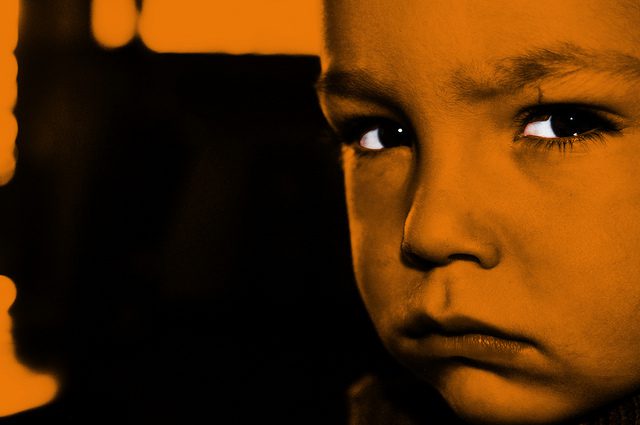 There’s a well-known phenomenon in churches where young families, many of whom have not been involved in organized religion since before college, return to a community of faith once they have kids. If asked why, many of the parents say they come back because they want their children to learn the importance of the values promoted by that religion: compassion, patience, love, generosity, humility.
But what if that same religious community actually is making their kids meaner than they’d be without it?
As the father of two children who attend church, and as the husband of a pastor, I found a recent study published in the journal Current Biology both intriguing and disturbing. The study examined children ages 5 to 12 from Christian, Muslim and non-religious backgrounds, assessing their altruism and their degree of judgment of other child peers. The study was broad, spanning nearly 1,200 kids from the U.S., Canada, China, South Africa, Jordan and Turkey, engaging them in a game called the “Dictator Test.” Each was given a certain number of stickers, and they were told there weren’t enough to share with their entire group. Also, they were asked to assess the morality and behavior of their peers. Finally, the scientists assessed the perception of the parents of these children to see how they perceived their own kids compared to others.
Their conclusions were sobering:
Across all countries, parents in religious house- holds reported that their children expressed more empathy and sensitivity for justice in everyday life than non-religious parents. However, religiousness was inversely predictive of children’s altruism and positively correlated with their punitive tendencies. Together these results reveal the similarity across countries in how religion negatively influences children’s altruism, challenging the view that religiosity facilitates prosocial behavior.
In fact, the study found that the longer the children were exposed to the religious environment, the less generous and more judgmental they became. The “secular kids,” meanwhile, were more forgiving of, and more generous with, other kids.
My initial response was, Fine, but it’s commonly known that, as adults, religious people are more generous than those not involved in church.
Not exactly, it turns out.
Taken simply at face value, yes: people in church give more of their income to charitable causes. But we have to dig a little deeper to get down to what that 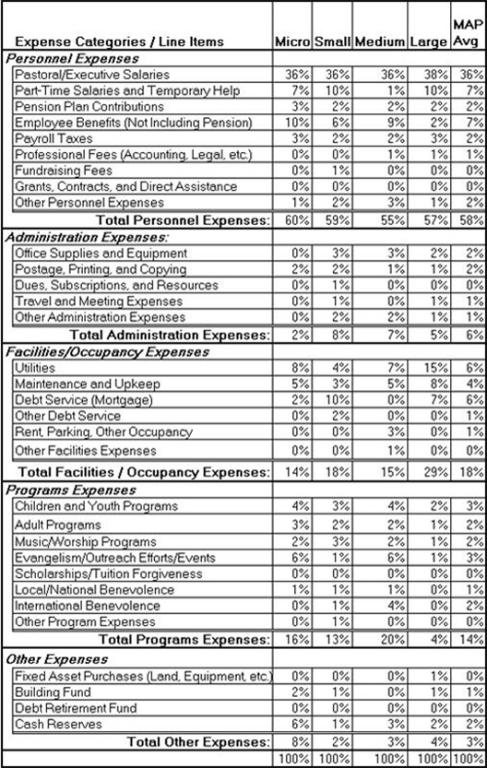 really means. In 2012, the Chronicle of Philanthropy released a study (since taken down from their site) that did, indeed, demonstrate that U.S. Christians in particular did give more to tax-exempt organizations than others. But although that finding was trumpeted by religion advocates, they were nearly universally silent about where that money actually went.
In 2o13, a follow-up study by the National Study of Religious Giving released a report called “Connected to Give: Faith Communities” that said 73% of the money American Christians were giving went to a religious organization. About seventy-five cents out of every dollar they donated to charity went to the Church. And this would be fine if, in fact, the churches were living out their claim to fulfill a principal purpose of serving the poor.
But they’re not.
A 2014 study issued by the Evangelical Christian Credit Union broke down how our churches are spending their money. On average, they dedicate 58% to personnel expenses, 18% to facilities and maintenance, 6% to administration and 3% to cash reserves, paying off debt and to building funds. This leaves 14% for “Programs,” which includes 5% for child and adult education, 2% for worship and 3% for evangelism/outreach (advertising, recruitment and P.R.). If you’re tracking so far, this leaves 3%, 2% of which goes to overseas charities, and 1% of which is given to local and national causes outside the building.
And though it can be argued that the programs inside church buildings do benefit both those who attend the church and sometimes those in the surrounding community, the fact remains that only $3 out of every $100 we give to our churches leaves the building. In short: when we are given a large pool of resources, we share less of it with people we’re not personally connected with than those outside of the Church.
OK, I thought to myself, so the altruism/generosity findings in the children study seems to bear out in the adults of those kids found to be less altruistic. But what about them being more judgmental of others?
Sadly, it isn’t good.
My wife, Amy, and I did a survey of about 750 young adults for a book we wrote together years ago about how both Christians and non-Christians perceived people within the Christian faith. Given a wide range of adjectives to choose from, both religious insiders and outsiders overwhelmingly picked two words first and foremost to describe Christians: “Judgmental” (78 percent) and “Hypocritical” (72 percent). But that’s an anomaly, right? Certainly we were unscientific in our findings, attracting skeptical peers from our own circles that were influenced by what they thought we wanted to find.
In 2012, researchers at Baylor University did a study, assessing the narcissism of three groups of college students: devoutly religious young adults, nominally religious young adults and non-religious/skeptical young adults. Here’s a summary of what they found, as stated by Baylor’s Dr. Marjorie J. Cooper and Chris Pullig, the latter of whom was the author of the study report:
Both the nominal and devout groups show degrees of poor ethical judgment equal to that of the skeptics when accompanied by higher degrees of narcissism, a finding that suggests a dramatic transformation for both nominals and the devouts when ethical judgment is clouded by narcissistic tendencies. For both of these groups as narcissism increases so does the tendency to demonstrate worse ethical judgment. (Pullig)
Devout people who are narcissistic and exercise poor ethical judgment would be committing acts that are, according to their own internalized value system, blatantly hypocritical. (Cooper)
So their findings were that narcissistic religious students were no more ethical in their decision-making than those not involved in organized religion. And in as much as those religious institutions promote and preach selflessness, compassion and generosity, those religious people, rightly then, are perceived as hypocrites. So in this case, though religion doesn’t make adults have poorer judgment, it also doesn’t have a positive effect. And on top of that, the values promoted by their religion and claimed by its faithful don’t match their behavior, which makes them hypocrites.
To top all of this off, the Current Biology study cited at the top of the article found that parents of the young children tested in the altruism-and-judgment study pervasively perceived their own children to be more generous and less judgmental than their secular counterparts, despite the evidence yielded by the study. So despite the evidence, we think religion is making our kids more giving and forgiving, when actually it seems to have exactly the opposite correlation. But because it’s what we tell ourselves, we see what we want to see.
Further, we continue to model these negative, un-Gospel, un-Christ-like attitudes and behaviors as we get older, and even within the very institutions we entrust our children to teach the values we so desire for them to live out. All the while, the rest for the culture sees the hypocrisy and the cognitive dissonance in our attitudes toward others and where we place our money.
And as Jesus says in Matthew 6:21, “Wherever your treasure is, there the desires of your heart will also be.”
The conclusion that seems to emerge from all of this validates in some ways what vocal atheist scholar Richard Dawkins claims, which is that organized religion’s mission, first and foremost, is self-sustenance. And at the risk of distilling down a number of scientific studies into plain language summaries, when we identify with these institutions bent on survival, we pool our resources to that end, and then tell ourselves it makes us better people in doing so. Otherwise, committing so much of our time, energy and money to an institutional system whose primary desire is to keep going for the sake of itself is…kind of insane.
“Do you see all these great buildings?” replied Jesus. “Not one stone here will be left on another; every one will be thrown down.”
-Mark 13:2
religious children less altruistic
religious children less generous
Previous Post

November 13, 2015
Kill Rock Stars' Portia Sabin, Social Capital and Election Day Haps
Next Post

November 20, 2015 Kill Rock Star's Portia Sabin on How the Music Biz Ticks
Browse Our Archives
Select a Category atonement belief bible Bill O'Reilly Buddhism CCM children christian piatt christianity Contemporary Christian Music current events derek flood Easter education Everyday Sunday faith faith and culture Frank Schaeffer great commission Haaz Sleiman Hobby Lobby Homebrewed Culture humor ISIS Jesus John Paul Lederach Killing Jesus LGBTQ marc driscoll Mission Year Music My Jesus Project Nat Geo parenting politics popular culture postChristian prison reform Ray rice religion republicans sacrifice sexuality theology Uncategorized video violence wild goose festival World Vision young adults
Select a Month December 2017 November 2017 October 2017 September 2017 August 2017 July 2017 June 2017 May 2017 April 2017 March 2017 February 2017 January 2017 November 2016 October 2016 September 2016 August 2016 July 2016 June 2016 May 2016 April 2016 March 2016 February 2016 January 2016 December 2015 November 2015 October 2015 September 2015 August 2015 July 2015 June 2015 May 2015 April 2015 March 2015 February 2015 January 2015 December 2014 November 2014 October 2014 September 2014 August 2014 July 2014 June 2014 May 2014 April 2014 March 2014 February 2014 January 2014 December 2013 November 2013 October 2013 September 2013 August 2013 July 2013 June 2013 May 2013 April 2013 March 2013 February 2013 January 2013 December 2012 November 2012 October 2012 September 2012 August 2012 July 2012 June 2012 May 2012 April 2012 March 2012 February 2012 January 2012 December 2011 November 2011 October 2011 September 2011 August 2011 July 2011 June 2011 May 2011 April 2011 March 2011 February 2011 January 2011 December 2010 November 2010 October 2010 September 2010 August 2010 July 2010 June 2010 May 2010 April 2010 March 2010 February 2010 January 2010 December 2009 November 2009 October 2009 September 2009 August 2009 July 2009 June 2009 May 2009 April 2009 March 2009 February 2009 January 2009 December 2008 November 2008 October 2008 September 2008 August 2008 July 2008 June 2008 May 2008 April 2008 March 2008 February 2008 January 2008 December 2007 November 2007 October 2007 September 2007 August 2007 July 2007 June 2007 May 2007 April 2007 March 2007 February 2007 January 2007 December 2006 November 2006 October 2006 September 2006 August 2006
Follow Us!
TAKE THE
Religious Wisdom Quiz
How many apostles did Jesus have?
Select your answer to see how you score.
14 11 4 12
Related posts from Christian Piatt

More Than Jezebel (Third Week Advent Devotional)

Are We There Yet? (Second Week in Advent...

Look, Shiny! (First Week of Advent Study)

TRENDING AT PATHEOS Progressive Christian

Why Christians Have a Sacred Duty to Vote:...
The Bible offers strong support for the sacred duty to vote. Here...

What Being a Modern-Day Apostle Means to Me
In my last column, I discussed the ins and outs of modern-day...

Did Ancient China Once Worship the God of...
Across human history, a common thread weaves through the origins of the...

Love Your Neighbor – Including Earth-Kin: Lev. 19,...
God’s command to love your neighbor means acting in an ethical and...

Lead a Church Study of “Jesus and Lao...
Guest writer Jack Thomas (The Irreverent Reverend) reflects on leading his church...

Principles for Understanding the Apostolic Ministry Today
Whenever people discover that my formal ministry title is "apostle," as in...
view all Progressive Christian blogs
Ad-Free & Subscriber Log-In Subscription Support
- About Us
- 2026 Calendar
- Videos
- Podcasts
- Library of World Religions
- Faith In Media Tracker
- Advertise With Us
- Write for Us
- Privacy Policy
- Terms of Service
- Do Not Sell My Data
- Contact Us
- Radiant Digital
- Manage Newsletter Subscriptions
- Unsubscribe From Notifications
- Sitemap
Copyright 2008-2026, Patheos. All rights reserved.
Subscription Support Ad-Free & Subscriber Log-In
Follow Patheos