
BuddhistCatholicContemplativeEvangelicalGeneral ChristianHinduJewishLatter-day SaintMuslimNew VisionsProgressive Christian
Beliefs
- Buddhist
- Catholic
- Contemplative
- Evangelical
- General Christian
- Hindu
- Jewish
- Latter-day Saint
- More Voices
- Muslim
- New Visions
- Pagan
- Progressive Christian
Topics
- Religion News
- Food and Religion
- Sports and Religion
- Religious Art
- Religious Music and Entertainment
- Religious Events
- History and Religion
- Style and Religion
- Politics and Religion
- Women in Religion
- Recreation Outdoors and Religion
- Business Finance and Religion
- Careers Workplace and Religion
- Education and Religion
- Family Parenting and Religion
- Health Fitness and Religion
- Home and Religion
- Relationships and Religion
- Technology and Religion
- Travel and Religion
Columnists
- Buddhist Columnists
- Business Finance and Religion Columnists
- Careers Workplace and Religion Columnists
- Catholic Columnists
- Contemplative Columnists
- Education and Religion Columnists
- Evangelists Columnists
- Family Parenting and Religion Columnists
- General Christian Columnists
- Health Fitness and Religion Columnists
- Hindu Columnists
- History and Religion Columnists
- Home and Religion Columnists
- Jewish Columnists
- More Voices Columnists
- Latter Day Columnists
- Muslim Columnists
- New Visions Columnists
- Nonreligious Columnists
- Pagan Columnists
- Politics and Religion Columnists
- Progressive Columnists
- Recreation Outdoors and Religion Columnists
- Relationships and Religion Columnists
- Religion News Columnists
- Religious Art Columnists
- Religious Events Columnists
- Religious Music and Entertainment Columnists
- Sports and Religion Columnists
- Style and Religion Columnists
- Technology and Religion Columnists
- Travel and Religion Columnists
- Women in Religion Columnists
Resource Library
- 2026 Calendar
- Library of World Religions
- The 100 Most Holy Places on Earth
- Patheos Answers
- Podcasts
- Videos
- Faith Leaders Database
- Anglican Episcopalian
- Bahai
- Baptist
- Buddhism
- Christianity
- Confucianism
- Eastern Orthodoxy
- Hinduism
- Holiness and Pentecostal
- ISKCON
- Islam
- Judaism
- Lutheran
- Methodist
- The Church of Jesus Christ of Latter-day Saints
- New Age
- Paganism
- Presbytarian and Reformed
- Protestantism
- Religion Behind the Scenes
- Roman Catholic
- Scientology
- Shia Islam
- Sikhism
- Sufism
- Sunni Islam
- Taoism
- Zen
- See all religions
Research Tools
 Ad-Free & Subscriber Log-In Subscription Support
Ad-Free & Subscriber Log-In Subscription Support
Follow Patheos 

- Trending:
- Forgiveness
- |
- Marriage
- |
- Consciousness
- |
- Death Penalty
- |
- Election
- |
- Halloween
 Christian Piatt
- Home
- Progressive Christian
- Rachel Dolezal: Transracial, Passing or Blackface Liar?
Rachel Dolezal: Transracial, Passing or Blackface Liar?
Last updated on: June 16, 2015 at 6:47 pm by Christian Piatt
Rachel Dolezal: Transracial, Passing or Blackface Liar? 2015-06-16T18:47:16+00:00 Christian Piatt
Patheos Explore the world's faith through different perspectives on religion and spirituality! Patheos has the views of the prevalent religions and spiritualities of the world.
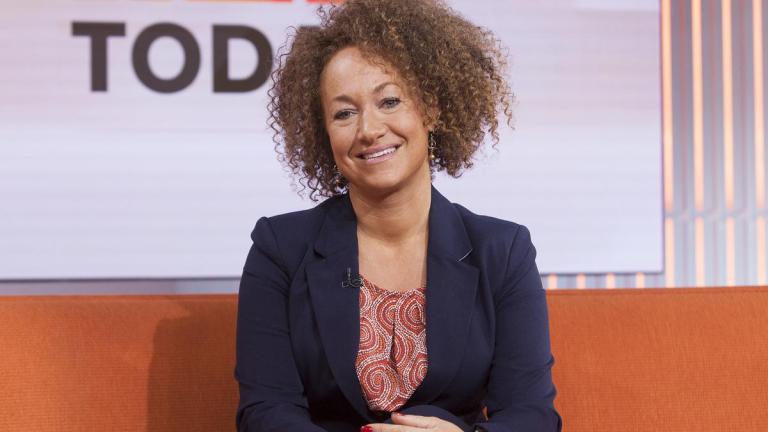
In this image released by NBC News, former NAACP leader Rachel Dolezal appears on the “Today” show set on Tuesday, June 16, 2015, in New York. Dolezal, who resigned as head of a NAACP chapter after her parents said she is white, said Tuesday that she started identifying as black around age 5, when she drew self-portraits with a brown crayon, and “takes exception” to the contention that she tried to deceive people. Asked by Matt Lauer if she is an “an African-American woman,” Dolezal said: “I identify as black.” (Anthony Quintano/NBC News via AP)
Rachel Dolezal, the woman who was born to racially anglo parents, headed the Washington State NAACP for years and self-identifies as black, has officially broken the internet. In an eight-minute interview on the Today Show with Matt Lauer, she went public to address allegations that she has deceived friends, colleagues, and has co-opted a racial and cultural identity to gain both credibility and professional advantage.
So how is this different from Caitlyn Jenner’s story? Or is it?
One of the arguments in support of Dolezal is that she has, on many occasions, identified as “transracial.” To be clear, there is no evidence I have seen that she has gone on to clarify whether she has meant that she identifies beyond traditional racial binaries, or if this means she was born culturally white and now identifies as black. And Dolezal herself claims in the interview that some of the confusion has come from a series of articles that have taken her claims of being transracial and changed her identity to biracial, and then another after that identified her as black. She does admit that she did not go out of her way to correct or clarify their statements, but she suggests on the Today Show that this was at the heart of some of the confusion.
However, in a compilation of clips from various interviews she has done in a video posted on the New York Times website, it is clear that is vague, if not intentionally evasive, when asked about her racial/cultural identity.
The matter is complicated further by the fact that her birth parents (both identifying as Caucasian
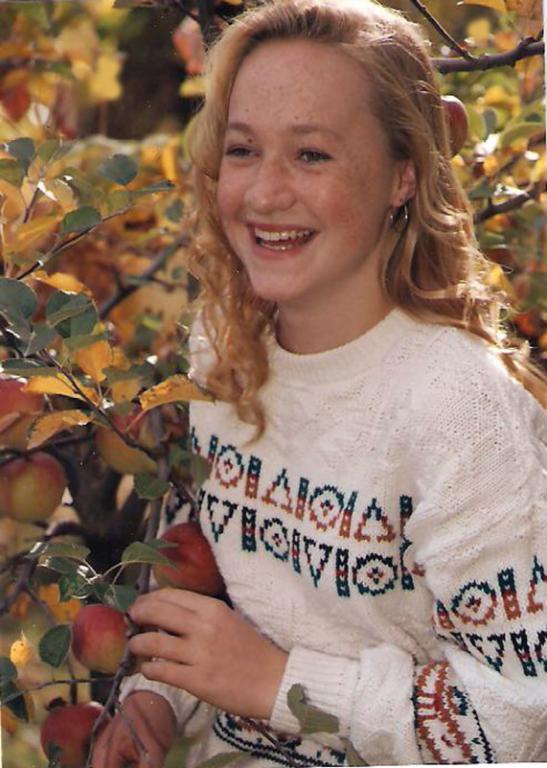
Dolezal at age 16 (From The Guardian)
and identifying her as such too), claim she is being deceptive. However, she says she began self-identifying as black as young as five years old. She drew pictures of herself with dark skin and black, curly hair, she says, as young as Kindergarten. However, when Lauer showed a photo of her at sixteen with white freckled skin and straight blond hair and asked if she identified as black at that time, she said she didn’t.
Aside from the fact that she served as the state head of a branch of the NAACP for about a decade under these pretenses, it’s also been suggested that she plays both sides of the fence as a matter of convenience, so to speak. Around the turn of the century Dolezal (then Rachel Moore) attended Howard University, a historically black college. In her 2002 lawsuit, she claimed discrimination based on, among other things, her race.
But it’s not what you might think. Dolezal/Moore said in the suit that she was denied a teaching assistant position because she was white.
But enough about Dolezal in particular. There’s plenty of media coverage about her in particular. Beyond this, I’m intrigued by the idea of self-identification and the perception of identity binaries in our increasingly pluralistic and postmodern culture. One thing I’ve noticed is that many people who were vocally, actively in support of Caitlyn Jenner’s self-identification as a woman have been as vocal and active in opposition of Dolezal. Even in myself, I felt immediate compassion for Jenner, but suspicion and some anger toward Dolezal. So my question is: why?
Following are some of the other questions I’m wrestling with today:
Yes, some of us support Jenner but not Dolezal, and some will say that this is because Jenner was honest about her transformation throughout, while Dolezal has been deceptive. However, Jenner’s former wives have stated otherwise. They felt deceived given that she didn’t divulge to them that she identified as a woman, even then.
We could say that the primary difference is that Dolezal benefitted from identifying as black, while Jenner lost much. However, it should be noted that Jenner landed on the cover of Vanity Fair, and has been offered her own television show and scads of media interviews.
Some might draw the line at the fact that Jenner always has identified as a woman, but that Dolezal hasn’t, or has even played both sides to her own benefit. But first, do any of us have any right at any time to question how someone else self-identifies with regard to gender, sex, orientation, race, ethnicity or culture? Under what conditions is it acceptable and when isn’t it?
Some argue that Dolezal co-opted a minority culture, but even given the progresses women have made, would anyone argue that women are not still minorities with regard to power, representation, compensation and even rights? and yes, I mean rights. Ask a woman in any number of more conservative Christian denominations who feels a call to lead a church how it feels to be denied that call. Or a Muslim woman.
I understand some of the more immediate, visceral reactions to Dolezal, and the impulse to distinguish one conversation from another. But it seems to me that, in the middle of the hype, scandal and accusations, there is a tremendous opportunity here to learn in a more in-depth and nuanced way about ourselves and one another. It’s my hope that we take that opportunity.
It calls to mind for me the moment in Malcolm X’s autobiography when his eyes are opened to the wrong-mindedness of some of his previous teaching. When he visits north Africa for the first time, he expects to see more people that look more like him. However, when he encounters native Africans who have light skin, fair hair and blue eyes, his own eyes are opened to the reality that racial binaries – or perhaps binaries in general – not only don’t hold up under greater scrutiny; they can easily be a seed from which much division and violence grow.
My question is not whether Rachel Dolezal is wrong, right, black or white. My question is what the rest of us will do with this incredible opportunity.
Previous Post
June 12, 2015
Why Do 3-Year-Olds Die? Pat Robertson: "He Could Grow Up To Be Hitler"
Next Post

June 17, 2015 Five Reasons We Take Our Kids to Gay Pride
Browse Our Archives
Select a Category atonement belief bible Bill O'Reilly Buddhism CCM children christian piatt christianity Contemporary Christian Music current events derek flood Easter education Everyday Sunday faith faith and culture Frank Schaeffer great commission Haaz Sleiman Hobby Lobby Homebrewed Culture humor ISIS Jesus John Paul Lederach Killing Jesus LGBTQ marc driscoll Mission Year Music My Jesus Project Nat Geo parenting politics popular culture postChristian prison reform Ray rice religion republicans sacrifice sexuality theology Uncategorized video violence wild goose festival World Vision young adults
Select a Month December 2017 November 2017 October 2017 September 2017 August 2017 July 2017 June 2017 May 2017 April 2017 March 2017 February 2017 January 2017 November 2016 October 2016 September 2016 August 2016 July 2016 June 2016 May 2016 April 2016 March 2016 February 2016 January 2016 December 2015 November 2015 October 2015 September 2015 August 2015 July 2015 June 2015 May 2015 April 2015 March 2015 February 2015 January 2015 December 2014 November 2014 October 2014 September 2014 August 2014 July 2014 June 2014 May 2014 April 2014 March 2014 February 2014 January 2014 December 2013 November 2013 October 2013 September 2013 August 2013 July 2013 June 2013 May 2013 April 2013 March 2013 February 2013 January 2013 December 2012 November 2012 October 2012 September 2012 August 2012 July 2012 June 2012 May 2012 April 2012 March 2012 February 2012 January 2012 December 2011 November 2011 October 2011 September 2011 August 2011 July 2011 June 2011 May 2011 April 2011 March 2011 February 2011 January 2011 December 2010 November 2010 October 2010 September 2010 August 2010 July 2010 June 2010 May 2010 April 2010 March 2010 February 2010 January 2010 December 2009 November 2009 October 2009 September 2009 August 2009 July 2009 June 2009 May 2009 April 2009 March 2009 February 2009 January 2009 December 2008 November 2008 October 2008 September 2008 August 2008 July 2008 June 2008 May 2008 April 2008 March 2008 February 2008 January 2008 December 2007 November 2007 October 2007 September 2007 August 2007 July 2007 June 2007 May 2007 April 2007 March 2007 February 2007 January 2007 December 2006 November 2006 October 2006 September 2006 August 2006
Follow Us!
TAKE THE
Religious Wisdom Quiz
Who said, 'My kingdom is not of this world'?
Select your answer to see how you score.
John Jesus Paul Peter
Related posts from Christian Piatt
This Episode is (Kinda) a Matter of Life...
White Men: Most Dangerous People in America?
A Theology of Disaster, Osteen's Sin of Sodom...
TRENDING AT PATHEOS Progressive Christian

What Being a Modern-Day Apostle Means to Me
In my last column, I discussed the ins and outs of modern-day...

Did Ancient China Once Worship the God of...
Across human history, a common thread weaves through the origins of the...

Love Your Neighbor – Including Earth-Kin: Lev. 19,...
God’s command to love your neighbor means acting in an ethical and...

Lead a Church Study of “Jesus and Lao...
Guest writer Jack Thomas (The Irreverent Reverend) reflects on leading his church...

Pastoral Wisdom for Responding to Sermon Pushback
Getting sermon pushback on your social justice sermon? Learn practical, Proverbs-based strategies...

Principles for Understanding the Apostolic Ministry Today
Whenever people discover that my formal ministry title is "apostle," as in...
view all Progressive Christian blogs
Ad-Free & Subscriber Log-In Subscription Support
- About Us
- 2026 Calendar
- Videos
- Podcasts
- Library of World Religions
- Faith In Media Tracker
- Advertise With Us
- Write for Us
- Privacy Policy
- Terms of Service
- Do Not Sell My Data
- Contact Us
- Radiant Digital
- Manage Newsletter Subscriptions
- Unsubscribe From Notifications
- Sitemap
Copyright 2008-2026, Patheos. All rights reserved.
Subscription Support Ad-Free & Subscriber Log-In
Follow Patheos