
BuddhistCatholicContemplativeEvangelicalGeneral ChristianHinduJewishLatter-day SaintMuslimNew VisionsProgressive Christian
Beliefs
- Buddhist
- Catholic
- Contemplative
- Evangelical
- General Christian
- Hindu
- Jewish
- Latter-day Saint
- More Voices
- Muslim
- New Visions
- Pagan
- Progressive Christian
Topics
- Religion News
- Food and Religion
- Sports and Religion
- Religious Art
- Religious Music and Entertainment
- Religious Events
- History and Religion
- Style and Religion
- Politics and Religion
- Women in Religion
- Recreation Outdoors and Religion
- Business Finance and Religion
- Careers Workplace and Religion
- Education and Religion
- Family Parenting and Religion
- Health Fitness and Religion
- Home and Religion
- Relationships and Religion
- Technology and Religion
- Travel and Religion
Columnists
- Buddhist Columnists
- Business Finance and Religion Columnists
- Careers Workplace and Religion Columnists
- Catholic Columnists
- Contemplative Columnists
- Education and Religion Columnists
- Evangelists Columnists
- Family Parenting and Religion Columnists
- General Christian Columnists
- Health Fitness and Religion Columnists
- Hindu Columnists
- History and Religion Columnists
- Home and Religion Columnists
- Jewish Columnists
- More Voices Columnists
- Latter Day Columnists
- Muslim Columnists
- New Visions Columnists
- Nonreligious Columnists
- Pagan Columnists
- Politics and Religion Columnists
- Progressive Columnists
- Recreation Outdoors and Religion Columnists
- Relationships and Religion Columnists
- Religion News Columnists
- Religious Art Columnists
- Religious Events Columnists
- Religious Music and Entertainment Columnists
- Sports and Religion Columnists
- Style and Religion Columnists
- Technology and Religion Columnists
- Travel and Religion Columnists
- Women in Religion Columnists
Resource Library
- 2026 Calendar
- Library of World Religions
- The 100 Most Holy Places on Earth
- Patheos Answers
- Podcasts
- Videos
- Faith Leaders Database
- Anglican Episcopalian
- Bahai
- Baptist
- Buddhism
- Christianity
- Confucianism
- Eastern Orthodoxy
- Hinduism
- Holiness and Pentecostal
- ISKCON
- Islam
- Judaism
- Lutheran
- Methodist
- The Church of Jesus Christ of Latter-day Saints
- New Age
- Paganism
- Presbytarian and Reformed
- Protestantism
- Religion Behind the Scenes
- Roman Catholic
- Scientology
- Shia Islam
- Sikhism
- Sufism
- Sunni Islam
- Taoism
- Zen
- See all religions
Research Tools
 Ad-Free & Subscriber Log-In Subscription Support
Ad-Free & Subscriber Log-In Subscription Support
Follow Patheos 

- Trending:
- Forgiveness
- |
- Marriage
- |
- Consciousness
- |
- Death Penalty
- |
- Election
- |
- Halloween
 Christian Piatt
- Home
- Progressive Christian
- Five Things Christianity Can Learn From Buddhism
Five Things Christianity Can Learn From Buddhism
Last updated on: April 15, 2015 at 12:15 pm by Christian Piatt
Five Things Christianity Can Learn From Buddhism 2015-04-15T12:15:57+00:00 Christian Piatt
Patheos Explore the world's faith through different perspectives on religion and spirituality! Patheos has the views of the prevalent religions and spiritualities of the world.
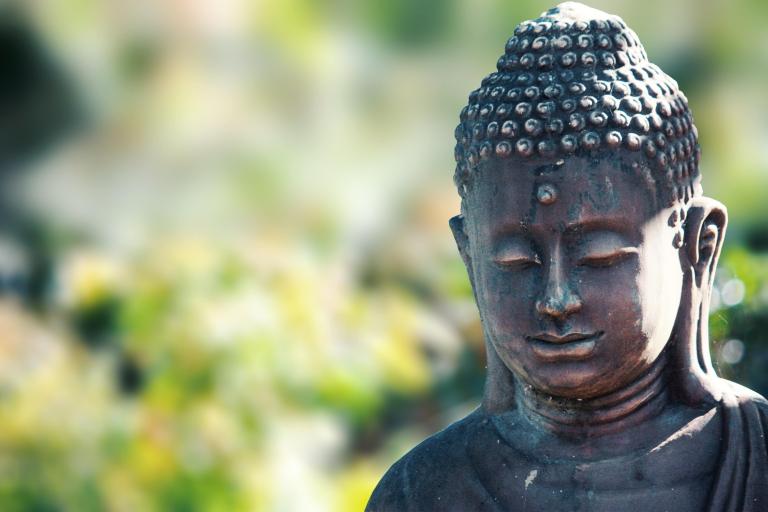 Could Christianity’s future lie in Buddhism’s past? This is a possibility that’s been haunting me lately, but in a good way, I think.
One big critique, understandably, of postmodern views on Christian spirituality is that there’s too much time and energy spent deconstructing old systems and ways of thinking that need to be torn down or reimagined, while lacking the same effort to build up something more helpful – more Christ-like – in its place.
This is true, and I’m as guilty of it as anyone. In my current spiritual practices as part of the current year I’m calling “My Jesus Project,” I’m trying to more fully understand what we mean when we talk about following Jesus. So it might seems strange to some that I would look to Buddhism for help in rebuilding my daily walk along the path of Christ.
Author and monastic Thich Nhat Hanh wrote a book years ago called “Living Buddha, Living Christ,” that had a profound impact on me. At the time, I was “A-B-C,” or “anything but Christian.” I had been thrown out of my church of origin for asking too many questions, and up to that point, I assumed there was no way I could ever associate myself with Jesus or the Gospel again. Thankfully – if surprisingly – it was a Buddhist monk who reintroduced me to Jesus.
In his book, he draws many parallels between the life, teaching and practices of Jesus and those of Siddhartha Gautama, later known as The Buddha after achieving enlightenment. For Jesus, I imagine a similar experience of enlightenment coming to him during his monastic retreat into the desert. And as I seek my own moments of illumination during My Jesus Project, it occurs to me that Buddhism has much to teach us about where we might take Christianity in the 21st century.
No Ego – One of the greatest weaknesses of modern Christianity has been the focus on the individual. This comes more from our individualistic culture than from Christianity itself. Though we focus on personal (often translated as sexual) sin, the idea of sin within the Hebrew Bible was more corporate. There was more of an interdependent, tribal culture, and as such, so were the shortcomings. We’ve also focused too much on personal salvation or a “personal relationship with Jesus Christ,” which has also led to such bastardized interpretations as the false gospel of personal prosperity.
In Buddhist practices, one must learn to let the self die, in a manner of speaking, in order to create a deeper, more meaningful relationship and interdependence with others and the rest of creation. This is actually more consistent with ancient Jewish and Christian thought than our modern, egocentric version of Christianity.
Seeking Wisdom, not Knowledge – If you were like me growing up, you were taught to be “armed with the Word,” which basically meant knowing your Bible inside and out – or at least just memorizing it – so you’d be ready to argue with anyone who refuted it in any way. Meanwhile, we didn’t spend much, if any, time actually experiencing the “real world.” Though our present culture values amassing a wealth of knowledge, or expertise, it actually does very little to prepare us to live in a Christ-like way beyond the church walls.
Wisdom, unlike knowledge, comes as a byproduct of lived experience. Something happens, and as often as not, we screw up. Then we reflect, learn and change our attitudes or behaviors moving forward. Christianity, however, too often teaches us to entrench ourselves in self-righteousness, seeking instead to change others to be more like us. (God forbid we would be changed by someone who isn’t a Christian.) But true wisdom means we learn and are affected by all of our experiences, and use that wisdom as an opportunity to do and be better in the future.
Right-Heartedness Over Right Belief – When someone joins a Christian church, or before they get baptized or commit their lives to Christ, we inevitably ask them with three telltale words: “DO YOU BELIEVE…”But Jesus didn’t ask people what they believed, or to recite some creed before following him or going and doing for others what he did for them. He was more concerned with the nature of their hearts than any claim of belief.
This is where a fundamental tenet of Buddhism serves us very well. We’re taught that right hearts, lead to right thoughts, and this, in turn, leads to right action. But it all begins with the orientation of our hearts, how we see, receive and respond to the world. We’re not sent out into the world so much to coerce people into like-thought; rather, we’re charged with going out and offering ourselves fully, sacrificially in humble service to others, regardless of who they are, what they believe or what the result might be for us.
Impermanence – We seem to become pretty fixated on some false correlation between our faithfulness and the lifespan of our churches and denominations. We know we’re doing God’s work if our churches are full, budgets are met and we can hand off a healthy institutional legacy to those who come after us. But Jesus preached the destruction of the temple not just to freak people out; he was warning them not to cling to tightly to all the trappings of religion around them that would inevitably crumble and fail.
We can learn much from the Buddhist artistic discipline of creating mandalas. These elaborate sand-art designs sometimes take weeks or more to make, with several monks attending to them many hours each day. And though our instinct is generally to preserve and even defend something beautiful, the mandala is intentionally destroyed not long after it is finished. The sand is returned to the earth and the only remaining impression of the mandala is in our consciousness. It’s a humbling exercise in letting go; one from which we can learn a great deal.
Care for All Creation – We Christians have been greatly affected by the industrial revolution in ways that have negatively impacted out relationship with the rest of creation. This, combined with an over-emphasis of disdain for our own bodies and sexual identities, has created a sense of disembodiment that also causes us to feel less interdependent on each other and less dependent on all of nature. The notion of dominionism falsely teaches within some Christian circles that the planet is ours to use as we please. And some even go so far as to suggest that anything we can do to help hasten the end-times gets us that much closer to heralding God’s kingdom on earth.
Buddhism, however, teaches simplicity, humility and intentional care for all of creation. Practices of mindfulness and humility help us loosen our grasp on personal desire and avail ourselves to the excesses and insensitivity of our habits. When we regain a healthier sense of our own places within a much larger, very delicate ecosystem, we not only treat our surroundings with more care; we treat ourselves with greater care as well.
Living Christ My Jesus Project
Previous Post

April 11, 2015
THE SHACK's Wm. Paul Young: Where's God When...
Next Post

April 18, 2015 Three of the Most Dangerous Christian Words: "Do You Believe..."
Browse Our Archives
Select a Category atonement belief bible Bill O'Reilly Buddhism CCM children christian piatt christianity Contemporary Christian Music current events derek flood Easter education Everyday Sunday faith faith and culture Frank Schaeffer great commission Haaz Sleiman Hobby Lobby Homebrewed Culture humor ISIS Jesus John Paul Lederach Killing Jesus LGBTQ marc driscoll Mission Year Music My Jesus Project Nat Geo parenting politics popular culture postChristian prison reform Ray rice religion republicans sacrifice sexuality theology Uncategorized video violence wild goose festival World Vision young adults
Select a Month December 2017 November 2017 October 2017 September 2017 August 2017 July 2017 June 2017 May 2017 April 2017 March 2017 February 2017 January 2017 November 2016 October 2016 September 2016 August 2016 July 2016 June 2016 May 2016 April 2016 March 2016 February 2016 January 2016 December 2015 November 2015 October 2015 September 2015 August 2015 July 2015 June 2015 May 2015 April 2015 March 2015 February 2015 January 2015 December 2014 November 2014 October 2014 September 2014 August 2014 July 2014 June 2014 May 2014 April 2014 March 2014 February 2014 January 2014 December 2013 November 2013 October 2013 September 2013 August 2013 July 2013 June 2013 May 2013 April 2013 March 2013 February 2013 January 2013 December 2012 November 2012 October 2012 September 2012 August 2012 July 2012 June 2012 May 2012 April 2012 March 2012 February 2012 January 2012 December 2011 November 2011 October 2011 September 2011 August 2011 July 2011 June 2011 May 2011 April 2011 March 2011 February 2011 January 2011 December 2010 November 2010 October 2010 September 2010 August 2010 July 2010 June 2010 May 2010 April 2010 March 2010 February 2010 January 2010 December 2009 November 2009 October 2009 September 2009 August 2009 July 2009 June 2009 May 2009 April 2009 March 2009 February 2009 January 2009 December 2008 November 2008 October 2008 September 2008 August 2008 July 2008 June 2008 May 2008 April 2008 March 2008 February 2008 January 2008 December 2007 November 2007 October 2007 September 2007 August 2007 July 2007 June 2007 May 2007 April 2007 March 2007 February 2007 January 2007 December 2006 November 2006 October 2006 September 2006 August 2006
Follow Us!
TAKE THE
Religious Wisdom Quiz
What did God create on the first day according to Genesis?
Select your answer to see how you score.
Animals Man Light Plants
Related posts from Christian Piatt

More Than Jezebel (Third Week Advent Devotional)

Are We There Yet? (Second Week in Advent...

Look, Shiny! (First Week of Advent Study)

TRENDING AT PATHEOS Progressive Christian

What Being a Modern-Day Apostle Means to Me
In my last column, I discussed the ins and outs of modern-day...

Did Ancient China Once Worship the God of...
Across human history, a common thread weaves through the origins of the...

Love Your Neighbor – Including Earth-Kin: Lev. 19,...
God’s command to love your neighbor means acting in an ethical and...

Lead a Church Study of “Jesus and Lao...
Guest writer Jack Thomas (The Irreverent Reverend) reflects on leading his church...

Pastoral Wisdom for Responding to Sermon Pushback
Getting sermon pushback on your social justice sermon? Learn practical, Proverbs-based strategies...

Principles for Understanding the Apostolic Ministry Today
Whenever people discover that my formal ministry title is "apostle," as in...
view all Progressive Christian blogs
Ad-Free & Subscriber Log-In Subscription Support
- About Us
- 2026 Calendar
- Videos
- Podcasts
- Library of World Religions
- Faith In Media Tracker
- Advertise With Us
- Write for Us
- Privacy Policy
- Terms of Service
- Do Not Sell My Data
- Contact Us
- Radiant Digital
- Manage Newsletter Subscriptions
- Unsubscribe From Notifications
- Sitemap
Copyright 2008-2026, Patheos. All rights reserved.
Subscription Support Ad-Free & Subscriber Log-In
Follow Patheos