
BuddhistCatholicContemplativeEvangelicalGeneral ChristianHinduJewishLatter-day SaintMuslimNew VisionsProgressive Christian
Beliefs
- Buddhist
- Catholic
- Contemplative
- Evangelical
- General Christian
- Hindu
- Jewish
- Latter-day Saint
- More Voices
- Muslim
- New Visions
- Pagan
- Progressive Christian
Topics
- Religion News
- Food and Religion
- Sports and Religion
- Religious Art
- Religious Music and Entertainment
- Religious Events
- History and Religion
- Style and Religion
- Politics and Religion
- Women in Religion
- Recreation Outdoors and Religion
- Business Finance and Religion
- Careers Workplace and Religion
- Education and Religion
- Family Parenting and Religion
- Health Fitness and Religion
- Home and Religion
- Relationships and Religion
- Technology and Religion
- Travel and Religion
Columnists
- Buddhist Columnists
- Business Finance and Religion Columnists
- Careers Workplace and Religion Columnists
- Catholic Columnists
- Contemplative Columnists
- Education and Religion Columnists
- Evangelists Columnists
- Family Parenting and Religion Columnists
- General Christian Columnists
- Health Fitness and Religion Columnists
- Hindu Columnists
- History and Religion Columnists
- Home and Religion Columnists
- Jewish Columnists
- More Voices Columnists
- Latter Day Columnists
- Muslim Columnists
- New Visions Columnists
- Nonreligious Columnists
- Pagan Columnists
- Politics and Religion Columnists
- Progressive Columnists
- Recreation Outdoors and Religion Columnists
- Relationships and Religion Columnists
- Religion News Columnists
- Religious Art Columnists
- Religious Events Columnists
- Religious Music and Entertainment Columnists
- Sports and Religion Columnists
- Style and Religion Columnists
- Technology and Religion Columnists
- Travel and Religion Columnists
- Women in Religion Columnists
Resource Library
- 2026 Calendar
- Library of World Religions
- The 100 Most Holy Places on Earth
- Patheos Answers
- Podcasts
- Videos
- Faith Leaders Database
- Anglican Episcopalian
- Bahai
- Baptist
- Buddhism
- Christianity
- Confucianism
- Eastern Orthodoxy
- Hinduism
- Holiness and Pentecostal
- ISKCON
- Islam
- Judaism
- Lutheran
- Methodist
- The Church of Jesus Christ of Latter-day Saints
- New Age
- Paganism
- Presbytarian and Reformed
- Protestantism
- Religion Behind the Scenes
- Roman Catholic
- Scientology
- Shia Islam
- Sikhism
- Sufism
- Sunni Islam
- Taoism
- Zen
- See all religions
Research Tools
 Ad-Free & Subscriber Log-In Subscription Support
Ad-Free & Subscriber Log-In Subscription Support
Follow Patheos 

- Trending:
- Forgiveness
- |
- Marriage
- |
- Consciousness
- |
- Death Penalty
- |
- Election
- |
- Halloween
 Christian Piatt
- Home
- Progressive Christian
- Explaining “Working Poor” to my Privileged, Middle Class Children
Explaining “Working Poor” to my Privileged, Middle Class Children
Last updated on: April 20, 2015 at 5:48 pm by Christian Piatt
Explaining “Working Poor” to my Privileged, Middle Class Children 2015-04-20T17:48:44+00:00 Christian Piatt
Patheos Explore the world's faith through different perspectives on religion and spirituality! Patheos has the views of the prevalent religions and spiritualities of the world.
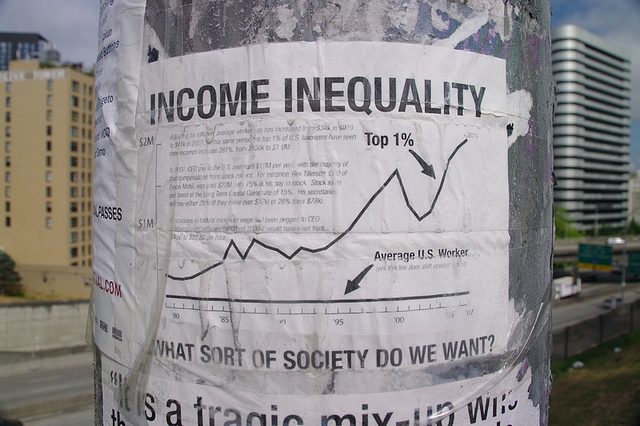 For my privileged, perhaps overly comfortable children, something as trivial as our internet being down constitutes a crisis. When we do our “gratitude inventory” (aka a way to get them to reflect and pray), they rattle off things as a matter of routine that many people would only dream of.
So how do I explain something as alien and complex as a state of being part of the working poor in a way they can have a at least a chance to internalize?
This was part of my goal in taking on My Jesus Project, a year-long endeavor to more deeply understand what we mean when we talk about following Jesus: to move from ignorance to empathy, which can only be achieved sometimes through direct, personal experiences.
For a month, I was assigned by one of my “Jesus Mentors” to go out of my way to walk and/or take public transportation to get places, with the intention that I would come into contact with people I might otherwise miss or overlook. As I did it, I realized my kids could benefit from it as well.
The first sign that they needed such an experience was that, when I announced to them we were taking the bus and train to do our family activities one weekend, they were excited. It was a new experience for them, rather than a necessity. As for the mile-long walks to get from place to place when the transit system didn’t get us exactly where we were going, they were a little less thrilled with that. And yet, we slowed down more, spent more time talking, and while on the public systems I noticed we looked each other in the eye a lot more, rather than all facing forward (with the kinds inevitably with their faces fixed on a screen) in the car.
My son, Mattias, who is on the high end of the autism spectrum, is a keen observer, and I suppose a natural byproduct of that is that he asks questions. A lot of questions.
“Dad,” he said, after jumping off the final leg of the bus route one day, “why were some of the people sleeping on the bus?”
“Different reasons,” I said. “I think some of them usually live outside, so riding the bus is actually a lot more comfortable than sleeping in a stairwell or on a park bench. Especially when it’s raining.” Because we do serve at a downtown church in Portland, where the number of people living outside is inordinately high, they do come into contact with them on a weekly basis. And yet, it’s still hard for them to imagine that these friends of ours really don’t have a choice about where to sleep.
“So, like, they really don’t have anyplace else to go?”
“Some of them, yeah,” I said.
“But some of them that were sleeping didn’t look homeless at all,” he said.
“Right,” i said. “Some of them are going to, or coming home from, work.”
“Why don’t they just work closer to home so they can get more sleep?”
“Lots of people have to take jobs wherever they can get them” I said. “Sometimes they can’t find good paying jobs where they can also find an affordable place to live. And some of them have to work more than one job.”
“What for?” he asked.
“Well,” I said, “think about it this way. Say you work full time and you make $500 a week…”
“Wow,” his eyes widened,” that’s a ton of money.”
“To you, yeah,” I said, “but then remember, if they have kids, they have to pay a babysitter, that might be $150 or more of that. Plus maybe $200 toward rent.” I could see his brain working away.
“So they still have $150 left. That’s pretty good.”
“Except,” I said, they haven’t paid for food yet. That’s probably $100 if they have a family. Then there’s electricity, water, gas. So figure that’s maybe another $75 a week.”
“But,” he scowled, “that’s more than they made already. And what about clothes and medicine and stuff?”
“Right,” I said. So what would they need to do?”
“Get another job?”
“Probably,” I said. “But then they have to pay a babysitter more. And you have to consider that a lot of people who live in more affordable housing also live in a food desert.”
“A what?’
“A food desert,” I said, “means that there aren’t healthy choices near your house where you can get good food for your family. So you end up either eating fast food or taking the bus or train even more to get the food you want.”
“Which means more babysitting,” he said.
“And more time away from home,” I said. “So if someone needs to work another part-time job in addition to their full-time job, that’s, say twelve hours a day right there. Plus figure another hour and a half for transportation, grocery shopping, spending at least a little bit of time with their partner or kids…”
“No wonder they’re tired,” he said in quiet bewilderment. “That’s just not fair.”
It all reminded me of when I worked in a Title 1 school in southern Colorado where the student turnover rate was more than 100% per year, mainly because families sometimes would have to move a couple of times during the school year, either because they couldn’t make rent, or because the good will of friends or family had worn thin. The reason my company had been brought in was because only fourteen percent of their students were deemed proficient according to state standards, and only two percent met the writing goals. The school was at risk of losing their federal funding, which likely would mean the school would be shut down.
In particular, I thought about a beautiful girl, who I’ll call Maria. She had been labeled as “special needs” by the district, though I wasn’t sure why. At least until I spent some time testing her myself. Maria was kind, soft-spoken and plenty bright. But as I went through the first questions of our assessment, her eyes would droop and eventually close all together.
“Maria,” I said, “did you not get enough sleep?” She nodded groggily, and then explained that her mom lived with her fiance who, though made sure they had shelter, was terribly abusive toward her mother. She explained that her mother and he had fought all night after she told him his friends needed to leave and turn off their music at midnight so the kids could sleep.
“He yells at her,” she said, “a lot. And when he grabs her, he throws her against the wall of my room. And when I went to school, there wasn’t anything to eat. I’m sorry mister Christian, but I just can’t stay awake.”
Mattias is right; sometimes it’s just not fair.
Join us for more conversation about what it means to follow Jesus at MyJesusProject.com
Previous Post

April 18, 2015
Three of the Most Dangerous Christian Words: "Do You Believe..."
Next Post
April 22, 2015 Worship How-Tos Franklin Graham Blues and New Tattoos (CultureCast)
Browse Our Archives
Select a Category atonement belief bible Bill O'Reilly Buddhism CCM children christian piatt christianity Contemporary Christian Music current events derek flood Easter education Everyday Sunday faith faith and culture Frank Schaeffer great commission Haaz Sleiman Hobby Lobby Homebrewed Culture humor ISIS Jesus John Paul Lederach Killing Jesus LGBTQ marc driscoll Mission Year Music My Jesus Project Nat Geo parenting politics popular culture postChristian prison reform Ray rice religion republicans sacrifice sexuality theology Uncategorized video violence wild goose festival World Vision young adults
Select a Month December 2017 November 2017 October 2017 September 2017 August 2017 July 2017 June 2017 May 2017 April 2017 March 2017 February 2017 January 2017 November 2016 October 2016 September 2016 August 2016 July 2016 June 2016 May 2016 April 2016 March 2016 February 2016 January 2016 December 2015 November 2015 October 2015 September 2015 August 2015 July 2015 June 2015 May 2015 April 2015 March 2015 February 2015 January 2015 December 2014 November 2014 October 2014 September 2014 August 2014 July 2014 June 2014 May 2014 April 2014 March 2014 February 2014 January 2014 December 2013 November 2013 October 2013 September 2013 August 2013 July 2013 June 2013 May 2013 April 2013 March 2013 February 2013 January 2013 December 2012 November 2012 October 2012 September 2012 August 2012 July 2012 June 2012 May 2012 April 2012 March 2012 February 2012 January 2012 December 2011 November 2011 October 2011 September 2011 August 2011 July 2011 June 2011 May 2011 April 2011 March 2011 February 2011 January 2011 December 2010 November 2010 October 2010 September 2010 August 2010 July 2010 June 2010 May 2010 April 2010 March 2010 February 2010 January 2010 December 2009 November 2009 October 2009 September 2009 August 2009 July 2009 June 2009 May 2009 April 2009 March 2009 February 2009 January 2009 December 2008 November 2008 October 2008 September 2008 August 2008 July 2008 June 2008 May 2008 April 2008 March 2008 February 2008 January 2008 December 2007 November 2007 October 2007 September 2007 August 2007 July 2007 June 2007 May 2007 April 2007 March 2007 February 2007 January 2007 December 2006 November 2006 October 2006 September 2006 August 2006
Follow Us!
TAKE THE
Religious Wisdom Quiz
What event led to the great flood in Genesis?
Select your answer to see how you score.
Human wickedness Worshiping golden calves Cain’s murder of Abel Tower of Babel
Related posts from Christian Piatt

More Than Jezebel (Third Week Advent Devotional)

Are We There Yet? (Second Week in Advent...

Look, Shiny! (First Week of Advent Study)

TRENDING AT PATHEOS Progressive Christian

What Being a Modern-Day Apostle Means to Me
In my last column, I discussed the ins and outs of modern-day...

Did Ancient China Once Worship the God of...
Across human history, a common thread weaves through the origins of the...

Love Your Neighbor – Including Earth-Kin: Lev. 19,...
God’s command to love your neighbor means acting in an ethical and...

Lead a Church Study of “Jesus and Lao...
Guest writer Jack Thomas (The Irreverent Reverend) reflects on leading his church...

Pastoral Wisdom for Responding to Sermon Pushback
Getting sermon pushback on your social justice sermon? Learn practical, Proverbs-based strategies...

Principles for Understanding the Apostolic Ministry Today
Whenever people discover that my formal ministry title is "apostle," as in...
view all Progressive Christian blogs
Ad-Free & Subscriber Log-In Subscription Support
- About Us
- 2026 Calendar
- Videos
- Podcasts
- Library of World Religions
- Faith In Media Tracker
- Advertise With Us
- Write for Us
- Privacy Policy
- Terms of Service
- Do Not Sell My Data
- Contact Us
- Radiant Digital
- Manage Newsletter Subscriptions
- Unsubscribe From Notifications
- Sitemap
Copyright 2008-2026, Patheos. All rights reserved.
Subscription Support Ad-Free & Subscriber Log-In
Follow Patheos