
BuddhistCatholicContemplativeEvangelicalGeneral ChristianHinduJewishLatter-day SaintMuslimNew VisionsProgressive Christian
Beliefs
- Buddhist
- Catholic
- Contemplative
- Evangelical
- General Christian
- Hindu
- Jewish
- Latter-day Saint
- More Voices
- Muslim
- New Visions
- Pagan
- Progressive Christian
Topics
- Religion News
- Food and Religion
- Sports and Religion
- Religious Art
- Religious Music and Entertainment
- Religious Events
- History and Religion
- Style and Religion
- Politics and Religion
- Women in Religion
- Recreation Outdoors and Religion
- Business Finance and Religion
- Careers Workplace and Religion
- Education and Religion
- Family Parenting and Religion
- Health Fitness and Religion
- Home and Religion
- Relationships and Religion
- Technology and Religion
- Travel and Religion
Columnists
- Buddhist Columnists
- Business Finance and Religion Columnists
- Careers Workplace and Religion Columnists
- Catholic Columnists
- Contemplative Columnists
- Education and Religion Columnists
- Evangelists Columnists
- Family Parenting and Religion Columnists
- General Christian Columnists
- Health Fitness and Religion Columnists
- Hindu Columnists
- History and Religion Columnists
- Home and Religion Columnists
- Jewish Columnists
- More Voices Columnists
- Latter Day Columnists
- Muslim Columnists
- New Visions Columnists
- Nonreligious Columnists
- Pagan Columnists
- Politics and Religion Columnists
- Progressive Columnists
- Recreation Outdoors and Religion Columnists
- Relationships and Religion Columnists
- Religion News Columnists
- Religious Art Columnists
- Religious Events Columnists
- Religious Music and Entertainment Columnists
- Sports and Religion Columnists
- Style and Religion Columnists
- Technology and Religion Columnists
- Travel and Religion Columnists
- Women in Religion Columnists
Resource Library
- 2026 Calendar
- Library of World Religions
- The 100 Most Holy Places on Earth
- Patheos Answers
- Podcasts
- Videos
- Faith Leaders Database
- Anglican Episcopalian
- Bahai
- Baptist
- Buddhism
- Christianity
- Confucianism
- Eastern Orthodoxy
- Hinduism
- Holiness and Pentecostal
- ISKCON
- Islam
- Judaism
- Lutheran
- Methodist
- The Church of Jesus Christ of Latter-day Saints
- New Age
- Paganism
- Presbytarian and Reformed
- Protestantism
- Religion Behind the Scenes
- Roman Catholic
- Scientology
- Shia Islam
- Sikhism
- Sufism
- Sunni Islam
- Taoism
- Zen
- See all religions
Research Tools
 Ad-Free & Subscriber Log-In Subscription Support
Ad-Free & Subscriber Log-In Subscription Support
Follow Patheos 

- Trending:
- Forgiveness
- |
- Marriage
- |
- Consciousness
- |
- Death Penalty
- |
- Election
- |
- Halloween
 Christian Piatt
- Home
- Progressive Christian
- Five Reasons post-Christianity is Good for Us
Five Reasons post-Christianity is Good for Us
Last updated on: August 12, 2014 at 7:43 pm by Christian Piatt
Five Reasons post-Christianity is Good for Us 2014-08-12T19:43:43+00:00 Christian Piatt
Patheos Explore the world's faith through different perspectives on religion and spirituality! Patheos has the views of the prevalent religions and spiritualities of the world.
 Anyone who has been paying attention knows that Christianity is in decline in the western world by all accounts. From progressive mainline churches to evangelical mega-churches, most institutional religious bodies are experiencing precipitous drops in attendance and giving. Meanwhile, the Christian voice in the civil and political conversations is also giving way to other perspectives, be they Jewish, Muslim or secular humanist. It’s no longer a dark mark on one’s social character to say they don’t go to church, or even that they’re not a Christian.
For many leaders within organized Christian circles, this is all a call to arms, a warning shot across the proverbial bow to wake us up from our slumber and engage the impinging culture war with renewed commitment.
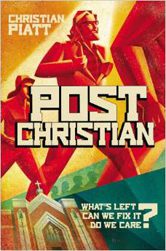
But as I suggest in my new book, “postChristian: What’s Left? Can we fix it? Do we care?” It’s actually good news. Granted, it may not slow the decline and closure of churches anytime soon, and we Christians will likely continue to lose some degree of political clout, but I argue that this isn’t the point. It never was. and in fact, our numerical, political and even financial success in recent generations has taken us far off track.
Following are several ways in which this current shake-up is the best thing for us, and actually promises to liberate the Gospel and its adherents from some of the false idols we’ve often come to worship, mistaking them for God:
Humility is necessary. Having become the dominant voice in the room, so to speak, for so long, Christianity has fallen victim to its own hubris in some respects. We’ve assumed that our way of thinking is the ‘default’ for everyone, and that we automatically know what is best for others. We’ve talked more than we’ve listened. We’ve changed others, while not being as willing to be changed. In short: we’ve become too comfortable with an imperialist attitude toward our faith. But Jesus consistently challenged such top-down power plays, and in as much as we’re to imitate the Christ-illuminated path to realizing God’s kingdom vision for the world, we’re well advised to do the same. More over, we’re to approach it with the humility of a servant, rather than with the bravado and arrogance of a dictator.
Friction is good. Back in the “old days” of the Hebrew Bible before Jesus came along, there was a spiritual practice of discernment among religious scholars and leaders called midrash. This approach to scripture presumed that everyone would reveal or resonate with a different dimension or meaning of any given text, and that, by debating or even arguing about it, God’s deeper, more complex and nuanced wisdom would emerge. The wisdom, then, came from the points of conflict, and the potential for the coexistence of multiple truths. It was never assumed that all present would agree on one, single and absolute interpretation.
And yet, we’ve come to lean on a ‘The Bible says it, I believe it, that settles it’ way of approaching scripture, suggesting that there even is such a thing as literal interpretation of scripture. But such absolute approaches to the Bible and our daily living out of our faith actually stifles the spirit’s movement within and among us, rather than forcing all into some uniform mold dictated by God for us to fall into.
We’re worshipping religion, not God. It’s hard, when we’ve been endowed with these amazing buildings, these historic legacies and these time-honored traditions, not to mistake them for the thing we’re supposed to really focus on. To paraphrase the recent TV show, ‘Halt and Catch Fire,’ religion isn’t the thing; it’s the thing that gets us to the thing.
Organized religion, and all that comes with it, is a means to an end. It’s intent is to facilitate community, spiritual growth, mutual accountability, worship of God and transformation of the world around us. But so much of our energy in recent decades has gone into propping up aging, hollowed out institutions and preserving empty rituals for the sake of themselves that we’ve turned them into the golden calf, taking precedent over God and the Gospel at the center of our hearts. We’ve fallen victim to mistaken assumption that we have to resurrect dying religious infrastructures in order to reveal God to ourselves and others. But in doing so, we’ve run the risk of losing connection with God’s call all together.
We need to know who we are independent of Church. I’ve suggested in my “postChristian” book that Christianity is undergoing both an identity crisis and a credibility crisis. One the one hand, we have to re-imagine who we are without being propped up by the religious systems into which we’ve invested so much of ourselves, our resources, and therefore, much of our egos and identities. So when those fade or weaken, what does this mean about us as people, or as Christians? We can’t rely on tradition to tell us who we are; rather, we have to listen with fresh ears and an open heart for God’s call to something new. To what, we’re not entirely sure.
Christianity has a PR problem. As for the credibility crisis noted above, it’s simple as simple as this. The world beyond our doors doesn’t tend to take issue with God or even Jesus; it’s Christians they can’t stand. As Gandhi famously said, “I like your Christ, I do not like your Christians. Your Christians are so unlike your Christ.” And so it goes today. In a survey of hundreds of Christians and non-Christians alike my wife, Amy, and I did a few years back, the words principally associated with God included “loving,” “forgiving” and “merciful.” However, the words most commonly associated with Christians – even by other Christians! – were ‘judgmental’ and ‘hypocrites.’
If we’re to be the body of Christ in the world, and in so much as Jesus is the embodiment of the God of our understanding, then we have some work to do.
postChristian: What’s left? Can we fix it? Do we care? is available everywhere in all formats, including audiobook. Order your copy today on Barnes and Noble, Books-aMillion, Powell’s, Amazon, IndieBound or anywhere you buy books.
To invite Christian to speak in your city on his upcoming national book tour, visit his website and drop him a note.
Previous Post

August 11, 2014
God Isn't Punishing Mark Driscoll
Next Post
August 14, 2014 Michael Brown, Iraq, Putin, Gaza: How to Reconcile the Brokenness?
Browse Our Archives
Select a Category atonement belief bible Bill O'Reilly Buddhism CCM children christian piatt christianity Contemporary Christian Music current events derek flood Easter education Everyday Sunday faith faith and culture Frank Schaeffer great commission Haaz Sleiman Hobby Lobby Homebrewed Culture humor ISIS Jesus John Paul Lederach Killing Jesus LGBTQ marc driscoll Mission Year Music My Jesus Project Nat Geo parenting politics popular culture postChristian prison reform Ray rice religion republicans sacrifice sexuality theology Uncategorized video violence wild goose festival World Vision young adults
Select a Month December 2017 November 2017 October 2017 September 2017 August 2017 July 2017 June 2017 May 2017 April 2017 March 2017 February 2017 January 2017 November 2016 October 2016 September 2016 August 2016 July 2016 June 2016 May 2016 April 2016 March 2016 February 2016 January 2016 December 2015 November 2015 October 2015 September 2015 August 2015 July 2015 June 2015 May 2015 April 2015 March 2015 February 2015 January 2015 December 2014 November 2014 October 2014 September 2014 August 2014 July 2014 June 2014 May 2014 April 2014 March 2014 February 2014 January 2014 December 2013 November 2013 October 2013 September 2013 August 2013 July 2013 June 2013 May 2013 April 2013 March 2013 February 2013 January 2013 December 2012 November 2012 October 2012 September 2012 August 2012 July 2012 June 2012 May 2012 April 2012 March 2012 February 2012 January 2012 December 2011 November 2011 October 2011 September 2011 August 2011 July 2011 June 2011 May 2011 April 2011 March 2011 February 2011 January 2011 December 2010 November 2010 October 2010 September 2010 August 2010 July 2010 June 2010 May 2010 April 2010 March 2010 February 2010 January 2010 December 2009 November 2009 October 2009 September 2009 August 2009 July 2009 June 2009 May 2009 April 2009 March 2009 February 2009 January 2009 December 2008 November 2008 October 2008 September 2008 August 2008 July 2008 June 2008 May 2008 April 2008 March 2008 February 2008 January 2008 December 2007 November 2007 October 2007 September 2007 August 2007 July 2007 June 2007 May 2007 April 2007 March 2007 February 2007 January 2007 December 2006 November 2006 October 2006 September 2006 August 2006
Follow Us!
TAKE THE
Religious Wisdom Quiz
I asked, 'What must I do to be saved?' after an earthquake freed my prisoners. Who am I?
Select your answer to see how you score.
Cornelius The Philippian jailer A Roman centurion The Ethiopian eunuch
Related posts from Christian Piatt

More Than Jezebel (Third Week Advent Devotional)

Are We There Yet? (Second Week in Advent...

Look, Shiny! (First Week of Advent Study)

TRENDING AT PATHEOS Progressive Christian

What Being a Modern-Day Apostle Means to Me
In my last column, I discussed the ins and outs of modern-day...

Did Ancient China Once Worship the God of...
Across human history, a common thread weaves through the origins of the...

Love Your Neighbor – Including Earth-Kin: Lev. 19,...
God’s command to love your neighbor means acting in an ethical and...

Lead a Church Study of “Jesus and Lao...
Guest writer Jack Thomas (The Irreverent Reverend) reflects on leading his church...

Pastoral Wisdom for Responding to Sermon Pushback
Getting sermon pushback on your social justice sermon? Learn practical, Proverbs-based strategies...

Principles for Understanding the Apostolic Ministry Today
Whenever people discover that my formal ministry title is "apostle," as in...
view all Progressive Christian blogs
Ad-Free & Subscriber Log-In Subscription Support
- About Us
- 2026 Calendar
- Videos
- Podcasts
- Library of World Religions
- Faith In Media Tracker
- Advertise With Us
- Write for Us
- Privacy Policy
- Terms of Service
- Do Not Sell My Data
- Contact Us
- Radiant Digital
- Manage Newsletter Subscriptions
- Unsubscribe From Notifications
- Sitemap
Copyright 2008-2026, Patheos. All rights reserved.
Subscription Support Ad-Free & Subscriber Log-In
Follow Patheos