
BuddhistCatholicContemplativeEvangelicalGeneral ChristianHinduJewishLatter-day SaintMuslimNew VisionsProgressive Christian
Beliefs
- Buddhist
- Catholic
- Contemplative
- Evangelical
- General Christian
- Hindu
- Jewish
- Latter-day Saint
- More Voices
- Muslim
- New Visions
- Pagan
- Progressive Christian
Topics
- Religion News
- Food and Religion
- Sports and Religion
- Religious Art
- Religious Music and Entertainment
- Religious Events
- History and Religion
- Style and Religion
- Politics and Religion
- Women in Religion
- Recreation Outdoors and Religion
- Business Finance and Religion
- Careers Workplace and Religion
- Education and Religion
- Family Parenting and Religion
- Health Fitness and Religion
- Home and Religion
- Relationships and Religion
- Technology and Religion
- Travel and Religion
Columnists
- Buddhist Columnists
- Business Finance and Religion Columnists
- Careers Workplace and Religion Columnists
- Catholic Columnists
- Contemplative Columnists
- Education and Religion Columnists
- Evangelists Columnists
- Family Parenting and Religion Columnists
- General Christian Columnists
- Health Fitness and Religion Columnists
- Hindu Columnists
- History and Religion Columnists
- Home and Religion Columnists
- Jewish Columnists
- More Voices Columnists
- Latter Day Columnists
- Muslim Columnists
- New Visions Columnists
- Nonreligious Columnists
- Pagan Columnists
- Politics and Religion Columnists
- Progressive Columnists
- Recreation Outdoors and Religion Columnists
- Relationships and Religion Columnists
- Religion News Columnists
- Religious Art Columnists
- Religious Events Columnists
- Religious Music and Entertainment Columnists
- Sports and Religion Columnists
- Style and Religion Columnists
- Technology and Religion Columnists
- Travel and Religion Columnists
- Women in Religion Columnists
Resource Library
- 2026 Calendar
- Library of World Religions
- The 100 Most Holy Places on Earth
- Patheos Answers
- Podcasts
- Videos
- Faith Leaders Database
- Anglican Episcopalian
- Bahai
- Baptist
- Buddhism
- Christianity
- Confucianism
- Eastern Orthodoxy
- Hinduism
- Holiness and Pentecostal
- ISKCON
- Islam
- Judaism
- Lutheran
- Methodist
- The Church of Jesus Christ of Latter-day Saints
- New Age
- Paganism
- Presbytarian and Reformed
- Protestantism
- Religion Behind the Scenes
- Roman Catholic
- Scientology
- Shia Islam
- Sikhism
- Sufism
- Sunni Islam
- Taoism
- Zen
- See all religions
Research Tools
 Ad-Free & Subscriber Log-In Subscription Support
Ad-Free & Subscriber Log-In Subscription Support
Follow Patheos 

- Trending:
- Forgiveness
- |
- Marriage
- |
- Consciousness
- |
- Death Penalty
- |
- Election
- |
- Halloween
 Christian Piatt
- Home
- Progressive Christian
- A postChristian dialogue with Romal Tune
A postChristian dialogue with Romal Tune
Last updated on: August 8, 2014 at 7:47 pm by Christian Piatt
A postChristian dialogue with Romal Tune 2014-08-08T19:47:37+00:00 Christian Piatt
Patheos Explore the world's faith through different perspectives on religion and spirituality! Patheos has the views of the prevalent religions and spiritualities of the world.
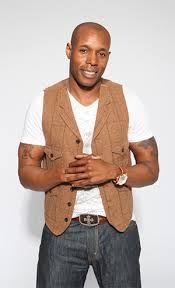 I sat down with my friend Romal Tune, an author, speaker and reformer for education focusing on at-risk students, to talk about my new book, postChrisitan: What’s left, can we fix it, do we care?” (Hattchette/Jericho). We talked about some aspects that the book addresses: what the church has become fixated on instead of the Gospel, challenges facing religion, and the inspiration behind writing it in the first place. I enjoyed my conversation with Romal. I hope you do too.
RT: What’s the concept of church that you are addressing with postChristian?
I think we’ve fallen victim to the misapprehension that worship, or church, is the point. Those are simply a means to an end though. Too often we’ve become so fixated on preserving our traditions, our buildings, our budgets or even our own personal pride that we’ve ended up worshipping the false god of religion.
People can be Christ-like without necessarily going to church, just as people can go to church every week – or even work in one, for that matter – and hardly resemble Jesus at all. Personally, I care far less about what form the Church takes in the future, how much of what we have now lasts, or how much it grows numerically. What I am passionate about is helping people seek God together, to share their stories, to hold one another accountable, and through intentional community, multiply one another’s joys and share the burden of our sorrows.
Ideally, this is what Church is about at its core. But it’s ended up being about so much more, much of which really keeps us from a Jesus Path. In so much as Church as it exists today can facilitate this humbly and with a heart of service, I support it; as for the rest, I welcome its disintegration.
RT: Who did you have in mind when you were writing postChristian? In other words, who does the postChristian narrative serve?
Certainly those who are drawn to this person we call Jesus, but who are suspicious of the Church that often lays claim to him. It’s also for those still within institutional Christianity who are desperate for a bigger understanding of what’s going on both within the Church and beyond it. With respect to the changing face of religion in the culture.
“Does religion matter in the West any more? What went wrong? What can be done about it? Do we even need religion in the world today? Anyone compelled by such questions will find plenty to think about and wrestle with in the pages of postChristian.”
RT: What inspired you to write postChristian? Was there and experience that led to it, conversation or observation of what’s happening in the church?
When I was 17 years old, I was kicked out of the Baptist church for asking too many questions. My youth minister actually threw a
Bible at my head! I vowed that, if I ever had anything to do with religion in the future, it would be in a space where my questions, doubts and struggles weren’t just tolerated; they were welcomed. So this has been the trajectory or my entire writing career, more or less, to engage those interested in wrestling with the hard questions around the importance of theology, religion, social justice and the Gospel in our lives.
Particularly with respect to postChristian, I found myself having more and more discussions with people about whether or not we were in a post-Christian reality in the United States. In short: yes we are. More specifically, we’re in a post-Christendom reality, which means that the Christian voice isn’t necessarily the biggest, loudest voice at the table any more. And in some ways that’s good for Christianity and good for the culture as a whole, as it gives us permission to try so hard to hold on to old power structures, and to reclaim a more humble, service-minded walk in our pursuit of Jesus.
RT: What’s the most important thing that you hope the reader takes away from the book?
More than anything else, I want people to have hope. I want church leaders to find hope in the persistence of God’s Word in the world, whether this or that church or denominations survives. I want those who have been beaten up by Church to find hope that they are not alone, and that just because they don’t seem to fit in a church doesn’t mean they can’t be Christ-like in how they live. And I’d like for those who have called for the removal of organized religion from the public square to find hope in the fact that at least some of us within the larger Christian tribe are seeking new ways to coexist with them without forcing them to be more like us.
RT: What type(s) of action would you like to see people take after reading thepostChristian?
Lots of discussion. I hope it stirs imaginations, sparks dialogue, and even leads to some serious personal reflection. No one gets away without a challenge in this book. I’m realistic; this one book isn’t going to change the course of history, but if it contributes to some reconciliation of broken bonds among us, and if it helps us re-imagine Christianity in a way that more closely resembles the life and teachings of Jesus, I’d be more than happy with that.
RT: Do you feel that the work you’ve done in writing postChristian transcends racial boundaries? In other words, is this a book for people, no matter what your ethnicity or social location?
The book takes on some universally human themes. We all struggle with lust, anger, greed, judgment and fear. We also all long to be more loving, courageous and humble, at least I hope we do! postChristian is a sort of roadmap for the future of faith, and it does that in part by looking at the big theological and historical picture. But I try to focus as much as possible on personal story, since human narrative is the thing that binds us together as a larger culture. Story is universal.
The book also calls out exploitive ministries like prosperity gospel, which disproportionately preys on the marginalized and disenfranchised. I also emphasize a theology of liberation as a necessary path forward, one in which oppressor and oppressed must find ways to coexist in peace, together. That is certainly something that people from various oppressed groups can relate to on a deeply personal level.
RT: How can people get involved with the work that you are doing?
Find or help create intentional community, wherever you are. That can be a church family, but it can also be a group that gathers
regularly at your home, coffeehouse or pub to discuss things that matter to you. Help model for people how to vulnerably and freely share their story by learning first how to share yours. Invest in people not because you might get them to go to church or to think more like you, but because they might have something to offer that could change you for the better, no matter who they are, and because they’re divinely-inspired creations of God.
There are plenty of noble causes out there, and I am not an advocate for one or another in particular. I do believe, though, that the real belonging, togetherness and real meaning we speak of when we say “Thy kingdom come, Thy will be done, on earth as it is in Heaven…” can be found, right here and right now. But it’s hard work. There’s no magic wand. It takes time, one person, one relationship, one story at a time.
RT: What’s next for you after the book tour? Any new project you can give us a heads up on?
I’ll be touring the country throughout the fall, talking about this book. But I’m always blogging over at Patheos, podcasting for the Homebrewed Christianity CultureCast, and folks can connect with me on Facebook, Twitter or by email by visiting my website. They can check out a sample of my new novel, Blood Doctrine, there, and keep up with all my travels and writing.
As for a next book, I am working on a project focusing on what Jesus has to say about gender, sex, sexuality and embodied spirituality. More on that as I have more specifics to share, but I think it’s another one of those difficult, important conversations we need to be having.
Previous Post

August 8, 2014
Homebrewed Wet & Wild at the Goose
Next Post
August 11, 2014 postChristian: The Foreword
Browse Our Archives
Select a Category atonement belief bible Bill O'Reilly Buddhism CCM children christian piatt christianity Contemporary Christian Music current events derek flood Easter education Everyday Sunday faith faith and culture Frank Schaeffer great commission Haaz Sleiman Hobby Lobby Homebrewed Culture humor ISIS Jesus John Paul Lederach Killing Jesus LGBTQ marc driscoll Mission Year Music My Jesus Project Nat Geo parenting politics popular culture postChristian prison reform Ray rice religion republicans sacrifice sexuality theology Uncategorized video violence wild goose festival World Vision young adults
Select a Month December 2017 November 2017 October 2017 September 2017 August 2017 July 2017 June 2017 May 2017 April 2017 March 2017 February 2017 January 2017 November 2016 October 2016 September 2016 August 2016 July 2016 June 2016 May 2016 April 2016 March 2016 February 2016 January 2016 December 2015 November 2015 October 2015 September 2015 August 2015 July 2015 June 2015 May 2015 April 2015 March 2015 February 2015 January 2015 December 2014 November 2014 October 2014 September 2014 August 2014 July 2014 June 2014 May 2014 April 2014 March 2014 February 2014 January 2014 December 2013 November 2013 October 2013 September 2013 August 2013 July 2013 June 2013 May 2013 April 2013 March 2013 February 2013 January 2013 December 2012 November 2012 October 2012 September 2012 August 2012 July 2012 June 2012 May 2012 April 2012 March 2012 February 2012 January 2012 December 2011 November 2011 October 2011 September 2011 August 2011 July 2011 June 2011 May 2011 April 2011 March 2011 February 2011 January 2011 December 2010 November 2010 October 2010 September 2010 August 2010 July 2010 June 2010 May 2010 April 2010 March 2010 February 2010 January 2010 December 2009 November 2009 October 2009 September 2009 August 2009 July 2009 June 2009 May 2009 April 2009 March 2009 February 2009 January 2009 December 2008 November 2008 October 2008 September 2008 August 2008 July 2008 June 2008 May 2008 April 2008 March 2008 February 2008 January 2008 December 2007 November 2007 October 2007 September 2007 August 2007 July 2007 June 2007 May 2007 April 2007 March 2007 February 2007 January 2007 December 2006 November 2006 October 2006 September 2006 August 2006
Follow Us!
TAKE THE
Religious Wisdom Quiz
What happened to the golden calf?
Select your answer to see how you score.
Set up for worship Burned, ground to powder Taken to Canaan Hidden
Related posts from Christian Piatt

More Than Jezebel (Third Week Advent Devotional)

Are We There Yet? (Second Week in Advent...

Look, Shiny! (First Week of Advent Study)

TRENDING AT PATHEOS Progressive Christian

What Being a Modern-Day Apostle Means to Me
In my last column, I discussed the ins and outs of modern-day...

Did Ancient China Once Worship the God of...
Across human history, a common thread weaves through the origins of the...

Love Your Neighbor – Including Earth-Kin: Lev. 19,...
God’s command to love your neighbor means acting in an ethical and...

Lead a Church Study of “Jesus and Lao...
Guest writer Jack Thomas (The Irreverent Reverend) reflects on leading his church...

Pastoral Wisdom for Responding to Sermon Pushback
Getting sermon pushback on your social justice sermon? Learn practical, Proverbs-based strategies...

Principles for Understanding the Apostolic Ministry Today
Whenever people discover that my formal ministry title is "apostle," as in...
view all Progressive Christian blogs
Ad-Free & Subscriber Log-In Subscription Support
- About Us
- 2026 Calendar
- Videos
- Podcasts
- Library of World Religions
- Faith In Media Tracker
- Advertise With Us
- Write for Us
- Privacy Policy
- Terms of Service
- Do Not Sell My Data
- Contact Us
- Radiant Digital
- Manage Newsletter Subscriptions
- Unsubscribe From Notifications
- Sitemap
Copyright 2008-2026, Patheos. All rights reserved.
Subscription Support Ad-Free & Subscriber Log-In
Follow Patheos