
BuddhistCatholicContemplativeEvangelicalGeneral ChristianHinduJewishLatter-day SaintMuslimNew VisionsProgressive Christian
Beliefs
- Buddhist
- Catholic
- Contemplative
- Evangelical
- General Christian
- Hindu
- Jewish
- Latter-day Saint
- More Voices
- Muslim
- New Visions
- Pagan
- Progressive Christian
Topics
- Religion News
- Food and Religion
- Sports and Religion
- Religious Art
- Religious Music and Entertainment
- Religious Events
- History and Religion
- Style and Religion
- Politics and Religion
- Women in Religion
- Recreation Outdoors and Religion
- Business Finance and Religion
- Careers Workplace and Religion
- Education and Religion
- Family Parenting and Religion
- Health Fitness and Religion
- Home and Religion
- Relationships and Religion
- Technology and Religion
- Travel and Religion
Columnists
- Buddhist Columnists
- Business Finance and Religion Columnists
- Careers Workplace and Religion Columnists
- Catholic Columnists
- Contemplative Columnists
- Education and Religion Columnists
- Evangelists Columnists
- Family Parenting and Religion Columnists
- General Christian Columnists
- Health Fitness and Religion Columnists
- Hindu Columnists
- History and Religion Columnists
- Home and Religion Columnists
- Jewish Columnists
- More Voices Columnists
- Latter Day Columnists
- Muslim Columnists
- New Visions Columnists
- Nonreligious Columnists
- Pagan Columnists
- Politics and Religion Columnists
- Progressive Columnists
- Recreation Outdoors and Religion Columnists
- Relationships and Religion Columnists
- Religion News Columnists
- Religious Art Columnists
- Religious Events Columnists
- Religious Music and Entertainment Columnists
- Sports and Religion Columnists
- Style and Religion Columnists
- Technology and Religion Columnists
- Travel and Religion Columnists
- Women in Religion Columnists
Resource Library
- 2026 Calendar
- Library of World Religions
- The 100 Most Holy Places on Earth
- Patheos Answers
- Podcasts
- Videos
- Faith Leaders Database
- Anglican Episcopalian
- Bahai
- Baptist
- Buddhism
- Christianity
- Confucianism
- Eastern Orthodoxy
- Hinduism
- Holiness and Pentecostal
- ISKCON
- Islam
- Judaism
- Lutheran
- Methodist
- The Church of Jesus Christ of Latter-day Saints
- New Age
- Paganism
- Presbytarian and Reformed
- Protestantism
- Religion Behind the Scenes
- Roman Catholic
- Scientology
- Shia Islam
- Sikhism
- Sufism
- Sunni Islam
- Taoism
- Zen
- See all religions
Research Tools
 Ad-Free & Subscriber Log-In Subscription Support
Ad-Free & Subscriber Log-In Subscription Support
Follow Patheos 

- Trending:
- Forgiveness
- |
- Marriage
- |
- Consciousness
- |
- Death Penalty
- |
- Election
- |
- Halloween
 Christian Piatt
- Home
- Progressive Christian
- Hell and the Love of God (Pt. 1 of 2)
Hell and the Love of God (Pt. 1 of 2)
Last updated on: April 12, 2013 at 3:36 pm by Christian Piatt
Hell and the Love of God (Pt. 1 of 2) 2013-04-12T15:36:11+00:00 Christian Piatt
Patheos Explore the world's faith through different perspectives on religion and spirituality! Patheos has the views of the prevalent religions and spiritualities of the world.
I was invited to participate in a debate as part of Oregon State University’s Socratic Club series. The topic was “Hell and the Love of God.” I debated against, Todd Miles, a professor at Western Seminary in Portland, who took the position that the existence of hell as a place of eternal conscious torment was consistent with an understanding of a loving God. I took the position that it is not consistent with a God of love.
Each of us was invited to offer a 20-minute introductory lecture on our position. Below is the manuscript for the first half of my lecture. Part two is available HERE. Eventually, the Socratic Club will be posting video of the event, including much more than just my introductory talk here. I will post segments of the video as they come available.
Hell and the Love of God
(Part 1 of 2)
 I was born the only son of a Southern Baptist and an atheist. So it stands to reason that I split the difference in my adult life and became a heretic. I grew up in the Baptist church, memorizing scripture as part of our “sword drills,” and arming myself with the necessary tools to convert my friends to the side of righteousness.
The Bible was a critical means to that end of saving souls, and so it was important to know it well. But as I got older, my understanding of what it meant to know scripture began to diverge from the teaching of my church. I was being taught at school to think critically and question everything, while at Church, those same kinds of questions were not welcome.
I was taught that the earth was 5,000 years old, that scientists fabricated the fossil record to fit their agenda, and that some people – actually, a lot of people – really, most people – were going to hell.
Including most of my Jewish friends. And including my own father. And if I wasn’t careful, I’d be next. I remember waking up, shaking in my bed from dreams of the hungry flames of hell licking at my heels. My daily decisions we’re increasingly governed by fear and guilt rather than by love or a sense of what was right.
Finally, after asking one too many questions, my youth minister threw his Bible at me. “If you can’t believe every word in this book exactly the way it’s written,” he yelled, “then it doesn’t mean shit!” Well, I can’t. I’m sorry. So count me among the goats from now on, I guess.
While Jonathan Edwards wasn’t the first to preach about hell and condemnation, his ‘Sinners in the Hands of an Angry God’ sermon in 1741 crystallizes the beginning of a modern movement in the church. Edwards employed fear of punishment as a primary means for conversion and doctrinal adherence. Meanwhile, his congregants fainted in the aisles and clung to the pews to avoid being dragged down into the abyss.
We can argue day and night about whether or not fear-based theology is effective, biblically accurate and even necessary. But it’s worthwhile to consider where our
contemporary ideas about hell even come from.
First, we have to consider what it is we’re talking about when we say “hell.” Is it a place of eternal conscious torment? Is it effectively the same as the annihilation of the soul, when one ceases to exist, even in the spiritual sense? Is it less physical and more of a conscious torment, where we, bound by our sins, spend eternity aware only of our irreconcilable separation from God?
Is it something awful but not eternal? Can we earn our way out? Does it have different levels like Dante’s “Inferno?” For the sake of this discussion, I’m working  under the assumption that the “hell” we’re talking about is one of eternal conscious torment and suffering. Never mind if the suffering is physical or just psychic; eternal conscious suffering in itself is probably bad enough, either way.
Donald Miller, bestselling author of the book, “Blue Like Jazz,” said, “If the religious fundamentalists are right, heaven will be hell. And almost nobody will be there.”
Author and former pastor Rob Bell, best known for his bestselling book, “Love Wins,” stirred up a tidal wave of controversy not so much for suggesting there wasn’t a hell, but for suggesting a loving God would ensure that such a place would sit empty.
I want to geek out on some semantics for a minute before getting into some of the other really nerdy stuff I have to say. Let’s consider, for a second, the phrase, “Eternal Conscious Suffering.”
Let’s take the first word: Eternal. By definition, eternity cannot have any beginning or end. So by definition, if we’re to be condemned to an eternal hell, we are already there. Now, some would argue that life on earth is hell enough, but even the most ardent Christian apologist would not suggest that this, here and now, is hell.
Although I told someone at my church in Portland about having a two-hour debate on this topic, and he was pretty sure that sounded like hell to him.
Next, consider the word “conscious.” Consciousness is a manifestation of the human brain, a tool that helps us know who, where and when we are. Without it, we have no awareness of the distinction between us, our inner world and the rest of the outer world. Without consciousness, there is no “I” or “other.” At the point of physical death, consciousness as a cognitive function stops.
Is there such a thing as soul consciousness? Perhaps. But for what purpose? To what end? In Romans 8 verses 38-39, the Apostle Paul tells us that “neither death, nor life, nor angels, nor rulers, nor things present, nor things to come, nor powers, nor height, nor depth, nor anything else in all creation, will be able to separate us from the love of God in Christ Jesus our Lord.”
In first John, chapter 4, verse 8, we have one of the most famous verse in scripture: “Whoever does not love does not know God, because God is love.” Note that it doesn’t say “God is like love,’ or “God has love.” It says that “God” and “Love” are one and the same. So God is love, and nothing we can do in life or death can separate us from God.
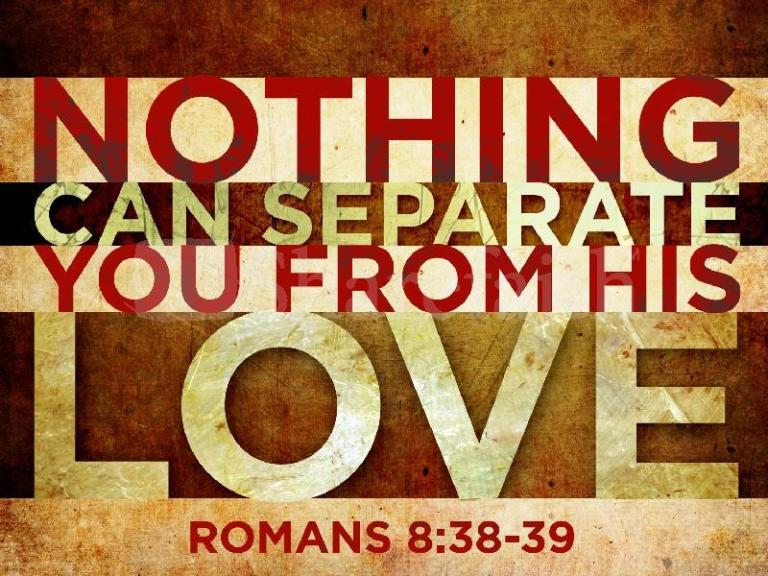 Perfect unity with love, it seems, would eliminate the necessity for consciousness. The experience of oneness with God (which Paul says is inevitable because of Jesus) is the closing of the gap between “self” and “other.” There is no separation, and therefore, no use for consciousness, never mind the scientific impossibility of human consciousness as we understand it continuing after physical death.
Third, we need to understand what it means to suffer. Bear in mind that suffering is different than pain. While pain is a physical response to threat or injury, suffering deals with emotional or psychological pain. Though this can be brought on by physical pain, it can also be related to trauma, loss or separation.
So both consciousness and suffering seem dependent on some separation being present. In this case, that would be our separation from God, yet Paul tells us this isn’t possible.
And if such separation can and does exist beyond physical existence, we’re left with a number of troubling questions we have to contend with, like:
- Why would a loving God condemn a soul to eternal suffering for temporal decisions made during their lifetime?
- Can God not tolerate sin? If so, how did God create people with the capacity to do something that our Creator can’t endure? But in the Book of Acts even the disciples are given the authority to forgive sin.
These questions present a conundrum, because if God can’t expiate sin without our participation in asking for that forgiveness, then God is weak. If, instead, God chooses not to forgive sin unless we ask for it, opting instead to let us suffer for all eternity because of our mistakes, then God is not loving.
(Part two of this lecture will be available on the blog tomorrow.)
Next Post

April 12, 2013 Hell and the Love of God (Pt. 2 of 2)
Browse Our Archives
Select a Category atonement belief bible Bill O'Reilly Buddhism CCM children christian piatt christianity Contemporary Christian Music current events derek flood Easter education Everyday Sunday faith faith and culture Frank Schaeffer great commission Haaz Sleiman Hobby Lobby Homebrewed Culture humor ISIS Jesus John Paul Lederach Killing Jesus LGBTQ marc driscoll Mission Year Music My Jesus Project Nat Geo parenting politics popular culture postChristian prison reform Ray rice religion republicans sacrifice sexuality theology Uncategorized video violence wild goose festival World Vision young adults
Select a Month December 2017 November 2017 October 2017 September 2017 August 2017 July 2017 June 2017 May 2017 April 2017 March 2017 February 2017 January 2017 November 2016 October 2016 September 2016 August 2016 July 2016 June 2016 May 2016 April 2016 March 2016 February 2016 January 2016 December 2015 November 2015 October 2015 September 2015 August 2015 July 2015 June 2015 May 2015 April 2015 March 2015 February 2015 January 2015 December 2014 November 2014 October 2014 September 2014 August 2014 July 2014 June 2014 May 2014 April 2014 March 2014 February 2014 January 2014 December 2013 November 2013 October 2013 September 2013 August 2013 July 2013 June 2013 May 2013 April 2013 March 2013 February 2013 January 2013 December 2012 November 2012 October 2012 September 2012 August 2012 July 2012 June 2012 May 2012 April 2012 March 2012 February 2012 January 2012 December 2011 November 2011 October 2011 September 2011 August 2011 July 2011 June 2011 May 2011 April 2011 March 2011 February 2011 January 2011 December 2010 November 2010 October 2010 September 2010 August 2010 July 2010 June 2010 May 2010 April 2010 March 2010 February 2010 January 2010 December 2009 November 2009 October 2009 September 2009 August 2009 July 2009 June 2009 May 2009 April 2009 March 2009 February 2009 January 2009 December 2008 November 2008 October 2008 September 2008 August 2008 July 2008 June 2008 May 2008 April 2008 March 2008 February 2008 January 2008 December 2007 November 2007 October 2007 September 2007 August 2007 July 2007 June 2007 May 2007 April 2007 March 2007 February 2007 January 2007 December 2006 November 2006 October 2006 September 2006 August 2006
Follow Us!
TAKE THE
Religious Wisdom Quiz
What did fire from heaven consume to prove Elijah's God was real?
Select your answer to see how you score.
Sacrifice on Mount Carmel The temple A chariot A golden calf
Related posts from Christian Piatt

More Than Jezebel (Third Week Advent Devotional)

Are We There Yet? (Second Week in Advent...

Look, Shiny! (First Week of Advent Study)

TRENDING AT PATHEOS Progressive Christian

Why Christians Have a Sacred Duty to Vote:...
The Bible offers strong support for the sacred duty to vote. Here...

What Being a Modern-Day Apostle Means to Me
In my last column, I discussed the ins and outs of modern-day...

Did Ancient China Once Worship the God of...
Across human history, a common thread weaves through the origins of the...

Love Your Neighbor – Including Earth-Kin: Lev. 19,...
God’s command to love your neighbor means acting in an ethical and...

Lead a Church Study of “Jesus and Lao...
Guest writer Jack Thomas (The Irreverent Reverend) reflects on leading his church...

Principles for Understanding the Apostolic Ministry Today
Whenever people discover that my formal ministry title is "apostle," as in...
view all Progressive Christian blogs
Ad-Free & Subscriber Log-In Subscription Support
- About Us
- 2026 Calendar
- Videos
- Podcasts
- Library of World Religions
- Faith In Media Tracker
- Advertise With Us
- Write for Us
- Privacy Policy
- Terms of Service
- Do Not Sell My Data
- Contact Us
- Radiant Digital
- Manage Newsletter Subscriptions
- Unsubscribe From Notifications
- Sitemap
Copyright 2008-2026, Patheos. All rights reserved.
Subscription Support Ad-Free & Subscriber Log-In
Follow Patheos