
BuddhistCatholicContemplativeEvangelicalGeneral ChristianHinduJewishLatter-day SaintMuslimNew VisionsProgressive Christian
Beliefs
- Buddhist
- Catholic
- Contemplative
- Evangelical
- General Christian
- Hindu
- Jewish
- Latter-day Saint
- More Voices
- Muslim
- New Visions
- Pagan
- Progressive Christian
Topics
- Religion News
- Food and Religion
- Sports and Religion
- Religious Art
- Religious Music and Entertainment
- Religious Events
- History and Religion
- Style and Religion
- Politics and Religion
- Women in Religion
- Recreation Outdoors and Religion
- Business Finance and Religion
- Careers Workplace and Religion
- Education and Religion
- Family Parenting and Religion
- Health Fitness and Religion
- Home and Religion
- Relationships and Religion
- Technology and Religion
- Travel and Religion
Columnists
- Buddhist Columnists
- Business Finance and Religion Columnists
- Careers Workplace and Religion Columnists
- Catholic Columnists
- Contemplative Columnists
- Education and Religion Columnists
- Evangelists Columnists
- Family Parenting and Religion Columnists
- General Christian Columnists
- Health Fitness and Religion Columnists
- Hindu Columnists
- History and Religion Columnists
- Home and Religion Columnists
- Jewish Columnists
- More Voices Columnists
- Latter Day Columnists
- Muslim Columnists
- New Visions Columnists
- Nonreligious Columnists
- Pagan Columnists
- Politics and Religion Columnists
- Progressive Columnists
- Recreation Outdoors and Religion Columnists
- Relationships and Religion Columnists
- Religion News Columnists
- Religious Art Columnists
- Religious Events Columnists
- Religious Music and Entertainment Columnists
- Sports and Religion Columnists
- Style and Religion Columnists
- Technology and Religion Columnists
- Travel and Religion Columnists
- Women in Religion Columnists
Resource Library
- 2026 Calendar
- Library of World Religions
- The 100 Most Holy Places on Earth
- Patheos Answers
- Podcasts
- Videos
- Faith Leaders Database
- Anglican Episcopalian
- Bahai
- Baptist
- Buddhism
- Christianity
- Confucianism
- Eastern Orthodoxy
- Hinduism
- Holiness and Pentecostal
- ISKCON
- Islam
- Judaism
- Lutheran
- Methodist
- The Church of Jesus Christ of Latter-day Saints
- New Age
- Paganism
- Presbytarian and Reformed
- Protestantism
- Religion Behind the Scenes
- Roman Catholic
- Scientology
- Shia Islam
- Sikhism
- Sufism
- Sunni Islam
- Taoism
- Zen
- See all religions
Research Tools
 Ad-Free & Subscriber Log-In Subscription Support
Ad-Free & Subscriber Log-In Subscription Support
Follow Patheos 

- Trending:
- Forgiveness
- |
- Marriage
- |
- Consciousness
- |
- Death Penalty
- |
- Election
- |
- Halloween
 Christian Piatt
- Home
- Progressive Christian
- Does Postmodern Theology Risk Becoming What It “Hates?”
Does Postmodern Theology Risk Becoming What It “Hates?”
Last updated on: April 3, 2013 at 8:31 pm by Christian Piatt
Does Postmodern Theology Risk Becoming What It “Hates?” 2013-04-03T20:31:03+00:00 Christian Piatt
Patheos Explore the world's faith through different perspectives on religion and spirituality! Patheos has the views of the prevalent religions and spiritualities of the world.
 I’ve been getting ready to head out to speak at the Subverting the Norm conference this past week or so, and in preparing, I’ve been talking though my presentations with my wife, Amy. Basically, the conference is a dive into the roiling waters of postmodern theological thought, with the aim of addressing the question of whether such theology can exist within the structure of organized religion. I’m a big fan of much of what is being discussed by the forefront thinkers in this area (like Peter Rollins, John Caputo and others), such as critically examining what we believe about God and why. More to the point, perhaps, is the endeavor to free people from the damaging, or at least limiting, religious strictures and conscious constructs that they have built up around God and their faith.
I’m no postmodern theology expert, so I’ll leave it to the pros to explicate more about what’s what in postmodern thought. But for me, the exciting work revolves around supplanting things like binary, propositional “truths” about God with more inductive, open-ended notions of the Divine that transcend religious doctrine or even our own mental constructs of God. This is both a necessary and a liberating process, I think, that indeed can lead the Church (big C Church, that is) toward something far more reconciling and healing for humanity than the modernist approach to faith we’ve employed for many decades now, if not some centuries.
It’s helpful to look back a little bit at where we’ve come from in our religious and theological evolution of thought and practice. At the risk of geeking out on something that puts everyone to sleep, I’ll try to make this quick and fairly painless. Interestingly, it can be argued that the more fundamentalist strain of Christianity can trace 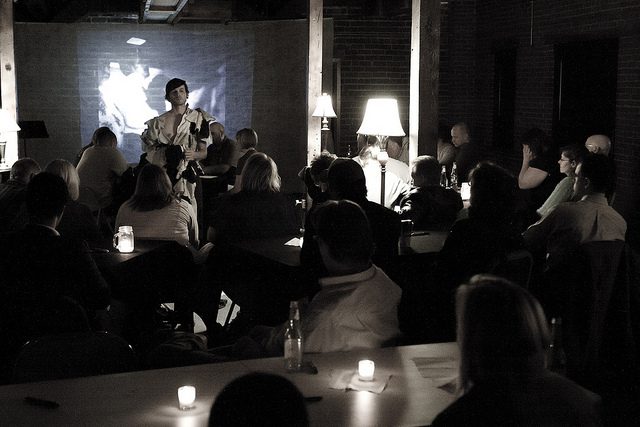 its origins back to the “liberal” thinking following the Enlightenment that suggested all things – faith, God and religious thought included – could be explained by rational means. This hyper-rationalism sought to build up rhetorical constructs that made a case for God, so to speak, as well as buttressing the doctrines of the Church.
But it also led to division, power struggles and the kind of other-izing that has opened the gate to religiously-fueled violence in the past. We may be a bit more subtle about it today than they were back during the Salem witch trials or the crusades, but the attempt to hyper-rationalize faith still leaves much human colateral damage in its wake. Just ask one of the millions who claim emotional abuse or neglect when a religious leader or even a family member placed their belief above the humanity of the “other.”
So in so much as postmodern theology seeks to depart from this destructive model of faith, I’m all for it. Deductive approaches to faith that require us to nail down truth (seems we have a history of doing that, don’t we?) have led to much damage on the personal level, while also splintering the Church Universal into a fragmented mess, rather than a dynamic and diverse organism which leaves room for a breadth of religious experience and thought.
The thing is, I have my own concerns that this movement risks becoming the kind of thing that it seeks to distance itself from. Whereas there’s a great potential benefit in challenging, or even actively deconstructing everything from our image of God to our notion of all things supernatural or miraculous, there’s also the risk that we end up embarking in our own sort of “scorched earth” theological crusade, intent on wringing all metaphysical thinking from the conversation and discounting anything beyond aesthetic experience and fundamental human morality.
 This is a borad brush, I know, and this isn’t to say that the whole of the movement is becoming a sort of hyper-rational response to the byproduct of previous hyper-rationalism. But the seeds are there, as I’ve observed from time to time. Amy keenly observed that this, like many other movements within organized religion, seems to be dominated principally by Anglo males. Certainly there are other voices at the table, but just in browsing the roster of keynote speakers for this weekend’s event, half of the featured presenters appear to be white men. Amy supposed, without casting any particular judgment, if the predominance of male voices had some relationship to my perception that we risked sliding into this new iteration of hyper-rationality.
That one caught me off guard. But I think maybe she’s right. As she noted (recognizing these are generalizations that don’t always apply), in our experience, women tend to be more comfortable with mystery, open-endedness and more inductive thought processes, whereas men have a stronger tendency to pursue and define certainty, perhaps even at the risk of alternate perspectives or multiple coexistent truths.
This is why I’m particularly glad I’ve been asked to speak on the topic of theopoetics. Basically, this is a look at how art connects us to the longing for God we all possess in our capacities to experience beauty, love, conflict, justice and the like. Whereas we can argue the nature of God (or the lack of any defining “nature,” perhaps), an experience of deeply moving art in the moment can draw us outside of ourselves, cause a moment of reverent reflection and even a course correction in our future story.
Again, I’m not saying in broad, certain terms that portmodern theology is doomed to repeat the very patterns that gave rise to what it most ardently resists. But I see the potential, mainly because human beings are involved. It’s my hope, though, that alongside all of the heated, heady discussions that I’m sure will take place, we all will take the time and set some of ourselves aside to seek the ineffable, the transcendent and the profound in radically illogical ways. For the sake of this relatively new expression of theological thought, I expect it’s the only chance it has to truly find a home among more than a fe bookish God-nerds like myself.
Previous Post

April 2, 2013
Truth or Fact? (Heretic's Guide to the Bible)
Next Post
April 4, 2013 Jimmy Carter vs. the SBC/Driscoll/Victoria's Secret: A Sea Change?
Browse Our Archives
Select a Category atonement belief bible Bill O'Reilly Buddhism CCM children christian piatt christianity Contemporary Christian Music current events derek flood Easter education Everyday Sunday faith faith and culture Frank Schaeffer great commission Haaz Sleiman Hobby Lobby Homebrewed Culture humor ISIS Jesus John Paul Lederach Killing Jesus LGBTQ marc driscoll Mission Year Music My Jesus Project Nat Geo parenting politics popular culture postChristian prison reform Ray rice religion republicans sacrifice sexuality theology Uncategorized video violence wild goose festival World Vision young adults
Select a Month December 2017 November 2017 October 2017 September 2017 August 2017 July 2017 June 2017 May 2017 April 2017 March 2017 February 2017 January 2017 November 2016 October 2016 September 2016 August 2016 July 2016 June 2016 May 2016 April 2016 March 2016 February 2016 January 2016 December 2015 November 2015 October 2015 September 2015 August 2015 July 2015 June 2015 May 2015 April 2015 March 2015 February 2015 January 2015 December 2014 November 2014 October 2014 September 2014 August 2014 July 2014 June 2014 May 2014 April 2014 March 2014 February 2014 January 2014 December 2013 November 2013 October 2013 September 2013 August 2013 July 2013 June 2013 May 2013 April 2013 March 2013 February 2013 January 2013 December 2012 November 2012 October 2012 September 2012 August 2012 July 2012 June 2012 May 2012 April 2012 March 2012 February 2012 January 2012 December 2011 November 2011 October 2011 September 2011 August 2011 July 2011 June 2011 May 2011 April 2011 March 2011 February 2011 January 2011 December 2010 November 2010 October 2010 September 2010 August 2010 July 2010 June 2010 May 2010 April 2010 March 2010 February 2010 January 2010 December 2009 November 2009 October 2009 September 2009 August 2009 July 2009 June 2009 May 2009 April 2009 March 2009 February 2009 January 2009 December 2008 November 2008 October 2008 September 2008 August 2008 July 2008 June 2008 May 2008 April 2008 March 2008 February 2008 January 2008 December 2007 November 2007 October 2007 September 2007 August 2007 July 2007 June 2007 May 2007 April 2007 March 2007 February 2007 January 2007 December 2006 November 2006 October 2006 September 2006 August 2006
Follow Us!
TAKE THE
Religious Wisdom Quiz
Where was Paul's hometown?
Select your answer to see how you score.
Damascus Tarsus Antioch Jerusalem
Related posts from Christian Piatt

More Than Jezebel (Third Week Advent Devotional)

Are We There Yet? (Second Week in Advent...

Look, Shiny! (First Week of Advent Study)

TRENDING AT PATHEOS Progressive Christian

What Being a Modern-Day Apostle Means to Me
In my last column, I discussed the ins and outs of modern-day...

Did Ancient China Once Worship the God of...
Across human history, a common thread weaves through the origins of the...

Love Your Neighbor – Including Earth-Kin: Lev. 19,...
God’s command to love your neighbor means acting in an ethical and...

Lead a Church Study of “Jesus and Lao...
Guest writer Jack Thomas (The Irreverent Reverend) reflects on leading his church...

Pastoral Wisdom for Responding to Sermon Pushback
Getting sermon pushback on your social justice sermon? Learn practical, Proverbs-based strategies...

Principles for Understanding the Apostolic Ministry Today
Whenever people discover that my formal ministry title is "apostle," as in...
view all Progressive Christian blogs
Ad-Free & Subscriber Log-In Subscription Support
- About Us
- 2026 Calendar
- Videos
- Podcasts
- Library of World Religions
- Faith In Media Tracker
- Advertise With Us
- Write for Us
- Privacy Policy
- Terms of Service
- Do Not Sell My Data
- Contact Us
- Radiant Digital
- Manage Newsletter Subscriptions
- Unsubscribe From Notifications
- Sitemap
Copyright 2008-2026, Patheos. All rights reserved.
Subscription Support Ad-Free & Subscriber Log-In
Follow Patheos