
BuddhistCatholicContemplativeEvangelicalGeneral ChristianHinduJewishLatter-day SaintMuslimNew VisionsProgressive Christian
Beliefs
- Buddhist
- Catholic
- Contemplative
- Evangelical
- General Christian
- Hindu
- Jewish
- Latter-day Saint
- More Voices
- Muslim
- New Visions
- Pagan
- Progressive Christian
Topics
- Religion News
- Food and Religion
- Sports and Religion
- Religious Art
- Religious Music and Entertainment
- Religious Events
- History and Religion
- Style and Religion
- Politics and Religion
- Women in Religion
- Recreation Outdoors and Religion
- Business Finance and Religion
- Careers Workplace and Religion
- Education and Religion
- Family Parenting and Religion
- Health Fitness and Religion
- Home and Religion
- Relationships and Religion
- Technology and Religion
- Travel and Religion
Columnists
- Buddhist Columnists
- Business Finance and Religion Columnists
- Careers Workplace and Religion Columnists
- Catholic Columnists
- Contemplative Columnists
- Education and Religion Columnists
- Evangelists Columnists
- Family Parenting and Religion Columnists
- General Christian Columnists
- Health Fitness and Religion Columnists
- Hindu Columnists
- History and Religion Columnists
- Home and Religion Columnists
- Jewish Columnists
- More Voices Columnists
- Latter Day Columnists
- Muslim Columnists
- New Visions Columnists
- Nonreligious Columnists
- Pagan Columnists
- Politics and Religion Columnists
- Progressive Columnists
- Recreation Outdoors and Religion Columnists
- Relationships and Religion Columnists
- Religion News Columnists
- Religious Art Columnists
- Religious Events Columnists
- Religious Music and Entertainment Columnists
- Sports and Religion Columnists
- Style and Religion Columnists
- Technology and Religion Columnists
- Travel and Religion Columnists
- Women in Religion Columnists
Resource Library
- 2026 Calendar
- Library of World Religions
- The 100 Most Holy Places on Earth
- Patheos Answers
- Podcasts
- Videos
- Faith Leaders Database
- Anglican Episcopalian
- Bahai
- Baptist
- Buddhism
- Christianity
- Confucianism
- Eastern Orthodoxy
- Hinduism
- Holiness and Pentecostal
- ISKCON
- Islam
- Judaism
- Lutheran
- Methodist
- The Church of Jesus Christ of Latter-day Saints
- New Age
- Paganism
- Presbytarian and Reformed
- Protestantism
- Religion Behind the Scenes
- Roman Catholic
- Scientology
- Shia Islam
- Sikhism
- Sufism
- Sunni Islam
- Taoism
- Zen
- See all religions
Research Tools
 Ad-Free & Subscriber Log-In Subscription Support
Ad-Free & Subscriber Log-In Subscription Support
Follow Patheos 

- Trending:
- Forgiveness
- |
- Marriage
- |
- Consciousness
- |
- Death Penalty
- |
- Election
- |
- Halloween
 Christian Piatt
- Home
- Progressive Christian
- Jonathan Fitzgerald Talks About Your Mom(‘s Morals)
Jonathan Fitzgerald Talks About Your Mom(‘s Morals)
Last updated on: January 30, 2013 at 5:35 pm by Christian Piatt
Jonathan Fitzgerald Talks About Your Mom(‘s Morals) 2013-01-30T17:35:04+00:00 Christian Piatt
Patheos Explore the world's faith through different perspectives on religion and spirituality! Patheos has the views of the prevalent religions and spiritualities of the world.
 I’ve suggested for some time that one key distinction between modernism and postmodernism is that, whereas modernism values perfection, postmodernism prefers authenticity. Author, blogger, editor and uber-hipster Jonathan D. Fitzgerald more or less agrees with me, so of course, I dig him.
I sat down with Jon (and by “sat down,” I mean I emailed him some questions and he emailed back) to chat about how this ethos of authenticity and hyper-sincerity is not only bubbling up within Christianity, but throughout contemporary western culture. What does it tell us about ourselves? Will it last? And perhaps most important: does this blog make my butt look fat?
In Not Your Mother’s Morals: How the New Sincerity is Changing Pop Culture for the Better, Jonathan D. Fitzgerald argues that today’s popular music, movies, TV shows, and books are making the world a better place. For all the hand-wringing about the decline of morals and the cheapening of culture in our time, contemporary media brims with examples of fascinating and innovative art that promote positive and uplifting moral messages–without coming across as “preachy.”
The catch? Today’s moral messages can be quite different than the ones your mother taught you. Fitzgerald compares the pop culture of yesterday with that of today and finds that while both are committed to major ideals—especially God, Family, and Country—the nature of those commitments has shifted.
What is new sincerity and why does it matter?
Sometime around the turn of the century, the attributes of sincerity and authenticity rose to prominence in American culture; in a way, they’ve become our most treasured virtues. In my book, I argue that this is great news because these postures allow us to consider topics such as spirituality and morality in refreshingly open ways.
Can you offer examples of this trend manifesting itself in the culture?
Sincerity is everywhere in pop culture, but since I just watched it last night and thus it’s a fresh example that I’ve never used before, I submit that the film “Silver Linings Playbooks” is a great example of the New Sincerity.
It’s heartbreakingly honest and, if it wasn’t for the heartbreaking part, it might come across as kind of saccharine sweet. But by being sincere before just about anything else, a number of serious issues such as mental illness, fidelity, and addiction are considered in what is essentially, after all, a romantic comedy.
What would this look like in a Christian community context, and how is it different than what’s been done in the past?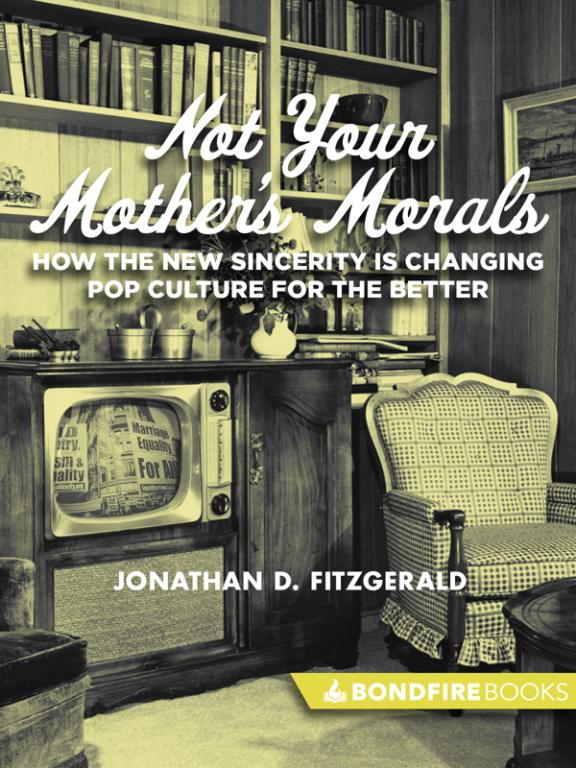
I actually think the most relevant application for Christians is the recognition of just how much we’ve missed the movement. Evangelical subculture has been inherently insincere and inauthentic by virtue of trying to imitate “secular” culture. The New Sincerity presents a great opportunity for Christians to join in, to be a natural part of the larger cultural conversation. But first we have to stop trying to “engage” everything all the time.
How is New Sincerity different than the Radical Honesty movement?
Honestly (see what I did there?), I had never heard of the Radical Honesty movement before now. So, naturally, I googled it. I think the primary difference, from what I can tell (read: what Wikipedia told me) is that Radical Honesty is an intentional means of self-improvement and the New Sincerity, to this point at least, organically arose in response to prevailing winds in culture. That is, you can’t — I don’t think — try do the New Sincerity. Chances are, you’re already in it.
It seems like sincerity requires a degree of trust that really only comes from face-to-face relationship. How do you cultivate this in a society allows for such superficial relationships and anonymity that trolls and character assassins abound?
You know, it’s interesting, since about 2008, when my wife and I moved to New York City, most of my closest relationships began online before becoming face-to-face. When done right, and maybe especially for not particularly outgoing writer types, social media can actually be a means of cultivating sincerity.
Now, obviously, it can also do the exact opposite, and probably that’s what happens most often, but I don’t think that anything about the internet necessarily stands in the way of very sincere relationships. I actually think your ten questions model that kind of thing all the time — unless you get a lot of liars, in which case I’m doing it wrong.
 So New Sincerity is, in a sense, sharing about yourself in a radically open way. But how do you keep this from not becoming narcissistic? Where does the listening enter in?
This is the biggest threat to the New Sincerity as a positive movement. There’s always the looming threat that trying to be true to oneself leads right into narcissism. And, honestly, I’m not sure how to protect against that except to remember that we can only be most fully ourselves in community with others who helps us be that.
One of the objections some people have to this style of media and dialogue is that it seems to have no boundary. Where do we draw the lines of propriety? Or do we?
Oh, I hope so. “Girls” is probably the prime example of this right now, and I kind of wish — maybe prudishly — that the boundaries were a bit clearer on that show. But boundaries will continue to push out; it’s inevitable. My guess, based on how culture works, is that we’ll hit a certain point and, as a whole, the culture will swing back a bit and reign it in, before stretching back out. This seems to be how boundaries work in popular culture.
When does this kind of edgy, sometimes shocking, sincerity become its own worst enemy? In other words, when does it become a sort of defense mechanism rather than a means for deeper intimacy?
Yeah, so, back to “Girls.” I actually think Lena Dunham uses sincerity as a kind of defense mechanism. I think that she beats you to the punch — you can’t call her fat because she already did it. And then she takes all her clothes off just to prove it. This isn’t necessarily a bad thing, except to the extent that it veers off into narcissism.
I use Girls as the example for these last two questions because it’s produced by Judd Apatow, who, starting with “Freaks and Geeks” and through each of the films he’s involved with either as producer, director, or writer, has been the champion of the New Sincerity. So it’s interesting to see where he and “Girls” take the movement next.
Who do you hope read your new book, and what do you hope they get out of it?
The book really is aimed at a wide audience of pop culture consumers, but probably more specifically to those who enjoy thinking about pop culture instead of just passively consuming. It will be of particular interest to anyone who, like me, grew up in a conservative, borderline fundamentalist Christian community that demonized pop culture because they, like me, probably love it all the more for that reason.
*** * ***
Jonathan D. Fitzgerald is a writer and educator whose work most often considers the various manifestations of religion in culture. He is an editor at Patrolmag.com and a contributor to the popular religion website, Patheos. Not Your Mother’s Morals is his first book.
Previous Post

January 29, 2013
Women Foil Robber by Chanting "Jesus"
Next Post
February 1, 2013 I'm an A-hole Dad
Browse Our Archives
Select a Category atonement belief bible Bill O'Reilly Buddhism CCM children christian piatt christianity Contemporary Christian Music current events derek flood Easter education Everyday Sunday faith faith and culture Frank Schaeffer great commission Haaz Sleiman Hobby Lobby Homebrewed Culture humor ISIS Jesus John Paul Lederach Killing Jesus LGBTQ marc driscoll Mission Year Music My Jesus Project Nat Geo parenting politics popular culture postChristian prison reform Ray rice religion republicans sacrifice sexuality theology Uncategorized video violence wild goose festival World Vision young adults
Select a Month December 2017 November 2017 October 2017 September 2017 August 2017 July 2017 June 2017 May 2017 April 2017 March 2017 February 2017 January 2017 November 2016 October 2016 September 2016 August 2016 July 2016 June 2016 May 2016 April 2016 March 2016 February 2016 January 2016 December 2015 November 2015 October 2015 September 2015 August 2015 July 2015 June 2015 May 2015 April 2015 March 2015 February 2015 January 2015 December 2014 November 2014 October 2014 September 2014 August 2014 July 2014 June 2014 May 2014 April 2014 March 2014 February 2014 January 2014 December 2013 November 2013 October 2013 September 2013 August 2013 July 2013 June 2013 May 2013 April 2013 March 2013 February 2013 January 2013 December 2012 November 2012 October 2012 September 2012 August 2012 July 2012 June 2012 May 2012 April 2012 March 2012 February 2012 January 2012 December 2011 November 2011 October 2011 September 2011 August 2011 July 2011 June 2011 May 2011 April 2011 March 2011 February 2011 January 2011 December 2010 November 2010 October 2010 September 2010 August 2010 July 2010 June 2010 May 2010 April 2010 March 2010 February 2010 January 2010 December 2009 November 2009 October 2009 September 2009 August 2009 July 2009 June 2009 May 2009 April 2009 March 2009 February 2009 January 2009 December 2008 November 2008 October 2008 September 2008 August 2008 July 2008 June 2008 May 2008 April 2008 March 2008 February 2008 January 2008 December 2007 November 2007 October 2007 September 2007 August 2007 July 2007 June 2007 May 2007 April 2007 March 2007 February 2007 January 2007 December 2006 November 2006 October 2006 September 2006 August 2006
Follow Us!
TAKE THE
Religious Wisdom Quiz
What is the name for the Jewish prayer shawl?
Select your answer to see how you score.
Tallit Mezuzah Tefillin Kippah
Related posts from Christian Piatt

More Than Jezebel (Third Week Advent Devotional)

Are We There Yet? (Second Week in Advent...

Look, Shiny! (First Week of Advent Study)

TRENDING AT PATHEOS Progressive Christian

What Being a Modern-Day Apostle Means to Me
In my last column, I discussed the ins and outs of modern-day...

Did Ancient China Once Worship the God of...
Across human history, a common thread weaves through the origins of the...

Love Your Neighbor – Including Earth-Kin: Lev. 19,...
God’s command to love your neighbor means acting in an ethical and...

Lead a Church Study of “Jesus and Lao...
Guest writer Jack Thomas (The Irreverent Reverend) reflects on leading his church...

Pastoral Wisdom for Responding to Sermon Pushback
Getting sermon pushback on your social justice sermon? Learn practical, Proverbs-based strategies...

Principles for Understanding the Apostolic Ministry Today
Whenever people discover that my formal ministry title is "apostle," as in...
view all Progressive Christian blogs
Ad-Free & Subscriber Log-In Subscription Support
- About Us
- 2026 Calendar
- Videos
- Podcasts
- Library of World Religions
- Faith In Media Tracker
- Advertise With Us
- Write for Us
- Privacy Policy
- Terms of Service
- Do Not Sell My Data
- Contact Us
- Radiant Digital
- Manage Newsletter Subscriptions
- Unsubscribe From Notifications
- Sitemap
Copyright 2008-2026, Patheos. All rights reserved.
Subscription Support Ad-Free & Subscriber Log-In
Follow Patheos