
BuddhistCatholicContemplativeEvangelicalGeneral ChristianHinduJewishLatter-day SaintMuslimNew VisionsProgressive Christian
Beliefs
- Buddhist
- Catholic
- Contemplative
- Evangelical
- General Christian
- Hindu
- Jewish
- Latter-day Saint
- More Voices
- Muslim
- New Visions
- Pagan
- Progressive Christian
Topics
- Religion News
- Food and Religion
- Sports and Religion
- Religious Art
- Religious Music and Entertainment
- Religious Events
- History and Religion
- Style and Religion
- Politics and Religion
- Women in Religion
- Recreation Outdoors and Religion
- Business Finance and Religion
- Careers Workplace and Religion
- Education and Religion
- Family Parenting and Religion
- Health Fitness and Religion
- Home and Religion
- Relationships and Religion
- Technology and Religion
- Travel and Religion
Columnists
- Buddhist Columnists
- Business Finance and Religion Columnists
- Careers Workplace and Religion Columnists
- Catholic Columnists
- Contemplative Columnists
- Education and Religion Columnists
- Evangelists Columnists
- Family Parenting and Religion Columnists
- General Christian Columnists
- Health Fitness and Religion Columnists
- Hindu Columnists
- History and Religion Columnists
- Home and Religion Columnists
- Jewish Columnists
- More Voices Columnists
- Latter Day Columnists
- Muslim Columnists
- New Visions Columnists
- Nonreligious Columnists
- Pagan Columnists
- Politics and Religion Columnists
- Progressive Columnists
- Recreation Outdoors and Religion Columnists
- Relationships and Religion Columnists
- Religion News Columnists
- Religious Art Columnists
- Religious Events Columnists
- Religious Music and Entertainment Columnists
- Sports and Religion Columnists
- Style and Religion Columnists
- Technology and Religion Columnists
- Travel and Religion Columnists
- Women in Religion Columnists
Resource Library
- 2026 Calendar
- Library of World Religions
- The 100 Most Holy Places on Earth
- Patheos Answers
- Podcasts
- Videos
- Faith Leaders Database
- Anglican Episcopalian
- Bahai
- Baptist
- Buddhism
- Christianity
- Confucianism
- Eastern Orthodoxy
- Hinduism
- Holiness and Pentecostal
- ISKCON
- Islam
- Judaism
- Lutheran
- Methodist
- The Church of Jesus Christ of Latter-day Saints
- New Age
- Paganism
- Presbytarian and Reformed
- Protestantism
- Religion Behind the Scenes
- Roman Catholic
- Scientology
- Shia Islam
- Sikhism
- Sufism
- Sunni Islam
- Taoism
- Zen
- See all religions
Research Tools
 Ad-Free & Subscriber Log-In Subscription Support
Ad-Free & Subscriber Log-In Subscription Support
Follow Patheos 

- Trending:
- Forgiveness
- |
- Marriage
- |
- Consciousness
- |
- Death Penalty
- |
- Election
- |
- Halloween
 Christian Piatt
- Home
- Progressive Christian
- Christianity: Philosophy or Religion?
Christianity: Philosophy or Religion?
Last updated on: December 8, 2012 at 7:44 pm by Christian Piatt
Christianity: Philosophy or Religion? 2012-12-08T19:44:22+00:00 Christian Piatt
Patheos Explore the world's faith through different perspectives on religion and spirituality! Patheos has the views of the prevalent religions and spiritualities of the world.
 Short answer: Yes. It’s both. Now, if you’d consider a little more detail…
Conservative pundit Bill O’Reilly (AKA “Papa Bear” if you’re Stephen Colbert) really stepped in the rhetorical poop pile recently when, in an effort to defend the claim that there is a war in our culture on Christmas, took some bait from his show’s guest David Silverman (President of American Atheists) and claimed on the air that Christianity was a philosophy and not a religion.
Yes, I could give you the actual news story, but why do that when Jon Stewart breaks it down in a much more entertaining way?
The Daily Show with Jon Stewart
Get More: Daily Show Full Episodes,Political Humor & Satire Blog,The Daily Show on Facebook
Yes, O’Reilly ended up looking a little ridiculous (especially after recanting a couple of days later and buckling on air under questioning from…a priest. But actually I think it’s an interesting discussing, barring the theatrics and opportunistic jockeying that both Christians and atheists have been doing on the issue.
To start with, I think it’s worth addressing a couple of things that Stewart himself mentions in his commentary. The way he distinguishes religion from philosophy (in his own pithy, comedic sort of way) is two-fold: Christians acknowledge the divinity of Jesus, and they believe in particular (rather than universal) salvation.
On the second point, this is obviously a belief held by many Christians, but not all. I explored this in some more detail in this post about the new movie, 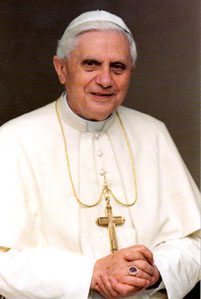 “Hellbound?” which explores the Christian doctrine(s) of hell. From the time of Christian leaders like Origen, the notion of universal salvation for Christians and non-Christians alike has been around. It may not be the most popular doctrine when it comes to salvation, but it’s hardly a radical fringe idea either.
As for Jesus’ divinity, this one is harder to tease out than it might seem. Yes, some believe Jesus IS God. Others believe he is the SON of God. Some folks believe in some combination of the two. Some believe he was particularly anointed/endowed/enlightened with a transformative message that forever changed the course of humanity. Some take the stories of healing and other miracles in scripture literally, while others understand them more metaphorically. Still others are comfortable to sit with the mystery of not knowing entirely what to make of things like miracles, the ascension, the afterlife and other hard-to-explain phenomena described in the Bible.
So what is Christianity, then? And where is the line at which point it goes from being a religion to being a philosophy?
The problem is, you’ll get about as many answers to this as there are Christian in the world. Even those who may recite similar (or even identical) doctrine on the matter would inevitably reveal various understandings of that doctrine if pressed to excavate the ideas in more depth.
 For much of my life, I have studied Buddhism while also practicing Christianity. Similar questions have been raised about Buddhism, given that there is no particular central tenet that requires its adherent to submit to the authority of a supernatural being. And yet, there are branches of Buddhism that have many practices that suggest they have incorporated worship of the supernatural into it. Does this mean that they aren’t really Buddhist? or does it mean that a Buddhist religion has emerged from a larger Buddhist philosophy?
And could the opposite be said about Christianity? Has some constituency within Christianity become a philosophy, in that it does not claim certitude about the existence of a supernatural “other?” I know that, for some people (some Christians in particular) the distinction is very important. But I think that this delineation is increasingly less relevant to a growing number of people, including those who claim to identify as Christian and who practice Christianity.
Which leaves us with government. Like marriage, it seems unnecessarily important what our laws and elected officials believe Christianity is. And like marriage, I’d be content to see government get entirely out of the business of semantics (and the power that comes with it) when it comes to people’s personal lives. What does this mean, practically speaking?
With regard to “marriage,” it means that, from here forward, the government would have the power to acknowledge civil unions (a right afforded to all couples regardless of sexual orientation and identity). Churches can chose to perform marriage ceremonies for whomever they do or not not choose to serve. And conversely, people can call themselves married whether a church blesses the union or not, particularly because there is no legal power behind the term. It is a social contract, or in more religious terms, a covenant, made between two people and God.
On the matter of “religion,” the government would also be out of the business of endowing tax-exempt status based on their assessment of whether or not a system of beliefs and group of people qualify as a religion or not under law. Instead, religious organizations would be treated like other nonprofit organizations. If they don’t qualify as a charity under the laws defining what a nonprofit, they pay taxes like any other revenue-generating organization.
I know this doesn’t settle anything, but I’d argue it’s not something that can be settled without a singular, authoritative power to declare what is and isn’t within the so-called lines. Granted, Catholics and some other religious groups have such authorities, but not all who claim Christianity recognize that authority. So, then, we’re left to discern for ourselves what we believe, why we believe it, how we will practice it and with whom.
And really, if we’re to look at Christ’s example when asked about which laws were the most important in governing our lives, he directed us inward, searching our own hearts rather than digging through the volumes of laws for answers.
Are you a Christian? Are you religiously Christian? The good news is that, despite what Bill O’Reily, Jon Stewart, the government or religious authorities say, that’s something you get to decide for yourself.
Previous Post

December 7, 2012
Church Sign Epic Fails, Advent Onslaught (Video)
Next Post

December 9, 2012 Church Sign Epic Fails, "Soul Harvest" Edition
Browse Our Archives
Select a Category atonement belief bible Bill O'Reilly Buddhism CCM children christian piatt christianity Contemporary Christian Music current events derek flood Easter education Everyday Sunday faith faith and culture Frank Schaeffer great commission Haaz Sleiman Hobby Lobby Homebrewed Culture humor ISIS Jesus John Paul Lederach Killing Jesus LGBTQ marc driscoll Mission Year Music My Jesus Project Nat Geo parenting politics popular culture postChristian prison reform Ray rice religion republicans sacrifice sexuality theology Uncategorized video violence wild goose festival World Vision young adults
Select a Month December 2017 November 2017 October 2017 September 2017 August 2017 July 2017 June 2017 May 2017 April 2017 March 2017 February 2017 January 2017 November 2016 October 2016 September 2016 August 2016 July 2016 June 2016 May 2016 April 2016 March 2016 February 2016 January 2016 December 2015 November 2015 October 2015 September 2015 August 2015 July 2015 June 2015 May 2015 April 2015 March 2015 February 2015 January 2015 December 2014 November 2014 October 2014 September 2014 August 2014 July 2014 June 2014 May 2014 April 2014 March 2014 February 2014 January 2014 December 2013 November 2013 October 2013 September 2013 August 2013 July 2013 June 2013 May 2013 April 2013 March 2013 February 2013 January 2013 December 2012 November 2012 October 2012 September 2012 August 2012 July 2012 June 2012 May 2012 April 2012 March 2012 February 2012 January 2012 December 2011 November 2011 October 2011 September 2011 August 2011 July 2011 June 2011 May 2011 April 2011 March 2011 February 2011 January 2011 December 2010 November 2010 October 2010 September 2010 August 2010 July 2010 June 2010 May 2010 April 2010 March 2010 February 2010 January 2010 December 2009 November 2009 October 2009 September 2009 August 2009 July 2009 June 2009 May 2009 April 2009 March 2009 February 2009 January 2009 December 2008 November 2008 October 2008 September 2008 August 2008 July 2008 June 2008 May 2008 April 2008 March 2008 February 2008 January 2008 December 2007 November 2007 October 2007 September 2007 August 2007 July 2007 June 2007 May 2007 April 2007 March 2007 February 2007 January 2007 December 2006 November 2006 October 2006 September 2006 August 2006
Follow Us!
TAKE THE
Religious Wisdom Quiz
True or False: David committed adultery with Bathsheba and arranged for her husband Uriah to be killed.
Select your answer to see how you score.
TRUE FALSE
Related posts from Christian Piatt

More Than Jezebel (Third Week Advent Devotional)

Are We There Yet? (Second Week in Advent...

Look, Shiny! (First Week of Advent Study)

TRENDING AT PATHEOS Progressive Christian

What Being a Modern-Day Apostle Means to Me
In my last column, I discussed the ins and outs of modern-day...

Did Ancient China Once Worship the God of...
Across human history, a common thread weaves through the origins of the...

Love Your Neighbor – Including Earth-Kin: Lev. 19,...
God’s command to love your neighbor means acting in an ethical and...

Lead a Church Study of “Jesus and Lao...
Guest writer Jack Thomas (The Irreverent Reverend) reflects on leading his church...

Pastoral Wisdom for Responding to Sermon Pushback
Getting sermon pushback on your social justice sermon? Learn practical, Proverbs-based strategies...

Principles for Understanding the Apostolic Ministry Today
Whenever people discover that my formal ministry title is "apostle," as in...
view all Progressive Christian blogs
Ad-Free & Subscriber Log-In Subscription Support
- About Us
- 2026 Calendar
- Videos
- Podcasts
- Library of World Religions
- Faith In Media Tracker
- Advertise With Us
- Write for Us
- Privacy Policy
- Terms of Service
- Do Not Sell My Data
- Contact Us
- Radiant Digital
- Manage Newsletter Subscriptions
- Unsubscribe From Notifications
- Sitemap
Copyright 2008-2026, Patheos. All rights reserved.
Subscription Support Ad-Free & Subscriber Log-In
Follow Patheos