
BuddhistCatholicContemplativeEvangelicalGeneral ChristianHinduJewishLatter-day SaintMuslimNew VisionsProgressive Christian
Beliefs
- Buddhist
- Catholic
- Contemplative
- Evangelical
- General Christian
- Hindu
- Jewish
- Latter-day Saint
- More Voices
- Muslim
- New Visions
- Pagan
- Progressive Christian
Topics
- Religion News
- Food and Religion
- Sports and Religion
- Religious Art
- Religious Music and Entertainment
- Religious Events
- History and Religion
- Style and Religion
- Politics and Religion
- Women in Religion
- Recreation Outdoors and Religion
- Business Finance and Religion
- Careers Workplace and Religion
- Education and Religion
- Family Parenting and Religion
- Health Fitness and Religion
- Home and Religion
- Relationships and Religion
- Technology and Religion
- Travel and Religion
Columnists
- Buddhist Columnists
- Business Finance and Religion Columnists
- Careers Workplace and Religion Columnists
- Catholic Columnists
- Contemplative Columnists
- Education and Religion Columnists
- Evangelists Columnists
- Family Parenting and Religion Columnists
- General Christian Columnists
- Health Fitness and Religion Columnists
- Hindu Columnists
- History and Religion Columnists
- Home and Religion Columnists
- Jewish Columnists
- More Voices Columnists
- Latter Day Columnists
- Muslim Columnists
- New Visions Columnists
- Nonreligious Columnists
- Pagan Columnists
- Politics and Religion Columnists
- Progressive Columnists
- Recreation Outdoors and Religion Columnists
- Relationships and Religion Columnists
- Religion News Columnists
- Religious Art Columnists
- Religious Events Columnists
- Religious Music and Entertainment Columnists
- Sports and Religion Columnists
- Style and Religion Columnists
- Technology and Religion Columnists
- Travel and Religion Columnists
- Women in Religion Columnists
Resource Library
- 2026 Calendar
- Library of World Religions
- The 100 Most Holy Places on Earth
- Patheos Answers
- Podcasts
- Videos
- Faith Leaders Database
- Anglican Episcopalian
- Bahai
- Baptist
- Buddhism
- Christianity
- Confucianism
- Eastern Orthodoxy
- Hinduism
- Holiness and Pentecostal
- ISKCON
- Islam
- Judaism
- Lutheran
- Methodist
- The Church of Jesus Christ of Latter-day Saints
- New Age
- Paganism
- Presbytarian and Reformed
- Protestantism
- Religion Behind the Scenes
- Roman Catholic
- Scientology
- Shia Islam
- Sikhism
- Sufism
- Sunni Islam
- Taoism
- Zen
- See all religions
Research Tools
 Ad-Free & Subscriber Log-In Subscription Support
Ad-Free & Subscriber Log-In Subscription Support
Follow Patheos 

- Trending:
- Forgiveness
- |
- Marriage
- |
- Consciousness
- |
- Death Penalty
- |
- Election
- |
- Halloween
 Christian Piatt
- Home
- Progressive Christian
- What Does Communion Mean Without Atonement?
What Does Communion Mean Without Atonement?
Last updated on: November 13, 2012 at 10:45 pm by Christian Piatt
What Does Communion Mean Without Atonement? 2012-11-13T22:45:03+00:00 Christian Piatt
Patheos Explore the world's faith through different perspectives on religion and spirituality! Patheos has the views of the prevalent religions and spiritualities of the world.
 I am part of a small denomination called the Christian Church (Disciples of Christ), and I always have to explain that, yes, the parentheses are actually part of the denominational name. Long story. Just trust me on this.
Our denomination is known for being very non-credal, which basically means we don’t tell churches what to do, believe or think from the top down on hardly anything. Congregation autonomy is values, and the concept of the “Priesthood of all believers” is central. Or as Amy puts it every Sunday in worship, “we’re all ministers and we all have a ministry.” One phrase that describes us well is sometimes mistakenly attributed to us originally, though it was actually penned in the 17th century by Rupertus Meldenius, a German theologian. His credo was:
In Essentials Unity, In Non-Essentials Liberty, In All Things Charity
Regardless of who came up with it, it’s a pretty good summation of what Disciples are about.
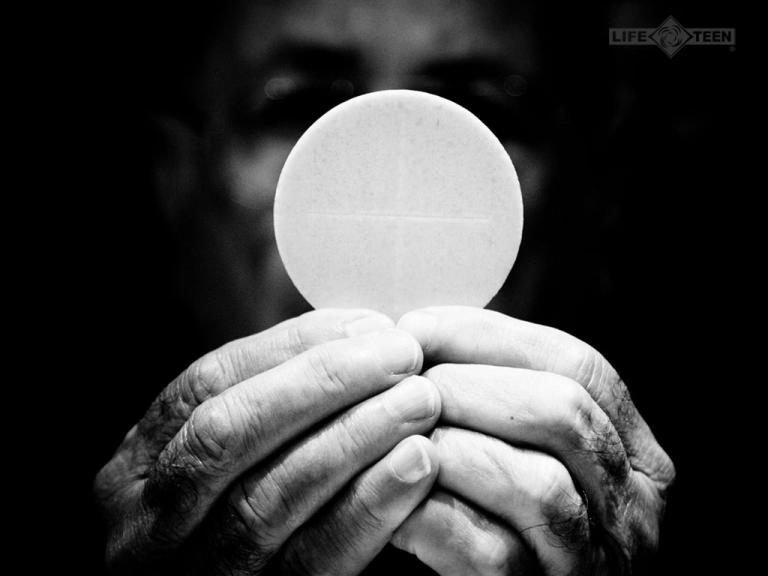
We’re also known for including communion in every single worship service we ever have. How it’s done, who can participate and even what words are said vary from church to church (see above), but the centrality of communion is pretty much a given in Disciples of Christ services. I should mention here that I’ve helped start one church, I currently am on staff at another, and in all, I’ve worked in ministry for more than ten years now. So I’ve participated in hundreds of communion rituals by now, and I’ve even presided over several of them myself (laypeople can do this in Disciples churches, after all).
But I’m also known for holding an alternative view on salvation than many Christians – even disciples maintain, in that I do not adhere to the doctrine that Jesus died for our sins. I know there are lots of scriptures to back this position, and one can also use scripture to justify other explanations for Jesus’ death. As many of us have seen, the Bible can be, and has been, used to justify nearly any position we care to use it to support. As for me, I’ve done years of searching, praying, discussing and reading, and my conclusion is that it is the love of God as manifest by Jesus that is redemptive, and not Jesus’ blood.
I know some folks will likely stop here, discrediting anything else I have to say because of this perspective, which is unfortunate, but which I also understand. But a family member recently asked me about my take on communion if, in fact, I don’t ascribe to the idea that Jesus was saying “this is my body broken and my blood poured out for the remission of your sins.”
A fair question for sure.
For this, we have to go back a few steps to what I understand the Bible to be. I see the Bible principally as humanity’s effort to understand God. As such, the God that is portrayed throughout scripture is multifaceted, and arguably even seems to kind of “evolve” over the thousands of years during which the texts were written. Even Jesus speaks of “perfecting” or “fulfilling” the law, taking 613 Jewish laws and honing them to Ten Commandments. Finally, he boils it down to one (or two, depending on semantics). At the core of this Greatest Commandment is one word: LOVE.
The word is not “repent,” “atone” or sacrifice, although these are found in the Gospels too. But paramount of all the laws, Jesus says, is the prevailing, overarching law of Love. This, more than anything else, informs my theology, as I think it should.
As such, I cannot reconcile the idea that a violent act is redeeming when Love is what is held in highest esteem by the one I understand to be Messiah. The two simply do not coexist in my understanding of theology. I understand why some differ, and I respect that interpretation. But I do not share it.
So what does communion mean if we don’t look to it as the reminder that Jesus died for our sins? Let’s consider which words we use at the table, to begin with. There are several versions of the so-called Words of Institution, after all. The Roman Catholic Church has said that there are eight words they believe are “necessary and sufficient,” which means they have to be included to be considered a legitimate mass. And although I’m not Catholic, this seems a good place to start. Those eight words are:
“This is my body…this is my blood.”
Though most denominations ascribe to this idea, it’s not necessarily the case that they all agree even on this handful of words. But as for the most common Protestant text for the Table, it generally comes from I Corinthians, 11:23-26, which says:
“…the Lord Jesus on the night when he was betrayed took bread, and when he had given thanks, he broke it, and said, ‘This is my body which is for you. Do this in remembrance of me.’ In the same way also he took the cup, after supper, saying, ‘This cup is the new covenant in my blood. Do this, as often as you drink it, in remembrance of me.'”
So this text is found in a letter that the Apostle Paul wrote to a fledgling Christian church in Corinth. This is basically his guide for them on how to conduct communion. There are a few critical phrases here, it seems, and I’ll take them one at a time.
“This is my body which is for you” These are words from Paul, attributed directly to Jesus. Was he there at the Last Supper, the event on which our communion is based? No. Actually, Paul says that God imparted to him the words to record in his letter to Corinth. So, what we have is not a firsthand account, but rather an inspired writing. Depending on your understanding of divine inspiration, this may mean either that Paul was no more than a human dictation machine at the time, or perhaps that he and God were, somehow, collaborators in the creation of these important letters. I lean toward the latter interpretation (no surprise), and so I don’t lose sleep over the fact that these words are different than other accounts of what was said at the actual Last Supper.
But in this text, my understanding of the gesture Paul asserts that Jesus is making is one of giving himself over to the world. It is a loving act of total submission, an act which makes sense in the context of Jesus as a suffering servant. He did not come to conquer, but rather to submit in love to all that the world would heap upon him. And why? Because in spite of it all, what has endured is love. And how else could such love have been communicated than through such a selfless act of submission?
 Second, we have, “This cup is the new covenant in my blood.” It’s important to understand what the word “covenant” means here, as he is referring to a “holy promise.” And at the time, covenants were bound by a seal, sometimes even with the blood of both parties used to seal the promise. However, in the case of Jesus, his covenant does not require our blood, but rather, his promise is sufficient without such sacrifice by us. He makes a promise, he completes the seal, and that is all that is required.
Finally, there’s the phrase “do this…in remembrance of me,” which actually appears twice in this brief text. One device often used to get people’s attention in scripture is repetition, so when something is said more than one in short succession, we’re called by the author to pay close attention. On the one level, there the common understanding of remembrance as recollection, or thinking back to some event that has since passed. But there’s also the etymology of the word, “re-member,” which means to put back together. If Jesus is broken in the process of sealing this covenant, it is we who are charged with the command of putting him back together in the world.
How? By manifesting God’s love as he modeled. It’s a simple concept, but one that we will never fully realize in our lifetime. It’s a beacon toward which we orient, time and again, when we falter, rather than a destination to be fully achieved. We gather up the brokenness all around us and reconcile the pieces, erase the divisions, heal the wounds and fit them all back together in a way that reflects the One who called us to do so.
To me, that’s the message of communion.
Previous Post

November 11, 2012
Church Sign Epic Fails, Hangover Edition
Next Post
November 14, 2012 Why Powerful Men Get In Trouble (And Why We Care)
Browse Our Archives
Select a Category atonement belief bible Bill O'Reilly Buddhism CCM children christian piatt christianity Contemporary Christian Music current events derek flood Easter education Everyday Sunday faith faith and culture Frank Schaeffer great commission Haaz Sleiman Hobby Lobby Homebrewed Culture humor ISIS Jesus John Paul Lederach Killing Jesus LGBTQ marc driscoll Mission Year Music My Jesus Project Nat Geo parenting politics popular culture postChristian prison reform Ray rice religion republicans sacrifice sexuality theology Uncategorized video violence wild goose festival World Vision young adults
Select a Month December 2017 November 2017 October 2017 September 2017 August 2017 July 2017 June 2017 May 2017 April 2017 March 2017 February 2017 January 2017 November 2016 October 2016 September 2016 August 2016 July 2016 June 2016 May 2016 April 2016 March 2016 February 2016 January 2016 December 2015 November 2015 October 2015 September 2015 August 2015 July 2015 June 2015 May 2015 April 2015 March 2015 February 2015 January 2015 December 2014 November 2014 October 2014 September 2014 August 2014 July 2014 June 2014 May 2014 April 2014 March 2014 February 2014 January 2014 December 2013 November 2013 October 2013 September 2013 August 2013 July 2013 June 2013 May 2013 April 2013 March 2013 February 2013 January 2013 December 2012 November 2012 October 2012 September 2012 August 2012 July 2012 June 2012 May 2012 April 2012 March 2012 February 2012 January 2012 December 2011 November 2011 October 2011 September 2011 August 2011 July 2011 June 2011 May 2011 April 2011 March 2011 February 2011 January 2011 December 2010 November 2010 October 2010 September 2010 August 2010 July 2010 June 2010 May 2010 April 2010 March 2010 February 2010 January 2010 December 2009 November 2009 October 2009 September 2009 August 2009 July 2009 June 2009 May 2009 April 2009 March 2009 February 2009 January 2009 December 2008 November 2008 October 2008 September 2008 August 2008 July 2008 June 2008 May 2008 April 2008 March 2008 February 2008 January 2008 December 2007 November 2007 October 2007 September 2007 August 2007 July 2007 June 2007 May 2007 April 2007 March 2007 February 2007 January 2007 December 2006 November 2006 October 2006 September 2006 August 2006
Follow Us!
TAKE THE
Religious Wisdom Quiz
Who was the king that the angel of the Lord struck because he did not give God glory, but received the worship of the people, and who was eaten by worms?
Select your answer to see how you score.
Hezekiah Herod Haddam Saul
Related posts from Christian Piatt

More Than Jezebel (Third Week Advent Devotional)

Are We There Yet? (Second Week in Advent...

Look, Shiny! (First Week of Advent Study)

TRENDING AT PATHEOS Progressive Christian

What Being a Modern-Day Apostle Means to Me
In my last column, I discussed the ins and outs of modern-day...

Did Ancient China Once Worship the God of...
Across human history, a common thread weaves through the origins of the...

Love Your Neighbor – Including Earth-Kin: Lev. 19,...
God’s command to love your neighbor means acting in an ethical and...

Lead a Church Study of “Jesus and Lao...
Guest writer Jack Thomas (The Irreverent Reverend) reflects on leading his church...

Pastoral Wisdom for Responding to Sermon Pushback
Getting sermon pushback on your social justice sermon? Learn practical, Proverbs-based strategies...

Principles for Understanding the Apostolic Ministry Today
Whenever people discover that my formal ministry title is "apostle," as in...
view all Progressive Christian blogs
Ad-Free & Subscriber Log-In Subscription Support
- About Us
- 2026 Calendar
- Videos
- Podcasts
- Library of World Religions
- Faith In Media Tracker
- Advertise With Us
- Write for Us
- Privacy Policy
- Terms of Service
- Do Not Sell My Data
- Contact Us
- Radiant Digital
- Manage Newsletter Subscriptions
- Unsubscribe From Notifications
- Sitemap
Copyright 2008-2026, Patheos. All rights reserved.
Subscription Support Ad-Free & Subscriber Log-In
Follow Patheos