
BuddhistCatholicContemplativeEvangelicalGeneral ChristianHinduJewishLatter-day SaintMuslimNew VisionsProgressive Christian
Beliefs
- Buddhist
- Catholic
- Contemplative
- Evangelical
- General Christian
- Hindu
- Jewish
- Latter-day Saint
- More Voices
- Muslim
- New Visions
- Pagan
- Progressive Christian
Topics
- Religion News
- Food and Religion
- Sports and Religion
- Religious Art
- Religious Music and Entertainment
- Religious Events
- History and Religion
- Style and Religion
- Politics and Religion
- Women in Religion
- Recreation Outdoors and Religion
- Business Finance and Religion
- Careers Workplace and Religion
- Education and Religion
- Family Parenting and Religion
- Health Fitness and Religion
- Home and Religion
- Relationships and Religion
- Technology and Religion
- Travel and Religion
Columnists
- Buddhist Columnists
- Business Finance and Religion Columnists
- Careers Workplace and Religion Columnists
- Catholic Columnists
- Contemplative Columnists
- Education and Religion Columnists
- Evangelists Columnists
- Family Parenting and Religion Columnists
- General Christian Columnists
- Health Fitness and Religion Columnists
- Hindu Columnists
- History and Religion Columnists
- Home and Religion Columnists
- Jewish Columnists
- More Voices Columnists
- Latter Day Columnists
- Muslim Columnists
- New Visions Columnists
- Nonreligious Columnists
- Pagan Columnists
- Politics and Religion Columnists
- Progressive Columnists
- Recreation Outdoors and Religion Columnists
- Relationships and Religion Columnists
- Religion News Columnists
- Religious Art Columnists
- Religious Events Columnists
- Religious Music and Entertainment Columnists
- Sports and Religion Columnists
- Style and Religion Columnists
- Technology and Religion Columnists
- Travel and Religion Columnists
- Women in Religion Columnists
Resource Library
- 2026 Calendar
- Library of World Religions
- The 100 Most Holy Places on Earth
- Patheos Answers
- Podcasts
- Videos
- Faith Leaders Database
- Anglican Episcopalian
- Bahai
- Baptist
- Buddhism
- Christianity
- Confucianism
- Eastern Orthodoxy
- Hinduism
- Holiness and Pentecostal
- ISKCON
- Islam
- Judaism
- Lutheran
- Methodist
- The Church of Jesus Christ of Latter-day Saints
- New Age
- Paganism
- Presbytarian and Reformed
- Protestantism
- Religion Behind the Scenes
- Roman Catholic
- Scientology
- Shia Islam
- Sikhism
- Sufism
- Sunni Islam
- Taoism
- Zen
- See all religions
Research Tools
 Ad-Free & Subscriber Log-In Subscription Support
Ad-Free & Subscriber Log-In Subscription Support
Follow Patheos 

- Trending:
- Forgiveness
- |
- Marriage
- |
- Consciousness
- |
- Death Penalty
- |
- Election
- |
- Halloween
 Christian Piatt
- Home
- Progressive Christian
- Was Jesus a Pacifist?
Was Jesus a Pacifist?
Last updated on: July 24, 2012 at 6:15 pm by Christian Piatt
Was Jesus a Pacifist? 2012-07-24T18:15:43+00:00 Christian Piatt
Patheos Explore the world's faith through different perspectives on religion and spirituality! Patheos has the views of the prevalent religions and spiritualities of the world.
To recognize the final days of the Amazon Kindle $2.99 sale of Banned Questions About Jesus (through Wednesday, July 25th), I thought I’d post another question from the book, along with responses from the contributors who took that question on.
Question: Was Jesus a pacifist?
Jarrod McKenna: No.
Jesus did not come to bring peace but a sword. And we as disciples must wield the same sword Jesus brings, and no other.
The question is, what is this sword?
What is this sword that heals rather than harms enemies?
What is this sword that never collaborates or mirrors the Powers, thereby exposing their addiction to violence?
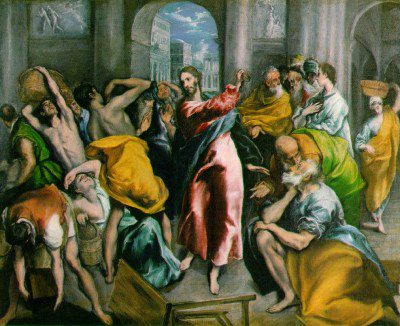
What is this sword that prophetically turns over tables of idolatry and injustice in a judgment that does not harm, hurt, coerce or kill anyone?
What is this fire that is ablaze with the very presence of I AM in response to the cries of the oppressed, this fire that does not destroy the bush in which it burns?
What is this power that is ablaze on the cross, sucking the oxygen of injustice and violence from creation then causes a cosmic backdraft in the resurrection, setting the world alight with the love that conquers death?
This sword of Christ is something far more dangerous and dynamic than a philosophy of an ideal, static, passive, peace read back onto the life of Christ. Martin Luther King would insist it is a peace that “is not the absence of tension but the presence of justice.” It is the Mystery our Lord Jesus embodies, enabling a new world where what we once wasted on bombs is now used to feed the hungry.
Jesus is no pacifist. He is YHWH’s nonviolent Suffering Servant whose grace calls us to share in his tears over what would make for peace, whose Spirit empowers us to take up the sword of nonviolence as our only weapon in witness to the victory Christ has won.
Chris Haw: The Temple cleansing would seem to imply, “no.” But we must careful to note here how he did not kill (or even, it seems, harm) anybody in this  well-documented incident. And the early Jesus followers seem to have taken no inspiration from this story as a type of action to imitate, as we have no documentation of early Christians carrying swords or rioting after Jesus’ famous “put that away; those who live by the sword will die by it.”
In sum, I see no good reason to see that anything in the canon contradicts Jesus’ oft-ignored teaching, “love your enemies.” And seeing as he gives three concrete examples of how to do so in practice, I do not think he meant this metaphorically, or as Luther pontificated—that one can kill one’s enemy and love them at the same time.
In an etymologically strict sense, it is probably beneficial to think that Jesus’ politics indeed did involve attempts to “pacify” one’s enemy. Walking an extra mile with the demanding officer is just one attempt at pacification. Granted, his speaking truth to his accusers (“why did you hit me?”) could have perhaps enflamed their hatred—though I am inclined to think of the enflaming as the fault of the violent, not the Lamb.
R. M. Keelan Downton: It is clear that Jesus is doing something different when he tells his disciples to respond to being slapped or robbed or forced to work with a creative response that would evoke shame or other complications for the abuser. It is less clear whether Jesus ever intended this to be scaled up to the level of nation-state (which, of course, hadn’t been invented, but like empire, requires significant levels of violence to maintain).
Often discussions of whether Jesus is a pacifist get muddled by confusion about what the word “violence” means. I once heard a speaker ask, “How can we reject violence as a means of resisting capitalism? I mean, even Jesus used violence against bankers!” This misses a critical distinction.
To be pacifist means to reject the use of deadly force as a legitimate means of resolving disputes–it does not mean allowing injustice to continue without challenge. It does not mean that those who wish to do violence cannot be constrained legally, economically, or even physically.
The space between inaction and murder is precisely where we see Jesus operating in his dealings with the Roman Empire and the temple entrepreneurs. Even at the end of Revelation (which some people read as a Rambo-esque return) it is important to remember that the “sword” comes from Jesus’ mouth and the blood is Jesus’ own.
 Tripp Fuller: It is perfectly clear that Jesus was against violence and war as means of setting things right. He told his disciples to turn the other cheek, not to resist an evildoer, to pray for their enemies, and then forgave his own enemies from the cross.
But does this make him a pacifist? Would he be one today in our historical situation? Most conversations around this topic quickly devolve into attempts to justify some act of violence (protecting an innocent child) or moral war (putting an end to genocide), yet this misses the larger point of Jesus’ embodied teaching. The reason Jesus and God’s kingdom reject violence is not because it can’t bring about a victory, but because an act of violence leads to a victor who is also a violator of their victims.
Eventually power shifts and the previous victims feel justified in becoming the new violating victors. God’s Kingdom Way, embodied by Jesus and taught to the disciples, is a way that does not reach victory by building crosses but by bearing them. The ultimate victory of God is a victory for all, because through the resurrection God becomes Victor by becoming the Victim.
In doing so God identifies and shares in the suffering of the world and charts a path for reconciliation, even for the violators. This larger perspective reframes the nature of Jesus’ ‘pacifism,’ asking his followers today not all to become passively peaceful, but active peacemakers and ambassadors of God’s reconciliation.
Previous Post

July 23, 2012
Further Thoughts on Chick Fil A
Next Post
July 25, 2012 Bryan Fischer: Blame Darwin, Liberals, Gays for Aurora Shooting
Browse Our Archives
Select a Category atonement belief bible Bill O'Reilly Buddhism CCM children christian piatt christianity Contemporary Christian Music current events derek flood Easter education Everyday Sunday faith faith and culture Frank Schaeffer great commission Haaz Sleiman Hobby Lobby Homebrewed Culture humor ISIS Jesus John Paul Lederach Killing Jesus LGBTQ marc driscoll Mission Year Music My Jesus Project Nat Geo parenting politics popular culture postChristian prison reform Ray rice religion republicans sacrifice sexuality theology Uncategorized video violence wild goose festival World Vision young adults
Select a Month December 2017 November 2017 October 2017 September 2017 August 2017 July 2017 June 2017 May 2017 April 2017 March 2017 February 2017 January 2017 November 2016 October 2016 September 2016 August 2016 July 2016 June 2016 May 2016 April 2016 March 2016 February 2016 January 2016 December 2015 November 2015 October 2015 September 2015 August 2015 July 2015 June 2015 May 2015 April 2015 March 2015 February 2015 January 2015 December 2014 November 2014 October 2014 September 2014 August 2014 July 2014 June 2014 May 2014 April 2014 March 2014 February 2014 January 2014 December 2013 November 2013 October 2013 September 2013 August 2013 July 2013 June 2013 May 2013 April 2013 March 2013 February 2013 January 2013 December 2012 November 2012 October 2012 September 2012 August 2012 July 2012 June 2012 May 2012 April 2012 March 2012 February 2012 January 2012 December 2011 November 2011 October 2011 September 2011 August 2011 July 2011 June 2011 May 2011 April 2011 March 2011 February 2011 January 2011 December 2010 November 2010 October 2010 September 2010 August 2010 July 2010 June 2010 May 2010 April 2010 March 2010 February 2010 January 2010 December 2009 November 2009 October 2009 September 2009 August 2009 July 2009 June 2009 May 2009 April 2009 March 2009 February 2009 January 2009 December 2008 November 2008 October 2008 September 2008 August 2008 July 2008 June 2008 May 2008 April 2008 March 2008 February 2008 January 2008 December 2007 November 2007 October 2007 September 2007 August 2007 July 2007 June 2007 May 2007 April 2007 March 2007 February 2007 January 2007 December 2006 November 2006 October 2006 September 2006 August 2006
Follow Us!
TAKE THE
Religious Wisdom Quiz
What does the Parable of the Workers in the Vineyard teach about God?
Select your answer to see how you score.
He is strict Only the first are blessed His grace is generous He loves some more than others
Related posts from Christian Piatt

More Than Jezebel (Third Week Advent Devotional)

Are We There Yet? (Second Week in Advent...

Look, Shiny! (First Week of Advent Study)

TRENDING AT PATHEOS Progressive Christian

What Being a Modern-Day Apostle Means to Me
In my last column, I discussed the ins and outs of modern-day...

Did Ancient China Once Worship the God of...
Across human history, a common thread weaves through the origins of the...

Love Your Neighbor – Including Earth-Kin: Lev. 19,...
God’s command to love your neighbor means acting in an ethical and...

Lead a Church Study of “Jesus and Lao...
Guest writer Jack Thomas (The Irreverent Reverend) reflects on leading his church...

Pastoral Wisdom for Responding to Sermon Pushback
Getting sermon pushback on your social justice sermon? Learn practical, Proverbs-based strategies...

Principles for Understanding the Apostolic Ministry Today
Whenever people discover that my formal ministry title is "apostle," as in...
view all Progressive Christian blogs
Ad-Free & Subscriber Log-In Subscription Support
- About Us
- 2026 Calendar
- Videos
- Podcasts
- Library of World Religions
- Faith In Media Tracker
- Advertise With Us
- Write for Us
- Privacy Policy
- Terms of Service
- Do Not Sell My Data
- Contact Us
- Radiant Digital
- Manage Newsletter Subscriptions
- Unsubscribe From Notifications
- Sitemap
Copyright 2008-2026, Patheos. All rights reserved.
Subscription Support Ad-Free & Subscriber Log-In
Follow Patheos