
BuddhistCatholicContemplativeEvangelicalGeneral ChristianHinduJewishLatter-day SaintMuslimNew VisionsProgressive Christian
Beliefs
- Buddhist
- Catholic
- Contemplative
- Evangelical
- General Christian
- Hindu
- Jewish
- Latter-day Saint
- More Voices
- Muslim
- New Visions
- Pagan
- Progressive Christian
Topics
- Religion News
- Food and Religion
- Sports and Religion
- Religious Art
- Religious Music and Entertainment
- Religious Events
- History and Religion
- Style and Religion
- Politics and Religion
- Women in Religion
- Recreation Outdoors and Religion
- Business Finance and Religion
- Careers Workplace and Religion
- Education and Religion
- Family Parenting and Religion
- Health Fitness and Religion
- Home and Religion
- Relationships and Religion
- Technology and Religion
- Travel and Religion
Columnists
- Buddhist Columnists
- Business Finance and Religion Columnists
- Careers Workplace and Religion Columnists
- Catholic Columnists
- Contemplative Columnists
- Education and Religion Columnists
- Evangelists Columnists
- Family Parenting and Religion Columnists
- General Christian Columnists
- Health Fitness and Religion Columnists
- Hindu Columnists
- History and Religion Columnists
- Home and Religion Columnists
- Jewish Columnists
- More Voices Columnists
- Latter Day Columnists
- Muslim Columnists
- New Visions Columnists
- Nonreligious Columnists
- Pagan Columnists
- Politics and Religion Columnists
- Progressive Columnists
- Recreation Outdoors and Religion Columnists
- Relationships and Religion Columnists
- Religion News Columnists
- Religious Art Columnists
- Religious Events Columnists
- Religious Music and Entertainment Columnists
- Sports and Religion Columnists
- Style and Religion Columnists
- Technology and Religion Columnists
- Travel and Religion Columnists
- Women in Religion Columnists
Resource Library
- 2026 Calendar
- Library of World Religions
- The 100 Most Holy Places on Earth
- Patheos Answers
- Podcasts
- Videos
- Faith Leaders Database
- Anglican Episcopalian
- Bahai
- Baptist
- Buddhism
- Christianity
- Confucianism
- Eastern Orthodoxy
- Hinduism
- Holiness and Pentecostal
- ISKCON
- Islam
- Judaism
- Lutheran
- Methodist
- The Church of Jesus Christ of Latter-day Saints
- New Age
- Paganism
- Presbytarian and Reformed
- Protestantism
- Religion Behind the Scenes
- Roman Catholic
- Scientology
- Shia Islam
- Sikhism
- Sufism
- Sunni Islam
- Taoism
- Zen
- See all religions
Research Tools
 Ad-Free & Subscriber Log-In Subscription Support
Ad-Free & Subscriber Log-In Subscription Support
Follow Patheos 

- Trending:
- Forgiveness
- |
- Marriage
- |
- Consciousness
- |
- Death Penalty
- |
- Election
- |
- Halloween
 Christian Piatt
- Home
- Progressive Christian
- Don’t Think Too Hard; You’ll Kill God (Day Nine)
Don’t Think Too Hard; You’ll Kill God (Day Nine)
Last updated on: May 10, 2012 at 11:55 pm by Christian Piatt
Don’t Think Too Hard; You’ll Kill God (Day Nine) 2012-05-10T23:55:27+00:00 Christian Piatt
Patheos Explore the world's faith through different perspectives on religion and spirituality! Patheos has the views of the prevalent religions and spiritualities of the world.
Amy and I covered Los Angeles on foot today. This morning we walked from Marina Del Rey to the Santa Monica Pier by way of Venice Beach, stopping for coffee on the pier. After lunch we walked over to a street called Abbot Kinney, which has been rated (by whom, I’m not sure) as the coolest street in America. I’m not entirely sure about that, but if coolness is measured by the number of storefronts with no names and containing items I couldn’t name, let alone use or afford, then yeah, it’s pretty cool.
When you spend several hours in a day walking, you have a lot of time to think. My mind wandered to a number of topics, but I spent some time thinking about the second article I mentioned being sent recently, which measured the relationship between people’s religious beliefs and the type of thinking they depend on in certain situations.
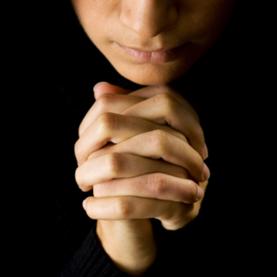 First, the study divides human thought into “intuitive” thought and “analytical” thought. The former is used in situations when you trust your gut, like knowing when someone is angry, or getting a sense for how to act in a certain social environment. The latter emphasizes problem solving, which is a slower, more intentional process of thought.
In other words, when you’re thinking analytically, you generally know you are. Intuitive thought comes more naturally, at least for most folks. When it comes to an aspie-type guy like me, the intuitive thinking actually is more of a challenge. That’s why we often connect with super intuitive types, like Amy. They act as socio-cultural interpreters and bridges for those of us who can’t read people and social situations as well.
And given the findings of this study, it makes sense that Amy was a minister and I wanted nothing to do with religion when we met.
Basically, the study found that people who thought more analytically tended to be less religiously inclined than those who were intuitive 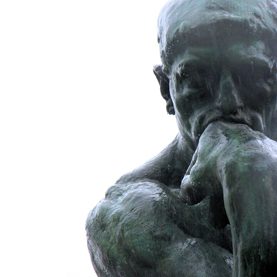 thinkers. Not exactly a revelation. I know, but they also found that religious sentiment could be manipulated. For example, when a survey about religious beliefs was given to a random sample of people but was printed in a strange font (which apparently triggers analytical, interpretive thought) the respondents scored lower on religious conviction than another random group who took the same survey in a more familiar font.
That’s pretty cool, if you ask me.
The title of the article was a little weird, I thought; it was called, “To Keep the Faith, Don’t Get Analytical.” However, the researchers were careful to point out that, even in manipulating people’s thought processes (and therefore their religious convictions, at least in the moment), they were “not turning people into atheists.” The differences were small but significant, statistically speaking.
But for me, it totally made sense. Amy is incredibly intuitive, and she enjoys a faith that I find sort of mysterious. This extends beyond God to faith in other people too: another quality I tend to lack. When I met her, she was already serving in ministry, while I hadn’t darkened the door of a church in a decade. I got in trouble in church in the first place for doubting and questioning, which seemed to rub up against the more intuitive faith of those in my church at the time.
The message I got was that critical thought and faith simply didn’t mix. But in the more “progressive” mainline churches, I found a space in which such challenging questions were welcome. Small wonder, I guess, that some folks view such denominations and churches as fomenting atheism beneath the cloak of Christianity. Although the following paragraph from the article really resonated for me:
“It’s very difficult to distinguish between what a person believes and what they say they believe,” says Daniel Kahneman, a psychologist and Nobel laureate at Princeton University who has done pioneering work on the contributions of intuitive and analytical thinking to human decision making. “All they have shown, and all that can be shown, is that when you’re thinking more critically you reject statements that otherwise you would endorse,” Kahneman says. “It tells you that there are some religious beliefs people hold that if they were thinking more critically, they themselves would not endorse.”
So if this is the case, the fear coming from other religious folks might be precisely because they don’t actually believe, deep down inside, everything they claim to believe. So of course, when those claimed beliefs are challenged, folks tend to get a little defensive.
It seems to me that a number of postmodern theologians like John Caputo, Peter Rollins, Jacques Derrida and the like are exploring this more analytical mindspace and where – if at all – faith fits. To me, at the heart of postmodern theology is an effort to deconstruct these beliefs we claim, but which end up being emotional or psychological crutches rather than beliefs one can examine and still maintain. For example, postmodern theology challenges this idea of God as an anthropomorphic “other,” resting instead in the tension of what Caputo calls the “perhaps.”
It’s not hard to understand why lots of folks are howling that such postmodern theology is yet another subversive form of atheism, intent on killing God once and for all. But if, in fact, it helps strip away those things we cling to but which we really don’t believe deep, down inside, how can this be anything but a good thing? Yes, some worry that if they strip away the self-made and institutionally promoted constructs of faith on which we lean, there will be nothing left.
But if that’s really all there is to our religion, aren’t we better off without it anyway?
Previous Post

May 9, 2012
To the Edge of the Earth (Day Eight)
Next Post
May 11, 2012 This Is My Body (Day Ten)
Browse Our Archives
Select a Category atonement belief bible Bill O'Reilly Buddhism CCM children christian piatt christianity Contemporary Christian Music current events derek flood Easter education Everyday Sunday faith faith and culture Frank Schaeffer great commission Haaz Sleiman Hobby Lobby Homebrewed Culture humor ISIS Jesus John Paul Lederach Killing Jesus LGBTQ marc driscoll Mission Year Music My Jesus Project Nat Geo parenting politics popular culture postChristian prison reform Ray rice religion republicans sacrifice sexuality theology Uncategorized video violence wild goose festival World Vision young adults
Select a Month December 2017 November 2017 October 2017 September 2017 August 2017 July 2017 June 2017 May 2017 April 2017 March 2017 February 2017 January 2017 November 2016 October 2016 September 2016 August 2016 July 2016 June 2016 May 2016 April 2016 March 2016 February 2016 January 2016 December 2015 November 2015 October 2015 September 2015 August 2015 July 2015 June 2015 May 2015 April 2015 March 2015 February 2015 January 2015 December 2014 November 2014 October 2014 September 2014 August 2014 July 2014 June 2014 May 2014 April 2014 March 2014 February 2014 January 2014 December 2013 November 2013 October 2013 September 2013 August 2013 July 2013 June 2013 May 2013 April 2013 March 2013 February 2013 January 2013 December 2012 November 2012 October 2012 September 2012 August 2012 July 2012 June 2012 May 2012 April 2012 March 2012 February 2012 January 2012 December 2011 November 2011 October 2011 September 2011 August 2011 July 2011 June 2011 May 2011 April 2011 March 2011 February 2011 January 2011 December 2010 November 2010 October 2010 September 2010 August 2010 July 2010 June 2010 May 2010 April 2010 March 2010 February 2010 January 2010 December 2009 November 2009 October 2009 September 2009 August 2009 July 2009 June 2009 May 2009 April 2009 March 2009 February 2009 January 2009 December 2008 November 2008 October 2008 September 2008 August 2008 July 2008 June 2008 May 2008 April 2008 March 2008 February 2008 January 2008 December 2007 November 2007 October 2007 September 2007 August 2007 July 2007 June 2007 May 2007 April 2007 March 2007 February 2007 January 2007 December 2006 November 2006 October 2006 September 2006 August 2006
Follow Us!
TAKE THE
Religious Wisdom Quiz
What city did David capture and make the capital of Israel?
Select your answer to see how you score.
Hebron Bethlehem Jerusalem Samaria
Related posts from Christian Piatt

More Than Jezebel (Third Week Advent Devotional)

Are We There Yet? (Second Week in Advent...

Look, Shiny! (First Week of Advent Study)

TRENDING AT PATHEOS Progressive Christian

What Being a Modern-Day Apostle Means to Me
In my last column, I discussed the ins and outs of modern-day...

Did Ancient China Once Worship the God of...
Across human history, a common thread weaves through the origins of the...

Love Your Neighbor – Including Earth-Kin: Lev. 19,...
God’s command to love your neighbor means acting in an ethical and...

Lead a Church Study of “Jesus and Lao...
Guest writer Jack Thomas (The Irreverent Reverend) reflects on leading his church...

Pastoral Wisdom for Responding to Sermon Pushback
Getting sermon pushback on your social justice sermon? Learn practical, Proverbs-based strategies...

Principles for Understanding the Apostolic Ministry Today
Whenever people discover that my formal ministry title is "apostle," as in...
view all Progressive Christian blogs
Ad-Free & Subscriber Log-In Subscription Support
- About Us
- 2026 Calendar
- Videos
- Podcasts
- Library of World Religions
- Faith In Media Tracker
- Advertise With Us
- Write for Us
- Privacy Policy
- Terms of Service
- Do Not Sell My Data
- Contact Us
- Radiant Digital
- Manage Newsletter Subscriptions
- Unsubscribe From Notifications
- Sitemap
Copyright 2008-2026, Patheos. All rights reserved.
Subscription Support Ad-Free & Subscriber Log-In
Follow Patheos