
BuddhistCatholicContemplativeEvangelicalGeneral ChristianHinduJewishLatter-day SaintMuslimNew VisionsProgressive Christian
Beliefs
- Buddhist
- Catholic
- Contemplative
- Evangelical
- General Christian
- Hindu
- Jewish
- Latter-day Saint
- More Voices
- Muslim
- New Visions
- Pagan
- Progressive Christian
Topics
- Religion News
- Food and Religion
- Sports and Religion
- Religious Art
- Religious Music and Entertainment
- Religious Events
- History and Religion
- Style and Religion
- Politics and Religion
- Women in Religion
- Recreation Outdoors and Religion
- Business Finance and Religion
- Careers Workplace and Religion
- Education and Religion
- Family Parenting and Religion
- Health Fitness and Religion
- Home and Religion
- Relationships and Religion
- Technology and Religion
- Travel and Religion
Columnists
- Buddhist Columnists
- Business Finance and Religion Columnists
- Careers Workplace and Religion Columnists
- Catholic Columnists
- Contemplative Columnists
- Education and Religion Columnists
- Evangelists Columnists
- Family Parenting and Religion Columnists
- General Christian Columnists
- Health Fitness and Religion Columnists
- Hindu Columnists
- History and Religion Columnists
- Home and Religion Columnists
- Jewish Columnists
- More Voices Columnists
- Latter Day Columnists
- Muslim Columnists
- New Visions Columnists
- Nonreligious Columnists
- Pagan Columnists
- Politics and Religion Columnists
- Progressive Columnists
- Recreation Outdoors and Religion Columnists
- Relationships and Religion Columnists
- Religion News Columnists
- Religious Art Columnists
- Religious Events Columnists
- Religious Music and Entertainment Columnists
- Sports and Religion Columnists
- Style and Religion Columnists
- Technology and Religion Columnists
- Travel and Religion Columnists
- Women in Religion Columnists
Resource Library
- 2026 Calendar
- Library of World Religions
- The 100 Most Holy Places on Earth
- Patheos Answers
- Podcasts
- Videos
- Faith Leaders Database
- Anglican Episcopalian
- Bahai
- Baptist
- Buddhism
- Christianity
- Confucianism
- Eastern Orthodoxy
- Hinduism
- Holiness and Pentecostal
- ISKCON
- Islam
- Judaism
- Lutheran
- Methodist
- The Church of Jesus Christ of Latter-day Saints
- New Age
- Paganism
- Presbytarian and Reformed
- Protestantism
- Religion Behind the Scenes
- Roman Catholic
- Scientology
- Shia Islam
- Sikhism
- Sufism
- Sunni Islam
- Taoism
- Zen
- See all religions
Research Tools
 Ad-Free & Subscriber Log-In Subscription Support
Ad-Free & Subscriber Log-In Subscription Support
Follow Patheos 

- Trending:
- Forgiveness
- |
- Marriage
- |
- Consciousness
- |
- Death Penalty
- |
- Election
- |
- Halloween
 Christian Piatt
- Home
- Progressive Christian
- Taking “Jesus Christ” Out of the Bible
Taking “Jesus Christ” Out of the Bible
Last updated on: April 25, 2012 at 2:43 pm by Christian Piatt
Taking “Jesus Christ” Out of the Bible 2012-04-25T14:43:59+00:00 Christian Piatt
Patheos Explore the world's faith through different perspectives on religion and spirituality! Patheos has the views of the prevalent religions and spiritualities of the world.
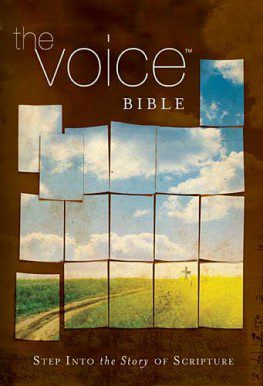 A new translation of the Bible called “The Voice” (no, Cee-Lo makes no appearances in this one), published by Thomas Nelson, has created quite a buzz. The discussion is not so much around what is in the newest version, but rather what’s left out.
According to a recent article on the Huffington Post, the words “Jesus Christ” do not appear anywhere in the New Testament. And for some, this is tantamount to heresy. The publishers point out, however, that “Christ” was not, in fact, Jesus’ last name.
According to the article, “angel is rendered as ‘messenger’ and apostle as ’emissary.’ Jesus Christ is ‘Jesus the Anointed One’ or the ‘liberating king.'” David Capes, the top scholar working on the translation, says that the phrases used to describe Jesus actually are more accurate than the use of “Christ,” (which means “anointed” or “messiah”), particularly given the common misunderstanding about the etymology of the word “Christ.”
Another stylistic difference in the new version is in how dialogue is presented. Rather than including “he said, she said” verbiage, the interactions are presented more like a screenplay. A sample from the Huffington article:
Disciple: “It’s a ghost!”
Another Disciple: “A ghost? What will we do?”
Jesus: “Be still. It is I; you have nothing to fear.”
The intent is to engage and draw in readers who might otherwise get bogged down in the text itself. Like many other modern interpretations and translations (not the same thing, mind you), the goal is to present the essence of the scripture in a format that can help readers connect with it as a living, breathing document, and not just a relic from our ancient past.
Where we get hung up is when we start debating what it is that’s essential and what isn’t. For so-called Biblical literalists, everything is essential. And in general, the translation referred to as “the Bible” is the King James version.
But it’s easy to forget, as the King James Bibles have become the default traditional translation, that even the translators of that version had a 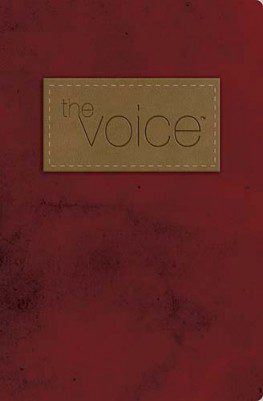 specific human agenda. James, King of England at the turn of the seventeenth century, wanted to ensure that the translation supported the existing structure and authority of the Church of England.
It’s easy to forget that all English translations of the Bible mean that we’re bound to depend on the agendas of the people who translated it. Now, just because they had agendas doesn’t mean those agendas were bad, but it’s worth knowing what those angles were they were using in approaching the original texts.
Or at least what we think are the original texts. After all there’s no guarantee that the scriptures in Hebrew, Greek and Aramaic we’re working from haven’t been transcribed and reinterpreted from original writings forever lost. We assume – perhaps on faith – that the ancient scriptures we’re translating are the original, unaltered documents.
And even if they are, it’s necessary to understand the agendas of the authors of those first texts. For example, why in the world does the book of Matthew start out with a mind-numbing list of names, like some verbal literary family tree? Because the author of Matthew was particularly concerned with demonstrating Jesus’ fulfillment of earlier prophecy, portending the coming Messiah. So the “begats” were a sort of line traced from Abraham to King David and then to Jesus.
This is my understanding anyway. I’m hardly a Biblical scholar. But each Gospel (as well as every other text in the Bible) had a particular purpose or agenda to present to readers. Does this mean the content is no good if there’s a human element at play? Hardly. But if we go into Biblical study without this understanding – or if we simply accept that the Bible is a transcription from God’s mouth to paper through human hands, eliminating all human agency – we miss a critical element of Biblical understanding that diminishes our experience of it.
What’s worse, if we assume our understanding of the texts is “the understanding,” that’s the stuff of religious warfare, dehumanizing subjugation of others and deeper division.
It’s easy to forget that the authors of scripture never sat down in a big room together with the intent of writing “The Bible.” It’s a collection of stories, historical accounts, songs, prayers, letters, laws and prophecies that were recorded and collected over thousands of years.
For some, these agendas folks brought (and bring) to scripture are problematic and should be eliminated whenever possible to get down to the “real meaning” of the text. For me, the agendas are, in many ways, as important as the words on the page. They speak to humanity’s longing to better understand The Divine. Yes, there are cases where authors or translators aim use the power of human faith to their own advantage. All the more reason to approach all texts with a critical eye.
Like comedian Dennis Miller used to say, somewhat tongue-in-cheek: “That’s just my opinion; I could be wrong.”
Previous Post

April 24, 2012
The Piatts on the Road
Next Post
April 26, 2012 "Angry Queers" Take on Driscoll, Mars Hill the Wrong Way
Browse Our Archives
Select a Category atonement belief bible Bill O'Reilly Buddhism CCM children christian piatt christianity Contemporary Christian Music current events derek flood Easter education Everyday Sunday faith faith and culture Frank Schaeffer great commission Haaz Sleiman Hobby Lobby Homebrewed Culture humor ISIS Jesus John Paul Lederach Killing Jesus LGBTQ marc driscoll Mission Year Music My Jesus Project Nat Geo parenting politics popular culture postChristian prison reform Ray rice religion republicans sacrifice sexuality theology Uncategorized video violence wild goose festival World Vision young adults
Select a Month December 2017 November 2017 October 2017 September 2017 August 2017 July 2017 June 2017 May 2017 April 2017 March 2017 February 2017 January 2017 November 2016 October 2016 September 2016 August 2016 July 2016 June 2016 May 2016 April 2016 March 2016 February 2016 January 2016 December 2015 November 2015 October 2015 September 2015 August 2015 July 2015 June 2015 May 2015 April 2015 March 2015 February 2015 January 2015 December 2014 November 2014 October 2014 September 2014 August 2014 July 2014 June 2014 May 2014 April 2014 March 2014 February 2014 January 2014 December 2013 November 2013 October 2013 September 2013 August 2013 July 2013 June 2013 May 2013 April 2013 March 2013 February 2013 January 2013 December 2012 November 2012 October 2012 September 2012 August 2012 July 2012 June 2012 May 2012 April 2012 March 2012 February 2012 January 2012 December 2011 November 2011 October 2011 September 2011 August 2011 July 2011 June 2011 May 2011 April 2011 March 2011 February 2011 January 2011 December 2010 November 2010 October 2010 September 2010 August 2010 July 2010 June 2010 May 2010 April 2010 March 2010 February 2010 January 2010 December 2009 November 2009 October 2009 September 2009 August 2009 July 2009 June 2009 May 2009 April 2009 March 2009 February 2009 January 2009 December 2008 November 2008 October 2008 September 2008 August 2008 July 2008 June 2008 May 2008 April 2008 March 2008 February 2008 January 2008 December 2007 November 2007 October 2007 September 2007 August 2007 July 2007 June 2007 May 2007 April 2007 March 2007 February 2007 January 2007 December 2006 November 2006 October 2006 September 2006 August 2006
Follow Us!
TAKE THE
Religious Wisdom Quiz
I will heal their waywardness and love them freely, making them blossom like this flower and fragrant like this tree. What plant and tree are mentioned?
Select your answer to see how you score.
Lebanon Cedar and Lilies Rose and olive Iris and cypress Lotus and palm
Related posts from Christian Piatt

More Than Jezebel (Third Week Advent Devotional)

Are We There Yet? (Second Week in Advent...

Look, Shiny! (First Week of Advent Study)

TRENDING AT PATHEOS Progressive Christian

Why Christians Have a Sacred Duty to Vote:...
The Bible offers strong support for the sacred duty to vote. Here...

What Being a Modern-Day Apostle Means to Me
In my last column, I discussed the ins and outs of modern-day...

Did Ancient China Once Worship the God of...
Across human history, a common thread weaves through the origins of the...

Love Your Neighbor – Including Earth-Kin: Lev. 19,...
God’s command to love your neighbor means acting in an ethical and...

Lead a Church Study of “Jesus and Lao...
Guest writer Jack Thomas (The Irreverent Reverend) reflects on leading his church...

Principles for Understanding the Apostolic Ministry Today
Whenever people discover that my formal ministry title is "apostle," as in...
view all Progressive Christian blogs
Ad-Free & Subscriber Log-In Subscription Support
- About Us
- 2026 Calendar
- Videos
- Podcasts
- Library of World Religions
- Faith In Media Tracker
- Advertise With Us
- Write for Us
- Privacy Policy
- Terms of Service
- Do Not Sell My Data
- Contact Us
- Radiant Digital
- Manage Newsletter Subscriptions
- Unsubscribe From Notifications
- Sitemap
Copyright 2008-2026, Patheos. All rights reserved.
Subscription Support Ad-Free & Subscriber Log-In
Follow Patheos