
BuddhistCatholicContemplativeEvangelicalGeneral ChristianHinduJewishLatter-day SaintMuslimNew VisionsProgressive Christian
Beliefs
- Buddhist
- Catholic
- Contemplative
- Evangelical
- General Christian
- Hindu
- Jewish
- Latter-day Saint
- More Voices
- Muslim
- New Visions
- Pagan
- Progressive Christian
Topics
- Religion News
- Food and Religion
- Sports and Religion
- Religious Art
- Religious Music and Entertainment
- Religious Events
- History and Religion
- Style and Religion
- Politics and Religion
- Women in Religion
- Recreation Outdoors and Religion
- Business Finance and Religion
- Careers Workplace and Religion
- Education and Religion
- Family Parenting and Religion
- Health Fitness and Religion
- Home and Religion
- Relationships and Religion
- Technology and Religion
- Travel and Religion
Columnists
- Buddhist Columnists
- Business Finance and Religion Columnists
- Careers Workplace and Religion Columnists
- Catholic Columnists
- Contemplative Columnists
- Education and Religion Columnists
- Evangelists Columnists
- Family Parenting and Religion Columnists
- General Christian Columnists
- Health Fitness and Religion Columnists
- Hindu Columnists
- History and Religion Columnists
- Home and Religion Columnists
- Jewish Columnists
- More Voices Columnists
- Latter Day Columnists
- Muslim Columnists
- New Visions Columnists
- Nonreligious Columnists
- Pagan Columnists
- Politics and Religion Columnists
- Progressive Columnists
- Recreation Outdoors and Religion Columnists
- Relationships and Religion Columnists
- Religion News Columnists
- Religious Art Columnists
- Religious Events Columnists
- Religious Music and Entertainment Columnists
- Sports and Religion Columnists
- Style and Religion Columnists
- Technology and Religion Columnists
- Travel and Religion Columnists
- Women in Religion Columnists
Resource Library
- 2026 Calendar
- Library of World Religions
- The 100 Most Holy Places on Earth
- Patheos Answers
- Podcasts
- Videos
- Faith Leaders Database
- Anglican Episcopalian
- Bahai
- Baptist
- Buddhism
- Christianity
- Confucianism
- Eastern Orthodoxy
- Hinduism
- Holiness and Pentecostal
- ISKCON
- Islam
- Judaism
- Lutheran
- Methodist
- The Church of Jesus Christ of Latter-day Saints
- New Age
- Paganism
- Presbytarian and Reformed
- Protestantism
- Religion Behind the Scenes
- Roman Catholic
- Scientology
- Shia Islam
- Sikhism
- Sufism
- Sunni Islam
- Taoism
- Zen
- See all religions
Research Tools
 Ad-Free & Subscriber Log-In Subscription Support
Ad-Free & Subscriber Log-In Subscription Support
Follow Patheos 

- Trending:
- Forgiveness
- |
- Marriage
- |
- Consciousness
- |
- Death Penalty
- |
- Election
- |
- Halloween
 Christian Piatt
- Home
- Progressive Christian
- Dealing With Inconsistencies in Scripture
Dealing With Inconsistencies in Scripture
Last updated on: March 1, 2012 at 3:32 pm by Christian Piatt
Dealing With Inconsistencies in Scripture 2012-03-01T15:32:43+00:00 Christian Piatt
Patheos Explore the world's faith through different perspectives on religion and spirituality! Patheos has the views of the prevalent religions and spiritualities of the world.
 The four Gospels in the Bible are central to the Christian faith. But they don’t always agree on the facts. So which is right? Which is most important? And does it even matter if certain stories are told differently from Gospel to Gospel?
Some who feel the need to interpret the Bible literally have to do some pretty interesting literary juggling to reconcile some of the differences among the books of Matthew, Mark, Luke and John. And for others, it still raises questions about why the differences exist and what to do about them.
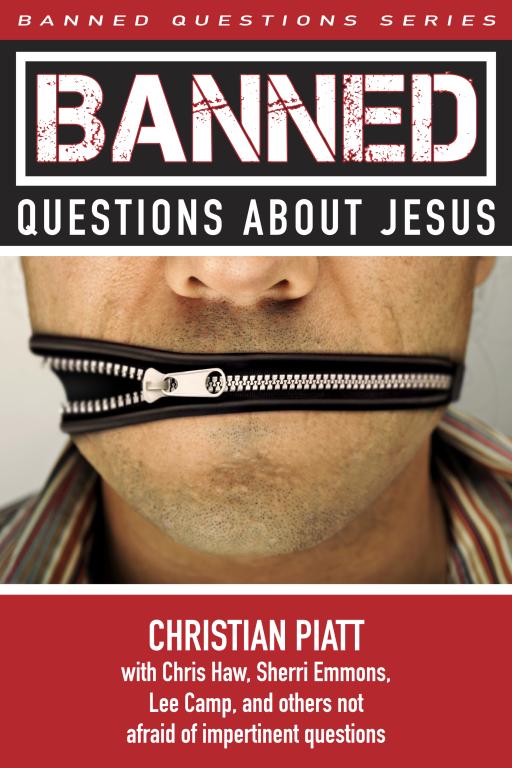
We took on one of these questions in Banned Questions About Jesus. Check out the question below, followed by the responses from several contributors.
In Matthew, Mark and Luke, Jesus drives the money changers out of the temple just before he died, but in John, this happens at the beginning of his ministry. Why are these accounts different?
Pablo A. Jiménez: Matthew, Mark and Luke are very similar. Experts think that Mark was the main source used by Matthew and Luke to write their Gospels. These documents are so similar that experts in biblical studies have given them a particular name: the “Synoptic” Gospels. The word “Synoptic” derives from two Greek words: “syn”, which means “with” and “ophtalmos”, which means “eye”. Therefore, they can be read together, “with a single eye”.
In the Synoptic Gospels the disturbance at the Temple is one of the main reasons for Jesus’ execution. The Temple courtyard was visible from the watchtowers of the Antonia Fortress, from where Roman soldiers monitored activities. According to the Synoptic Gospels, Jesus was arrested few days as after this event, which surely labeled him as an enemy of the state.
John, written later than the others, follows his own path. For theological reasons, John places the account of the disturbance at the Temple at the very beginning of his story. It serves as an indictment of the Jewish status quo.
Sadly, John refers to Jesus’ adversaries as “the Jews”, which some people mistakenly understand in ethnic terms. In reality, John’s term refers to the established Jewish political and religious leadership, particularly those in collusion with the Roman occupation army.
In historical terms, though, the disturbance did occur in Jesus’ last week, triggering his persecution, arrest, torture, sentence and execution.
Christian Piatt: It’s always interesting when stories differ from one gospel to another. For some, this may present a problem to reconcile, particularly if they require the Bible to be perfect not only in truth, but also in fact.
Another perspective actually can tell us a lot about what was going on within the culture at the time the texts were written. Take this story in the gospels, for example. In The People’s New Testament Commentary, Eugene Boring and Fred Craddock note that the temple referred to in the stories in Matthew, Mark and Luke no longer exists by the time John was written, having been destroyed by war.
This, of course, doesn’t mean that John’s gospel couldn’t have the story happening at the same time as the so-called synoptic gospels. But the destruction of the temple, foretold by Jesus in scripture, serves too as a metaphor for the understanding within Christianity of where God dwells.
In the Jewish tradition, the temple is a holier place than others, which means that Jesus was, in a sense, protecting “God’s house” in the synoptic gospels. But in John, which was written decades later in the life of the early Christian movement, Jesus is establishing himself as the new focus of God’s power, carried out into the world by the “body of Christ,” i.e., his followers.
So the difference comes down to a matter of priorities. In the synoptics, Jesus’ appearance at the temple is one of the final challenges to the powers that be, leading to his death. In John, however, the story is establishing Jesus’ divinity, and that he – not the physical church – is now endowed with God’s authority.
David Lose: The writers of the four gospels were not writing history as we know it. They were confessing their faith through historical story. Their goal is not neutral objectivity; indeed, their hope is to persuade us to come to faith in Jesus (see John 20:30-31). So whenever you encounter different versions of what looks like the same event, the question isn’t, “Which one is right?” but rather, “What does this difference tell me about the distinct confession of faith the author is making?” The intentional choices the evangelists make provide clues to their literary and theological aims.
In Matthew, Mark, and Luke, Jesus’ cleansing of the temple by driving out the money changers portrays the rising tension between Jesus and the religious authorities. In fact, Jesus’ attack on their sacrificial system is one of the last straws that provokes his opponents to determine to put Jesus to death.
In John, however, the action serves an entirely different literary and theological purpose. At the outset of the Fourth Gospel, John the Baptizer declared that Jesus is “the lamb that takes away the sin of the world.” (1:29) Further, in John’s gospel the day on which Jesus is crucified is the Day of Preparation for the Passover (in the other three accounts that Friday is Passover), which means that Jesus dies at the time when the priests are sacrificing the Passover lambs (19:31). Jesus, according to John, is the new Passover lamb. The very first thing Jesus does in his public ministry, therefore, is to drive out the money changers from the Temple. Why? Because now that God’s own Passover lamb is among us, there simply is no more need for any more sacrifice.
Previous Post

February 29, 2012
Ron Paul: A Bad Lip Reading Tribute
Next Post
March 2, 2012 The Pee Stick (PregMANcy)
Browse Our Archives
Select a Category atonement belief bible Bill O'Reilly Buddhism CCM children christian piatt christianity Contemporary Christian Music current events derek flood Easter education Everyday Sunday faith faith and culture Frank Schaeffer great commission Haaz Sleiman Hobby Lobby Homebrewed Culture humor ISIS Jesus John Paul Lederach Killing Jesus LGBTQ marc driscoll Mission Year Music My Jesus Project Nat Geo parenting politics popular culture postChristian prison reform Ray rice religion republicans sacrifice sexuality theology Uncategorized video violence wild goose festival World Vision young adults
Select a Month December 2017 November 2017 October 2017 September 2017 August 2017 July 2017 June 2017 May 2017 April 2017 March 2017 February 2017 January 2017 November 2016 October 2016 September 2016 August 2016 July 2016 June 2016 May 2016 April 2016 March 2016 February 2016 January 2016 December 2015 November 2015 October 2015 September 2015 August 2015 July 2015 June 2015 May 2015 April 2015 March 2015 February 2015 January 2015 December 2014 November 2014 October 2014 September 2014 August 2014 July 2014 June 2014 May 2014 April 2014 March 2014 February 2014 January 2014 December 2013 November 2013 October 2013 September 2013 August 2013 July 2013 June 2013 May 2013 April 2013 March 2013 February 2013 January 2013 December 2012 November 2012 October 2012 September 2012 August 2012 July 2012 June 2012 May 2012 April 2012 March 2012 February 2012 January 2012 December 2011 November 2011 October 2011 September 2011 August 2011 July 2011 June 2011 May 2011 April 2011 March 2011 February 2011 January 2011 December 2010 November 2010 October 2010 September 2010 August 2010 July 2010 June 2010 May 2010 April 2010 March 2010 February 2010 January 2010 December 2009 November 2009 October 2009 September 2009 August 2009 July 2009 June 2009 May 2009 April 2009 March 2009 February 2009 January 2009 December 2008 November 2008 October 2008 September 2008 August 2008 July 2008 June 2008 May 2008 April 2008 March 2008 February 2008 January 2008 December 2007 November 2007 October 2007 September 2007 August 2007 July 2007 June 2007 May 2007 April 2007 March 2007 February 2007 January 2007 December 2006 November 2006 October 2006 September 2006 August 2006
Follow Us!
TAKE THE
Religious Wisdom Quiz
What happened to the prophet Elijah at the end of his life?
Select your answer to see how you score.
Died of old age Killed by Jezebel Taken to heaven in a whirlwind Buried by Elisha
Related posts from Christian Piatt

More Than Jezebel (Third Week Advent Devotional)

Are We There Yet? (Second Week in Advent...

Look, Shiny! (First Week of Advent Study)

TRENDING AT PATHEOS Progressive Christian

What Being a Modern-Day Apostle Means to Me
In my last column, I discussed the ins and outs of modern-day...

Did Ancient China Once Worship the God of...
Across human history, a common thread weaves through the origins of the...

Love Your Neighbor – Including Earth-Kin: Lev. 19,...
God’s command to love your neighbor means acting in an ethical and...

Lead a Church Study of “Jesus and Lao...
Guest writer Jack Thomas (The Irreverent Reverend) reflects on leading his church...

Pastoral Wisdom for Responding to Sermon Pushback
Getting sermon pushback on your social justice sermon? Learn practical, Proverbs-based strategies...

Principles for Understanding the Apostolic Ministry Today
Whenever people discover that my formal ministry title is "apostle," as in...
view all Progressive Christian blogs
Ad-Free & Subscriber Log-In Subscription Support
- About Us
- 2026 Calendar
- Videos
- Podcasts
- Library of World Religions
- Faith In Media Tracker
- Advertise With Us
- Write for Us
- Privacy Policy
- Terms of Service
- Do Not Sell My Data
- Contact Us
- Radiant Digital
- Manage Newsletter Subscriptions
- Unsubscribe From Notifications
- Sitemap
Copyright 2008-2026, Patheos. All rights reserved.
Subscription Support Ad-Free & Subscriber Log-In
Follow Patheos