
BuddhistCatholicContemplativeEvangelicalGeneral ChristianHinduJewishLatter-day SaintMuslimNew VisionsProgressive Christian
Beliefs
- Buddhist
- Catholic
- Contemplative
- Evangelical
- General Christian
- Hindu
- Jewish
- Latter-day Saint
- More Voices
- Muslim
- New Visions
- Pagan
- Progressive Christian
Topics
- Religion News
- Food and Religion
- Sports and Religion
- Religious Art
- Religious Music and Entertainment
- Religious Events
- History and Religion
- Style and Religion
- Politics and Religion
- Women in Religion
- Recreation Outdoors and Religion
- Business Finance and Religion
- Careers Workplace and Religion
- Education and Religion
- Family Parenting and Religion
- Health Fitness and Religion
- Home and Religion
- Relationships and Religion
- Technology and Religion
- Travel and Religion
Columnists
- Buddhist Columnists
- Business Finance and Religion Columnists
- Careers Workplace and Religion Columnists
- Catholic Columnists
- Contemplative Columnists
- Education and Religion Columnists
- Evangelists Columnists
- Family Parenting and Religion Columnists
- General Christian Columnists
- Health Fitness and Religion Columnists
- Hindu Columnists
- History and Religion Columnists
- Home and Religion Columnists
- Jewish Columnists
- More Voices Columnists
- Latter Day Columnists
- Muslim Columnists
- New Visions Columnists
- Nonreligious Columnists
- Pagan Columnists
- Politics and Religion Columnists
- Progressive Columnists
- Recreation Outdoors and Religion Columnists
- Relationships and Religion Columnists
- Religion News Columnists
- Religious Art Columnists
- Religious Events Columnists
- Religious Music and Entertainment Columnists
- Sports and Religion Columnists
- Style and Religion Columnists
- Technology and Religion Columnists
- Travel and Religion Columnists
- Women in Religion Columnists
Resource Library
- 2026 Calendar
- Library of World Religions
- The 100 Most Holy Places on Earth
- Patheos Answers
- Podcasts
- Videos
- Faith Leaders Database
- Anglican Episcopalian
- Bahai
- Baptist
- Buddhism
- Christianity
- Confucianism
- Eastern Orthodoxy
- Hinduism
- Holiness and Pentecostal
- ISKCON
- Islam
- Judaism
- Lutheran
- Methodist
- The Church of Jesus Christ of Latter-day Saints
- New Age
- Paganism
- Presbytarian and Reformed
- Protestantism
- Religion Behind the Scenes
- Roman Catholic
- Scientology
- Shia Islam
- Sikhism
- Sufism
- Sunni Islam
- Taoism
- Zen
- See all religions
Research Tools
 Ad-Free & Subscriber Log-In Subscription Support
Ad-Free & Subscriber Log-In Subscription Support
Follow Patheos 

- Trending:
- Forgiveness
- |
- Marriage
- |
- Consciousness
- |
- Death Penalty
- |
- Election
- |
- Halloween
 Christian Piatt
- Home
- Progressive Christian
- Shedding Blood in God’s Name
Shedding Blood in God’s Name
Last updated on: February 6, 2012 at 6:45 pm by Christian Piatt
Shedding Blood in God’s Name 2012-02-06T18:45:49+00:00 Christian Piatt
Patheos Explore the world's faith through different perspectives on religion and spirituality! Patheos has the views of the prevalent religions and spiritualities of the world.
I’ll admit I’m a sucker for stories about the malleability of human morality. From the mob movies, where a guy can whack his  cousin but better not show his Patron any “disrespect,” to justice-seeking serial killers like “Dexter,” there’s plenty of justified violence to be found.
Where do such seemingly contradictory value systems come from? And do they actually happen in the real world today?
How about the politician who claims a platform that values a respect for “all life,” while justifying war and advocating for capital punishment? Or those who celebrate the death of Osama Bin Laden and Saddam Hussein? And the list goes on.
It’s common in western culture to objectify the Islamic faith, cherry-picking texts from their scripture and plucking choice sound-bytes from extremist leaders, to portray the whole of the religion as inherently violent. This, in turn, is employed to justify violence in-kind, or worse, preemptive violence, as in the case of our invasion of Iraq.
I call this “Dexter” theology, named after the Showtime Network series of the same name. In it, Dexter is a serial killer who justifies his killings because he only preys on those he deems to be morally corrupt, such as sexual predators and others who prey on the weak. In fact, this past season Dexter has even begun to employ religion as a buttress for his actions. No, not Islam, but rather Christianity.
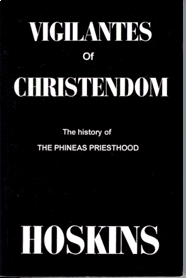 How in the world could someone take a peaceful religion like Christianity and use it to justify a killing spree? Or how about, say, the Crusades? Or hate crimes against gays, African-Americans or pretty much anyone different than we are? I was reading an article on the Huffington Post today by Phillip Jenkins called “What To Do About Violent Biblical Texts?” In it, he notes that such white supremacist groups as the Phineas Priesthood even draw their names from scripture.
This same organization of which Oklahoma City bomber Timothy McVeigh was a member was inspired by a story we rarely hear preached about from the pulpit. But it’s in there.
To quote Jenkin’s piece:
The children of Israel have intermarried with Moabite women, so that the two peoples begin to share in worship. God furiously commands that the chiefs of Israel be impaled in the sun as a means of quenching his anger; Moses commands his subordinates to kill anyone who has married a pagan; a plague kills 24,000 Hebrews. Fortunately, Phinehas, grandson of Aaron, takes decisive action to preempt the worst of the catastrophe. He slaughters a mixed-race couple, the Hebrew man Zimri, who had married a Midianite woman. Mollified, God ends the plague and grants Phinehas a “covenant of peace.”
So not only is Phinehas doing “God’s will,” but the case is made that he is actually saving lives and ensuring peace by sacrificing this mixed-race couple. Sure, they are collateral damage, but it’s for a greater cause. It had to be done.
Sound familiar?
Some even suggest that a culture of justified violence was applied to Jesus’ own crucifixion. This can even be found in the writings of Paul, who came from a culture in which blood was used to purify one of sinfulness. The sacrifice of life, was a common practice in ancient Judaism as well. So it’s understandable when this same model is applied to Jesus’ death.
Yes, many argue, it’s tragic that Jesus died, but it was necessary. It was for a greater cause. He died so that we could live.
Just like Phinehas justified killing the mixed-race couple so that the Jews would be spared God’s wrath.
Just like Bin Laden’s death is justified because he can no longer kill more innocent people.
Just like McVeigh and Dexter justify their actions. And we justify our own actions.
Plenty of people talk about the life and ministry of Jesus being counter-cultural. But generally, we only apply that to our contemporary culture. But his life was counter to the culture of his own day and his own religion of Judaism. Jewish religion called for redemptive violence in the form of sacrifice. Even Paul, who came from a similar Roman culture of redemptive violence, attempts to overlay this historical value of blood atonement over the death of the Messiah. But there are inconsistencies we simply can’t ignore.
Jesus forgave sin while he was still alive. Was this a lie? A Mistake? Or did he actually present a grace to the world that was greater than sin, even then?
And if so, then what is the difference between the forgiveness of the sin of one, or the forgiveness of the sin of many? What about all of humanity? Is it a matter of volume? Can God only handle so much? Does something change about the nature of sin when it’s bundled all together? After all, we Christians often say that “sin is sin,” with no real distinction based on degree or amount.
All fall short. All need grace. Jesus manifest that grace. And he did it while still alive. What’s more, Jesus never justifies violence, even against his captors. He acts just as he preaches, responding to violence with peace.
Call me a peace fundamentalist, but I believe that the justification of one act of violence opens the door for the justified violence of Phinehas, Timothy McVeigh and all other extremists who employ God to justify their bloodshed.
I believe that Walter Wink’s interpretation of Jesus’ message rings the most true, and it can be summed up in three simple words:
Violence never redeems.
It’s love that redeems, and love requires no blood to be spilled in order to exist, or else it’s not really love. There’s no such thing as conditional love; love never comes with an asterisk, a caveat or fine print. It is whole, complete and absolute in and of itself.
Justified violence may be culturally acceptable. It may even be considered Biblical in some cases. But it’s not Christ-like.
Previous Post

February 5, 2012
Best Super Bowl Commercials Ever
Next Post
February 7, 2012 Mark Driscoll's Mars Hill: A Case for Accountability
Browse Our Archives
Select a Category atonement belief bible Bill O'Reilly Buddhism CCM children christian piatt christianity Contemporary Christian Music current events derek flood Easter education Everyday Sunday faith faith and culture Frank Schaeffer great commission Haaz Sleiman Hobby Lobby Homebrewed Culture humor ISIS Jesus John Paul Lederach Killing Jesus LGBTQ marc driscoll Mission Year Music My Jesus Project Nat Geo parenting politics popular culture postChristian prison reform Ray rice religion republicans sacrifice sexuality theology Uncategorized video violence wild goose festival World Vision young adults
Select a Month December 2017 November 2017 October 2017 September 2017 August 2017 July 2017 June 2017 May 2017 April 2017 March 2017 February 2017 January 2017 November 2016 October 2016 September 2016 August 2016 July 2016 June 2016 May 2016 April 2016 March 2016 February 2016 January 2016 December 2015 November 2015 October 2015 September 2015 August 2015 July 2015 June 2015 May 2015 April 2015 March 2015 February 2015 January 2015 December 2014 November 2014 October 2014 September 2014 August 2014 July 2014 June 2014 May 2014 April 2014 March 2014 February 2014 January 2014 December 2013 November 2013 October 2013 September 2013 August 2013 July 2013 June 2013 May 2013 April 2013 March 2013 February 2013 January 2013 December 2012 November 2012 October 2012 September 2012 August 2012 July 2012 June 2012 May 2012 April 2012 March 2012 February 2012 January 2012 December 2011 November 2011 October 2011 September 2011 August 2011 July 2011 June 2011 May 2011 April 2011 March 2011 February 2011 January 2011 December 2010 November 2010 October 2010 September 2010 August 2010 July 2010 June 2010 May 2010 April 2010 March 2010 February 2010 January 2010 December 2009 November 2009 October 2009 September 2009 August 2009 July 2009 June 2009 May 2009 April 2009 March 2009 February 2009 January 2009 December 2008 November 2008 October 2008 September 2008 August 2008 July 2008 June 2008 May 2008 April 2008 March 2008 February 2008 January 2008 December 2007 November 2007 October 2007 September 2007 August 2007 July 2007 June 2007 May 2007 April 2007 March 2007 February 2007 January 2007 December 2006 November 2006 October 2006 September 2006 August 2006
Follow Us!
TAKE THE
Religious Wisdom Quiz
Who was King Saul's father?
Select your answer to see how you score.
Kish Methuselah Rehoboam Job
Related posts from Christian Piatt

More Than Jezebel (Third Week Advent Devotional)

Are We There Yet? (Second Week in Advent...

Look, Shiny! (First Week of Advent Study)

TRENDING AT PATHEOS Progressive Christian

Why Christians Have a Sacred Duty to Vote:...
The Bible offers strong support for the sacred duty to vote. Here...

What Being a Modern-Day Apostle Means to Me
In my last column, I discussed the ins and outs of modern-day...

Did Ancient China Once Worship the God of...
Across human history, a common thread weaves through the origins of the...

Love Your Neighbor – Including Earth-Kin: Lev. 19,...
God’s command to love your neighbor means acting in an ethical and...

Lead a Church Study of “Jesus and Lao...
Guest writer Jack Thomas (The Irreverent Reverend) reflects on leading his church...

Principles for Understanding the Apostolic Ministry Today
Whenever people discover that my formal ministry title is "apostle," as in...
view all Progressive Christian blogs
Ad-Free & Subscriber Log-In Subscription Support
- About Us
- 2026 Calendar
- Videos
- Podcasts
- Library of World Religions
- Faith In Media Tracker
- Advertise With Us
- Write for Us
- Privacy Policy
- Terms of Service
- Do Not Sell My Data
- Contact Us
- Radiant Digital
- Manage Newsletter Subscriptions
- Unsubscribe From Notifications
- Sitemap
Copyright 2008-2026, Patheos. All rights reserved.
Subscription Support Ad-Free & Subscriber Log-In
Follow Patheos