
BuddhistCatholicContemplativeEvangelicalGeneral ChristianHinduJewishLatter-day SaintMuslimNew VisionsProgressive Christian
Beliefs
- Buddhist
- Catholic
- Contemplative
- Evangelical
- General Christian
- Hindu
- Jewish
- Latter-day Saint
- More Voices
- Muslim
- New Visions
- Pagan
- Progressive Christian
Topics
- Religion News
- Food and Religion
- Sports and Religion
- Religious Art
- Religious Music and Entertainment
- Religious Events
- History and Religion
- Style and Religion
- Politics and Religion
- Women in Religion
- Recreation Outdoors and Religion
- Business Finance and Religion
- Careers Workplace and Religion
- Education and Religion
- Family Parenting and Religion
- Health Fitness and Religion
- Home and Religion
- Relationships and Religion
- Technology and Religion
- Travel and Religion
Columnists
- Buddhist Columnists
- Business Finance and Religion Columnists
- Careers Workplace and Religion Columnists
- Catholic Columnists
- Contemplative Columnists
- Education and Religion Columnists
- Evangelists Columnists
- Family Parenting and Religion Columnists
- General Christian Columnists
- Health Fitness and Religion Columnists
- Hindu Columnists
- History and Religion Columnists
- Home and Religion Columnists
- Jewish Columnists
- More Voices Columnists
- Latter Day Columnists
- Muslim Columnists
- New Visions Columnists
- Nonreligious Columnists
- Pagan Columnists
- Politics and Religion Columnists
- Progressive Columnists
- Recreation Outdoors and Religion Columnists
- Relationships and Religion Columnists
- Religion News Columnists
- Religious Art Columnists
- Religious Events Columnists
- Religious Music and Entertainment Columnists
- Sports and Religion Columnists
- Style and Religion Columnists
- Technology and Religion Columnists
- Travel and Religion Columnists
- Women in Religion Columnists
Resource Library
- 2026 Calendar
- Library of World Religions
- The 100 Most Holy Places on Earth
- Patheos Answers
- Podcasts
- Videos
- Faith Leaders Database
- Anglican Episcopalian
- Bahai
- Baptist
- Buddhism
- Christianity
- Confucianism
- Eastern Orthodoxy
- Hinduism
- Holiness and Pentecostal
- ISKCON
- Islam
- Judaism
- Lutheran
- Methodist
- The Church of Jesus Christ of Latter-day Saints
- New Age
- Paganism
- Presbytarian and Reformed
- Protestantism
- Religion Behind the Scenes
- Roman Catholic
- Scientology
- Shia Islam
- Sikhism
- Sufism
- Sunni Islam
- Taoism
- Zen
- See all religions
Research Tools
 Ad-Free & Subscriber Log-In Subscription Support
Ad-Free & Subscriber Log-In Subscription Support
Follow Patheos 

- Trending:
- Forgiveness
- |
- Marriage
- |
- Consciousness
- |
- Death Penalty
- |
- Election
- |
- Halloween
 Christian Piatt
- Home
- Progressive Christian
- Education for ALL: A “Sweeping, Disruptive Technology”
Education for ALL: A “Sweeping, Disruptive Technology”
Last updated on: January 24, 2012 at 5:46 pm by Christian Piatt
Education for ALL: A “Sweeping, Disruptive Technology” 2012-01-24T17:46:29+00:00 Christian Piatt
Patheos Explore the world's faith through different perspectives on religion and spirituality! Patheos has the views of the prevalent religions and spiritualities of the world.
 Yesterday I wrote a piece about how nostalgia expressed in contemporary politics points to the privilege of those longing for the “good old days.” In doing so, I stumbled onto a theme I’ve decided to explore throughout the week. Namely, I’m interested in how it is that inspired vision – unconstrained by “what ifs” or fear of change – might break down barriers to opportunity and help overcome systemic privilege that holds some people back from realizing the same potential as others who are more fortunate.
I wrote an article a little while back about the lingering effects of colonial power on institutional education, and how it continues to limit access for those without certain privilege to connect with it. Well, it turns out there are some folks already trying to do something about this, and it’s pretty exciting.
Sebastian Thrun, a professor at Stanford in computer science, worked recently with Google to create a revolutionary self-driving  car. As if this wasn’t enough, Thrun went on to develop an idea that would at once shift the educational landscape across the planet.
In a recent story on NPR’s “All Things Considered,” Thrun describes how he and an associate decided they would place a class they were offering at Stanford online. Though this is nothing new, the way they offered the class was unheard of.
On a Saturday morning, the pair sent out an email to a small group of people announcing that their upcoming Artificial Intelligence class would be available online for anyone who wanted to take part. Again, some institutions have made curriculum and even video versions of lectures available to the public, but Thrun’s model allowed people actually to take the class. This included submitting questions for the lecturers to respond to, taking online tests and quizzes, and even getting a grade at the end of the class, just like any student enrolled at Stanford.
The only two differences: participants did not get official university credit and the experience cost them nothing.
Within a couple of hours, 5,000 people had signed up. A couple of hours later, that number doubled. And before the class began, a total of 160,000 people registered to take part from 190 different countries across the globe. Students included aspiring computer scientists in Nigeria, an American teacher seeking continuing education supplements, a sixteen-year-old high school student and a woman on dialysis who was homebound because of her disability.
Take a moment to absorb the gravity of what this means. That little sound in your imagination is the sound of the world shifting beneath your feet. For some (like me), the prospects are exhilarating. For others, the response understandably ranges from skepticism to panic.
No, participants do not get school credit toward a degree at Stanford, but is it only a matter of time? And can you imagine the economies of scale at this level? If two professors can conduct a class for a group larger than the population of Green Bay, Wisconsin, how much do you really have to charge each participant to justify the cost? And though I understand the institution’s desire to vet people through their traditional enrollment process, why shouldn’t someone be allowed to get credit for work if they can perform at the same level as the rest of the student body.
There are fears that such widespread access may compromise the integrity of the institution – the brand, if you will – and therefore devalue the diploma people receive from places like Stanford. But if this is what holds a system back from making ideas readily available to the world, they are falling victim to the very colonial forces of institutional self-preservation I warned about in my earlier article.
For me, the formula is fairly simple:
1) Experts have information that is valuable;
2) Others desire to acquire that information;
3) There is now a mean by which that information can be shared on a nearly unlimited scale.
So the question in my mind is: do educational institutions have the right to decide who does and doesn’t get to access this information? It seems that, on some level, the answer to that question may eventually become irrelevant.
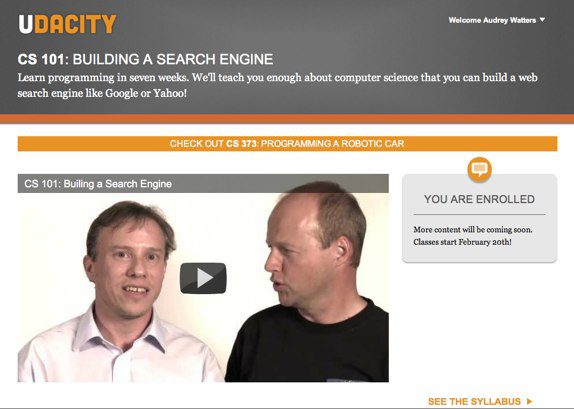 Thrun and his partners at Google already have launched a pilot online learning project called Udacity. Think of it like the TED lecture series on steroids. For $200,000 in seed money, the team has developed a space where people can offer and participate in any number of computer-science-related classes, like the one they offered through Stanford. Their initial offerings have more specific topical focus, like “how to build your own search engine,” and a class on how to build your own self-driving car, like the one Thrun himself created for Google.
Observers have called this phenomenon a “sweeping disruptive technology” which I would suggest will change the way we understand education from here, forward. The question yet to be answered, then, is whether – and/or how – current institutions of higher learning will participate in this revolution of the mind.
Previous Post

January 23, 2012
GOP Nostalgia is a Symptom of Privilege
Next Post
January 25, 2012 We Need More Cannibals
Browse Our Archives
Select a Category atonement belief bible Bill O'Reilly Buddhism CCM children christian piatt christianity Contemporary Christian Music current events derek flood Easter education Everyday Sunday faith faith and culture Frank Schaeffer great commission Haaz Sleiman Hobby Lobby Homebrewed Culture humor ISIS Jesus John Paul Lederach Killing Jesus LGBTQ marc driscoll Mission Year Music My Jesus Project Nat Geo parenting politics popular culture postChristian prison reform Ray rice religion republicans sacrifice sexuality theology Uncategorized video violence wild goose festival World Vision young adults
Select a Month December 2017 November 2017 October 2017 September 2017 August 2017 July 2017 June 2017 May 2017 April 2017 March 2017 February 2017 January 2017 November 2016 October 2016 September 2016 August 2016 July 2016 June 2016 May 2016 April 2016 March 2016 February 2016 January 2016 December 2015 November 2015 October 2015 September 2015 August 2015 July 2015 June 2015 May 2015 April 2015 March 2015 February 2015 January 2015 December 2014 November 2014 October 2014 September 2014 August 2014 July 2014 June 2014 May 2014 April 2014 March 2014 February 2014 January 2014 December 2013 November 2013 October 2013 September 2013 August 2013 July 2013 June 2013 May 2013 April 2013 March 2013 February 2013 January 2013 December 2012 November 2012 October 2012 September 2012 August 2012 July 2012 June 2012 May 2012 April 2012 March 2012 February 2012 January 2012 December 2011 November 2011 October 2011 September 2011 August 2011 July 2011 June 2011 May 2011 April 2011 March 2011 February 2011 January 2011 December 2010 November 2010 October 2010 September 2010 August 2010 July 2010 June 2010 May 2010 April 2010 March 2010 February 2010 January 2010 December 2009 November 2009 October 2009 September 2009 August 2009 July 2009 June 2009 May 2009 April 2009 March 2009 February 2009 January 2009 December 2008 November 2008 October 2008 September 2008 August 2008 July 2008 June 2008 May 2008 April 2008 March 2008 February 2008 January 2008 December 2007 November 2007 October 2007 September 2007 August 2007 July 2007 June 2007 May 2007 April 2007 March 2007 February 2007 January 2007 December 2006 November 2006 October 2006 September 2006 August 2006
Follow Us!
TAKE THE
Religious Wisdom Quiz
What is the effect of the Red Horse's arrival in revelations?
Select your answer to see how you score.
Peace is taken from the earth Plagues spread across the land The sun turns black People fall into a deep sleep
Related posts from Christian Piatt

This Episode is (Kinda) a Matter of Life...


White Men: Most Dangerous People in America?

Prophets, Priests, Heretics, Nones and Becoming Truly Human
TRENDING AT PATHEOS Progressive Christian

What Being a Modern-Day Apostle Means to Me
In my last column, I discussed the ins and outs of modern-day...

Did Ancient China Once Worship the God of...
Across human history, a common thread weaves through the origins of the...

Love Your Neighbor – Including Earth-Kin: Lev. 19,...
God’s command to love your neighbor means acting in an ethical and...

Lead a Church Study of “Jesus and Lao...
Guest writer Jack Thomas (The Irreverent Reverend) reflects on leading his church...

Pastoral Wisdom for Responding to Sermon Pushback
Getting sermon pushback on your social justice sermon? Learn practical, Proverbs-based strategies...

Principles for Understanding the Apostolic Ministry Today
Whenever people discover that my formal ministry title is "apostle," as in...
view all Progressive Christian blogs
Ad-Free & Subscriber Log-In Subscription Support
- About Us
- 2026 Calendar
- Videos
- Podcasts
- Library of World Religions
- Faith In Media Tracker
- Advertise With Us
- Write for Us
- Privacy Policy
- Terms of Service
- Do Not Sell My Data
- Contact Us
- Radiant Digital
- Manage Newsletter Subscriptions
- Unsubscribe From Notifications
- Sitemap
Copyright 2008-2026, Patheos. All rights reserved.
Subscription Support Ad-Free & Subscriber Log-In
Follow Patheos