
BuddhistCatholicContemplativeEvangelicalGeneral ChristianHinduJewishLatter-day SaintMuslimNew VisionsProgressive Christian
Beliefs
- Buddhist
- Catholic
- Contemplative
- Evangelical
- General Christian
- Hindu
- Jewish
- Latter-day Saint
- More Voices
- Muslim
- New Visions
- Pagan
- Progressive Christian
Topics
- Religion News
- Food and Religion
- Sports and Religion
- Religious Art
- Religious Music and Entertainment
- Religious Events
- History and Religion
- Style and Religion
- Politics and Religion
- Women in Religion
- Recreation Outdoors and Religion
- Business Finance and Religion
- Careers Workplace and Religion
- Education and Religion
- Family Parenting and Religion
- Health Fitness and Religion
- Home and Religion
- Relationships and Religion
- Technology and Religion
- Travel and Religion
Columnists
- Buddhist Columnists
- Business Finance and Religion Columnists
- Careers Workplace and Religion Columnists
- Catholic Columnists
- Contemplative Columnists
- Education and Religion Columnists
- Evangelists Columnists
- Family Parenting and Religion Columnists
- General Christian Columnists
- Health Fitness and Religion Columnists
- Hindu Columnists
- History and Religion Columnists
- Home and Religion Columnists
- Jewish Columnists
- More Voices Columnists
- Latter Day Columnists
- Muslim Columnists
- New Visions Columnists
- Nonreligious Columnists
- Pagan Columnists
- Politics and Religion Columnists
- Progressive Columnists
- Recreation Outdoors and Religion Columnists
- Relationships and Religion Columnists
- Religion News Columnists
- Religious Art Columnists
- Religious Events Columnists
- Religious Music and Entertainment Columnists
- Sports and Religion Columnists
- Style and Religion Columnists
- Technology and Religion Columnists
- Travel and Religion Columnists
- Women in Religion Columnists
Resource Library
- 2026 Calendar
- Library of World Religions
- The 100 Most Holy Places on Earth
- Patheos Answers
- Podcasts
- Videos
- Faith Leaders Database
- Anglican Episcopalian
- Bahai
- Baptist
- Buddhism
- Christianity
- Confucianism
- Eastern Orthodoxy
- Hinduism
- Holiness and Pentecostal
- ISKCON
- Islam
- Judaism
- Lutheran
- Methodist
- The Church of Jesus Christ of Latter-day Saints
- New Age
- Paganism
- Presbytarian and Reformed
- Protestantism
- Religion Behind the Scenes
- Roman Catholic
- Scientology
- Shia Islam
- Sikhism
- Sufism
- Sunni Islam
- Taoism
- Zen
- See all religions
Research Tools
 Ad-Free & Subscriber Log-In Subscription Support
Ad-Free & Subscriber Log-In Subscription Support
Follow Patheos 

- Trending:
- Forgiveness
- |
- Marriage
- |
- Consciousness
- |
- Death Penalty
- |
- Election
- |
- Halloween
 Christian Piatt
- Home
- Progressive Christian
- Atheism: A Null Hypothesis on God
Atheism: A Null Hypothesis on God
Last updated on: January 16, 2012 at 5:11 pm by Christian Piatt
Atheism: A Null Hypothesis on God 2012-01-16T17:11:03+00:00 Christian Piatt
Patheos Explore the world's faith through different perspectives on religion and spirituality! Patheos has the views of the prevalent religions and spiritualities of the world.
It’s funny, but I realized that when I talk about myself in relationship to atheists I often sound like a post-civil-rights white person trying to minimize the gap between myself and another group.
 I don’t have anything personally against atheists.
Some of my best friends are atheists.
I even like Ricky Gervais. He’s an atheist, you know.
All of this aside, I have tried in vain over the years to understand atheism. I’ve written about it several times, and whenever I do, I get a bucket of responses from atheists. And of course if I’m ever feeling disconnected from my non-believing brothers and sisters, I really have to go no further than the comment board on the Huffington Post (it seems they have quite a fascination with my articles there).
Try as I may to get atheism, I still don’t. I do, however, see where agnostics are coming from. In fact, I identify myself quite often as a Christian agnostic. This from the website, Infidels.org on the origin of the word:
“Thomas Henry Huxley invented the word agnostic in the Spring of 1869…Huxley first used the word agnostic at a party at James Knowles’s house on Clapham Common prior to the formation of the Metaphysical Society…He [Huxley] took it from St. Paul’s mention of the altar to ‘the Unknown God.'”
The actual Greek roots of the word, “a-gnosis” means, “without knowledge.” Basically, Huxley asserted that he didn’t feel he had 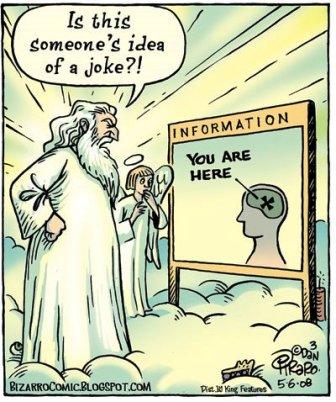 sufficient understanding either way to say with certainty that God does or does not exist. And really, if we consider the centrality of faith in the context of the metaphysical, no one KNOWS that God exists, or else they would have no need for faith. I understand that some will say their faith is so strong that it feels to them like certitude, but that is different than truly knowing.
There’s also the notion of “deep knowing,” which some people claim supersedes the vagueness of agnosticism. But again, in considering the actual etymology of the word, the type of knowledge Huxley is talking about is a cerebral, intellectual knowledge, not a gut feeling, regardless of the strength of conviction.
So by this definition, we’re all agnostic, really.
And that’s why I struggle to understand atheism.
Etymologically, atheism has similar Greek roots to agnosticism, coming from the words “a-theos” which means “no God” or “without God.” This implies the same kind of certitude that a religious fundamentalist might claim is arguing they “know without any doubt that God exists.” Based on what? Either of you? There is no way to prove or disprove the existence of God. Especially when we can’t even nail down what exactly it is we’re talking about.
For some, God is an anthropomorphic “other.” For others, as philosopher John D. Caputo suggests, it’s not that God exists as some independent metaphysical entity, but rather God “insists, so that the rest of creation might exist.”
Put another way, God is the impetus, the spark, the divine breath, the “inspiration,” if you will from which all the rest of creation finds meaning. But God is not to be found “elsewhere.” It’s more like light in that way, conspiring with the physical world to create something that makes sense. Yet to borrow a scientific concept, when you’re seeing an object, what you’re actually seeing is the light, or more specifically, the result of the interaction between the light and the observed object.
But you don’t see the thing itself; you see the light. But the light is the means by which we find meaning in all that we see.
Pretty amazing understanding of God if you ask me. But how do you measure it? How do you prove it? Or disprove it?
One of the cornerstones of science is the scientific method, which is the process by which phenomena are understood and measured based on observable data. And I can see why someone who leans heavily on the scientific method would say that, since the idea of God is not directly observable in the ways defined by the scientific method, it’s a non-issue.
But here’s the thing. At one time, atomic particles were not observable, given the instruments at our disposal. Neither was dark matter. Or gravity, for that matter, which still cannot be directly observed: only measured as it affects other objects. It’s not a “thing” that can be pinned down.
Sound familiar?
I respect the process and constraints of the scientific method. It has been critical to so much of the advancement we’ve made as a species. but to say that even science is entirely constrained by the scientific method is to ignore the creative imagination required to stretch the boundaries, to imagine what might be, beyond what is now understood to be. It’s this kind of imagination that pushes humanity to create new tools that have allowed us to observe things we never knew existed before.
But all of those things – and I’d argue, much more we’ve yet to discover – have been a part of creation, despite out inability to observe or even conceive of them. Making room for those possibilities, seem, to me, to be at the heart of science as much as the rigorous processes defined by the scientific method.
In my graduate studies, I learned that every time you formed a hypothesis (God is), you were also required to develop a null hypothesis that says the opposite of your hypothesis (God isn’t). Keep in mind that there are no “facts” in science, but rather hypotheses (educated guesses) and theories (hypotheses that have been supported by science, but that may ultimately be disproved). Now, I’m not a scientists, but it makes perfect sense within this model to have the “null hypothesis” that God doesn’t exist.
However, to leap from that to certitude of God’s non-existence is to violate the principles of the scientific method, isn’t it? Even Aristotle conceded that the boundaries of science prohibited it from testing certain metaphysical phenomena such as the existence of God.
It seems to me, to paraphrase Paul (like Huxley), that we risk becoming that which we hate in staking claims of certainty on either side of this issue. In pushing back primarily against religious fundamentalism, atheism risks embracing the very fundamentalism it resists. And in doing so, it abandons the very principles of science it claims as the basis for non-belief.
I can work with a null hypothesis on the existence of God. There’s room for dialogue. It creates space for creative imagination on both sides, whereas fundamentalism of any stripe seeks to draw lines of distinction (ie, division) and to stem conversation for the purpose of “being right.”
I don’t know if God exists. You don’t know if God doesn’t exist. But if scientists can not only coexist on both sides of a hypothesis, but even use that difference to promote progress, it seems we can and should apply similar principles to the public forum.
Previous Post

January 14, 2012
From Sex to Satan, Some Churches Will Try Anything
Next Post
January 17, 2012 Re-Membering: the Heart of the Gospel
Browse Our Archives
Select a Category atonement belief bible Bill O'Reilly Buddhism CCM children christian piatt christianity Contemporary Christian Music current events derek flood Easter education Everyday Sunday faith faith and culture Frank Schaeffer great commission Haaz Sleiman Hobby Lobby Homebrewed Culture humor ISIS Jesus John Paul Lederach Killing Jesus LGBTQ marc driscoll Mission Year Music My Jesus Project Nat Geo parenting politics popular culture postChristian prison reform Ray rice religion republicans sacrifice sexuality theology Uncategorized video violence wild goose festival World Vision young adults
Select a Month December 2017 November 2017 October 2017 September 2017 August 2017 July 2017 June 2017 May 2017 April 2017 March 2017 February 2017 January 2017 November 2016 October 2016 September 2016 August 2016 July 2016 June 2016 May 2016 April 2016 March 2016 February 2016 January 2016 December 2015 November 2015 October 2015 September 2015 August 2015 July 2015 June 2015 May 2015 April 2015 March 2015 February 2015 January 2015 December 2014 November 2014 October 2014 September 2014 August 2014 July 2014 June 2014 May 2014 April 2014 March 2014 February 2014 January 2014 December 2013 November 2013 October 2013 September 2013 August 2013 July 2013 June 2013 May 2013 April 2013 March 2013 February 2013 January 2013 December 2012 November 2012 October 2012 September 2012 August 2012 July 2012 June 2012 May 2012 April 2012 March 2012 February 2012 January 2012 December 2011 November 2011 October 2011 September 2011 August 2011 July 2011 June 2011 May 2011 April 2011 March 2011 February 2011 January 2011 December 2010 November 2010 October 2010 September 2010 August 2010 July 2010 June 2010 May 2010 April 2010 March 2010 February 2010 January 2010 December 2009 November 2009 October 2009 September 2009 August 2009 July 2009 June 2009 May 2009 April 2009 March 2009 February 2009 January 2009 December 2008 November 2008 October 2008 September 2008 August 2008 July 2008 June 2008 May 2008 April 2008 March 2008 February 2008 January 2008 December 2007 November 2007 October 2007 September 2007 August 2007 July 2007 June 2007 May 2007 April 2007 March 2007 February 2007 January 2007 December 2006 November 2006 October 2006 September 2006 August 2006
Follow Us!
TAKE THE
Religious Wisdom Quiz
I was only seven years old when I became king and reigned for forty years in Jerusalem. Who am I?
Select your answer to see how you score.
Josiah Manasseh Joash (or Jehoash) Hezekiah
Related posts from Christian Piatt

More Than Jezebel (Third Week Advent Devotional)

Are We There Yet? (Second Week in Advent...

Look, Shiny! (First Week of Advent Study)

TRENDING AT PATHEOS Progressive Christian

What Being a Modern-Day Apostle Means to Me
In my last column, I discussed the ins and outs of modern-day...

Did Ancient China Once Worship the God of...
Across human history, a common thread weaves through the origins of the...

Love Your Neighbor – Including Earth-Kin: Lev. 19,...
God’s command to love your neighbor means acting in an ethical and...

Lead a Church Study of “Jesus and Lao...
Guest writer Jack Thomas (The Irreverent Reverend) reflects on leading his church...

Pastoral Wisdom for Responding to Sermon Pushback
Getting sermon pushback on your social justice sermon? Learn practical, Proverbs-based strategies...

Principles for Understanding the Apostolic Ministry Today
Whenever people discover that my formal ministry title is "apostle," as in...
view all Progressive Christian blogs
Ad-Free & Subscriber Log-In Subscription Support
- About Us
- 2026 Calendar
- Videos
- Podcasts
- Library of World Religions
- Faith In Media Tracker
- Advertise With Us
- Write for Us
- Privacy Policy
- Terms of Service
- Do Not Sell My Data
- Contact Us
- Radiant Digital
- Manage Newsletter Subscriptions
- Unsubscribe From Notifications
- Sitemap
Copyright 2008-2026, Patheos. All rights reserved.
Subscription Support Ad-Free & Subscriber Log-In
Follow Patheos