
BuddhistCatholicContemplativeEvangelicalGeneral ChristianHinduJewishLatter-day SaintMuslimNew VisionsProgressive Christian
Beliefs
- Buddhist
- Catholic
- Contemplative
- Evangelical
- General Christian
- Hindu
- Jewish
- Latter-day Saint
- More Voices
- Muslim
- New Visions
- Pagan
- Progressive Christian
Topics
- Religion News
- Food and Religion
- Sports and Religion
- Religious Art
- Religious Music and Entertainment
- Religious Events
- History and Religion
- Style and Religion
- Politics and Religion
- Women in Religion
- Recreation Outdoors and Religion
- Business Finance and Religion
- Careers Workplace and Religion
- Education and Religion
- Family Parenting and Religion
- Health Fitness and Religion
- Home and Religion
- Relationships and Religion
- Technology and Religion
- Travel and Religion
Columnists
- Buddhist Columnists
- Business Finance and Religion Columnists
- Careers Workplace and Religion Columnists
- Catholic Columnists
- Contemplative Columnists
- Education and Religion Columnists
- Evangelists Columnists
- Family Parenting and Religion Columnists
- General Christian Columnists
- Health Fitness and Religion Columnists
- Hindu Columnists
- History and Religion Columnists
- Home and Religion Columnists
- Jewish Columnists
- More Voices Columnists
- Latter Day Columnists
- Muslim Columnists
- New Visions Columnists
- Nonreligious Columnists
- Pagan Columnists
- Politics and Religion Columnists
- Progressive Columnists
- Recreation Outdoors and Religion Columnists
- Relationships and Religion Columnists
- Religion News Columnists
- Religious Art Columnists
- Religious Events Columnists
- Religious Music and Entertainment Columnists
- Sports and Religion Columnists
- Style and Religion Columnists
- Technology and Religion Columnists
- Travel and Religion Columnists
- Women in Religion Columnists
Resource Library
- 2026 Calendar
- Library of World Religions
- The 100 Most Holy Places on Earth
- Patheos Answers
- Podcasts
- Videos
- Faith Leaders Database
- Anglican Episcopalian
- Bahai
- Baptist
- Buddhism
- Christianity
- Confucianism
- Eastern Orthodoxy
- Hinduism
- Holiness and Pentecostal
- ISKCON
- Islam
- Judaism
- Lutheran
- Methodist
- The Church of Jesus Christ of Latter-day Saints
- New Age
- Paganism
- Presbytarian and Reformed
- Protestantism
- Religion Behind the Scenes
- Roman Catholic
- Scientology
- Shia Islam
- Sikhism
- Sufism
- Sunni Islam
- Taoism
- Zen
- See all religions
Research Tools
 Ad-Free & Subscriber Log-In Subscription Support
Ad-Free & Subscriber Log-In Subscription Support
Follow Patheos 

- Trending:
- Forgiveness
- |
- Marriage
- |
- Consciousness
- |
- Death Penalty
- |
- Election
- |
- Halloween
 Christian Democracy
- Home
- Catholic
- Politics and Religion
- Killing Hurts
Killing Hurts
Last updated on: April 15, 2019 at 4:18 pm by Jack Quirk
Killing Hurts 2019-04-15T16:18:56-05:00 Jack Quirk
Patheos Explore the world's faith through different perspectives on religion and spirituality! Patheos has the views of the prevalent religions and spiritualities of the world.
Occasionally your humble servant makes reference to the fact that the United States is not a Catholic Country, and the Supreme Court has recently provided a stark reminder. The Church teaches this regarding capital punishment:
“Recourse to the death penalty on the part of legitimate authority, following a fair trial, was long considered an appropriate response to the gravity of certain crimes and an acceptable, albeit extreme, means of safeguarding the common good.
Today, however, there is an increasing awareness that the dignity of the person is not lost even after the commission of very serious crimes. In addition, a new understanding has emerged of the significance of penal sanctions imposed by the state. Lastly, more effective systems of detention have been developed, which ensure the due protection of citizens but, at the same time, do not definitively deprive the guilty of the possibility of redemption.
 Consequently, the Church teaches, in the light of the Gospel, that ‘the death penalty is inadmissible because it is an attack on the inviolability and dignity of the person’, and she works with determination for its abolition worldwide.” (Catechism of the Catholic Church, no. 2267) [1]
This is, of course, the new language of no. 2267. It won’t be found in the Catechism you may have at home. The Church has come to the recognition that previous circumstances which justified the death penalty are no longer extant, and has updated the Catechism accordingly.
But the U.S. Constitution provides otherwise. As the Supreme Court in Bucklew v. Precythe recently reminded us, the “Constitution allows capital punishment.” (Id, at p. 8) [2] It is true that the Eighth Amendment prohibits “cruel and unusual punishments,” [3] but, as originally understood, this prohibited “punishments in which ‘terror, pain, or disgrace [were] superadded’ to the penalty of death,” such as “dragging the prisoner to the place of execution, disemboweling, quartering, public dissection, and burning alive, all of which…’savor[ed] of torture or cruelty.’” (Bucklew, at p. 9)
The Eighth Amendment, however, “does not guarantee a prisoner a painless death….” (Id, at p. 12) All that is required is that the mode of punishment not inflict pain unnecessarily. Pain is acceptable. Gratuitous pain is not.
 Russell Bucklew, the petitioner in the recent case, claimed that, due to his unusual medical condition (“cavernous hemangioma, which causes vascular tumors—clumps of blood vessels—to grow in his head, neck, and throat.” [Id, at p. 5]), lethal injection would be particularly painful for him. This was supported by the expert testimony of one Dr. Joel Zivot, an anesthesiologist, who opined that (1) Mr. Bucklew’s airway is compromised such that it was highly likely that it’s integrity could not be maintained after receiving the lethal injection, (2) he would “’likely experience hemorrhaging and/or the possible rupture of the tumor’ on his uvula during his execution,” (3) the hemorrhaging would “’further impede Mr. Bucklew’s airway by filling his mouth and airway with blood, causing him to choke and cough on his own blood,’” (4) it was “’highly likely that Mr. Bucklew, given his specific congenital medical condition,’” could not “’undergo lethal injection without experiencing the excruciating pain and suffering’ of ‘suffocation, convulsions, and visible hemorrhaging,’” (5) the effects of the lethal injection were “’highly unlikely to be instantaneous and the period of time between receiving the injection and death could range over a few minutes to many minutes,’” (6) the lethal injection would not result in rapid unconsciousness, and (7) Mr. “Bucklew ‘would likely experience unconsciousness that’” set “’in progressively as the chemical’” circulated “’through his system’ and that it was during this period that Bucklew was ‘likely to experience prolonged feelings of suffocation and excruciating pain.” (Dissent of Justice Breyer, pp. 3-5)
Many will wince at Mr. Bucklew confronting such a fate. Others, alas, will not. The U.S. Supreme Court didn’t find any of this convincing enough to afford Mr. Bucklew a full hearing. It upheld the lower court’s granting of a summary judgment against him.
But the truth is, anymore, capital punishment itself involves a gratuitous inflicting of pain. As the new no. 2267 of the Catechism informs us, “more effective systems of detention have been developed, which ensure the due protection of citizens but, at the same time, do not definitively deprive the guilty of the possibility of redemption.” In other words, we now have the capability to protect the public without the use of capital punishment. Therefore, we should do so.
The icon of St. Joseph the Worker is by Daniel Nichols.
Please go like Christian Democracy on Facebook here. Join the discussion on Catholic social teaching here.
Previous Post

March 24, 2019
A Kind of Theft
Next Post
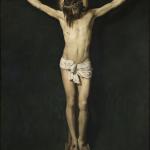
April 18, 2019 A Good Friday Reflection
Browse Our Archives
Select a Category Abortion Affordable Care Act Arbitration Agreements Catholic Social Teaching Christian Democracy climate change Communism Consistent life Constitutional Rights Discrimination distributism Employment Contracts First Amendment Free Exercise Clause Freedom of Speech Government Immigration Ireland Israel Jerusalem Labor Magisterium Middle East Monarchism Neoliberalism Palestine Palestinian State Political parties Pope Pro-Life Movement Religious Discrimination Religious Freedom RIght to Life right-to-work Ruth Bader Ginsburg Same Sex Marriage socialism subsidiarity Supreme Court syndicates Uncategorized United States United States Constitution Universal health care Unjust law Western Society
Select a Month June 2019 May 2019 April 2019 March 2019 February 2019 January 2019 December 2018 November 2018 October 2018 September 2018 August 2018 July 2018 June 2018 May 2018 April 2018
Follow Us!
TAKE THE
Religious Wisdom Quiz
What part of the body does the Breastplate of Righteousness protect?
Select your answer to see how you score.
The heart The stomach The head The back
Related posts from Christian Democracy
What's Wrong with Socialism? (Part 5)
What's Wrong with Socialism? (Part 4)
What's Wrong with Socialism? (Part 3)
The New Teaching on Capital Punishment Isn't so...
TRENDING AT PATHEOS Catholic

Rejecting Doom: Christian Hope And Human Action
Christianity is a religion of hope. We are to have hope and...

It’s What Comes From Within Which Matters
One of the most difficult things for us to understand is why...

Why I Choose the Eucharist Over the Sermon
Choose the Eucharist, Not the Sermon What are we supposed to get...

5 Design Elements Found in Spiritually Rooted Homes
Putting Spirituality Into Home Decor Our homes are more than our living...

Credo: A Story of God Told with the...
About 10 years ago, I began to imagine a personal "Credo" that...

The Anatomy of Divine Revelation in Catholic Thought
The claim that God has made Himself known to human beings is...
view all Catholic blogs
Ad-Free & Subscriber Log-In Subscription Support
- About Us
- 2026 Calendar
- Videos
- Podcasts
- Library of World Religions
- Faith In Media Tracker
- Advertise With Us
- Write for Us
- Privacy Policy
- Terms of Service
- Do Not Sell My Data
- Contact Us
- Radiant Digital
- Manage Newsletter Subscriptions
- Unsubscribe From Notifications
- Sitemap
Copyright 2008-2026, Patheos. All rights reserved.
Subscription Support Ad-Free & Subscriber Log-In
Follow Patheos