
BuddhistCatholicContemplativeEvangelicalGeneral ChristianHinduJewishLatter-day SaintMuslimNew VisionsProgressive Christian
Beliefs
- Buddhist
- Catholic
- Contemplative
- Evangelical
- General Christian
- Hindu
- Jewish
- Latter-day Saint
- More Voices
- Muslim
- New Visions
- Pagan
- Progressive Christian
Topics
- Religion News
- Food and Religion
- Sports and Religion
- Religious Art
- Religious Music and Entertainment
- Religious Events
- History and Religion
- Style and Religion
- Politics and Religion
- Women in Religion
- Recreation Outdoors and Religion
- Business Finance and Religion
- Careers Workplace and Religion
- Education and Religion
- Family Parenting and Religion
- Health Fitness and Religion
- Home and Religion
- Relationships and Religion
- Technology and Religion
- Travel and Religion
Columnists
- Buddhist Columnists
- Business Finance and Religion Columnists
- Careers Workplace and Religion Columnists
- Catholic Columnists
- Contemplative Columnists
- Education and Religion Columnists
- Evangelists Columnists
- Family Parenting and Religion Columnists
- General Christian Columnists
- Health Fitness and Religion Columnists
- Hindu Columnists
- History and Religion Columnists
- Home and Religion Columnists
- Jewish Columnists
- More Voices Columnists
- Latter Day Columnists
- Muslim Columnists
- New Visions Columnists
- Nonreligious Columnists
- Pagan Columnists
- Politics and Religion Columnists
- Progressive Columnists
- Recreation Outdoors and Religion Columnists
- Relationships and Religion Columnists
- Religion News Columnists
- Religious Art Columnists
- Religious Events Columnists
- Religious Music and Entertainment Columnists
- Sports and Religion Columnists
- Style and Religion Columnists
- Technology and Religion Columnists
- Travel and Religion Columnists
- Women in Religion Columnists
Resource Library
- 2026 Calendar
- Library of World Religions
- The 100 Most Holy Places on Earth
- Patheos Answers
- Podcasts
- Videos
- Faith Leaders Database
- Anglican Episcopalian
- Bahai
- Baptist
- Buddhism
- Christianity
- Confucianism
- Eastern Orthodoxy
- Hinduism
- Holiness and Pentecostal
- ISKCON
- Islam
- Judaism
- Lutheran
- Methodist
- The Church of Jesus Christ of Latter-day Saints
- New Age
- Paganism
- Presbytarian and Reformed
- Protestantism
- Religion Behind the Scenes
- Roman Catholic
- Scientology
- Shia Islam
- Sikhism
- Sufism
- Sunni Islam
- Taoism
- Zen
- See all religions
Research Tools
 Ad-Free & Subscriber Log-In Subscription Support
Ad-Free & Subscriber Log-In Subscription Support
Follow Patheos 

- Trending:
- Forgiveness
- |
- Marriage
- |
- Consciousness
- |
- Death Penalty
- |
- Election
- |
- Halloween
 Christian Democracy
- Home
- Catholic
- Politics and Religion
- A Good Friday Reflection
A Good Friday Reflection
Last updated on: April 18, 2019 at 5:47 pm by Jack Quirk
A Good Friday Reflection 2019-04-18T17:47:59-05:00 Jack Quirk
Patheos Explore the world's faith through different perspectives on religion and spirituality! Patheos has the views of the prevalent religions and spiritualities of the world.
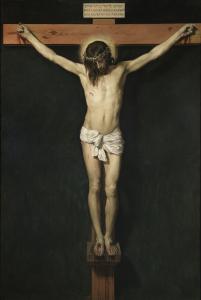
On Good Friday we remember that God subjected himself to the evil of humanity, and what that evil looked like when it was placed upon him. We recall that somehow, in a way not fully understood by us, this voluntary self-sacrifice by the Creator and Sustainer of the universe made possible a reconciliation between him and the humanity that manifested its rejection of him by the torture and degradation it inflicted upon him. It is of the essence of the Christian faith that we maintain within ourselves the sobering disquiet of the realization that we were all present and participating in the brutal flagellation, the savage driving of the nails, and the heartless mockery. So deep and intense was our evil that concentrated upon him that day that the sun itself was made dark, and we were made to look plainly at the grim and stark reality of what we had become.
No one can fully understand his need for repentance until he has come to grips with his own culpability for the events of Good Friday. No one understands the reason for the Crucifixion until he realizes that it was our nature, not God’s, that made the bloody sacrifice necessary; that it was we, not him, who thirsted for the torture and death of the God whose love was so absolute and unconditional that he submitted to our will in order to be reconciled to us.
In light of these things it seems almost beside the point to consider the legal and political reasons behind the Crucifixion, which seem at first blush to be merely incidental. But they are not incidental. For it was the very fact that such reasons were possible that made the Crucifixion necessary in the first place.
A 4158
First century Palestine had governments, like most places, and was under occupation, like many places before and since. Jesus’ native Galilee was governed by Herod Antipas, a puppet of the Roman Empire. Judea, where Jesus was killed, was under direct Roman rule, such jurisdiction that the high priests and Sanhedrin had being entirely at Roman sufferance.
Roman rule was brutal, taxation was harsh, and any resistance was met with one of the cruelest methods of execution ever devised. Into this situation Jesus came proclaiming the kingdom of God, something that was to come inevitably at the end of the world, to be sure, but also something that could be experienced here and now by those willing to drop the pretenses of the present age.
It was for this he was killed. He offered an alternative, God’s alternative, to the brutality of the prevailing system. He offered God as king in a society that could tolerate no other king but Caesar. He showed people that their participation in the system could be remedied by something as simple as the cessation of that participation. And so he was sentenced to the execution of a rebel, for a rebel he truly was, of the deepest and most significant kind.
In our own time, and in our own nation, some of us enjoy the fruits of empire, much as the Roman citizens did when Jesus walked the earth. Others of us fare little better than those who have groaned under our export of war and the falsely called “free enterprise.” We are at constant war with each other and with those abroad. We cut food stamps for the needy, and bomb villages in the Middle East. We allow unconscionable employers to pay wages lower than what is needed to support a family. We are so addicted to our own pleasures that we slay our own offspring if any result, comforting ourselves that we have done so before birth, and calling our action by the euphemism “abortion.” And we are arrogant enough to claim that it is our right to do such things, twisting and distorting the idea of natural rights beyond recognition.
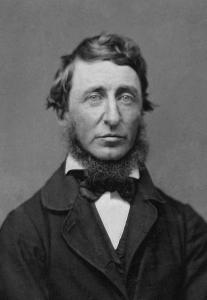 Henry David Thoreau refused to pay the poll tax because of his objection to slavery, and was arrested as a result. It is said that Ralph Waldo Emerson came to see him in jail, and asked, “Henry, what are you doing in there?” Thoreau’s pointed response was, “Waldo, what are you doing out there?”
Here in these United States we Christians don’t suffer persecution as did those who lived in the Islamic State, those who marched with Dr. Martin Luther King, Jr., or those many martyrs who have gone before us back to the Apostolic age. Indeed, many of us enjoy the comforts of respectability and prosperity. And yet it is an open question as to what difference we are making to a society that engages in the evils aforementioned. Indeed, some of us who take the name of Christian actively embrace those evils. In light of this, we must ask ourselves if the reason we do not suffer persecution in such a system is because we present no threat to it, and, if so, why that is the case.
Perhaps, this Good Friday, we will reflect on our participation in the Crucifixion. And perhaps we will reflect on the reasons why Jesus was crucified. Perhaps further, we will look up to Jesus on the Cross and ask him, “What are you doing up there?” And, perhaps, Jesus will look down upon us and ask, “What are you doing down there?”
The icon of St. Joseph the Worker is by Daniel Nichols.
Please go like Christian Democracy on Facebook here. Join the discussion on Catholic social teaching here.
An earlier version of this article appeared in the pre-Patheos version of Christian Democracy on March 25, 2016.
Previous Post

April 15, 2019
Killing Hurts
Next Post

May 10, 2019 Catholic Teaching and Taxes
Browse Our Archives
Select a Category Abortion Affordable Care Act Arbitration Agreements Catholic Social Teaching Christian Democracy climate change Communism Consistent life Constitutional Rights Discrimination distributism Employment Contracts First Amendment Free Exercise Clause Freedom of Speech Government Immigration Ireland Israel Jerusalem Labor Magisterium Middle East Monarchism Neoliberalism Palestine Palestinian State Political parties Pope Pro-Life Movement Religious Discrimination Religious Freedom RIght to Life right-to-work Ruth Bader Ginsburg Same Sex Marriage socialism subsidiarity Supreme Court syndicates Uncategorized United States United States Constitution Universal health care Unjust law Western Society
Select a Month June 2019 May 2019 April 2019 March 2019 February 2019 January 2019 December 2018 November 2018 October 2018 September 2018 August 2018 July 2018 June 2018 May 2018 April 2018
Follow Us!
TAKE THE
Religious Wisdom Quiz
True or False: Solomon asked God for wisdom rather than wealth or long life.
Select your answer to see how you score.
FALSE TRUE
Related posts from Christian Democracy



Bernie Sanders Tacks Distributist
TRENDING AT PATHEOS Catholic

The Parable Of The Sower And The Word...
One of Christ’s most famous parables is that of the sower who...

Rejecting Doom: Christian Hope And Human Action
Christianity is a religion of hope. We are to have hope and...

Why I Choose the Eucharist Over the Sermon
Choose the Eucharist, Not the Sermon What are we supposed to get...

5 Design Elements Found in Spiritually Rooted Homes
Putting Spirituality Into Home Decor Our homes are more than our living...

Credo: A Story of God Told with the...
About 10 years ago, I began to imagine a personal "Credo" that...

The Anatomy of Divine Revelation in Catholic Thought
The claim that God has made Himself known to human beings is...
view all Catholic blogs
Ad-Free & Subscriber Log-In Subscription Support
- About Us
- 2026 Calendar
- Videos
- Podcasts
- Library of World Religions
- Faith In Media Tracker
- Advertise With Us
- Write for Us
- Privacy Policy
- Terms of Service
- Do Not Sell My Data
- Contact Us
- Radiant Digital
- Manage Newsletter Subscriptions
- Unsubscribe From Notifications
- Sitemap
Copyright 2008-2026, Patheos. All rights reserved.
Subscription Support Ad-Free & Subscriber Log-In
Follow Patheos