
BuddhistCatholicContemplativeEvangelicalGeneral ChristianHinduJewishLatter-day SaintMuslimNew VisionsProgressive Christian
Beliefs
- Buddhist
- Catholic
- Contemplative
- Evangelical
- General Christian
- Hindu
- Jewish
- Latter-day Saint
- More Voices
- Muslim
- New Visions
- Pagan
- Progressive Christian
Topics
- Religion News
- Food and Religion
- Sports and Religion
- Religious Art
- Religious Music and Entertainment
- Religious Events
- History and Religion
- Style and Religion
- Politics and Religion
- Women in Religion
- Recreation Outdoors and Religion
- Business Finance and Religion
- Careers Workplace and Religion
- Education and Religion
- Family Parenting and Religion
- Health Fitness and Religion
- Home and Religion
- Relationships and Religion
- Technology and Religion
- Travel and Religion
Columnists
- Buddhist Columnists
- Business Finance and Religion Columnists
- Careers Workplace and Religion Columnists
- Catholic Columnists
- Contemplative Columnists
- Education and Religion Columnists
- Evangelists Columnists
- Family Parenting and Religion Columnists
- General Christian Columnists
- Health Fitness and Religion Columnists
- Hindu Columnists
- History and Religion Columnists
- Home and Religion Columnists
- Jewish Columnists
- More Voices Columnists
- Latter Day Columnists
- Muslim Columnists
- New Visions Columnists
- Nonreligious Columnists
- Pagan Columnists
- Politics and Religion Columnists
- Progressive Columnists
- Recreation Outdoors and Religion Columnists
- Relationships and Religion Columnists
- Religion News Columnists
- Religious Art Columnists
- Religious Events Columnists
- Religious Music and Entertainment Columnists
- Sports and Religion Columnists
- Style and Religion Columnists
- Technology and Religion Columnists
- Travel and Religion Columnists
- Women in Religion Columnists
Resource Library
- 2026 Calendar
- Library of World Religions
- The 100 Most Holy Places on Earth
- Patheos Answers
- Podcasts
- Videos
- Faith Leaders Database
- Anglican Episcopalian
- Bahai
- Baptist
- Buddhism
- Christianity
- Confucianism
- Eastern Orthodoxy
- Hinduism
- Holiness and Pentecostal
- ISKCON
- Islam
- Judaism
- Lutheran
- Methodist
- The Church of Jesus Christ of Latter-day Saints
- New Age
- Paganism
- Presbytarian and Reformed
- Protestantism
- Religion Behind the Scenes
- Roman Catholic
- Scientology
- Shia Islam
- Sikhism
- Sufism
- Sunni Islam
- Taoism
- Zen
- See all religions
Research Tools
 Ad-Free & Subscriber Log-In Subscription Support
Ad-Free & Subscriber Log-In Subscription Support
Follow Patheos 

- Trending:
- Forgiveness
- |
- Marriage
- |
- Consciousness
- |
- Death Penalty
- |
- Election
- |
- Halloween
 Christian Democracy
- Home
- Catholic
- Politics and Religion
- Moses’ Seat
Moses’ Seat
Last updated on: March 15, 2019 at 12:32 pm by Jack Quirk
Moses’ Seat 2019-03-15T12:32:46-05:00 Jack Quirk
Patheos Explore the world's faith through different perspectives on religion and spirituality! Patheos has the views of the prevalent religions and spiritualities of the world.
Then said Jesus to the crowds and to his disciples, “The scribes and the Pharisees sit on Moses’ seat; so practice and observe whatever they tell you, but not what they do; for they preach, but do not practice.”
—Matthew 23:1-3
Recently your humble servant has been writing about how bishops should be elected by the people of the diocese. While it is an idea that has pleased some, it has been met with derision by others. That has to be expected. Although it is a practice that goes back to the earliest days of the Church, it is a practice with which modern Catholics are completely unfamiliar. It is, therefore, understandable that some would think that I have been suggesting a change in the nature of the Church.
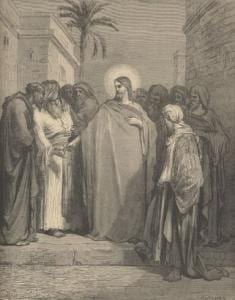 But even to those who are favorable to the idea in theory it may seem quixotic of me to bring it up. In order for such a radical change to take place, the bishops would have to allow it. And none of them were selected by anything resembling popular suffrage. In fact, bishops are no longer required to even be from the dioceses they are to preside over. They are simply promoted and assigned like branch managers, and there is no requirement that they have any previous connection to the local churches they are to govern.
It is no wonder, then, that they would have such an emotional distance from their flocks so as to allow sexual predators to run loose in the churches, given that they have spent their careers seeking preferment like corporate executives, with all of the vacuous character traits that such endeavors bring to bear.
None of this is new, of course. The Church has had crises of leadership since Judas Iscariot took his thirty pieces of silver. And even before then, there were the scribes and Pharisees who devoured widows’ houses and for a pretense made long prayers. (Luke 20:47)
The moral authority of such can be seen to be reasonably questioned. How can they be believed about such issues as birth control while they provide cover for child molesters?
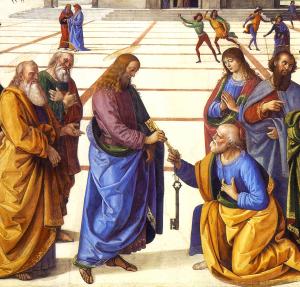 Jesus provided the paradoxical answer: they sit in the seat of Moses, of the Apostles. Thus, the bishops are to be obeyed, though not emulated.
This isn’t the only hard saying of Jesus. He told the rich young man to sell all he had and give the proceeds to the poor. He said whoever lusts after a woman has committed adultery in his heart. He said, “If any one comes to me and does not hate his own father and mother and wife and children and brothers and sisters, yes, and even his own life, he cannot be my disciple.” (Luke 14:26)
It is natural for us to hope for men who are worthy of being obeyed. But that is not always afforded us. Perhaps it is not even usually afforded us. Still, Jesus couldn’t have been clearer.
This goes against the grain, and doubtlessly some will find it offensive. In that respect it is much like many other things Jesus said. That’s why it is necessary to have faith to follow him.
The icon of St. Joseph the Worker is by Daniel Nichols.
Please go like Christian Democracy on Facebook here. Join the discussion on Catholic social teaching here.
Biblical quotations are from the Catholic Edition of the Revised Standard Version of the Bible, copyright 1965, 1966 by the Division of Christian Education of the National Council of the Churches of Christ in the United States of America. Used by permission. All rights reserved.
Previous Post

February 26, 2019
The Value of Motherhood
Next Post

March 24, 2019 A Kind of Theft
Browse Our Archives
Select a Category Abortion Affordable Care Act Arbitration Agreements Catholic Social Teaching Christian Democracy climate change Communism Consistent life Constitutional Rights Discrimination distributism Employment Contracts First Amendment Free Exercise Clause Freedom of Speech Government Immigration Ireland Israel Jerusalem Labor Magisterium Middle East Monarchism Neoliberalism Palestine Palestinian State Political parties Pope Pro-Life Movement Religious Discrimination Religious Freedom RIght to Life right-to-work Ruth Bader Ginsburg Same Sex Marriage socialism subsidiarity Supreme Court syndicates Uncategorized United States United States Constitution Universal health care Unjust law Western Society
Select a Month June 2019 May 2019 April 2019 March 2019 February 2019 January 2019 December 2018 November 2018 October 2018 September 2018 August 2018 July 2018 June 2018 May 2018 April 2018
Follow Us!
TAKE THE
Religious Wisdom Quiz
True or False: Romans teaches that whoever calls on the name of the Lord will be saved.
Select your answer to see how you score.
TRUE FALSE
Related posts from Christian Democracy
The People Should Elect the Bishops (Part II)
The People Should Elect the Bishop

Public Sector Unions in Catholic Social Teaching
TRENDING AT PATHEOS Catholic

Rejecting Doom: Christian Hope And Human Action
Christianity is a religion of hope. We are to have hope and...

It’s What Comes From Within Which Matters
One of the most difficult things for us to understand is why...

Why I Choose the Eucharist Over the Sermon
Choose the Eucharist, Not the Sermon What are we supposed to get...

5 Design Elements Found in Spiritually Rooted Homes
Putting Spirituality Into Home Decor Our homes are more than our living...

Credo: A Story of God Told with the...
About 10 years ago, I began to imagine a personal "Credo" that...

The Anatomy of Divine Revelation in Catholic Thought
The claim that God has made Himself known to human beings is...
view all Catholic blogs
Ad-Free & Subscriber Log-In Subscription Support
- About Us
- 2026 Calendar
- Videos
- Podcasts
- Library of World Religions
- Faith In Media Tracker
- Advertise With Us
- Write for Us
- Privacy Policy
- Terms of Service
- Do Not Sell My Data
- Contact Us
- Radiant Digital
- Manage Newsletter Subscriptions
- Unsubscribe From Notifications
- Sitemap
Copyright 2008-2026, Patheos. All rights reserved.
Subscription Support Ad-Free & Subscriber Log-In
Follow Patheos