
BuddhistCatholicContemplativeEvangelicalGeneral ChristianHinduJewishLatter-day SaintMuslimNew VisionsProgressive Christian
Beliefs
- Buddhist
- Catholic
- Contemplative
- Evangelical
- General Christian
- Hindu
- Jewish
- Latter-day Saint
- More Voices
- Muslim
- New Visions
- Pagan
- Progressive Christian
Topics
- Religion News
- Food and Religion
- Sports and Religion
- Religious Art
- Religious Music and Entertainment
- Religious Events
- History and Religion
- Style and Religion
- Politics and Religion
- Women in Religion
- Recreation Outdoors and Religion
- Business Finance and Religion
- Careers Workplace and Religion
- Education and Religion
- Family Parenting and Religion
- Health Fitness and Religion
- Home and Religion
- Relationships and Religion
- Technology and Religion
- Travel and Religion
Columnists
- Buddhist Columnists
- Business Finance and Religion Columnists
- Careers Workplace and Religion Columnists
- Catholic Columnists
- Contemplative Columnists
- Education and Religion Columnists
- Evangelists Columnists
- Family Parenting and Religion Columnists
- General Christian Columnists
- Health Fitness and Religion Columnists
- Hindu Columnists
- History and Religion Columnists
- Home and Religion Columnists
- Jewish Columnists
- More Voices Columnists
- Latter Day Columnists
- Muslim Columnists
- New Visions Columnists
- Nonreligious Columnists
- Pagan Columnists
- Politics and Religion Columnists
- Progressive Columnists
- Recreation Outdoors and Religion Columnists
- Relationships and Religion Columnists
- Religion News Columnists
- Religious Art Columnists
- Religious Events Columnists
- Religious Music and Entertainment Columnists
- Sports and Religion Columnists
- Style and Religion Columnists
- Technology and Religion Columnists
- Travel and Religion Columnists
- Women in Religion Columnists
Resource Library
- 2026 Calendar
- Library of World Religions
- The 100 Most Holy Places on Earth
- Patheos Answers
- Podcasts
- Videos
- Faith Leaders Database
- Anglican Episcopalian
- Bahai
- Baptist
- Buddhism
- Christianity
- Confucianism
- Eastern Orthodoxy
- Hinduism
- Holiness and Pentecostal
- ISKCON
- Islam
- Judaism
- Lutheran
- Methodist
- The Church of Jesus Christ of Latter-day Saints
- New Age
- Paganism
- Presbytarian and Reformed
- Protestantism
- Religion Behind the Scenes
- Roman Catholic
- Scientology
- Shia Islam
- Sikhism
- Sufism
- Sunni Islam
- Taoism
- Zen
- See all religions
Research Tools
 Ad-Free & Subscriber Log-In Subscription Support
Ad-Free & Subscriber Log-In Subscription Support
Follow Patheos 

- Trending:
- Forgiveness
- |
- Marriage
- |
- Consciousness
- |
- Death Penalty
- |
- Election
- |
- Halloween
 Christian Democracy
- Home
- Catholic
- Politics and Religion
- The People Should Elect the Bishops (Part II)
The People Should Elect the Bishops (Part II)
Last updated on: January 23, 2019 at 11:18 pm by Jack Quirk
The People Should Elect the Bishops (Part II) 2019-01-23T23:18:01-06:00 Jack Quirk
Patheos Explore the world's faith through different perspectives on religion and spirituality! Patheos has the views of the prevalent religions and spiritualities of the world.
At the end of last month your humble servant wrote an article entitled “The People Should Elect the Bishop,” [1] which got a fair amount of attention, and some objections were raised that require a response. Even though it is an old idea, for those of us living in these times it is a new idea, and it is not surprising that some objections would be raised. People are accustomed to what they are accustomed to, and practices which precede one’s lifetime can often carry with them the illusion that they stem from eternal verities.
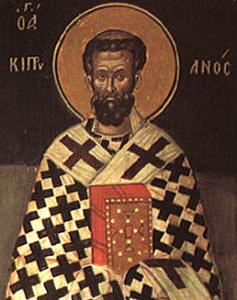
And one objection that was raised was that I was proposing a change in the very nature of the Catholic Church, that I was even suggesting a move in the direction of Protestantism. But nothing could be further from the truth. The fact is, in the early Church, popular election of bishops was a common practice. The chief witness to the practice is St. Cyprian, bishop of Carthage in the 3rd century. As Patrick Granfield of Catholic University of America put it,
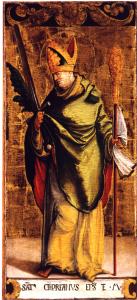 “In the Roman Catholic communion today the writings of Cyprian are referred to with increasing frequency and approval. This is especially evident in contemporary research on the nature of episcopal ministry and on the coresponsibility of all levels of Church membership. The witness of Cyprian is important at a time when demands are being made for structural reform and greater democratization of the Roman Church. Cyprian furnished valuable information on the practical operation of shared responsibility in the election of bishops. He stated emphatically that the entire community—clergy, laity, and neighboring bishops—should participate in the selection of episcopal leaders. In this he anticipated the important assertion made by Leo the Great two centuries later: ‘Qui praefuturus est omnibus, eligi debet ab omnibus.’” [2]
Moreover, this was at least a widespread practice, if not universal.
“The geographic extension of the elective process described by Cyprian is quite broad. It appears, as we have seen above, to have been the ordinary and normal way of electing bishops in at least three important Christian centers: Rome, Spain, and Africa. Cyprian referred to his own election, at which he was chosen bishop ‘populi universi suffragio.’ He also stated that the custom of popular election was observed not only in Africa (‘apud nos’) but ‘fere per provincias universas.’”
So popular election of bishops is hardly an innovation, much less a Protestant innovation. It is simply the way that many of the early churches selected their bishops. Anyone opposed to the idea has to do better than “the Church is not a democracy” bromide. He will have to give reasons for why he thinks it is a bad idea.
An objection along those very lines also came up. Many were concerned that Catholics will willfully elect heretics. To that objection I have two responses.
The first is simply that I can’t imagine how we could do worse than leadership that allows a manifest pedophile ring to flourish throughout the world. Worse, they cover it up. All meaningful impetus for reform has come from outside their ranks.
 Secondly, those who are concerned that the Church will somehow change her essential doctrines have forgotten about the Holy Spirit. Elected bishops, who will be as duly ordained as the bishops we have now, won’t be a different kind of creature. If they agree in an ecumenical council, the Holy Spirit will ensure the results as surely as he does now. Human beings cannot overcome the teachings of the Church. It is impossible.
But we can certainly try to devise a way to select bishops who will behave better. I humbly submit that we can do that by returning to the early practice of the Church.
The icon of St. Joseph the Worker is by Daniel Nichols.
Please go like Christian Democracy on Facebook here. Join the discussion on Catholic social teaching here.
Previous Post

January 8, 2019
A Wall for Universal Healthcare
Next Post
February 9, 2019 For Democracy to Work, Politicians Must Believe in It
Browse Our Archives
Select a Category Abortion Affordable Care Act Arbitration Agreements Catholic Social Teaching Christian Democracy climate change Communism Consistent life Constitutional Rights Discrimination distributism Employment Contracts First Amendment Free Exercise Clause Freedom of Speech Government Immigration Ireland Israel Jerusalem Labor Magisterium Middle East Monarchism Neoliberalism Palestine Palestinian State Political parties Pope Pro-Life Movement Religious Discrimination Religious Freedom RIght to Life right-to-work Ruth Bader Ginsburg Same Sex Marriage socialism subsidiarity Supreme Court syndicates Uncategorized United States United States Constitution Universal health care Unjust law Western Society
Select a Month June 2019 May 2019 April 2019 March 2019 February 2019 January 2019 December 2018 November 2018 October 2018 September 2018 August 2018 July 2018 June 2018 May 2018 April 2018
Follow Us!
TAKE THE
Religious Wisdom Quiz
In what city was Jesus born?
Select your answer to see how you score.
Bethlehem Jerusalem Nazareth Capernaum
Related posts from Christian Democracy
The People Should Elect the Bishop
TRENDING AT PATHEOS Catholic

Rejecting Doom: Christian Hope And Human Action
Christianity is a religion of hope. We are to have hope and...

It’s What Comes From Within Which Matters
One of the most difficult things for us to understand is why...

Why I Choose the Eucharist Over the Sermon
Choose the Eucharist, Not the Sermon What are we supposed to get...

5 Design Elements Found in Spiritually Rooted Homes
Putting Spirituality Into Home Decor Our homes are more than our living...

Credo: A Story of God Told with the...
About 10 years ago, I began to imagine a personal "Credo" that...

The Anatomy of Divine Revelation in Catholic Thought
The claim that God has made Himself known to human beings is...
view all Catholic blogs
Ad-Free & Subscriber Log-In Subscription Support
- About Us
- 2026 Calendar
- Videos
- Podcasts
- Library of World Religions
- Faith In Media Tracker
- Advertise With Us
- Write for Us
- Privacy Policy
- Terms of Service
- Do Not Sell My Data
- Contact Us
- Radiant Digital
- Manage Newsletter Subscriptions
- Unsubscribe From Notifications
- Sitemap
Copyright 2008-2026, Patheos. All rights reserved.
Subscription Support Ad-Free & Subscriber Log-In
Follow Patheos