
BuddhistCatholicContemplativeEvangelicalGeneral ChristianHinduJewishLatter-day SaintMuslimNew VisionsProgressive Christian
Beliefs
- Buddhist
- Catholic
- Contemplative
- Evangelical
- General Christian
- Hindu
- Jewish
- Latter-day Saint
- More Voices
- Muslim
- New Visions
- Pagan
- Progressive Christian
Topics
- Religion News
- Food and Religion
- Sports and Religion
- Religious Art
- Religious Music and Entertainment
- Religious Events
- History and Religion
- Style and Religion
- Politics and Religion
- Women in Religion
- Recreation Outdoors and Religion
- Business Finance and Religion
- Careers Workplace and Religion
- Education and Religion
- Family Parenting and Religion
- Health Fitness and Religion
- Home and Religion
- Relationships and Religion
- Technology and Religion
- Travel and Religion
Columnists
- Buddhist Columnists
- Business Finance and Religion Columnists
- Careers Workplace and Religion Columnists
- Catholic Columnists
- Contemplative Columnists
- Education and Religion Columnists
- Evangelists Columnists
- Family Parenting and Religion Columnists
- General Christian Columnists
- Health Fitness and Religion Columnists
- Hindu Columnists
- History and Religion Columnists
- Home and Religion Columnists
- Jewish Columnists
- More Voices Columnists
- Latter Day Columnists
- Muslim Columnists
- New Visions Columnists
- Nonreligious Columnists
- Pagan Columnists
- Politics and Religion Columnists
- Progressive Columnists
- Recreation Outdoors and Religion Columnists
- Relationships and Religion Columnists
- Religion News Columnists
- Religious Art Columnists
- Religious Events Columnists
- Religious Music and Entertainment Columnists
- Sports and Religion Columnists
- Style and Religion Columnists
- Technology and Religion Columnists
- Travel and Religion Columnists
- Women in Religion Columnists
Resource Library
- 2026 Calendar
- Library of World Religions
- The 100 Most Holy Places on Earth
- Patheos Answers
- Podcasts
- Videos
- Faith Leaders Database
- Anglican Episcopalian
- Bahai
- Baptist
- Buddhism
- Christianity
- Confucianism
- Eastern Orthodoxy
- Hinduism
- Holiness and Pentecostal
- ISKCON
- Islam
- Judaism
- Lutheran
- Methodist
- The Church of Jesus Christ of Latter-day Saints
- New Age
- Paganism
- Presbytarian and Reformed
- Protestantism
- Religion Behind the Scenes
- Roman Catholic
- Scientology
- Shia Islam
- Sikhism
- Sufism
- Sunni Islam
- Taoism
- Zen
- See all religions
Research Tools
 Ad-Free & Subscriber Log-In Subscription Support
Ad-Free & Subscriber Log-In Subscription Support
Follow Patheos 

- Trending:
- Forgiveness
- |
- Marriage
- |
- Consciousness
- |
- Death Penalty
- |
- Election
- |
- Halloween
 Christian Democracy
- Home
- Catholic
- Politics and Religion
- What’s Wrong with Socialism? (Part 2)
What’s Wrong with Socialism? (Part 2)
Last updated on: July 21, 2018 at 3:34 pm by Jack Quirk
What’s Wrong with Socialism? (Part 2) 2018-07-21T15:34:32-05:00 Jack Quirk
Patheos Explore the world's faith through different perspectives on religion and spirituality! Patheos has the views of the prevalent religions and spiritualities of the world.
When Pope Leo XIII wrote Rerum Novarum [1] in 1891, the world had seen the dire impact of unregulated capitalism on working people. It was, therefore, obvious to the Pontiff “that some opportune remedy” needed to “be found quickly for the misery and wretchedness pressing so unjustly on the majority of the working class….” (Ibid, §3) A system had developed such that “the hiring of labor and the conduct of trade” were “concentrated in the hands of comparatively few; so that a small number of very rich men” had “been able to lay upon the teeming masses of the laboring poor a yoke little better than that of slavery itself.”
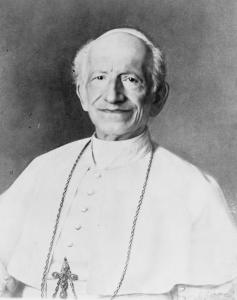 Leo XIII’s solution would be a requirement that wages be sufficient to support a family, with labor unions to secure that right, combined with assistance from the State if needed. But he also addressed the remedy proposed by the socialists of his day, which he rejected completely. But what, precisely, was he rejecting? He explained it plainly:
“To remedy these wrongs the socialists, working on the poor man’s envy of the rich, are striving to do away with private property, and contend that individual possessions should become the common property of all, to be administered by the State or by municipal bodies. They hold that by thus transferring property from private individuals to the community, the present mischievous state of things will be set to rights, inasmuch as each citizen will then get his fair share of whatever there is to enjoy. But their contentions are so clearly powerless to end the controversy that were they carried into effect the working man himself would be among the first to suffer. They are, moreover, emphatically unjust, for they would rob the lawful possessor, distort the functions of the State, and create utter confusion in the community.” (Ibid, §4)
What Leo XIII was opposed to was the abolition of private property. Here, it should be noted, that the “private property” referred to wasn’t individual items for personal use, but the means of production, or capital goods, such as machinery, factories, or the soil. But why did Leo XIII believe that working people “would be among the first to suffer” if private ownership of the means of production was abolished? He laid it out like this:
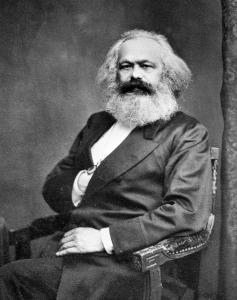 “It is surely undeniable that, when a man engages in remunerative labor, the impelling reason and motive of his work is to obtain property, and thereafter to hold it as his very own. If one man hires out to another his strength or skill, he does so for the purpose of receiving in return what is necessary for the satisfaction of his needs; he therefore expressly intends to acquire a right full and real, not only to the remuneration, but also to the disposal of such remuneration, just as he pleases. Thus, if he lives sparingly, saves money, and, for greater security, invests his savings in land, the land, in such case, is only his wages under another form; and, consequently, a working man’s little estate thus purchased should be as completely at his full disposal as are the wages he receives for his labor. But it is precisely in such power of disposal that ownership obtains, whether the property consist of land or chattels. Socialists, therefore, by endeavoring to transfer the possessions of individuals to the community at large, strike at the interests of every wage-earner, since they would deprive him of the liberty of disposing of his wages, and thereby of all hope and possibility of increasing his resources and of bettering his condition in life.” (Ibid, §5)
If the means of production cannot be privately owned, they cannot be privately purchased. But wages are earned precisely to be used in subsequent purchases. But if a working person cannot invest whatever savings he has into some form of capital ownership, his purchasing power has been to that extent reduced, and, thus, the value of his wages. Some will point out that wages are often so low that there isn’t any money left over for investment anyway. But it is those low wages that Leo XIII identified as the locus of the injustice in unregulated capitalism. The answer, he held, was to elevate working people to where they could be meaningful participants in the economy, not assign all meaningful participation to the State.
The Pontiff also objected to abolition of private property in the means of production on the ground that it constitutes a violation of natural law. I will explore that in the next installment in this series.
The icon of St. Joseph the Worker is by Daniel Nichols.
Listen to Christian Democracy on live internet radio on Tuesdays at 10:30 p.m. Eastern time at WCAT Radio here, or listen to the podcast here on the Christian Democracy Patheos blog.
Please go like Christian Democracy on Facebook here. Join the discussion on Catholic social teaching here.
Previous Post

July 20, 2018
What's Wrong with Socialism? (Part One)
Next Post

July 29, 2018 Christian Democracy Radio: Interview with Dr. Sebastian Mahfood
Browse Our Archives
Select a Category Abortion Affordable Care Act Arbitration Agreements Catholic Social Teaching Christian Democracy climate change Communism Consistent life Constitutional Rights Discrimination distributism Employment Contracts First Amendment Free Exercise Clause Freedom of Speech Government Immigration Ireland Israel Jerusalem Labor Magisterium Middle East Monarchism Neoliberalism Palestine Palestinian State Political parties Pope Pro-Life Movement Religious Discrimination Religious Freedom RIght to Life right-to-work Ruth Bader Ginsburg Same Sex Marriage socialism subsidiarity Supreme Court syndicates Uncategorized United States United States Constitution Universal health care Unjust law Western Society
Select a Month June 2019 May 2019 April 2019 March 2019 February 2019 January 2019 December 2018 November 2018 October 2018 September 2018 August 2018 July 2018 June 2018 May 2018 April 2018
Follow Us!
TAKE THE
Religious Wisdom Quiz
I am a day when the high priest enters the Most Holy Place once a year to make atonement. What day am I?
Select your answer to see how you score.
The Day of Trumpets The Day of Atonement The Sabbath Passover
Related posts from Christian Democracy


Bernie Sanders Tacks Distributist


TRENDING AT PATHEOS Catholic

Rejecting Doom: Christian Hope And Human Action
Christianity is a religion of hope. We are to have hope and...

It’s What Comes From Within Which Matters
One of the most difficult things for us to understand is why...

Why I Choose the Eucharist Over the Sermon
Choose the Eucharist, Not the Sermon What are we supposed to get...

5 Design Elements Found in Spiritually Rooted Homes
Putting Spirituality Into Home Decor Our homes are more than our living...

Credo: A Story of God Told with the...
About 10 years ago, I began to imagine a personal "Credo" that...

The Anatomy of Divine Revelation in Catholic Thought
The claim that God has made Himself known to human beings is...
view all Catholic blogs
Ad-Free & Subscriber Log-In Subscription Support
- About Us
- 2026 Calendar
- Videos
- Podcasts
- Library of World Religions
- Faith In Media Tracker
- Advertise With Us
- Write for Us
- Privacy Policy
- Terms of Service
- Do Not Sell My Data
- Contact Us
- Radiant Digital
- Manage Newsletter Subscriptions
- Unsubscribe From Notifications
- Sitemap
Copyright 2008-2026, Patheos. All rights reserved.
Subscription Support Ad-Free & Subscriber Log-In
Follow Patheos