
BuddhistCatholicContemplativeEvangelicalGeneral ChristianHinduJewishLatter-day SaintMuslimNew VisionsProgressive Christian
Beliefs
- Buddhist
- Catholic
- Contemplative
- Evangelical
- General Christian
- Hindu
- Jewish
- Latter-day Saint
- More Voices
- Muslim
- New Visions
- Pagan
- Progressive Christian
Topics
- Religion News
- Food and Religion
- Sports and Religion
- Religious Art
- Religious Music and Entertainment
- Religious Events
- History and Religion
- Style and Religion
- Politics and Religion
- Women in Religion
- Recreation Outdoors and Religion
- Business Finance and Religion
- Careers Workplace and Religion
- Education and Religion
- Family Parenting and Religion
- Health Fitness and Religion
- Home and Religion
- Relationships and Religion
- Technology and Religion
- Travel and Religion
Columnists
- Buddhist Columnists
- Business Finance and Religion Columnists
- Careers Workplace and Religion Columnists
- Catholic Columnists
- Contemplative Columnists
- Education and Religion Columnists
- Evangelists Columnists
- Family Parenting and Religion Columnists
- General Christian Columnists
- Health Fitness and Religion Columnists
- Hindu Columnists
- History and Religion Columnists
- Home and Religion Columnists
- Jewish Columnists
- More Voices Columnists
- Latter Day Columnists
- Muslim Columnists
- New Visions Columnists
- Nonreligious Columnists
- Pagan Columnists
- Politics and Religion Columnists
- Progressive Columnists
- Recreation Outdoors and Religion Columnists
- Relationships and Religion Columnists
- Religion News Columnists
- Religious Art Columnists
- Religious Events Columnists
- Religious Music and Entertainment Columnists
- Sports and Religion Columnists
- Style and Religion Columnists
- Technology and Religion Columnists
- Travel and Religion Columnists
- Women in Religion Columnists
Resource Library
- 2026 Calendar
- Library of World Religions
- The 100 Most Holy Places on Earth
- Patheos Answers
- Podcasts
- Videos
- Faith Leaders Database
- Anglican Episcopalian
- Bahai
- Baptist
- Buddhism
- Christianity
- Confucianism
- Eastern Orthodoxy
- Hinduism
- Holiness and Pentecostal
- ISKCON
- Islam
- Judaism
- Lutheran
- Methodist
- The Church of Jesus Christ of Latter-day Saints
- New Age
- Paganism
- Presbytarian and Reformed
- Protestantism
- Religion Behind the Scenes
- Roman Catholic
- Scientology
- Shia Islam
- Sikhism
- Sufism
- Sunni Islam
- Taoism
- Zen
- See all religions
Research Tools
 Ad-Free & Subscriber Log-In Subscription Support
Ad-Free & Subscriber Log-In Subscription Support
Follow Patheos 

- Trending:
- Forgiveness
- |
- Marriage
- |
- Consciousness
- |
- Death Penalty
- |
- Election
- |
- Halloween
 Christian Democracy
- Home
- Catholic
- Politics and Religion
- Hurting Labor Unions Is Wrong
Hurting Labor Unions Is Wrong
Last updated on: July 6, 2018 at 12:19 pm by Jack Quirk
Hurting Labor Unions Is Wrong 2018-07-06T12:19:29-05:00 Jack Quirk
Patheos Explore the world's faith through different perspectives on religion and spirituality! Patheos has the views of the prevalent religions and spiritualities of the world.
In a recent post, The U.S. Is Not a Catholic Country [1], your humble servant endeavored to show how American constitutional principles yield different judicial results than would an application of Catholic social teaching. The case I used to illustrate the point was the recent one of Janus v. State, County, and Municipal Employees [2], wherein the Supreme Court held that requiring someone who is, by his own choice, not a member of the union, but represented by the union in collective bargaining, to pay the union an “agency fee” to cover collective bargaining costs, is a violation of the First Amendment.
There was some criticism raised on the way I addressed the issue. While it is evident that there are going to be conflicts between Catholic teaching and American law, which was the larger point I was trying to make, there was an objection raised that I didn’t adequately explain why the Janus case was a good example of such a conflict, that I simply assumed that Catholic social teaching would decide the case the other way. Upon reflection, I think that is a valid criticism, and I will attempt to remedy the deficiency here.
 I will begin by pointing out what I did in the previous article, that Catholic teaching considers unions to be a positive good. I will consider it needless to repeat what was said in that article in support of that reality. Indeed, Rerum Novarum [3], the encyclical that Pope Pius XI said had “proved itself the Magna Charta upon which all Christian activity in the social field ought to be based, as on a foundation,” (Quadragesimo anno, §39) [4], established the desirability of labor unions from the standpoint of Catholic social teaching.
Of course, this doesn’t mean that everything a union does is to be extolled. For example, as Pope Saint John Paul II wrote in Laborum exercens, “the role of unions is not to ‘play politics’ in the sense that the expression is commonly understood today. Unions do not have the character of political parties struggling for power; they should not be subjected to the decision of political parties or have too close links with them. In fact, in such a situation they easily lose contact with their specific role, which is to secure the just rights of workers within the framework of the common good of the whole of society; instead they become an instrument used for other purposes. (Ibid, §20) [5] But when unions do behave in this manner, the answer is to get them to stop doing it, not to weaken them so as to render them less effective for their proper purpose. That is to weaken something that Catholic social teaching tells us is a positive good for society.
But the Janus case has definitely weakened the public employee unions to which it applies. It reduces their funding, possibly substantially, and it allows employees to reap the benefits of collective bargaining without helping to cover the costs of that effort. If this kind of activity becomes widespread, employees who do contribute might eventually find that the burden placed on them is too great, since now they will have to make up for lost revenue, with the result that they might feel compelled to decertify the union.
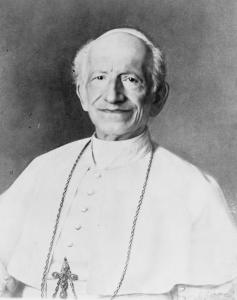 Now it is true that ever since the Church addressed this issue, the teaching has been that union membership should be voluntary. In Rerum Novarum, Pope Leo XIII objected to those unions that would “do their utmost to get within their grasp the whole field of labor, and force working men either to join them or to starve.” (Ibid, §54) But this applies to efforts to keep people from working at all unless they join a union. It doesn’t authorize individuals to disrupt contracts entered into between employers and unions requiring union membership.
Still, assuming for the sake of argument that Catholic teaching did maintain that individuals hired by a business or agency where the employees were represented by a union had a right to abstain from membership, that would have no application to Janus, where the plaintiff was not a union member, and there was no attempt to compel him to join. He was not required to pay dues to the union, but only a fee to cover his share of the cost of the collective bargaining from which he benefited. None of his money was to be applied to outside political activity to which he might have objected.
It thus appears that while Janus may well have been well founded in the First Amendment, though that can be, and is, disputed, its result may well do injury to something that Catholic social teaching tells us is a beneficial social force. For that reason, it presents itself as an exemplar of how the U.S. Constitution and Catholic social teaching may conflict.
The icon of St. Joseph the Worker is by Daniel Nichols.
Listen to Christian Democracy on live internet radio on Tuesdays at 10:30 p.m. Eastern time at WCAT Radio here, or listen to the podcast here on the Christian Democracy Patheos blog.
Please go like Christian Democracy on Facebook here. Join the discussion on Catholic social teaching here.

Next Post

July 7, 2018 It's Not Always Bad
Browse Our Archives
Select a Category Abortion Affordable Care Act Arbitration Agreements Catholic Social Teaching Christian Democracy climate change Communism Consistent life Constitutional Rights Discrimination distributism Employment Contracts First Amendment Free Exercise Clause Freedom of Speech Government Immigration Ireland Israel Jerusalem Labor Magisterium Middle East Monarchism Neoliberalism Palestine Palestinian State Political parties Pope Pro-Life Movement Religious Discrimination Religious Freedom RIght to Life right-to-work Ruth Bader Ginsburg Same Sex Marriage socialism subsidiarity Supreme Court syndicates Uncategorized United States United States Constitution Universal health care Unjust law Western Society
Select a Month June 2019 May 2019 April 2019 March 2019 February 2019 January 2019 December 2018 November 2018 October 2018 September 2018 August 2018 July 2018 June 2018 May 2018 April 2018
Follow Us!
TAKE THE
Religious Wisdom Quiz
Who wrote the majority of the Psalms?
Select your answer to see how you score.
Asaph David Moses Solomon
Related posts from Christian Democracy



Bernie Sanders Tacks Distributist
TRENDING AT PATHEOS Catholic

Rejecting Doom: Christian Hope And Human Action
Christianity is a religion of hope. We are to have hope and...

It’s What Comes From Within Which Matters
One of the most difficult things for us to understand is why...

Why I Choose the Eucharist Over the Sermon
Choose the Eucharist, Not the Sermon What are we supposed to get...

5 Design Elements Found in Spiritually Rooted Homes
Putting Spirituality Into Home Decor Our homes are more than our living...

Credo: A Story of God Told with the...
About 10 years ago, I began to imagine a personal "Credo" that...

The Anatomy of Divine Revelation in Catholic Thought
The claim that God has made Himself known to human beings is...
view all Catholic blogs
Ad-Free & Subscriber Log-In Subscription Support
- About Us
- 2026 Calendar
- Videos
- Podcasts
- Library of World Religions
- Faith In Media Tracker
- Advertise With Us
- Write for Us
- Privacy Policy
- Terms of Service
- Do Not Sell My Data
- Contact Us
- Radiant Digital
- Manage Newsletter Subscriptions
- Unsubscribe From Notifications
- Sitemap
Copyright 2008-2026, Patheos. All rights reserved.
Subscription Support Ad-Free & Subscriber Log-In
Follow Patheos