
BuddhistCatholicContemplativeEvangelicalGeneral ChristianHinduJewishLatter-day SaintMuslimNew VisionsProgressive Christian
Beliefs
- Buddhist
- Catholic
- Contemplative
- Evangelical
- General Christian
- Hindu
- Jewish
- Latter-day Saint
- More Voices
- Muslim
- New Visions
- Pagan
- Progressive Christian
Topics
- Religion News
- Food and Religion
- Sports and Religion
- Religious Art
- Religious Music and Entertainment
- Religious Events
- History and Religion
- Style and Religion
- Politics and Religion
- Women in Religion
- Recreation Outdoors and Religion
- Business Finance and Religion
- Careers Workplace and Religion
- Education and Religion
- Family Parenting and Religion
- Health Fitness and Religion
- Home and Religion
- Relationships and Religion
- Technology and Religion
- Travel and Religion
Columnists
- Buddhist Columnists
- Business Finance and Religion Columnists
- Careers Workplace and Religion Columnists
- Catholic Columnists
- Contemplative Columnists
- Education and Religion Columnists
- Evangelists Columnists
- Family Parenting and Religion Columnists
- General Christian Columnists
- Health Fitness and Religion Columnists
- Hindu Columnists
- History and Religion Columnists
- Home and Religion Columnists
- Jewish Columnists
- More Voices Columnists
- Latter Day Columnists
- Muslim Columnists
- New Visions Columnists
- Nonreligious Columnists
- Pagan Columnists
- Politics and Religion Columnists
- Progressive Columnists
- Recreation Outdoors and Religion Columnists
- Relationships and Religion Columnists
- Religion News Columnists
- Religious Art Columnists
- Religious Events Columnists
- Religious Music and Entertainment Columnists
- Sports and Religion Columnists
- Style and Religion Columnists
- Technology and Religion Columnists
- Travel and Religion Columnists
- Women in Religion Columnists
Resource Library
- 2026 Calendar
- Library of World Religions
- The 100 Most Holy Places on Earth
- Patheos Answers
- Podcasts
- Videos
- Faith Leaders Database
- Anglican Episcopalian
- Bahai
- Baptist
- Buddhism
- Christianity
- Confucianism
- Eastern Orthodoxy
- Hinduism
- Holiness and Pentecostal
- ISKCON
- Islam
- Judaism
- Lutheran
- Methodist
- The Church of Jesus Christ of Latter-day Saints
- New Age
- Paganism
- Presbytarian and Reformed
- Protestantism
- Religion Behind the Scenes
- Roman Catholic
- Scientology
- Shia Islam
- Sikhism
- Sufism
- Sunni Islam
- Taoism
- Zen
- See all religions
Research Tools
 Ad-Free & Subscriber Log-In Subscription Support
Ad-Free & Subscriber Log-In Subscription Support
Follow Patheos 

- Trending:
- Forgiveness
- |
- Marriage
- |
- Consciousness
- |
- Death Penalty
- |
- Election
- |
- Halloween
 Christian Democracy
- Home
- Catholic
- Politics and Religion
- We’re Responsible for What We’re Happy About
We’re Responsible for What We’re Happy About
Last updated on: June 20, 2018 at 7:16 pm by Jack Quirk
We’re Responsible for What We’re Happy About 2018-06-20T19:16:16-05:00 Jack Quirk
Patheos Explore the world's faith through different perspectives on religion and spirituality! Patheos has the views of the prevalent religions and spiritualities of the world.
As NBC News reports, “President Donald Trump, under mounting political pressure from angry members of his own party, signed an executive order Wednesday reversing his administration’s policy of separating children from their parents at the border and allowing families to instead be detained together.” [1] He “said the order ‘will solve that problem’ of children being separated from their parents, but that it wouldn’t end his administration’s ‘zero tolerance’ policy of charging everyone who attempts to cross the U.S.-Mexico border illegally.”
This new “executive order won’t stop the detention of children…but will allow them to be held with their parents pending ‘any criminal improper entry or immigration proceedings involving their members.’” This will require detaining children in custody for a longer time than is currently allowed. Thus, the order “directs Attorney General Jeff Sessions to file a request in federal court to modify a longstanding federal court decree — known as the ‘Flores settlement’ — that prohibits the government from holding children in detention for longer than 20 days.”
 So even though the practice of separating children from their parents will be coming to an end, we shouldn’t imagine that the problem has been solved. Children in federal custody will still be an issue, and now it will be for an even longer time. And if the parents are convicted, this new proposal will simply mean that there will be a delay in the separation, coupled with a longer time in custody for the children.
Defenders of separating children from their parents have been saying that it is simply a natural consequence of law breaking. And it is true that when people, even American citizens, are incarcerated, they are separated from their children. The unauthorized crossing of our border is a misdemeanor, and is subject to imprisonment, and, thus, the ‘don’t do the crime if you can’t do the time’ bromide has been widely proclaimed as of late.
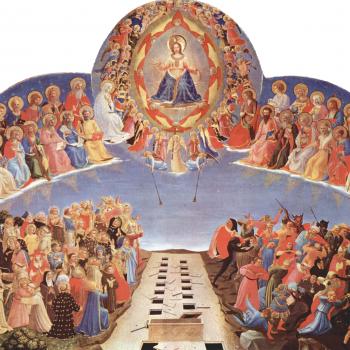
Now Catholics should take careful note that we have it on the highest authority that what we’ve been doing on the Southern border is about as wrong as anything can be. In the Gospel of Matthew, Jesus said to his disciples:
“And when the Son of man shall come in his majesty, and all the angels with him, then shall he sit upon the seat of his majesty. And all nations shall be gathered together before him, and he shall separate them one from another, as the shepherd separateth the sheep from the goats: And he shall set the sheep on his right hand, but the goats on his left. Then shall the king say to them that shall be on his right hand: Come, ye blessed of my Father, possess you the kingdom prepared for you from the foundation of the world. For I was hungry, and you gave me to eat; I was thirsty, and you gave me to drink; I was a stranger, and you took me in:
 “Naked, and you covered me: sick, and you visited me: I was in prison, and you came to me. Then shall the just answer him, saying: Lord, when did we see thee hungry, and fed thee; thirsty, and gave thee drink? And when did we see thee a stranger, and took thee in? or naked, and covered thee? Or when did we see thee sick or in prison, and came to thee? And the king answering, shall say to them: Amen I say to you, as long as you did it to one of these my least brethren, you did it to me.
“Then he shall say to them also that shall be on his left hand: Depart from me, you cursed, into everlasting fire which was prepared for the devil and his angels. For I was hungry, and you gave me not to eat: I was thirsty, and you gave me not to drink. I was a stranger, and you took me not in: naked, and you covered me not: sick and in prison, and you did not visit me. Then they also shall answer him, saying: Lord, when did we see thee hungry, or thirsty, or a stranger, or naked, or sick, or in prison, and did not minister to thee? Then he shall answer them, saying: Amen I say to you, as long as you did it not to one of these least, neither did you do it to me.
“And these shall go into everlasting punishment: but the just, into life everlasting.” (Matthew 25:31-46) [2]
Well, that should be pretty clear. And it is beyond doubt that we’ve been treating our strangers in a notably goat-like fashion in recent days; unless arresting them and putting their children in pens constitutes taking them in.
The objection to be anticipated here is that Jesus is talking about how individuals should act, not countries. But countries act through their leadership, and national leaders aren’t supposed to commit sin either; and one would be hard pressed to find any Catholic teaching that allows governmental authorities to engage in the kind of atrocity we’ve been witnessing.
 Moreover, there is a way that individuals can engage in a sin of this kind, and they don’t even have to work for U.S. Immigration and Customs Enforcement. As the Catechism informs us,
“Sin is a personal act. Moreover, we have a responsibility for the sins committed by others when we cooperate in them:
“—by participating directly and voluntarily in them;
“—by ordering, advising, praising, or approving them;
“—by not disclosing or not hindering them when we have an obligation to do so;
“—by protecting evil-doers.” (Catechism of the Catholic Church (CCC), §1868) [3]
Now there has certainly been a lot of praising and approving of the practice of separating children from their parents and putting them in pens. And this, the Church teaches, implicates those doing so in the sin. So there will be no wriggling out of Matthew 25 on separation of Church and state grounds.
We really should be more careful.
The icon of St. Joseph the Worker is by Daniel Nichols.
Listen to Christian Democracy on live internet radio on Tuesdays at 10:30 p.m. Eastern time at WCAT Radio here, or listen to the podcast here.
Please go like Christian Democracy on Facebook here. Join the discussion on Catholic social teaching here.
Previous Post

June 20, 2018
Christian Democracy: Radio Version, First Installment.
Next Post

June 23, 2018 What Now?
Browse Our Archives
Select a Category Abortion Affordable Care Act Arbitration Agreements Catholic Social Teaching Christian Democracy climate change Communism Consistent life Constitutional Rights Discrimination distributism Employment Contracts First Amendment Free Exercise Clause Freedom of Speech Government Immigration Ireland Israel Jerusalem Labor Magisterium Middle East Monarchism Neoliberalism Palestine Palestinian State Political parties Pope Pro-Life Movement Religious Discrimination Religious Freedom RIght to Life right-to-work Ruth Bader Ginsburg Same Sex Marriage socialism subsidiarity Supreme Court syndicates Uncategorized United States United States Constitution Universal health care Unjust law Western Society
Select a Month June 2019 May 2019 April 2019 March 2019 February 2019 January 2019 December 2018 November 2018 October 2018 September 2018 August 2018 July 2018 June 2018 May 2018 April 2018
Follow Us!
TAKE THE
Religious Wisdom Quiz
What did Jesus do for Lazarus in Bethany?
Select your answer to see how you score.
Raised him from the dead Turned him invisible Fed him Healed his blindness
Related posts from Christian Democracy



Bernie Sanders Tacks Distributist
TRENDING AT PATHEOS Catholic

Creation, Preservation, and Teleology in Catholic Theology
As I write this, it is very early Monday morning. Like millions...

The Parable Of The Sower And The Word...
One of Christ’s most famous parables is that of the sower who...

Rejecting Doom: Christian Hope And Human Action
Christianity is a religion of hope. We are to have hope and...

Why I Choose the Eucharist Over the Sermon
Choose the Eucharist, Not the Sermon What are we supposed to get...

5 Design Elements Found in Spiritually Rooted Homes
Putting Spirituality Into Home Decor Our homes are more than our living...

Credo: A Story of God Told with the...
About 10 years ago, I began to imagine a personal "Credo" that...
view all Catholic blogs
Ad-Free & Subscriber Log-In Subscription Support
- About Us
- 2026 Calendar
- Videos
- Podcasts
- Library of World Religions
- Faith In Media Tracker
- Advertise With Us
- Write for Us
- Privacy Policy
- Terms of Service
- Do Not Sell My Data
- Contact Us
- Radiant Digital
- Manage Newsletter Subscriptions
- Unsubscribe From Notifications
- Sitemap
Copyright 2008-2026, Patheos. All rights reserved.
Subscription Support Ad-Free & Subscriber Log-In
Follow Patheos