
BuddhistCatholicContemplativeEvangelicalGeneral ChristianHinduJewishLatter-day SaintMuslimNew VisionsProgressive Christian
Beliefs
- Buddhist
- Catholic
- Contemplative
- Evangelical
- General Christian
- Hindu
- Jewish
- Latter-day Saint
- More Voices
- Muslim
- New Visions
- Pagan
- Progressive Christian
Topics
- Religion News
- Food and Religion
- Sports and Religion
- Religious Art
- Religious Music and Entertainment
- Religious Events
- History and Religion
- Style and Religion
- Politics and Religion
- Women in Religion
- Recreation Outdoors and Religion
- Business Finance and Religion
- Careers Workplace and Religion
- Education and Religion
- Family Parenting and Religion
- Health Fitness and Religion
- Home and Religion
- Relationships and Religion
- Technology and Religion
- Travel and Religion
Columnists
- Buddhist Columnists
- Business Finance and Religion Columnists
- Careers Workplace and Religion Columnists
- Catholic Columnists
- Contemplative Columnists
- Education and Religion Columnists
- Evangelists Columnists
- Family Parenting and Religion Columnists
- General Christian Columnists
- Health Fitness and Religion Columnists
- Hindu Columnists
- History and Religion Columnists
- Home and Religion Columnists
- Jewish Columnists
- More Voices Columnists
- Latter Day Columnists
- Muslim Columnists
- New Visions Columnists
- Nonreligious Columnists
- Pagan Columnists
- Politics and Religion Columnists
- Progressive Columnists
- Recreation Outdoors and Religion Columnists
- Relationships and Religion Columnists
- Religion News Columnists
- Religious Art Columnists
- Religious Events Columnists
- Religious Music and Entertainment Columnists
- Sports and Religion Columnists
- Style and Religion Columnists
- Technology and Religion Columnists
- Travel and Religion Columnists
- Women in Religion Columnists
Resource Library
- 2026 Calendar
- Library of World Religions
- The 100 Most Holy Places on Earth
- Patheos Answers
- Podcasts
- Videos
- Faith Leaders Database
- Anglican Episcopalian
- Bahai
- Baptist
- Buddhism
- Christianity
- Confucianism
- Eastern Orthodoxy
- Hinduism
- Holiness and Pentecostal
- ISKCON
- Islam
- Judaism
- Lutheran
- Methodist
- The Church of Jesus Christ of Latter-day Saints
- New Age
- Paganism
- Presbytarian and Reformed
- Protestantism
- Religion Behind the Scenes
- Roman Catholic
- Scientology
- Shia Islam
- Sikhism
- Sufism
- Sunni Islam
- Taoism
- Zen
- See all religions
Research Tools
 Ad-Free & Subscriber Log-In Subscription Support
Ad-Free & Subscriber Log-In Subscription Support
Follow Patheos 

- Trending:
- Forgiveness
- |
- Marriage
- |
- Consciousness
- |
- Death Penalty
- |
- Election
- |
- Halloween
 Christian Democracy
- Home
- Catholic
- Politics and Religion
- Free Speech Cake Baking
Free Speech Cake Baking
Last updated on: June 14, 2018 at 3:04 am by Jack Quirk
Free Speech Cake Baking 2018-06-14T03:04:33-05:00 Jack Quirk
Patheos Explore the world's faith through different perspectives on religion and spirituality! Patheos has the views of the prevalent religions and spiritualities of the world.
In 1942 the West Virginia State Board of Education ordered that all teachers and pupils be required to participate in the Pledge of Allegiance, and that refusal to do so would “‘be regarded as an Act of insubordination, and’” would “’be dealt with accordingly.’” (West Virginia State Board of Education v. Barnette, Opinion, p. 626) [1] The penalty for refusal was expulsion, and the student couldn’t be readmitted until he or she complied. (Id, p. 629) Moreover, the expelled child could be dealt with as a delinquent, and the parents or guardians could be prosecuted. (Ibid.)
This requirement fell particularly hard on Jehovah’s Witnesses, who believed that saluting the flag was an act of idolatry (a belief they still hold). (Ibid.) Some of their children had been expelled and threatened with being sent to a juvenile reformatory, and some parents had been either threatened with prosecution or actually prosecuted. (Id, p. 630) Certain adherents of the religion brought suit, seeking an injunction prohibiting enforcement of these laws and regulations against Jehovah’s Witnesses. (Id, p. 629)
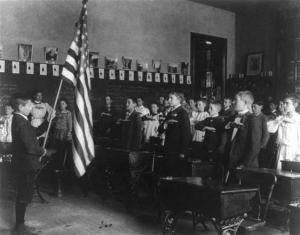 The case made its way to the U.S. Supreme Court, which didn’t decide the case on Freedom of Religion grounds, as might be expected, but on the basis of Free Speech. And what the Court saw before it was “a compulsion of students to declare a belief.” (Id, p. 631) This the Court found unacceptable, and ruled that the First Amendment rights of Jehovah’s Witnesses were being violated.
“The rationale of Barnette became the basis for the Court’s decision in Wooley v. Maynard, which voided a requirement by the state of New Hampshire that motorists display passenger vehicle license plates bearing the motto ‘Live Free or Die.’ Acting on the complaint of a Jehovah’s Witness, the Court held that the plaintiff could not be compelled by the state to display a message making an ideological statement on his private property. In a subsequent case, however, the Court found that compelling property owners to facilitate the speech of others by providing access to their property did not violate the First Amendment. Nor was there a constitutional violation where compulsory fees were used to subsidize the speech of others.
“Other governmental efforts to compel speech have also been held by the Supreme Court to violate the First Amendment; these include a North Carolina statute that required professional fundraisers for charities to disclose to potential donors the gross percentage of revenues retained in prior charitable solicitations, a Florida statute that required newspapers to grant political candidates equal space to reply to the newspapers’ criticism and attacks on their records, an Ohio statute that prohibited the distribution of anonymous campaign literature, and a Massachusetts statute that required private citizens who organized a parade to include among the marchers a group imparting a message—in this case support for gay rights—that the organizers did not wish to convey.” [2]
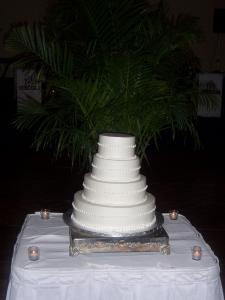 In the recent Supreme Court case of Masterpiece Cakeshop, Ltd. v. Colorado Civil Rights Commission [3], which was the subject of the previous two offerings in these pages [4] [5], one constitutional claim the baker brought before the Court was that applying Colorado law “in a way that would require him to create a cake for a same-sex wedding would violate his First Amendment right to free speech by compelling him to exercise his artistic talents to express a message with which he disagreed.” (Masterpiece Cakeshop, Ltd. v. Colorado Civil Rights Commission, Opinion, p. 7) But the Court ruled in favor of the baker on other grounds, based on the particular facts of the case, leaving for another time the question of whether a law forcing a baker opposed to same-sex marriages to bake a cake for a same-sex wedding constitutes unconstitutional compelled speech. While it seems to your humble servant that, given the precedents, a ruling that unconstitutional speech compulsion is not involved in such cases would be hard to rationally justify, the definitive answer is yet to come.
From the standpoint of Catholic teaching it appears that the baker’s religious freedom was manifestly violated. But from the constitutional perspective, a future baker’s best argument will be made on Free Speech grounds. Protection of religious freedom is not as strong in the United States as one might think, falling, as it does, before neutral laws of general applicability.
It is beyond the mission, indeed the competence, of this blog to attempt to give instructions to Catholic bakers on how to respond to this new situation. Instead, consultation with one’s pastor is recommended. I will only make the observation that, from the standpoint of Catholic morals, there can be no more justification in baking a wedding cake for a different-sex couple, where it is known to the baker that at least one of them is still bound by a prior marriage, than for a same-sex couple.
The icon of St. Joseph the Worker is by Daniel Nichols.
Please go like Christian Democracy on Facebook here. Join the discussion on Catholic social teaching here.
Previous Post
June 9, 2018
Assurance If Not an Advance
Next Post
June 16, 2018 Yes, Healthcare Is a Right
Browse Our Archives
Select a Category Abortion Affordable Care Act Arbitration Agreements Catholic Social Teaching Christian Democracy climate change Communism Consistent life Constitutional Rights Discrimination distributism Employment Contracts First Amendment Free Exercise Clause Freedom of Speech Government Immigration Ireland Israel Jerusalem Labor Magisterium Middle East Monarchism Neoliberalism Palestine Palestinian State Political parties Pope Pro-Life Movement Religious Discrimination Religious Freedom RIght to Life right-to-work Ruth Bader Ginsburg Same Sex Marriage socialism subsidiarity Supreme Court syndicates Uncategorized United States United States Constitution Universal health care Unjust law Western Society
Select a Month June 2019 May 2019 April 2019 March 2019 February 2019 January 2019 December 2018 November 2018 October 2018 September 2018 August 2018 July 2018 June 2018 May 2018 April 2018
Follow Us!
TAKE THE
Religious Wisdom Quiz
True or False: James says that if anyone is a hearer of the word and not a doer, he is blessed in what he does.
Select your answer to see how you score.
TRUE FALSE
Related posts from Christian Democracy
Bernie Sanders Tacks Distributist
TRENDING AT PATHEOS Catholic

The Parable Of The Sower And The Word...
One of Christ’s most famous parables is that of the sower who...

Rejecting Doom: Christian Hope And Human Action
Christianity is a religion of hope. We are to have hope and...

Why I Choose the Eucharist Over the Sermon
Choose the Eucharist, Not the Sermon What are we supposed to get...

5 Design Elements Found in Spiritually Rooted Homes
Putting Spirituality Into Home Decor Our homes are more than our living...

Credo: A Story of God Told with the...
About 10 years ago, I began to imagine a personal "Credo" that...

The Anatomy of Divine Revelation in Catholic Thought
The claim that God has made Himself known to human beings is...
view all Catholic blogs
Ad-Free & Subscriber Log-In Subscription Support
- About Us
- 2026 Calendar
- Videos
- Podcasts
- Library of World Religions
- Faith In Media Tracker
- Advertise With Us
- Write for Us
- Privacy Policy
- Terms of Service
- Do Not Sell My Data
- Contact Us
- Radiant Digital
- Manage Newsletter Subscriptions
- Unsubscribe From Notifications
- Sitemap
Copyright 2008-2026, Patheos. All rights reserved.
Subscription Support Ad-Free & Subscriber Log-In
Follow Patheos