
BuddhistCatholicContemplativeEvangelicalGeneral ChristianHinduJewishLatter-day SaintMuslimNew VisionsProgressive Christian
Beliefs
- Buddhist
- Catholic
- Contemplative
- Evangelical
- General Christian
- Hindu
- Jewish
- Latter-day Saint
- More Voices
- Muslim
- New Visions
- Pagan
- Progressive Christian
Topics
- Religion News
- Food and Religion
- Sports and Religion
- Religious Art
- Religious Music and Entertainment
- Religious Events
- History and Religion
- Style and Religion
- Politics and Religion
- Women in Religion
- Recreation Outdoors and Religion
- Business Finance and Religion
- Careers Workplace and Religion
- Education and Religion
- Family Parenting and Religion
- Health Fitness and Religion
- Home and Religion
- Relationships and Religion
- Technology and Religion
- Travel and Religion
Columnists
- Buddhist Columnists
- Business Finance and Religion Columnists
- Careers Workplace and Religion Columnists
- Catholic Columnists
- Contemplative Columnists
- Education and Religion Columnists
- Evangelists Columnists
- Family Parenting and Religion Columnists
- General Christian Columnists
- Health Fitness and Religion Columnists
- Hindu Columnists
- History and Religion Columnists
- Home and Religion Columnists
- Jewish Columnists
- More Voices Columnists
- Latter Day Columnists
- Muslim Columnists
- New Visions Columnists
- Nonreligious Columnists
- Pagan Columnists
- Politics and Religion Columnists
- Progressive Columnists
- Recreation Outdoors and Religion Columnists
- Relationships and Religion Columnists
- Religion News Columnists
- Religious Art Columnists
- Religious Events Columnists
- Religious Music and Entertainment Columnists
- Sports and Religion Columnists
- Style and Religion Columnists
- Technology and Religion Columnists
- Travel and Religion Columnists
- Women in Religion Columnists
Resource Library
- 2026 Calendar
- Library of World Religions
- The 100 Most Holy Places on Earth
- Patheos Answers
- Podcasts
- Videos
- Faith Leaders Database
- Anglican Episcopalian
- Bahai
- Baptist
- Buddhism
- Christianity
- Confucianism
- Eastern Orthodoxy
- Hinduism
- Holiness and Pentecostal
- ISKCON
- Islam
- Judaism
- Lutheran
- Methodist
- The Church of Jesus Christ of Latter-day Saints
- New Age
- Paganism
- Presbytarian and Reformed
- Protestantism
- Religion Behind the Scenes
- Roman Catholic
- Scientology
- Shia Islam
- Sikhism
- Sufism
- Sunni Islam
- Taoism
- Zen
- See all religions
Research Tools
 Ad-Free & Subscriber Log-In Subscription Support
Ad-Free & Subscriber Log-In Subscription Support
Follow Patheos 

- Trending:
- Forgiveness
- |
- Marriage
- |
- Consciousness
- |
- Death Penalty
- |
- Election
- |
- Halloween
 Christian Democracy
- Home
- Catholic
- Politics and Religion
- When the Salt Loses Its Taste
When the Salt Loses Its Taste
Last updated on: April 12, 2018 at 3:43 am by Jack Quirk
When the Salt Loses Its Taste 2018-04-12T03:43:29-05:00 Jack Quirk
Patheos Explore the world's faith through different perspectives on religion and spirituality! Patheos has the views of the prevalent religions and spiritualities of the world.
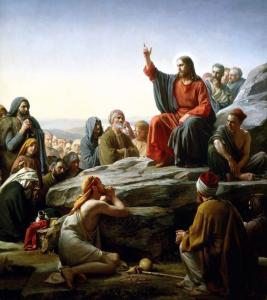
Pope Francis has offered us a profound reflection on holiness, and its connection to living out the Beatitudes in his latest Apostolic Exhortation, Gaudete et exsultate. [1] Unfortunately, the grandeur of the whole is likely to be swallowed up in the controversy over one section, and its pertinence to an ongoing dispute in American politics. Not that this is a pope who shuns controversy in the interests of proclaiming the Gospel. But there are indications that there are political partisans prepared to weaponize this one paragraph of the entire exhortation, leaving future generations to reap the full benefit of this religious masterpiece.
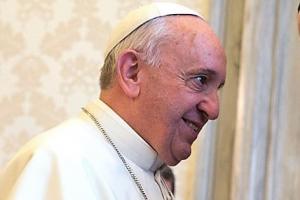 It will behoove us, then, to study the paragraph for ourselves in order to be inoculated against any misleading rhetoric that is certain to follow. The pope says,
“The other harmful ideological error is found in those who find suspect the social engagement of others, seeing it as superficial, worldly, secular, materialist, communist or populist. Or they relativize it, as if there are other more important matters, or the only thing that counts is one particular ethical issue or cause that they themselves defend. Our defence of the innocent unborn, for example, needs to be clear, firm and passionate, for at stake is the dignity of a human life, which is always sacred and demands love for each person, regardless of his or her stage of development. Equally sacred, however, are the lives of the poor, those already born, the destitute, the abandoned and the underprivileged, the vulnerable infirm and elderly exposed to covert euthanasia, the victims of human trafficking, new forms of slavery, and every form of rejection. We cannot uphold an ideal of holiness that would ignore injustice in a world where some revel, spend with abandon and live only for the latest consumer goods, even as others look on from afar, living their entire lives in abject poverty.”
In saner times this would be uncontroversial. But we do not live in a sane time. Rather, we live in a time where the unborn and the poor are tools of politicians. The polemics to follow can be anticipated.
One side will object that Pope Francis has downgraded the importance of unborn human lives. This, it will be said, marks such a departure from traditional Catholic doctrine that the Holy Father has now manifested his heretical tendencies for all to see; and that he, therefore, need not be listened to when he speaks on behalf of the world’s afflicted. The other side will say that the pope has let it be known that abortion is only one issue among many such that it can be discarded in favor of other priorities. Neither of these readings can be justified.
 The pope has not downgraded the seriousness of abortion. On the contrary, he insists that we be firm and passionate in our defense of the unborn. But he is also pointing out that other human lives are just as sacred, also requiring our serious concern. Moreover, he is by no means identifying any human issue as discardable. He is not saying that one human life issue is more important than the other, that is, he is not saying that one human life is more important than another. Quite the contrary, he is saying that all human life is sacred.
This message should be troubling to the inhabitants of the entire political spectrum in American politics. Many Catholics in the United States have steeled their consciences against the Faustian bargain they are called upon make with the two-party system. But Pope Francis is calling upon us to tear that contract in half.
It is too easy for us to acquiesce to the evils that our party promotes in order to obtain an advantage regarding the issue that is at the forefront of our concerns. Instead, we are called upon to be the “salt of the earth,” and the “light of the world.” Being Catholics, we must move the political parties we belong to in the direction of Catholic social teaching, rather than letting the political parties transform us.
In short, the answer is not either/or, but both.
That is, in part, what the Holy Father is saying.
The icon of St. Joseph the Worker is by Daniel Nichols.
Previous Post

April 9, 2018
Looking for Wiggle Room on Labor Rights
Next Post
April 16, 2018 Just War and the Strike on Syria
Browse Our Archives
Select a Category Abortion Affordable Care Act Arbitration Agreements Catholic Social Teaching Christian Democracy climate change Communism Consistent life Constitutional Rights Discrimination distributism Employment Contracts First Amendment Free Exercise Clause Freedom of Speech Government Immigration Ireland Israel Jerusalem Labor Magisterium Middle East Monarchism Neoliberalism Palestine Palestinian State Political parties Pope Pro-Life Movement Religious Discrimination Religious Freedom RIght to Life right-to-work Ruth Bader Ginsburg Same Sex Marriage socialism subsidiarity Supreme Court syndicates Uncategorized United States United States Constitution Universal health care Unjust law Western Society
Select a Month June 2019 May 2019 April 2019 March 2019 February 2019 January 2019 December 2018 November 2018 October 2018 September 2018 August 2018 July 2018 June 2018 May 2018 April 2018
Follow Us!
TAKE THE
Religious Wisdom Quiz
I will heal their waywardness and love them freely, making them blossom like this flower and fragrant like this tree. What plant and tree are mentioned?
Select your answer to see how you score.
Iris and cypress Lotus and palm Lebanon Cedar and Lilies Rose and olive
Related posts from Christian Democracy

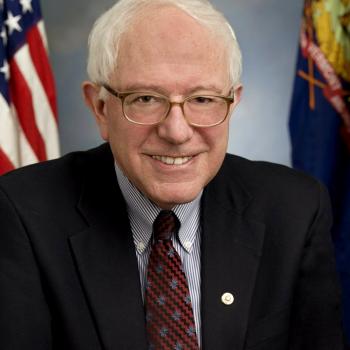
Bernie Sanders Tacks Distributist
TRENDING AT PATHEOS Catholic

Rejecting Doom: Christian Hope And Human Action
Christianity is a religion of hope. We are to have hope and...

It’s What Comes From Within Which Matters
One of the most difficult things for us to understand is why...

Why I Choose the Eucharist Over the Sermon
Choose the Eucharist, Not the Sermon What are we supposed to get...

5 Design Elements Found in Spiritually Rooted Homes
Putting Spirituality Into Home Decor Our homes are more than our living...

Credo: A Story of God Told with the...
About 10 years ago, I began to imagine a personal "Credo" that...

The Anatomy of Divine Revelation in Catholic Thought
The claim that God has made Himself known to human beings is...
view all Catholic blogs
Ad-Free & Subscriber Log-In Subscription Support
- About Us
- 2026 Calendar
- Videos
- Podcasts
- Library of World Religions
- Faith In Media Tracker
- Advertise With Us
- Write for Us
- Privacy Policy
- Terms of Service
- Do Not Sell My Data
- Contact Us
- Radiant Digital
- Manage Newsletter Subscriptions
- Unsubscribe From Notifications
- Sitemap
Copyright 2008-2026, Patheos. All rights reserved.
Subscription Support Ad-Free & Subscriber Log-In
Follow Patheos