
BuddhistCatholicContemplativeEvangelicalGeneral ChristianHinduJewishLatter-day SaintMuslimNew VisionsProgressive Christian
Beliefs
- Buddhist
- Catholic
- Contemplative
- Evangelical
- General Christian
- Hindu
- Jewish
- Latter-day Saint
- More Voices
- Muslim
- New Visions
- Pagan
- Progressive Christian
Topics
- Religion News
- Food and Religion
- Sports and Religion
- Religious Art
- Religious Music and Entertainment
- Religious Events
- History and Religion
- Style and Religion
- Politics and Religion
- Women in Religion
- Recreation Outdoors and Religion
- Business Finance and Religion
- Careers Workplace and Religion
- Education and Religion
- Family Parenting and Religion
- Health Fitness and Religion
- Home and Religion
- Relationships and Religion
- Technology and Religion
- Travel and Religion
Columnists
- Buddhist Columnists
- Business Finance and Religion Columnists
- Careers Workplace and Religion Columnists
- Catholic Columnists
- Contemplative Columnists
- Education and Religion Columnists
- Evangelists Columnists
- Family Parenting and Religion Columnists
- General Christian Columnists
- Health Fitness and Religion Columnists
- Hindu Columnists
- History and Religion Columnists
- Home and Religion Columnists
- Jewish Columnists
- More Voices Columnists
- Latter Day Columnists
- Muslim Columnists
- New Visions Columnists
- Nonreligious Columnists
- Pagan Columnists
- Politics and Religion Columnists
- Progressive Columnists
- Recreation Outdoors and Religion Columnists
- Relationships and Religion Columnists
- Religion News Columnists
- Religious Art Columnists
- Religious Events Columnists
- Religious Music and Entertainment Columnists
- Sports and Religion Columnists
- Style and Religion Columnists
- Technology and Religion Columnists
- Travel and Religion Columnists
- Women in Religion Columnists
Resource Library
- 2026 Calendar
- Library of World Religions
- The 100 Most Holy Places on Earth
- Patheos Answers
- Podcasts
- Videos
- Faith Leaders Database
- Anglican Episcopalian
- Bahai
- Baptist
- Buddhism
- Christianity
- Confucianism
- Eastern Orthodoxy
- Hinduism
- Holiness and Pentecostal
- ISKCON
- Islam
- Judaism
- Lutheran
- Methodist
- The Church of Jesus Christ of Latter-day Saints
- New Age
- Paganism
- Presbytarian and Reformed
- Protestantism
- Religion Behind the Scenes
- Roman Catholic
- Scientology
- Shia Islam
- Sikhism
- Sufism
- Sunni Islam
- Taoism
- Zen
- See all religions
Research Tools
 Ad-Free & Subscriber Log-In Subscription Support
Ad-Free & Subscriber Log-In Subscription Support
Follow Patheos 

- Trending:
- Forgiveness
- |
- Marriage
- |
- Consciousness
- |
- Death Penalty
- |
- Election
- |
- Halloween
 Christian Crier
- Home
- Evangelical
- Our Own Worst Enemy
Our Own Worst Enemy
Last updated on: May 24, 2019 at 5:00 am by Jack Wellman
Our Own Worst Enemy 2019-05-01T15:18:28-05:00 Jack Wellman
Patheos Explore the world's faith through different perspectives on religion and spirituality! Patheos has the views of the prevalent religions and spiritualities of the world.
Roman’s chapter 7 has been described as the titanic battle between the old nature and the new, and it’s a battle royal between the Spirit and the flesh.
None are Good
There are countless numbers of people I’ve witnessed to who believe they’re a “pretty good person,” and have done enough good things to go to heaven, so it amazes me how some people think that the Father Who willed Jesus’ brutal suffering and death on a cross (Isaiah 53), would let them slide because they’re a good person or done some good things. God “did not spare his own Son” (Rom 8:32a), so why do they think He’ll spare them who have rejected Christ? We tend to compare ourselves with others, thinking, “At least we’re not as bad as so and so,” but it’s not wise to compare ourselves with others (2 Cor 10:12). That’s not a good standard to have. We need the very righteousness of Christ (2 Cor 5:21). We could add up all the good works by humans from the time of Adam and that would still not absolve even one sin. “None is righteous, no, not one” (Rom 3:10), and for that one holdout who thinks they’re the exception, Paul again says, “no one does good, not even one” (Rom 3:12b). Twice Paul says “not one” because he knows human nature and our tendency to justify ourselves. We do this by associating our good works with righteousness, but God will not accept our works (Isaiah 64:6). That is self-righteousness, and it is a stench in the nose of God. Only Christ’s finished work will be accepted, so it is not 9 out of 10 who fall short of God’s holy standard, but “all have sinned and fall short of the glory of God” (Rom 3:23).
The Law
The Bible teaches that we all stand guilty before God, and are without excuse (Rom 1:18-22), because “we know that whatever the law says it speaks to those who are under the law, so that every mouth may be stopped, and the whole world may be held accountable to God” (Rom 3:19). The Law’s not the problem…the problem is with lawbreakers. That would be us (Rom 3:23), so there is nothing wrong with the Law. In fact, the Law tells us what sin actually is (Rom 7:12), and sin is lawlessness, or lawbreaking (1 John 3:4), “So the law is holy, and the commandment is holy and righteous and good” (Rom 7:12) because it exposes sinful human creatures who are anything but good. Paul says to the Galatian churches which were being infiltrated by law-keeping Jews, “Let me ask you only this: Did you receive the Spirit by works of the law or by hearing with faith” (Gal 3:2)? We know it isn’t by the Law that we are saved, but only by grace (Eph 2:8-9). The danger is, “all who rely on works of the law are under a curse; for it is written, “Cursed be everyone who does not abide by all things written in the Book of the Law, and do them” (Gal 3:10). Of course, there is no human that can keep the Law. Only Jesus Christ ever kept the Law and did so perfectly.
The Daily Struggle
After God brings a person to repentance and faith in Christ (John 6:44; Acts 5:31, 11:18; 2 Tim 2:24-26), the battle’s just beginning. They are both, and at the same time, sinner and saint. In the struggle for sanctification, the Spirit helps us, but we are our own worst enemy. Paul wrote, “I do not understand my own actions. For I do not do what I want, but I do the very thing I hate” (Rom 7:15). That’s me! I don’t always do what I want to do or know what is right to do, but instead, I do what I didn’t want to do, or what I know is wrong. The good news is, the Spirit of God tells us when something is right and something is wrong, but even with the Spirit’s help, like Paul, “I do not do the good I want, but the evil I do not want is what I keep on doing” (Rom 7:19), but thankfully, it is the Spirit that tells us the difference between what is right and what is wrong. When Paul finally sees his helplessness, he cries out, “Wretched man that I am! Who will deliver me from this body of death” (Rom 7:24), but then he answers his own question by telling us that it is only “through Jesus Christ our Lord” (Rom 7:25) that he will be delivered.
Conclusion
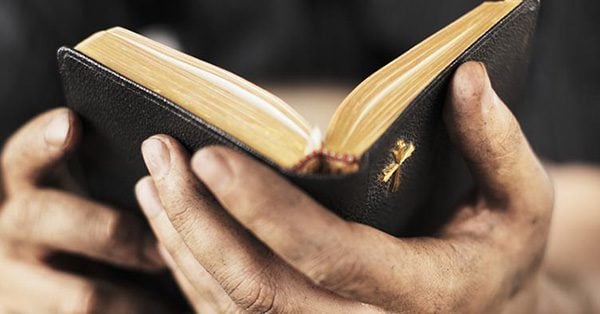 I am so busy working on the guy in the mirror that I cannot possibly be worried about others who likewise struggle with sin. There are sins of commission, sins of omission, and even in our thought life we can sin, but you are not alone since “No temptation has overtaken you that is not common to man. God is faithful, and he will not let you be tempted beyond your ability, but with the temptation he will also provide the way of escape, that you may be able to endure it” (1 Cor 10:13). Yes, we have met the enemy and it is we! Jesus’ council is, “Watch and pray that you may not enter into temptation. The spirit indeed is willing, but the flesh is weak” (Matt 26:41).
Jesus Christ was tempted beyond what any of us could resist, so “we do not have a high priest who is unable to sympathize with our weaknesses, but one who in every respect has been tempted as we are, yet without sin” (Heb 4:15). If there is anyone that understands temptation, it is Jesus, “because he himself has suffered when tempted, he is able to help those who are being tempted” (Heb 2:18). Wouldn’t you prefer a Counselor Who has been through more temptation than we will ever be? One Who has overcome the world and gave His life as a ransom for us (Mark 10:45)?
We all sin, but we can all confess our sins and be cleansed from all of our unrighteousness (1 John 1:9). As far as God is concerned, if we’ve trusted in Christ, we’ve received the very righteousness of Christ. And that is only because God “made him to be sin who knew no sin, so that in him we might become the righteousness of God” (2 Cor 5:21). A great big “hallelujah!” would be very appropriate right about now.
Article by Jack Wellman
Jack Wellman is an ordained elder of the Brethren Church and a Pastor and Prison Minister in the State of Kansas, but also a writer at Christian Quotes and What Christians Want to Know which address questions about the Bible. He also plants ministries like nursing home ministries, Outreach for the poor, and other evangelistic activities, and check out his book Teaching Children the Gospel available on Amazon.
Previous Post

May 22, 2019
FIghting Lust With Scripture
Next Post
May 27, 2019 How God Limits Satan’s Power
Browse Our Archives
Select a Category Bible Answers Bible Definitions Bible Story Bible Study Bible Verses Christian Books Christian Entertainment Christian Fathers Christian Mothers Christian Quotes Devotional Famous Christians Music News Parables Prayers Quotes Sunday School Lesson Uncategorized Youth Sermons
Select a Month October 2019 September 2019 August 2019 July 2019 June 2019 May 2019 April 2019 March 2019 February 2019 January 2019 December 2018 November 2018 October 2018 September 2018 August 2018 July 2018 June 2018 May 2018 April 2018 March 2018 February 2018 January 2018 December 2017 November 2017 October 2017 September 2017 August 2017 July 2017 June 2017 May 2017 April 2017 March 2017 February 2017 January 2017 December 2016 November 2016 October 2016 September 2016 August 2016 July 2016 June 2016 May 2016 March 2016 February 2016 January 2016 December 2015 November 2015 October 2015 September 2015 August 2015 July 2015 June 2015 May 2015 April 2015 March 2015 February 2015 January 2015 December 2014 November 2014 October 2014 September 2014 August 2014 July 2014 June 2014 May 2014 April 2014 March 2014 February 2014 January 2014 December 2013 November 2013 October 2013 September 2013 August 2013 July 2013 June 2013 May 2013 April 2013 March 2013
Follow Us!
TAKE THE
Religious Wisdom Quiz
What tax collector wrote a Gospel and was called by Jesus?
Select your answer to see how you score.
Barnabas Mark Luke Matthew
Related posts from Christian Crier

What Does The Bible Say About Our Thoughts?

Top 13 Bible Verses About Virtue

Do Colors Have Special Meaning In The Bible?

The Greatest Father In History
TRENDING AT PATHEOS Evangelical

How the author of the world's best hymn...
I've been working with John Newton for a while now. This makes...

Long before this Lectio Divina, Psalm 130 - the song - started...

What About the Trees? Another Living Parable
After I finished writing the last article about falling leaves as a...

Why Classical Education Is a Conversation, Not a...
Come and Read: Joy in Classical Education When I was a little...

Falling Leaves: A Living Parable on Letting Go
I’ve spent the vast majority of my life in the southeast corner...

Cornell University has received a great deal of negative publicity and intense...
view all Evangelical blogs
Ad-Free & Subscriber Log-In Subscription Support
- About Us
- 2026 Calendar
- Videos
- Podcasts
- Library of World Religions
- Faith In Media Tracker
- Advertise With Us
- Write for Us
- Privacy Policy
- Terms of Service
- Do Not Sell My Data
- Contact Us
- Radiant Digital
- Manage Newsletter Subscriptions
- Unsubscribe From Notifications
- Sitemap
Copyright 2008-2026, Patheos. All rights reserved.
Subscription Support Ad-Free & Subscriber Log-In
Follow Patheos