
BuddhistCatholicContemplativeEvangelicalGeneral ChristianHinduJewishLatter-day SaintMuslimNew VisionsProgressive Christian
Beliefs
- Buddhist
- Catholic
- Contemplative
- Evangelical
- General Christian
- Hindu
- Jewish
- Latter-day Saint
- More Voices
- Muslim
- New Visions
- Pagan
- Progressive Christian
Topics
- Religion News
- Food and Religion
- Sports and Religion
- Religious Art
- Religious Music and Entertainment
- Religious Events
- History and Religion
- Style and Religion
- Politics and Religion
- Women in Religion
- Recreation Outdoors and Religion
- Business Finance and Religion
- Careers Workplace and Religion
- Education and Religion
- Family Parenting and Religion
- Health Fitness and Religion
- Home and Religion
- Relationships and Religion
- Technology and Religion
- Travel and Religion
Columnists
- Buddhist Columnists
- Business Finance and Religion Columnists
- Careers Workplace and Religion Columnists
- Catholic Columnists
- Contemplative Columnists
- Education and Religion Columnists
- Evangelists Columnists
- Family Parenting and Religion Columnists
- General Christian Columnists
- Health Fitness and Religion Columnists
- Hindu Columnists
- History and Religion Columnists
- Home and Religion Columnists
- Jewish Columnists
- More Voices Columnists
- Latter Day Columnists
- Muslim Columnists
- New Visions Columnists
- Nonreligious Columnists
- Pagan Columnists
- Politics and Religion Columnists
- Progressive Columnists
- Recreation Outdoors and Religion Columnists
- Relationships and Religion Columnists
- Religion News Columnists
- Religious Art Columnists
- Religious Events Columnists
- Religious Music and Entertainment Columnists
- Sports and Religion Columnists
- Style and Religion Columnists
- Technology and Religion Columnists
- Travel and Religion Columnists
- Women in Religion Columnists
Resource Library
- 2026 Calendar
- Library of World Religions
- The 100 Most Holy Places on Earth
- Patheos Answers
- Podcasts
- Videos
- Faith Leaders Database
- Anglican Episcopalian
- Bahai
- Baptist
- Buddhism
- Christianity
- Confucianism
- Eastern Orthodoxy
- Hinduism
- Holiness and Pentecostal
- ISKCON
- Islam
- Judaism
- Lutheran
- Methodist
- The Church of Jesus Christ of Latter-day Saints
- New Age
- Paganism
- Presbytarian and Reformed
- Protestantism
- Religion Behind the Scenes
- Roman Catholic
- Scientology
- Shia Islam
- Sikhism
- Sufism
- Sunni Islam
- Taoism
- Zen
- See all religions
Research Tools
 Ad-Free & Subscriber Log-In Subscription Support
Ad-Free & Subscriber Log-In Subscription Support
Follow Patheos 

- Trending:
- Forgiveness
- |
- Marriage
- |
- Consciousness
- |
- Death Penalty
- |
- Election
- |
- Halloween
 Christian Crier
- Home
- Evangelical
- A Study on Church Leadership
A Study on Church Leadership
Last updated on: March 22, 2019 at 5:00 am by Jack Wellman
A Study on Church Leadership 2019-03-18T10:53:18-05:00 Jack Wellman
Patheos Explore the world's faith through different perspectives on religion and spirituality! Patheos has the views of the prevalent religions and spiritualities of the world.
The character and effectiveness of any church is directly related to the quality of its leadership.
Qualified Leadership
The Bible stresses the importance of qualified church leadership and specific standards for evaluating the moral character of anyone that would serve in the ministry. A church might go only as far as the leadership takes it. Some churches will evangelize while others fossilize, but if there’s a failure to uphold the integrity of church leaders, there’ll be failure in the pews. Timothy faced such problems while in Ephesus, and this is why Paul gave him a detailed explanation of the qualifications for elders (1 Tim. 3:1-7), and it has been used throughout the centuries for this same purpose. The Apostle Paul had started the church at Ephesus, staying there around three years in order to train church leaders (Acts 18:19; 20:17, 31), so the Ephesian church had solid leadership, thanks in large part to Paul’s laying down qualifications for elders and deacons. 
Satanic Influence
Almost like a prophetic statement, Paul told the Ephesian elders that, “I know that after my departure fierce wolves will come in among you, not sparing the flock; and from among your own selves will arise men speaking twisted things, to draw away the disciples after them” (Acts 20:29 30). In other words, Paul was certain that Satan’s most effective weapon to attack the church is to provide false or unqualified leaders who preach a false or works-based gospel, and that’s exactly what happened. After Paul was released from his first Roman imprisonment, he decided to leave Timothy at Ephesus, leaving him specific instructions regarding church leadership. One requirement was that “an overseer must be above reproach, the husband of one wife, sober-minded, self-controlled, respectable, hospitable, able to teach, not a drunkard, not violent but gentle, not quarrelsome, not a lover of money” (1 Tim 3:2-3). Of course, the underlying implication is that these characteristics were missing in the Ephesus elders.
Departing from the Word
Not only was it understood that some would depart from the faith, but some of the leaders would depart from preaching of God’s Word, so Paul told Timothy that an elder must not be “a drunkard, not violent but gentle, not quarrelsome, not a lover of money. He must manage his own household well, with all dignity keeping his children submissive” (1 Tim. 1:3 4, 6-7), but he also “must not be a recent convert, or he may become puffed up with conceit and fall into the condemnation of the devil. Moreover, he must be well thought of by outsiders, so that he may not fall into disgrace, into a snare of the devil” (1 Tim 3:6-7). If someone is ordained too quickly, they are not equipped or experienced to handle the Word correctly, and they can easily mislead others…either knowingly, or unknowingly. Either way, it must be addressed.
Prideful Elders
First Timothy 6:3-5 says, “If anyone teaches a different doctrine and does not agree with the sound words of our Lord Jesus Christ and the teaching that accords with godliness, he is puffed up with conceit and understands nothing. He has an unhealthy craving for controversy and for quarrels about words, which produce envy, dissension, slander, evil suspicions, and constant friction among people who are depraved in mind and deprived of the truth, imagining that godliness is a means of gain.” Much of their endless speculations and contradictions (like between their teaching and the way they live) is “falsely called ‘Knowledge’” (1 Tim 6:20), and tragically, by their “professing it some have swerved from the faith” (1 Tim 6:21). When teachers or preachers are blinded by pride, they become the blind leading the blind.
Apostate Leaders
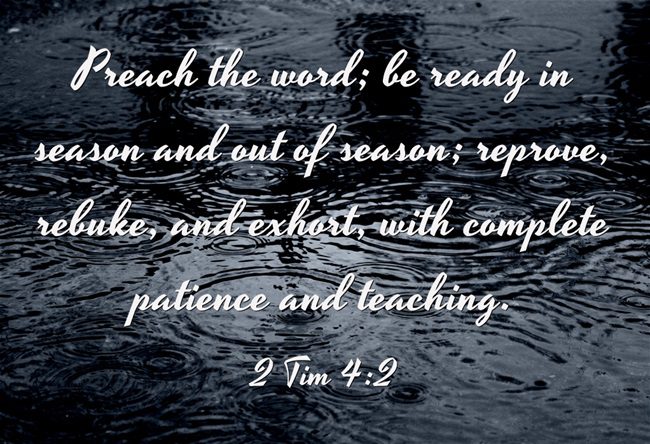 First Timothy 4:1-3 says, “The Spirit expressly says that in later times some will depart from the faith by devoting themselves to deceitful spirits and teachings of demons, through the insincerity of liars whose consciences are seared” (1 Tim 4:1-2), including adding works to salvation (1 Tim 4:3). Paul tells Timothy he must be “trained in the words of the faith and of the good doctrine that you have followed” (1 Tim 4:6), but “Have nothing to do with irreverent, silly myths. Rather train yourself for godliness” (1 Tim 4:7). This is why Paul advised Timothy to “Keep a close watch on yourself and on the teaching” (1 Tim 4:16a). Elders or church leaders are not above correction from the church. First Timothy 5:19-20 says, “Do not admit a charge against an elder except on the evidence of two or three witnesses. As for those who persist in sin, rebuke them in the presence of all, so that the rest may stand in fear.” It seemed apparent that some of the elders were in need of public rebuke. If you look at the church at Ephesus and Corinth, their problems were related to poor leadership, and this caused division.
Conclusion
Paul instructed Titus, who was ministering on the isle of Crete, that he must “appoint elders in every town as I directed you” (Titus 1:5). This church needed elders because it was new. Church growth had outstripped leadership, but by the time Paul gave Titus instructions, he knew exactly how to select them, and these instructions are very similar to 1 Timothy 3, and like that chapter, Paul tells Titus that an elder must be “above reproach, the husband of one wife, and his children are believers and not open to the charge of debauchery or insubordination. For an overseer, as God’s steward, must be above reproach. He must not be arrogant or quick-tempered or a drunkard or violent or greedy for gain” (Titus 1:6-7). Even after all this, Titus and Timothy’s task was not over because they had to ensure that the elders were qualified according to God’s standards (1 Tim. 3:2-7) and in their moral conduct (1 Tim 3:1-13), but they were always to “Keep a close watch on yourself and on the teaching” (1 Tim 4:16a). God will hold church leadership accountable for how they ran Jesus’ church. Each will stand before Him and give an account on what they did (sins of commission) and what they didn’t do (sins of omission). Jesus is the Head of the Church and He expects the Body to cooperate, but the Body can more easily cooperate when church leadership is sound; in teaching sound doctrine and in living a life above reproach.
Article by Jack Wellman
Jack Wellman is Pastor of the Mulvane Brethren Church in Mulvane Kansas. Jack is a writer at Christian Quotes and also the Senior Writer at What Christians Want To Know whose mission is to equip, encourage, and energize Christians and to address questions about the believer’s daily walk with God and the Bible. You can follow Jack on Christian Crier or check out his book Teaching Children the Gospel available on Amazon.
Previous Post

March 20, 2019
5 Purposes God Created You For
Next Post
March 25, 2019 A Pastoral Call to Humility
Browse Our Archives
Select a Category Bible Answers Bible Definitions Bible Story Bible Study Bible Verses Christian Books Christian Entertainment Christian Fathers Christian Mothers Christian Quotes Devotional Famous Christians Music News Parables Prayers Quotes Sunday School Lesson Uncategorized Youth Sermons
Select a Month October 2019 September 2019 August 2019 July 2019 June 2019 May 2019 April 2019 March 2019 February 2019 January 2019 December 2018 November 2018 October 2018 September 2018 August 2018 July 2018 June 2018 May 2018 April 2018 March 2018 February 2018 January 2018 December 2017 November 2017 October 2017 September 2017 August 2017 July 2017 June 2017 May 2017 April 2017 March 2017 February 2017 January 2017 December 2016 November 2016 October 2016 September 2016 August 2016 July 2016 June 2016 May 2016 March 2016 February 2016 January 2016 December 2015 November 2015 October 2015 September 2015 August 2015 July 2015 June 2015 May 2015 April 2015 March 2015 February 2015 January 2015 December 2014 November 2014 October 2014 September 2014 August 2014 July 2014 June 2014 May 2014 April 2014 March 2014 February 2014 January 2014 December 2013 November 2013 October 2013 September 2013 August 2013 July 2013 June 2013 May 2013 April 2013 March 2013
Follow Us!
TAKE THE
Religious Wisdom Quiz
Who wrote most of the New Testament letters?
Select your answer to see how you score.
James Paul Peter John
Related posts from Christian Crier

What Does The Bible Say About Our Thoughts?

Top 13 Bible Verses About Virtue

Do Colors Have Special Meaning In The Bible?

The Greatest Father In History
TRENDING AT PATHEOS Evangelical

How the author of the world's best hymn...
I've been working with John Newton for a while now. This makes...

Long before this Lectio Divina, Psalm 130 - the song - started...

What About the Trees? Another Living Parable
After I finished writing the last article about falling leaves as a...

Why Classical Education Is a Conversation, Not a...
Come and Read: Joy in Classical Education When I was a little...

Falling Leaves: A Living Parable on Letting Go
I’ve spent the vast majority of my life in the southeast corner...

Cornell University has received a great deal of negative publicity and intense...
view all Evangelical blogs
Ad-Free & Subscriber Log-In Subscription Support
- About Us
- 2026 Calendar
- Videos
- Podcasts
- Library of World Religions
- Faith In Media Tracker
- Advertise With Us
- Write for Us
- Privacy Policy
- Terms of Service
- Do Not Sell My Data
- Contact Us
- Radiant Digital
- Manage Newsletter Subscriptions
- Unsubscribe From Notifications
- Sitemap
Copyright 2008-2026, Patheos. All rights reserved.
Subscription Support Ad-Free & Subscriber Log-In
Follow Patheos