
BuddhistCatholicContemplativeEvangelicalGeneral ChristianHinduJewishLatter-day SaintMuslimNew VisionsProgressive Christian
Beliefs
- Buddhist
- Catholic
- Contemplative
- Evangelical
- General Christian
- Hindu
- Jewish
- Latter-day Saint
- More Voices
- Muslim
- New Visions
- Pagan
- Progressive Christian
Topics
- Religion News
- Food and Religion
- Sports and Religion
- Religious Art
- Religious Music and Entertainment
- Religious Events
- History and Religion
- Style and Religion
- Politics and Religion
- Women in Religion
- Recreation Outdoors and Religion
- Business Finance and Religion
- Careers Workplace and Religion
- Education and Religion
- Family Parenting and Religion
- Health Fitness and Religion
- Home and Religion
- Relationships and Religion
- Technology and Religion
- Travel and Religion
Columnists
- Buddhist Columnists
- Business Finance and Religion Columnists
- Careers Workplace and Religion Columnists
- Catholic Columnists
- Contemplative Columnists
- Education and Religion Columnists
- Evangelists Columnists
- Family Parenting and Religion Columnists
- General Christian Columnists
- Health Fitness and Religion Columnists
- Hindu Columnists
- History and Religion Columnists
- Home and Religion Columnists
- Jewish Columnists
- More Voices Columnists
- Latter Day Columnists
- Muslim Columnists
- New Visions Columnists
- Nonreligious Columnists
- Pagan Columnists
- Politics and Religion Columnists
- Progressive Columnists
- Recreation Outdoors and Religion Columnists
- Relationships and Religion Columnists
- Religion News Columnists
- Religious Art Columnists
- Religious Events Columnists
- Religious Music and Entertainment Columnists
- Sports and Religion Columnists
- Style and Religion Columnists
- Technology and Religion Columnists
- Travel and Religion Columnists
- Women in Religion Columnists
Resource Library
- 2026 Calendar
- Library of World Religions
- The 100 Most Holy Places on Earth
- Patheos Answers
- Podcasts
- Videos
- Faith Leaders Database
- Anglican Episcopalian
- Bahai
- Baptist
- Buddhism
- Christianity
- Confucianism
- Eastern Orthodoxy
- Hinduism
- Holiness and Pentecostal
- ISKCON
- Islam
- Judaism
- Lutheran
- Methodist
- The Church of Jesus Christ of Latter-day Saints
- New Age
- Paganism
- Presbytarian and Reformed
- Protestantism
- Religion Behind the Scenes
- Roman Catholic
- Scientology
- Shia Islam
- Sikhism
- Sufism
- Sunni Islam
- Taoism
- Zen
- See all religions
Research Tools
 Ad-Free & Subscriber Log-In Subscription Support
Ad-Free & Subscriber Log-In Subscription Support
Follow Patheos 

- Trending:
- Forgiveness
- |
- Marriage
- |
- Consciousness
- |
- Death Penalty
- |
- Election
- |
- Halloween
 Christian Crier
- Home
- Evangelical
- Why Does God Give Some People New Names?
Why Does God Give Some People New Names?
Last updated on: March 4, 2019 at 10:08 am by Jack Wellman
Why Does God Give Some People New Names? 2019-03-04T10:08:45-06:00 Jack Wellman
Patheos Explore the world's faith through different perspectives on religion and spirituality! Patheos has the views of the prevalent religions and spiritualities of the world.
Sometimes, God changes a person’s name, but why? What’s His purpose for doing so?
Old Testament
There are several instances where God changes a person’s name in the Bible. You don’t have to look very far to find out that Abram’s name was changed to Abraham…Sarai to Sarah…Jacob to Israel, and a few others, but why? God never does anything without purpose, so there is a purpose behind it. When we look at Jacob, we see a man who was a schemer who cheated Esau out of his birthright and blessing, so it’s no wonder Jacob’s name means “He who strives” or “supplanter.” To supplant something means to “undermine, to take the place of, to take over from, or to substitute for” and he did that until after wrestling with God all night, God changed His name to Israel, which means “He who strives with God,” and Israel did strive with God…all the way to the Promised Land, and then some! As for Abraham, he was first called Abram, meaning “exalted father,” but God later changed His name (Acts 17:5) to Abraham, meaning, “father of a multitude” or even “exalted father of a multitude,” and Abraham is seen as the father of the Jews. God also changed Sarai’s name to Sarah, meaning, “lady, princess,” or “noblewoman,” and that she was. She even shows up along with Abraham in the so-called “Hall of Faith” (Heb 11).
New Names in Heaven
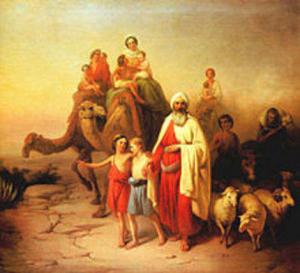
No longer shall your name be called Abram, but your name shall be Abraham, for I have made you the father of a multitude of nations (Gen 17:5).
When the Apostle John was writing about the church, he wrote, “He who has an ear, let him hear what the Spirit says to the churches. To the one who conquers I will give some of the hidden manna, and I will give him a white stone, with a new name written on the stone that no one knows except the one who receives it” (Rev 2:17). No one can say what the white stone is about, nor does anyone have a clue about what our new names will be in heaven, but perhaps they will be names that described a major attribute of ours or something we did that we had a passion for. Even then, it says, “no one knows except the one who receives it,” so it will be a mystery until that day (See, Rev 21:1-5). Later, John adds that “The one who conquers, I will make him a pillar in the temple of my God. Never shall he go out of it, and I will write on him the name of my God, and the name of the city of my God, the new Jerusalem, which comes down from my God out of heaven, and my own new name” (Rev 3:12). So believers will have Jesus’ name as well as “the name of my God.” Even though we’re told we’ll have new names, there is no way to know what that name will be, but one thing we do know is that when “God comes down out of heaven,” He will make all things new, apparently including our names (Rev 21:5).
Saul to Paul
If you read enough of the Bible, you’ll see that God often names people for their attributes or character traits, but I’ve noticed that sometimes God will change a person’s name when there is a change of character. We see this when Saul’s name began to dissapear and the name Paul began to be used more often. Although it doesn’t say God changed Saul’s name to Paul, there is a change. At first, Saul sought to destroy the church, but after conversion, he then evangelized for the church as Paul, so Saul went from seeking to destroy the Way to one who pronounces the Way, and the Way is a reference to the early church. What was the way? This comes from Jesus’ own words that He is the one and only way we can be saved (John 6:44; Acts 4:12). Jesus says He is the way, the truth, and the life. Not “a way” or “a truth,” but the truth and the way, and there is no other (John 14:6). Saul’s name may be closely related to the Hebrew name Shaul, which means “to ask for,” and interestingly, Saul approached the high priest and “asked him for letters to the synagogues at Damascus, so that if he found any belonging to the Way, men or women, he might bring them bound to Jerusalem” (Acts 9:2). There is also the fact that Saul and Sheol are spelled the same in the Hebrew, although pronounced differently. We do similar things with our own vocabulary, so sheol means “a pit” or “a grave,” or “mankind’s common grave,” or “the abode of the dead.” What we gather from all this is there is a sharp contrast between the meanings of the names Saul and Paul. God changed Saul’s heart, as only God can do (Prov 21:1), so God changed Saul’s name to go along with his new heart. He was a now a new creation in Christ (2 Cor 5:17). He was no longer the old man…Saul.
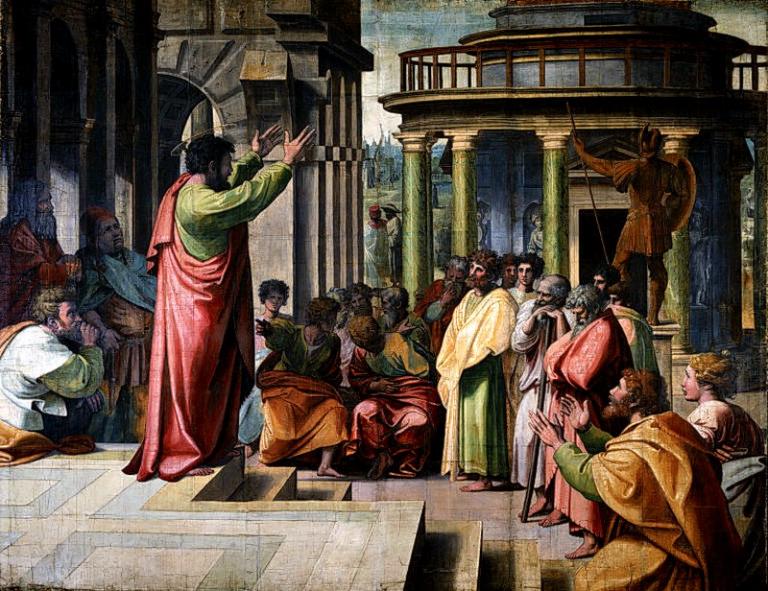
Paul tells the Greeks about Jesus as the only way.
Conclusion
The day will come when God calls us home, or Jesus’ splits the sky and returns to begin His reign. At that time, there will be “a new heaven and a new earth, for the first heaven and the first earth had passed away, and the sea was no more” (Rev 21:1). That’s when everything changes, and “the dwelling place of God is with man. He will dwell with them, and they will be his people, and God himself will be with them as their God” (Rev 21:3). The old things will be gone, which means God will have to “wipe away every tear from their eyes, and death shall be no more, neither shall there be mourning, nor crying, nor pain anymore, for the former things have passed away” (Rev 21:4). This is new. It makes sense that the One “who was seated on the throne said, “Behold, I am making all things new” (Rev 21:5). Part of Jesus’ making all things new will probably mean our old names will be gone. We’ll be given new names in the kingdom (Rev 2:17, 3:12). That’s because we’ll all be new creations. New creations should get new names, don’t you think?
Article by Jack Wellman
Jack Wellman is Pastor of the Mulvane Brethren Church in Mulvane Kansas. Jack is a writer at Christian Quotes and also the Senior Writer at What Christians Want To Know whose mission is to equip, encourage, and energize Christians and to address questions about the believer’s daily walk with God and the Bible. You can follow Jack on Christian Crier or check out his book Teaching Children the Gospel available on Amazon.
Previous Post

February 27, 2019
What Is Spiritualism?
Next Post
March 4, 2019 On Christ the Solid Rock I Stand
Browse Our Archives
Select a Category Bible Answers Bible Definitions Bible Story Bible Study Bible Verses Christian Books Christian Entertainment Christian Fathers Christian Mothers Christian Quotes Devotional Famous Christians Music News Parables Prayers Quotes Sunday School Lesson Uncategorized Youth Sermons
Select a Month October 2019 September 2019 August 2019 July 2019 June 2019 May 2019 April 2019 March 2019 February 2019 January 2019 December 2018 November 2018 October 2018 September 2018 August 2018 July 2018 June 2018 May 2018 April 2018 March 2018 February 2018 January 2018 December 2017 November 2017 October 2017 September 2017 August 2017 July 2017 June 2017 May 2017 April 2017 March 2017 February 2017 January 2017 December 2016 November 2016 October 2016 September 2016 August 2016 July 2016 June 2016 May 2016 March 2016 February 2016 January 2016 December 2015 November 2015 October 2015 September 2015 August 2015 July 2015 June 2015 May 2015 April 2015 March 2015 February 2015 January 2015 December 2014 November 2014 October 2014 September 2014 August 2014 July 2014 June 2014 May 2014 April 2014 March 2014 February 2014 January 2014 December 2013 November 2013 October 2013 September 2013 August 2013 July 2013 June 2013 May 2013 April 2013 March 2013
Follow Us!
TAKE THE
Religious Wisdom Quiz
What does the Bible say is better than gold?
Select your answer to see how you score.
Wine Wisdom Strength Bread
Related posts from Christian Crier

What Does The Bible Say About Our Thoughts?

Top 13 Bible Verses About Virtue

Do Colors Have Special Meaning In The Bible?

The Greatest Father In History
TRENDING AT PATHEOS Evangelical

How the author of the world's best hymn...
I've been working with John Newton for a while now. This makes...

Long before this Lectio Divina, Psalm 130 - the song - started...

What About the Trees? Another Living Parable
After I finished writing the last article about falling leaves as a...

Why Classical Education Is a Conversation, Not a...
Come and Read: Joy in Classical Education When I was a little...

Falling Leaves: A Living Parable on Letting Go
I’ve spent the vast majority of my life in the southeast corner...

Cornell University has received a great deal of negative publicity and intense...
view all Evangelical blogs
Ad-Free & Subscriber Log-In Subscription Support
- About Us
- 2026 Calendar
- Videos
- Podcasts
- Library of World Religions
- Faith In Media Tracker
- Advertise With Us
- Write for Us
- Privacy Policy
- Terms of Service
- Do Not Sell My Data
- Contact Us
- Radiant Digital
- Manage Newsletter Subscriptions
- Unsubscribe From Notifications
- Sitemap
Copyright 2008-2026, Patheos. All rights reserved.
Subscription Support Ad-Free & Subscriber Log-In
Follow Patheos