
BuddhistCatholicContemplativeEvangelicalGeneral ChristianHinduJewishLatter-day SaintMuslimNew VisionsProgressive Christian
Beliefs
- Buddhist
- Catholic
- Contemplative
- Evangelical
- General Christian
- Hindu
- Jewish
- Latter-day Saint
- More Voices
- Muslim
- New Visions
- Pagan
- Progressive Christian
Topics
- Religion News
- Food and Religion
- Sports and Religion
- Religious Art
- Religious Music and Entertainment
- Religious Events
- History and Religion
- Style and Religion
- Politics and Religion
- Women in Religion
- Recreation Outdoors and Religion
- Business Finance and Religion
- Careers Workplace and Religion
- Education and Religion
- Family Parenting and Religion
- Health Fitness and Religion
- Home and Religion
- Relationships and Religion
- Technology and Religion
- Travel and Religion
Columnists
- Buddhist Columnists
- Business Finance and Religion Columnists
- Careers Workplace and Religion Columnists
- Catholic Columnists
- Contemplative Columnists
- Education and Religion Columnists
- Evangelists Columnists
- Family Parenting and Religion Columnists
- General Christian Columnists
- Health Fitness and Religion Columnists
- Hindu Columnists
- History and Religion Columnists
- Home and Religion Columnists
- Jewish Columnists
- More Voices Columnists
- Latter Day Columnists
- Muslim Columnists
- New Visions Columnists
- Nonreligious Columnists
- Pagan Columnists
- Politics and Religion Columnists
- Progressive Columnists
- Recreation Outdoors and Religion Columnists
- Relationships and Religion Columnists
- Religion News Columnists
- Religious Art Columnists
- Religious Events Columnists
- Religious Music and Entertainment Columnists
- Sports and Religion Columnists
- Style and Religion Columnists
- Technology and Religion Columnists
- Travel and Religion Columnists
- Women in Religion Columnists
Resource Library
- 2026 Calendar
- Library of World Religions
- The 100 Most Holy Places on Earth
- Patheos Answers
- Podcasts
- Videos
- Faith Leaders Database
- Anglican Episcopalian
- Bahai
- Baptist
- Buddhism
- Christianity
- Confucianism
- Eastern Orthodoxy
- Hinduism
- Holiness and Pentecostal
- ISKCON
- Islam
- Judaism
- Lutheran
- Methodist
- The Church of Jesus Christ of Latter-day Saints
- New Age
- Paganism
- Presbytarian and Reformed
- Protestantism
- Religion Behind the Scenes
- Roman Catholic
- Scientology
- Shia Islam
- Sikhism
- Sufism
- Sunni Islam
- Taoism
- Zen
- See all religions
Research Tools
 Ad-Free & Subscriber Log-In Subscription Support
Follow Patheos 

- Trending:
- Advent
- |
- Forgiveness
- |
- Thanksgiving
- |
- Election
- |
- Seasonal Holidays
- |
- Marriage
 Christian Crier
- Home
- Evangelical
- How Handel’s Messiah Handles Theology
How Handel’s Messiah Handles Theology
Last updated on: November 11, 2022 at 2:02 pm by Jack Wellman
How Handel’s Messiah Handles Theology 2022-11-11T14:02:40-06:00 Jack Wellman
Patheos Explore the world's faith through different perspectives on religion and spirituality! Patheos has the views of the prevalent religions and spiritualities of the world.
Handel’s Messiah is not only biblically sound in its theology, but it’s sound is Biblical.
George Frideric Handel
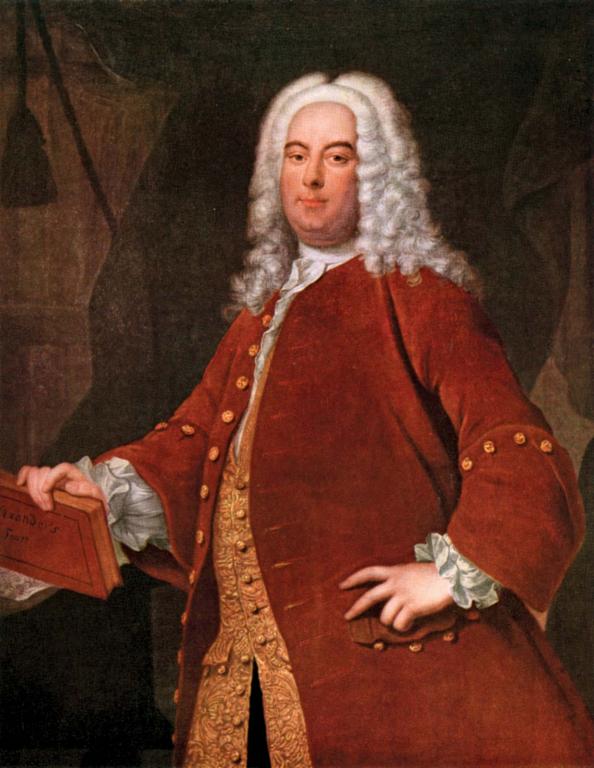
George Frideric Handel by Thomas Hudson, 1736.
George Frideric Handel’s (1685–1759) “Messiah” is among the most recognized songs on earth, and is familiar to almost every nationality on earth. Handel’s Messiah, with text from Charles Jennens in the King James, was first performed in 1742. At first, it had mixed reviews from audiences, but in years to come, it would become one of the most beloved Christmas time songs of all. To many who have listened to Messiah, it was not so much the orchestra that carried the program, but the choir that carried the orchestra…and it sounded like they carried it all the way up to heaven. And astoundingly, the original version was written within four weeks, and this score is almost 260 pages, and most historic accounts estimate the composer spent only 24 days writing the oratorio! Handel was not without controversy as his opera “Esther” caused outrage from the Bishop of London when it was performed by cathedral singers in 1732, so when Handel moved from Italian opera to English oratorio, and began dealing with religious subject matter, many critics objected to the idea. They saw it as mixing the sacred and secular worlds because the same theater might host religious subject matter one day and then suggestive comedy the next, but their criticisms were unwarranted. Mozart was among one of Handel’s early champions of the epic oratorio, and since that time, it’s since become one of Handel’s most treasured works and a Christmas perennial in millions of homes. As we will later read, it comes in three parts and perfectly harmonizes with the gospel, beginning with the prophecies of the coming Messiah.
The Prophecies
Clearly the lyrics come straight from Scripture in the King James Version, as Isaiah the Prophet writes about “The voice of him that crieth in the wilderness; prepare ye the way of the Lord; make straight in the desert a highway for our God” (Isaiah 40:4), which was John the Baptist’s work ahead of Christ (John 1:23), writing that every “valley shall be exalted, and ev’ry mountain and hill made low; the crooked straight and the rough places plain” (Isaiah 40:4), “And the glory of the Lord shall be revealed, and all flesh shall see it together: for the mouth of the Lord hath spoken it” (Isaiah 40:5). That day is coming, as revealed by the Apostle John who wrote, “Behold, he is coming with the clouds, and every eye will see him, even those who pierced him, and all tribes of the earth will wail on account of him. Even so. Amen” (Rev 1:7). Some will mourn or wail on account of Him because their chance for Him their Savior has passed and He will now be their judge (Rev 20:12-15). For the believer, it is a joyful announcement that the Lord God and Savior Jesus Christ, was born into flesh to save that which is flesh. Even though it was told that “a virgin shall conceive and bear a Son, and shall call His name Emmanuel, God with us” (Isaiah 7:14; Matt 1:23), most in His day rejected Him…and many are still rejecting Him today.
The Purpose
Handel’s Messiah comes in three parts. One part is where the Messiah’s coming was prophesied by the prophets and the psalmist. Part two is where the Lamb of God comes to die and takes away the sins of those who repent and believe. His sacrifice is sufficient for all to come and be saved…but it is only efficient for those who trust in Him. Today, while it is still called today (2 Cor 6:2), the Savior bids you, “Come unto Him, all ye that labour, come unto Him that are heavy laden, and He will give you rest. Take His yoke upon you, and learn of Him, for He is meek and lowly of heart, and ye shall find rest unto your souls” (Matt 11:28-29). Come to the Lord today or He may come as your Judge. If you die outside of the faith, your judgment will not be delayed (Heb 9:27), but trust in Him today, and the wrath of God is forever removed (John 3:36). Handel’s Messiah points us to the cross of Christ for there is redemption only through Him (Acts 4:12) The Word of God reassures us that Jesus Christ “hath borne our griefs, and carried our sorrows! He was wounded for our transgressions, He was bruised for our iniquities; the chastisement of our peace was upon Him” (Isaiah 53:4-5). This is why we rejoice and thank Him and praise Him and shout, “Hallelujah!” It was through Jesus Christ that the Lord God laid all of our iniquities on Him (Isaiah 53:6).
The Redemption
 After we have put our trust in Christ, we receive the righteousness of Christ (2 Cor 5:21). This is where we ask the rhetorical question, “Who shall lay anything to the charge of God’s elect? It is God that justifieth, who is he that condemneth” (Rom 6:33)? Clearly, no one can lay any charge to one whom God has cleansed, but that is only because “Worthy is the Lamb that was slain, and hath redeemed us to God by His blood, to receive power, and riches, and wisdom, and strength, and honour, and glory, and blessing. Blessing and honour, glory and power, be unto Him that sitteth upon the throne, and unto the Lamb, for ever and ever. Amen” (Rev 5:12-14).
Conclusion
Some believed that Handel’s Messiah was best performed for Passover or Easter, but the strain of “Hallelujah! For the Lord God omnipotent reigneth” becomes more meaningful with each passing year, and its inspiring performance draws us closer to the King of the kingdom. The day is coming when “The Kingdom of this world is become the kingdom of our Lord, and of His Christ. And He shall reign forever and ever” (Rev 11:15)! This may be the most dominant theme of all because we know that “He shall reign forever and ever,” and to that we sing “Hallelujah!”
Article by Jack Wellman
Jack Wellman is Pastor of the Mulvane Brethren Church in Mulvane Kansas. Jack is a writer at Christian Quotes and also the Senior Writer at What Christians Want To Know whose mission is to equip, encourage, and energize Christians and to address questions about the believer’s daily walk with God and the Bible. You can follow Jack on Google Plus or check out his book Teaching Children the Gospel available on Amazon.
Previous Post

December 3, 2018
3 Things That Bring On Spiritual Attacks
Next Post
December 7, 2018 How The Exodus Typifies Salvation
Browse Our Archives
Select a Category Bible Answers Bible Definitions Bible Story Bible Study Bible Verses Christian Books Christian Entertainment Christian Fathers Christian Mothers Christian Quotes Devotional Famous Christians Music News Parables Prayers Quotes Sunday School Lesson Uncategorized Youth Sermons
Select a Month October 2019 September 2019 August 2019 July 2019 June 2019 May 2019 April 2019 March 2019 February 2019 January 2019 December 2018 November 2018 October 2018 September 2018 August 2018 July 2018 June 2018 May 2018 April 2018 March 2018 February 2018 January 2018 December 2017 November 2017 October 2017 September 2017 August 2017 July 2017 June 2017 May 2017 April 2017 March 2017 February 2017 January 2017 December 2016 November 2016 October 2016 September 2016 August 2016 July 2016 June 2016 May 2016 March 2016 February 2016 January 2016 December 2015 November 2015 October 2015 September 2015 August 2015 July 2015 June 2015 May 2015 April 2015 March 2015 February 2015 January 2015 December 2014 November 2014 October 2014 September 2014 August 2014 July 2014 June 2014 May 2014 April 2014 March 2014 February 2014 January 2014 December 2013 November 2013 October 2013 September 2013 August 2013 July 2013 June 2013 May 2013 April 2013 March 2013
Follow Us!
TAKE THE
Religious Wisdom Quiz
What event occurred immediately after Jesus died?
Select your answer to see how you score.
An earthquake split the land The sun turned red A great flood The temple curtain tore
Related posts from Christian Crier
The Apostle Paul’s Last Will And Testament
Isaiah 53 And The Prophecy About Jesus Christ
Christmas Eve Or Christmas Day Bible Verses

Great Bible Verses For Christmas Cards
TRENDING AT PATHEOS Evangelical

Making Stones Into Bread: Choosing the “Right” Work
I was on my online arts ministry Zoom meeting with the International...

Ukraine’s exhausted Christians face fifth winter of war
By Julian Lukins The full-scale war in Ukraine is taking “a serious...

Russell Brand's Conviction is not anti-Christian Persecution
How do we shed the reputation that the Church is OK with...

Have you ever caught yourself saying, “I’ll do it tomorrow,” or “Now...

Write Your Story: A Great Way to Find...
A few month’s back, my son was scrolling around Facebook and saw...

Throughout history, people have pursued pleasure, possessions, relationships, and success in an...
view all Evangelical blogs
Ad-Free & Subscriber Log-In Subscription Support
- About Us
- 2026 Calendar
- Videos
- Podcasts
- Library of World Religions
- Faith In Media Tracker
- Advertise With Us
- Write for Us
- Privacy Policy
- Terms of Service
- Do Not Sell My Data
- Contact Us
- Radiant Digital
- Manage Newsletter Subscriptions
- Unsubscribe From Notifications
- Sitemap
Copyright 2008-2026, Patheos. All rights reserved.
Subscription Support Ad-Free & Subscriber Log-In
Follow Patheos