
BuddhistCatholicContemplativeEvangelicalGeneral ChristianHinduJewishLatter-day SaintMuslimNew VisionsProgressive Christian
Beliefs
- Buddhist
- Catholic
- Contemplative
- Evangelical
- General Christian
- Hindu
- Jewish
- Latter-day Saint
- More Voices
- Muslim
- New Visions
- Pagan
- Progressive Christian
Topics
- Religion News
- Food and Religion
- Sports and Religion
- Religious Art
- Religious Music and Entertainment
- Religious Events
- History and Religion
- Style and Religion
- Politics and Religion
- Women in Religion
- Recreation Outdoors and Religion
- Business Finance and Religion
- Careers Workplace and Religion
- Education and Religion
- Family Parenting and Religion
- Health Fitness and Religion
- Home and Religion
- Relationships and Religion
- Technology and Religion
- Travel and Religion
Columnists
- Buddhist Columnists
- Business Finance and Religion Columnists
- Careers Workplace and Religion Columnists
- Catholic Columnists
- Contemplative Columnists
- Education and Religion Columnists
- Evangelists Columnists
- Family Parenting and Religion Columnists
- General Christian Columnists
- Health Fitness and Religion Columnists
- Hindu Columnists
- History and Religion Columnists
- Home and Religion Columnists
- Jewish Columnists
- More Voices Columnists
- Latter Day Columnists
- Muslim Columnists
- New Visions Columnists
- Nonreligious Columnists
- Pagan Columnists
- Politics and Religion Columnists
- Progressive Columnists
- Recreation Outdoors and Religion Columnists
- Relationships and Religion Columnists
- Religion News Columnists
- Religious Art Columnists
- Religious Events Columnists
- Religious Music and Entertainment Columnists
- Sports and Religion Columnists
- Style and Religion Columnists
- Technology and Religion Columnists
- Travel and Religion Columnists
- Women in Religion Columnists
Resource Library
- 2026 Calendar
- Library of World Religions
- The 100 Most Holy Places on Earth
- Patheos Answers
- Podcasts
- Videos
- Faith Leaders Database
- Anglican Episcopalian
- Bahai
- Baptist
- Buddhism
- Christianity
- Confucianism
- Eastern Orthodoxy
- Hinduism
- Holiness and Pentecostal
- ISKCON
- Islam
- Judaism
- Lutheran
- Methodist
- The Church of Jesus Christ of Latter-day Saints
- New Age
- Paganism
- Presbytarian and Reformed
- Protestantism
- Religion Behind the Scenes
- Roman Catholic
- Scientology
- Shia Islam
- Sikhism
- Sufism
- Sunni Islam
- Taoism
- Zen
- See all religions
Research Tools
 Ad-Free & Subscriber Log-In Subscription Support
Ad-Free & Subscriber Log-In Subscription Support
Follow Patheos 

- Trending:
- Forgiveness
- |
- Marriage
- |
- Consciousness
- |
- Death Penalty
- |
- Election
- |
- Halloween
 Christian Crier
- Home
- Evangelical
- The Book Of Jude And The Last Days
The Book Of Jude And The Last Days
Last updated on: August 10, 2018 at 4:30 am by Jack Wellman
The Book Of Jude And The Last Days 2018-08-07T07:26:45-05:00 Jack Wellman
Patheos Explore the world's faith through different perspectives on religion and spirituality! Patheos has the views of the prevalent religions and spiritualities of the world.
The Book of Jude seems as if it’s almost written for today. Find out why.
Who was Jude?
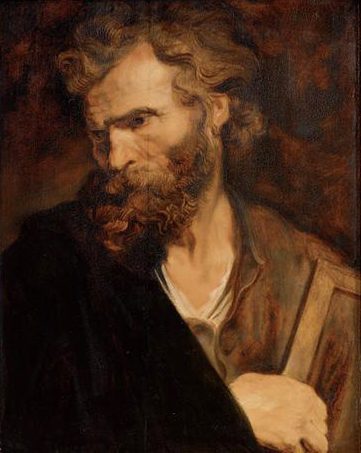
The Apostle Jude
Are we living in the last days? The Book of Jude is not very long (only one chapter), but its twenty-five verses have much to say about the last days, and today, it is strikingly similar to the way it was in Jude’s day. Jude is the half-brother of Jesus Christ, having the same mother but not the same father, and the range of date for this book is incredibly wide, with conservative scholars placing it between the years 70 to 90 AD. The reason I think the date is much later is because Jude refers to the Apostle’s predictions for the last days (Jude 1:18) as having come true (Jude 1:17), but clearly, Jude’s epistle is just as relevant today. Jude begins by telling us that he’s “a servant of Jesus Christ and brother of James” (Jude 1:1), so Jude is a servant of Christ, but he is also his half-brother. Notice that Jude puts these relationships in the proper hierarchy; Jesus is His Lord and God, and only by birth is Jude physically related to Jesus (having the same mother) but is also the brother of James, however the word translated into “servant” is wrong. It should be as the Greek word says, and that is “slave” (doulos), so there is a huge difference between a slave and a servant. A servant can quit their job, get fired, and go home after work, but a slave, particularly one of Christ, is owned by the Master, but the Master is good and He is merciful, and He now calls us friends.
Of Necessity
Jude wrote this book out of necessity for the church. You can tell it’s different from the rest of the New Testament books because it refers to a later time period than most of the others do. Jude writes with a sense of urgency, saying he “was very eager to write to you about our common salvation, I found it necessary to write appealing to you to contend for the faith that was once for all delivered to the saints” (Jude 1:3). Contending for something means we have to fight for something, and in this case, it was the faith that was once “delivered to the saints,” which is clearly in the past tense. I’ve heard it said, “If it’s new, it’s not from God; and if it’s from God, it’s not new,” so “new revelations” trouble me because we cannot ever be certain of the source. Just as it was going on in the church then, today, “certain people have crept in unnoticed who long ago were designated for this condemnation, ungodly people, who pervert the grace of our God into sensuality and deny our only Master and Lord, Jesus Christ” (Jude 1:4). This perversion could the “quid pro quo” God Who promises to bless your “seeds of faith,” or adding things to the gospel like, “Jesus Christ + baptism = salvation.” Many swallow these lies because those who brought them came in under the cover of darkness and have “crept in unnoticed.” If they had been noticed, someone would have said something, but that’s why Jude believes we must contend for the faith originally delivered by Christ and expounded by the Apostles because people are adding elements to the gospel of Jesus Christ. That means it’s not really the gospel at all (Gal 1:7-9). God has already spoken through His Apostles and Prophets, but most clearly through the Son of God, Jesus Christ (Heb 1:1-2), and we hear Him speak clearly and plainly in the Gospels.
Fulfilled
Since the date of this book’s writing may have come after most of the Apostles had died, it makes sense that the prophecies the Apostles gave had been fulfilled. Jude writes to remind them about “the predictions of the apostles of our Lord Jesus Christ” (Jude 1:17), and what “They said to you, “In the last time there will be scoffers, following their own ungodly passions” (Jude 1:18). We know it’s not those within the Body of Christ that Jude writes about, but “these who cause divisions, worldly people, devoid of the Spirit” (Jude 1:20), and without the Spirit of God, no one is a child of God (Rom 8:16). Looking religious means nothing because it’s not about religion; it’s about a personal, saving relationship with Jesus Christ. We are reminded that Satan has his own ministers, and this deceiver will make them look like angels of light (2 Cor 11:4-5), but they only appear that way, because they bring a message of darkness. A gospel look-alike that neglects matters of sin, repentance, confession, sanctification, living in holiness, coming out of this world, being Jesus’ disciple, and doing what Jesus’ disciples would naturally do (Matt 25:35-36). If the Apostles were here on earth today, would be appalled at some of the “buffet-style” religions that claim to be Christian? There is only one way and through One Person (John 6:44; Acts 4:12). We can’t have a little of this and a little of that, because without the whole gospel of repentance and faith (Mark 1:14-15), you have half the truth, and a half-truth is a whole lie…straight from hell.
Conclusion
I do not write a lot about the end time events or the last days, but that doesn’t mean it’s not important, but I believe it’s best to focus on Christ and to be ready for His appearing at any moment. I am not a Bible prophecy hound, but I do pay attention to what the Scriptures say, and what’s going on in the world, however I don’t do that at the expense of studying and reading the rest of Scripture. Is Jesus’ return soon? Are we living in the last days? I don’t know, but I know a better question: “Have you put your trust in Christ? Are you ready for His appearing because He could come at any moment?” If not, there are other prophecies that will come true someday (Rev 1:7, 20:12-25), so the question remains: “Will you put your trust in the Savior today?” Eternity is a very long time to be wrong.
Article by Jack Wellman
Jack Wellman is Pastor of the Mulvane Brethren Church in Mulvane Kansas. Jack is a writer at Christian Quotes and also the Senior Writer at What Christians Want To Know whose mission is to equip, encourage, and energize Christians and to address questions about the believer’s daily walk with God and the Bible. You can follow Jack on Google Plus or check out his book Teaching Children the Gospel available on Amazon.
Previous Post

August 8, 2018
3 Potent Powers Of The Word Of God
Next Post

August 13, 2018 What Is The Role Of The Holy Spirit?
Browse Our Archives
Select a Category Bible Answers Bible Definitions Bible Story Bible Study Bible Verses Christian Books Christian Entertainment Christian Fathers Christian Mothers Christian Quotes Devotional Famous Christians Music News Parables Prayers Quotes Sunday School Lesson Uncategorized Youth Sermons
Select a Month October 2019 September 2019 August 2019 July 2019 June 2019 May 2019 April 2019 March 2019 February 2019 January 2019 December 2018 November 2018 October 2018 September 2018 August 2018 July 2018 June 2018 May 2018 April 2018 March 2018 February 2018 January 2018 December 2017 November 2017 October 2017 September 2017 August 2017 July 2017 June 2017 May 2017 April 2017 March 2017 February 2017 January 2017 December 2016 November 2016 October 2016 September 2016 August 2016 July 2016 June 2016 May 2016 March 2016 February 2016 January 2016 December 2015 November 2015 October 2015 September 2015 August 2015 July 2015 June 2015 May 2015 April 2015 March 2015 February 2015 January 2015 December 2014 November 2014 October 2014 September 2014 August 2014 July 2014 June 2014 May 2014 April 2014 March 2014 February 2014 January 2014 December 2013 November 2013 October 2013 September 2013 August 2013 July 2013 June 2013 May 2013 April 2013 March 2013
Follow Us!
TAKE THE
Religious Wisdom Quiz
In what city was Paul shipwrecked?
Select your answer to see how you score.
Malta Crete Rhodes Cyprus
Related posts from Christian Crier

What Does The Bible Say About Our Thoughts?

Top 13 Bible Verses About Virtue

Do Colors Have Special Meaning In The Bible?

The Greatest Father In History
TRENDING AT PATHEOS Evangelical

How the author of the world's best hymn...
I've been working with John Newton for a while now. This makes...

Long before this Lectio Divina, Psalm 130 - the song - started...

What About the Trees? Another Living Parable
After I finished writing the last article about falling leaves as a...

Why Classical Education Is a Conversation, Not a...
Come and Read: Joy in Classical Education When I was a little...

Falling Leaves: A Living Parable on Letting Go
I’ve spent the vast majority of my life in the southeast corner...

Cornell University has received a great deal of negative publicity and intense...
view all Evangelical blogs
Ad-Free & Subscriber Log-In Subscription Support
- About Us
- 2026 Calendar
- Videos
- Podcasts
- Library of World Religions
- Faith In Media Tracker
- Advertise With Us
- Write for Us
- Privacy Policy
- Terms of Service
- Do Not Sell My Data
- Contact Us
- Radiant Digital
- Manage Newsletter Subscriptions
- Unsubscribe From Notifications
- Sitemap
Copyright 2008-2026, Patheos. All rights reserved.
Subscription Support Ad-Free & Subscriber Log-In
Follow Patheos