
BuddhistCatholicContemplativeEvangelicalGeneral ChristianHinduJewishLatter-day SaintMuslimNew VisionsProgressive Christian
Beliefs
- Buddhist
- Catholic
- Contemplative
- Evangelical
- General Christian
- Hindu
- Jewish
- Latter-day Saint
- More Voices
- Muslim
- New Visions
- Pagan
- Progressive Christian
Topics
- Religion News
- Food and Religion
- Sports and Religion
- Religious Art
- Religious Music and Entertainment
- Religious Events
- History and Religion
- Style and Religion
- Politics and Religion
- Women in Religion
- Recreation Outdoors and Religion
- Business Finance and Religion
- Careers Workplace and Religion
- Education and Religion
- Family Parenting and Religion
- Health Fitness and Religion
- Home and Religion
- Relationships and Religion
- Technology and Religion
- Travel and Religion
Columnists
- Buddhist Columnists
- Business Finance and Religion Columnists
- Careers Workplace and Religion Columnists
- Catholic Columnists
- Contemplative Columnists
- Education and Religion Columnists
- Evangelists Columnists
- Family Parenting and Religion Columnists
- General Christian Columnists
- Health Fitness and Religion Columnists
- Hindu Columnists
- History and Religion Columnists
- Home and Religion Columnists
- Jewish Columnists
- More Voices Columnists
- Latter Day Columnists
- Muslim Columnists
- New Visions Columnists
- Nonreligious Columnists
- Pagan Columnists
- Politics and Religion Columnists
- Progressive Columnists
- Recreation Outdoors and Religion Columnists
- Relationships and Religion Columnists
- Religion News Columnists
- Religious Art Columnists
- Religious Events Columnists
- Religious Music and Entertainment Columnists
- Sports and Religion Columnists
- Style and Religion Columnists
- Technology and Religion Columnists
- Travel and Religion Columnists
- Women in Religion Columnists
Resource Library
- 2026 Calendar
- Library of World Religions
- The 100 Most Holy Places on Earth
- Patheos Answers
- Podcasts
- Videos
- Faith Leaders Database
- Anglican Episcopalian
- Bahai
- Baptist
- Buddhism
- Christianity
- Confucianism
- Eastern Orthodoxy
- Hinduism
- Holiness and Pentecostal
- ISKCON
- Islam
- Judaism
- Lutheran
- Methodist
- The Church of Jesus Christ of Latter-day Saints
- New Age
- Paganism
- Presbytarian and Reformed
- Protestantism
- Religion Behind the Scenes
- Roman Catholic
- Scientology
- Shia Islam
- Sikhism
- Sufism
- Sunni Islam
- Taoism
- Zen
- See all religions
Research Tools
 Ad-Free & Subscriber Log-In Subscription Support
Ad-Free & Subscriber Log-In Subscription Support
Follow Patheos 

- Trending:
- Forgiveness
- |
- Marriage
- |
- Consciousness
- |
- Death Penalty
- |
- Election
- |
- Halloween
 Christian Crier
- Home
- Evangelical
- The Exodus And Christian Conversion
The Exodus And Christian Conversion
Last updated on: June 22, 2018 at 4:00 am by Jack Wellman
The Exodus And Christian Conversion 2018-06-15T17:25:23-05:00 Jack Wellman
Patheos Explore the world's faith through different perspectives on religion and spirituality! Patheos has the views of the prevalent religions and spiritualities of the world.
How is the Exodus from Egypt like a Christian’s conversion? Are there similarities?
The Exodus
When God heard the cries of His people under their harsh bondage to the Egyptians, God told Moses that He was going to free His people. After a series of plagues, and Pharaoh’s persistent refusal to free the Israelites, God promised that every firstborn, both man and beast would die. Only the firstborn of those who would take a spotless lamb’s blood and apply it to their doorposts would live. We read of this account where it says, “The LORD said to Moses and Aaron in the land of Egypt…that on the tenth day of this month every man shall take a lamb according to their fathers’ houses, a lamb for a household” (Ex 12:1, 3), but it was critical that “Your lamb shall be without blemish, a male a year old. You may take it from the sheep or from the goats” (Ex 12:6). Naturally, the reference to a lamb without spot or blemish foreshadows Jesus Christ by whom we were ransomed (1 Pet 1:18), so it was only “with the precious blood of Christ, like that of a lamb without blemish or spot” (1 Pet 1:19). 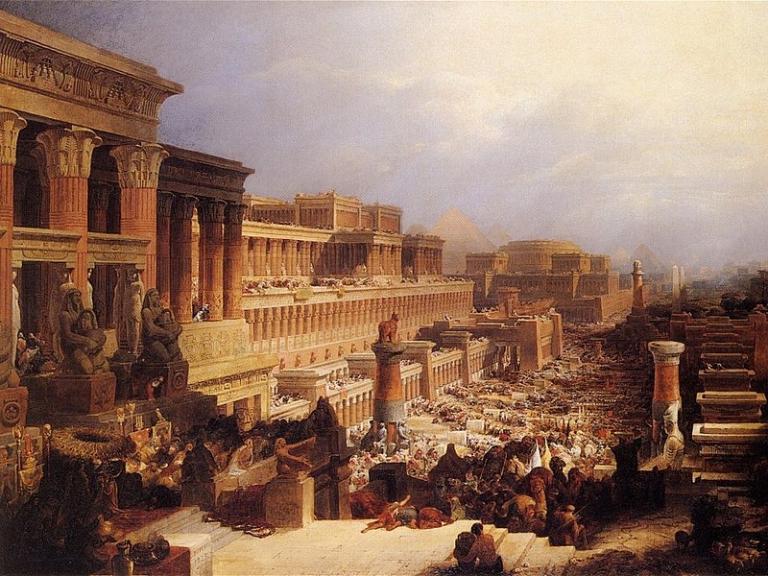
Egypt and Sin
It’s not that the Egyptians themselves represented sin, but some have seen the Israelites coming out of Egypt as symbolic for the Christian coming out of sin. Jesus said “everyone who practices sin is a slave to sin” (John 8:34). The Apostle Paul asked, “Do you not know that if you present yourselves to anyone as obedient slaves, you are slaves of the one whom you obey, either of sin, which leads to death, or of obedience, which leads to righteousness” (Rom 6:16), so whoever is held captive by sin is under the bondage of sin. The only way the Israelite’s firstborn could survive was to “take some of the blood and put it on the two doorposts and the lintel of the houses in which they eat it” (Ex 12:7), so essentially, that lamb’s blood on the door posts was a public profession of faith in God. It gave them the assurance that God would pass over that house, meaning they would avoid God’s judgment, so the Lord will pass over those with the blood publically displayed. God will not pass through but pass over them, but He will not pass over, but pass through those who reject the blood of Christ, and that lamb’s blood looked ahead to the substitutionary death of Christ on the cross. Whoever had the lamb’s blood would live, and God’s judgment would pass over them. Today, whoever trusts in Christ will cause God’s wrath to pass over them. “Whoever” applied the blood in Egypt would not die, and that is very much like an invitation to come to Christ and be saved, because “whoever believes in him should not perish but have eternal life” (John 3:16b).
Passing Over
The Passover comes from the simple idea of God passing over the Israelites (with the lambs blood), but not over those who refused to believe in the God of Abraham, Isaac, and Jacob. When the unleavened bread is to be eaten with bitter herbs, the unleavened bread may have served to remind them of their bitter enslavement in Egypt, and the New Testament is replete with references to sin being like leavening. It puffs up, it grows, and it expands. And leavening works the very quickest in lukewarm water (Rev 3:14-22). When the Passover Lamb is sacrificed, it is a total sacrifice, which is why God commanded that, “They shall eat the flesh that night, roasted on the fire; with unleavened bread and bitter herbs they shall eat it” (Ex 12:8), and if “anything that remains until the morning you shall burn. In this manner you shall eat it: with your belt fastened, your sandals on your feet, and your staff in your hand. And you shall eat it in haste. It is the LORD’s Passover. For I will pass through the land of Egypt that night, and I will strike all the firstborn in the land of Egypt, both man and beast; and on all the gods of Egypt I will execute judgments: I am the LORD. The blood shall be a sign for you, on the houses where you are. And when I see the blood, I will pass over you, and no plague will befall you to destroy you, when I strike the land of Egypt” (Ex 12:11-13).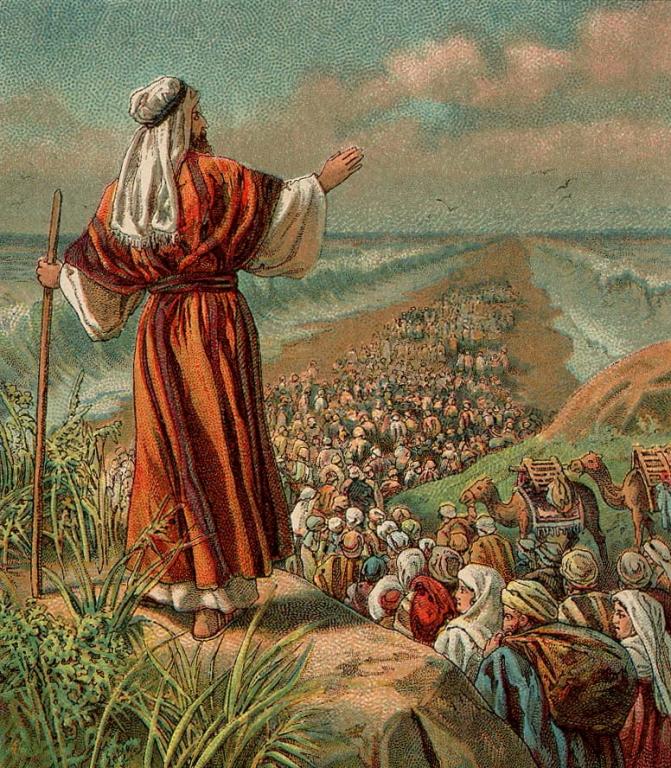
A Cleansing
In Exodus 12:21-22, “Moses called all the elders of Israel and said to them, “Go and select lambs for yourselves according to your clans, and kill the Passover lamb. Take a bunch of hyssop and dip it in the blood that is in the basin, and touch the lintel and the two doorposts with the blood that is in the basin. None of you shall go out of the door of his house until the morning.” Why was hyssop used? Hyssop is an herb in the mint family. It has cleansing, medicinal, and flavoring properties, but in ancient times, hyssop was used for ceremonial cleansing of people and houses. David mentions hyssop in Psalm 51:7, writing, “Cleanse me with hyssop, and I will be clean; wash me, and I will be whiter than snow.” David does not refer to physical cleansing, but rather, God cleansing him as he confessed his sins of adultery and murder. In the Old Testament, blood and hyssop purified a defiled person (Heb 9:19), so Jesus’ shed blood purifies us from the defilement of our sin, and perhaps why it’s no coincidence that the Apostle John writes that at the cross, “A jar full of sour wine stood there, so they put a sponge full of the sour wine on a hyssop branch and held it to his mouth” (John 19:29). The ancient Israelites displayed the lamb’s blood on their doorposts; today, believers are to display their trust in Christ publically. Those who don’t receive Christ, and have the precious blood of the Lamb atone for their sins, will not have God’s wrath pass over them, but there is only a fearful expectation of falling into the hands of the living God (Heb 10:31) when judgment comes after death (Heb 9:27), or at Christ’s return; whichever comes first . Jesus Himself said, “I will warn you whom to fear: fear him who, after he has killed, has authority to cast into hell. Yes, I tell you, fear him” (Luke 12:5)!
Conclusion
There are many more similarities between the Exodus and the gospel. For example, the Passover Lamb could not have any bones broken (Ex 12:46), which was also prophesied of Christ (Psalm 34:20), and fulfilled in the first century by Christ (John 19:31-36). Then, there’s the symbolism of coming out of Egypt, which represents our coming out of sin and the world. The Exodus also reminds us that God alone can bring us out of the world (John 15:5), just as He did with the ancient Israelite’s who were powerless to escape from Egypt on their own. And finally, have you ever noticed that Pharaoh’s crown had a serpent on it? Since Egypt is symbolic of sin, surely Pharaoh represents Satan, and like the old serpent deceiver, he desires to keep us in bondage to sin, however, God has made a way (John 3:16-17; Acts 4:12). First of all, God demands a sacrifice, but it’s a sacrifice we can’t provide, so God provided a Lamb for Himself, just as “Abraham said, “God will provide for himself the lamb” (Gen 22:8a), and it was provided in Himself in the spotless Lamb of God, Jesus Christ, Who is God. From Genesis (Gen 3:15) to Revelation (22), it’s all about Jesus Christ. The late Dr. J. Vernon McGee (Through the Bible Ministries) said, “The Bible is a Him book…it’s all about Him,” and of course He’s right. You can see shadows and images in the Old Testament of Jesus’ coming atoning work on the cross. He is the spotless Lamb that makes even the vilest of sinners clean. It is just the Apostle Paul wrote in 2 Corinthians 5:21: “For our sake he made him to be sin who knew no sin, so that in him we might become the righteousness of God.” That’s why none of us can boast (Eph 2:8-9).
Article by Jack Wellman
Jack Wellman is Pastor of the Mulvane Brethren Church in Mulvane Kansas. Jack is a writer at Christian Quotes and also the Senior Writer at What Christians Want To Know whose mission is to equip, encourage, and energize Christians and to address questions about the believer’s daily walk with God and the Bible. You can follow Jack on Google Plus or check out his book Teaching Children the Gospel available on Amazon.
Previous Post

June 20, 2018
4 Great Bible Verses To Read When You’re Doubting God
Next Post
June 25, 2018 How Abraham Was Justified 2,000 Years Before Christ
Browse Our Archives
Select a Category Bible Answers Bible Definitions Bible Story Bible Study Bible Verses Christian Books Christian Entertainment Christian Fathers Christian Mothers Christian Quotes Devotional Famous Christians Music News Parables Prayers Quotes Sunday School Lesson Uncategorized Youth Sermons
Select a Month October 2019 September 2019 August 2019 July 2019 June 2019 May 2019 April 2019 March 2019 February 2019 January 2019 December 2018 November 2018 October 2018 September 2018 August 2018 July 2018 June 2018 May 2018 April 2018 March 2018 February 2018 January 2018 December 2017 November 2017 October 2017 September 2017 August 2017 July 2017 June 2017 May 2017 April 2017 March 2017 February 2017 January 2017 December 2016 November 2016 October 2016 September 2016 August 2016 July 2016 June 2016 May 2016 March 2016 February 2016 January 2016 December 2015 November 2015 October 2015 September 2015 August 2015 July 2015 June 2015 May 2015 April 2015 March 2015 February 2015 January 2015 December 2014 November 2014 October 2014 September 2014 August 2014 July 2014 June 2014 May 2014 April 2014 March 2014 February 2014 January 2014 December 2013 November 2013 October 2013 September 2013 August 2013 July 2013 June 2013 May 2013 April 2013 March 2013
Follow Us!
TAKE THE
Religious Wisdom Quiz
According to Titus, what did God do when his kindness and love appeared?
Select your answer to see how you score.
He established his church He destroyed his enemies He saved us through the washing of rebirth and renewal by the Holy Spirit He sent his Son
Related posts from Christian Crier

What Does The Bible Say About Our Thoughts?

Top 13 Bible Verses About Virtue

Do Colors Have Special Meaning In The Bible?

The Greatest Father In History
TRENDING AT PATHEOS Evangelical

How the author of the world's best hymn...
I've been working with John Newton for a while now. This makes...

Long before this Lectio Divina, Psalm 130 - the song - started...

What About the Trees? Another Living Parable
After I finished writing the last article about falling leaves as a...

Why Classical Education Is a Conversation, Not a...
Come and Read: Joy in Classical Education When I was a little...

Falling Leaves: A Living Parable on Letting Go
I’ve spent the vast majority of my life in the southeast corner...

Cornell University has received a great deal of negative publicity and intense...
view all Evangelical blogs
Ad-Free & Subscriber Log-In Subscription Support
- About Us
- 2026 Calendar
- Videos
- Podcasts
- Library of World Religions
- Faith In Media Tracker
- Advertise With Us
- Write for Us
- Privacy Policy
- Terms of Service
- Do Not Sell My Data
- Contact Us
- Radiant Digital
- Manage Newsletter Subscriptions
- Unsubscribe From Notifications
- Sitemap
Copyright 2008-2026, Patheos. All rights reserved.
Subscription Support Ad-Free & Subscriber Log-In
Follow Patheos