
BuddhistCatholicContemplativeEvangelicalGeneral ChristianHinduJewishLatter-day SaintMuslimNew VisionsProgressive Christian
Beliefs
- Buddhist
- Catholic
- Contemplative
- Evangelical
- General Christian
- Hindu
- Jewish
- Latter-day Saint
- More Voices
- Muslim
- New Visions
- Pagan
- Progressive Christian
Topics
- Religion News
- Food and Religion
- Sports and Religion
- Religious Art
- Religious Music and Entertainment
- Religious Events
- History and Religion
- Style and Religion
- Politics and Religion
- Women in Religion
- Recreation Outdoors and Religion
- Business Finance and Religion
- Careers Workplace and Religion
- Education and Religion
- Family Parenting and Religion
- Health Fitness and Religion
- Home and Religion
- Relationships and Religion
- Technology and Religion
- Travel and Religion
Columnists
- Buddhist Columnists
- Business Finance and Religion Columnists
- Careers Workplace and Religion Columnists
- Catholic Columnists
- Contemplative Columnists
- Education and Religion Columnists
- Evangelists Columnists
- Family Parenting and Religion Columnists
- General Christian Columnists
- Health Fitness and Religion Columnists
- Hindu Columnists
- History and Religion Columnists
- Home and Religion Columnists
- Jewish Columnists
- More Voices Columnists
- Latter Day Columnists
- Muslim Columnists
- New Visions Columnists
- Nonreligious Columnists
- Pagan Columnists
- Politics and Religion Columnists
- Progressive Columnists
- Recreation Outdoors and Religion Columnists
- Relationships and Religion Columnists
- Religion News Columnists
- Religious Art Columnists
- Religious Events Columnists
- Religious Music and Entertainment Columnists
- Sports and Religion Columnists
- Style and Religion Columnists
- Technology and Religion Columnists
- Travel and Religion Columnists
- Women in Religion Columnists
Resource Library
- 2026 Calendar
- Library of World Religions
- The 100 Most Holy Places on Earth
- Patheos Answers
- Podcasts
- Videos
- Faith Leaders Database
- Anglican Episcopalian
- Bahai
- Baptist
- Buddhism
- Christianity
- Confucianism
- Eastern Orthodoxy
- Hinduism
- Holiness and Pentecostal
- ISKCON
- Islam
- Judaism
- Lutheran
- Methodist
- The Church of Jesus Christ of Latter-day Saints
- New Age
- Paganism
- Presbytarian and Reformed
- Protestantism
- Religion Behind the Scenes
- Roman Catholic
- Scientology
- Shia Islam
- Sikhism
- Sufism
- Sunni Islam
- Taoism
- Zen
- See all religions
Research Tools
 Ad-Free & Subscriber Log-In Subscription Support
Ad-Free & Subscriber Log-In Subscription Support
Follow Patheos 

- Trending:
- Forgiveness
- |
- Marriage
- |
- Consciousness
- |
- Death Penalty
- |
- Election
- |
- Halloween
 Christian Crier
- Home
- Evangelical
- Will We Recognize Family and Friends In The Kingdom Of Heaven?
Will We Recognize Family and Friends In The Kingdom Of Heaven?
Last updated on: June 18, 2018 at 4:00 am by Jack Wellman
Will We Recognize Family and Friends In The Kingdom Of Heaven? 2018-06-11T15:35:43-05:00 Jack Wellman
Patheos Explore the world's faith through different perspectives on religion and spirituality! Patheos has the views of the prevalent religions and spiritualities of the world.
When believers finally reach heaven, will they know family members and friends?
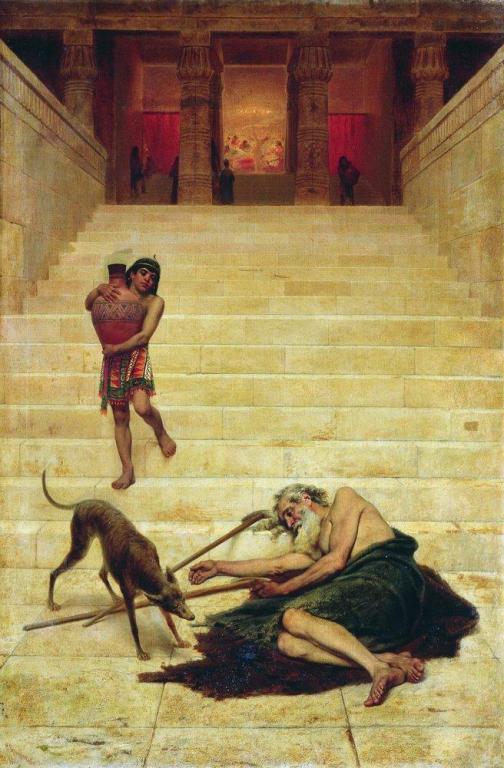
Lazarus and the Rich Man
Does the Bible tell us that we can know our lost family members and friends once we enter the kingdom of heaven? Not exactly, but there are strong indications that we will know those we’ve lost once we see them again and they will now us. One of Jesus’ most powerful stories is that of Lazarus and the Rich Man. Let’s read the account to see if this gives us any help as to whether we will recognize people on the other side of eternity. It is found in Luke 16:19-31 where Jesus said, “There was a rich man who was clothed in purple and fine linen and who feasted sumptuously every day. And at his gate was laid a poor man named Lazarus, covered with sores, who desired to be fed with what fell from the rich man’s table. Moreover, even the dogs came and licked his sores” (Luke 6:19-21), then “The poor man died and was carried by the angels to Abraham’s side. The rich man also died and was buried, and in Hades, being in torment, he lifted up his eyes and saw Abraham far off and Lazarus at his side” (Luke 16:22-23). Abraham responded by saying, “’Child, remember that you in your lifetime received your good things, and Lazarus in like manner bad things; but now he is comforted here, and you are in anguish. And besides all this, between us and you a great chasm has been fixed, in order that those who would pass from here to you may not be able, and none may cross from there to us.’ And he said, ‘Then I beg you, father, to send him to my father’s house — for I have five brothers so that he may warn them, lest they also come into this place of torment’” (Luke 16:25-28). The point to all this is that after death, we will still have feelings, we will be aware of our surroundings, and we will remember those who are still living after we’ve been judged, but we’ll have no place of escape from hell. The rich man wanted his family to know that there truly is a hell. He wanted to go back to warn them, so after death, the rich man (as with all of us) had memories, recollection, feelings, love for his family, and senses (he thirsted), so there is an awareness after death, but the thing is, there is no possible escape for those who’ve rejected Christ.
Mount of Transfiguration
When Jesus revealed his glory to Peter, James, and John, they immediately recognized Moses and Elijah even though they had never seen them before. How did they know them by sight? Did they know enough about them that they recognized them? Jesus never introduced them or told the disciples who these men were, but the disciples already knew them. Let’s read the account of the Transfiguration in Matthew 17:4 where Peter said to Jesus, “Lord, it is good that we are here. If you wish, I will make three tents here, one for you and one for Moses and one for Elijah.” We don’t know how Peter, James, and John knew who Elijah and Moses were by seeing them for the very first time…we only know they knew them, and I believe that gives us some indication that we will know others in the kingdom whom we’ve never met, particularly the heroes and heroines of the faith. Jesus spoke to these men after they had died, indicating that there is life after death. For example, Jesus said in Matthew 8:11, “I tell you, many will come from east and west and recline at table with Abraham, Isaac, and Jacob in the kingdom of heaven.” Even in ancient times, God told Moses that “I am the God of your father, the God of Abraham, the God of Isaac and the God of Jacob” (Ex 3:6), meaning these men still existed beyond this life.
After Death
Notice that “Abraham breathed his last and died at a good old age, an old man and full of years; and he was gathered to his people” (Gen 25:8). Also, “Ishmael lived a hundred and thirty-seven years. He breathed his last and died, and he was gathered to his people” (Gen 25:17). Jacob was explicit in his instructions about his burial in Genesis 49:29-33, saying, “I am about to be gathered to my people. Bury me with my fathers in the cave in the field of Ephron the Hittite, the cave in the field of Machpelah, near Mamre in Canaan, which Abraham bought as a burial place from Ephron the Hittite, along with the field. There Abraham and his wife Sarah were buried, there Isaac and his wife Rebekah were buried, and there I buried Leah. When Jacob had finished giving instructions to his sons, he drew his feet up into the bed, breathed his last and was gathered to his people.” Clearly, Jacob knew that he was going to be buried with his fathers and his relatives and “gathered to his people.” David also knew he would recognize his son who died in infancy when he sees him again someday, saying, “But now that he is dead, why should I go on fasting? Can I bring him back again? I will go to him, but he will not return to me” (2 Sam 12:23). There is no doubt David will recognize his own son for he spoke expectantly of seeing him again and “going” to him. This “going to him” is obviously where the child is at now. In 1 Corinthians 13:12, Paul says, “For now we see through a glass, darkly; but then face to face: now I know in part; but then shall I know even as also I am known.” Think about those you’ve shared the gospel with who are no longer here. Surely they’ll recognize you when they see you and they’ll rejoice with you, no doubt.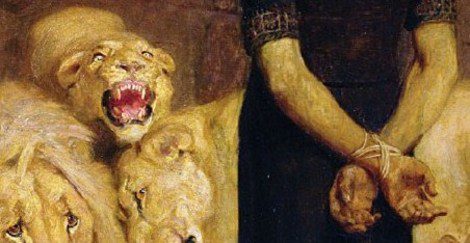
Cloud of Witnesses
Some believe that the “cloud of witnesses” is those saints who are now with the Lord and are watching us. The “cloud of witnesses” is mentioned in Hebrew 12:1, but these are witnesses left for us, not spectators. There is no Scriptural evidence that our lost loved ones can see us from heaven. By the way, Hebrews 12:1 is a conclusion of what was just said in Hebrews 11:39-40 that “all these, though commended through their faith, did not receive what was promised, since God had provided something better for us, that apart from us they should not be made perfect.” Jesus said that “in the resurrection they neither marry nor are given in marriage, but are like angels in heaven” (Matt 22:30), which some misconstrue to mean that we’ll be like or become angels. I don’t know why or where this myth ever got started, but in fact, someday, we are to judge the angels (1 Cor 6:3) but not become angels.
Conclusion
The very next moment after you die, you are with the Lord; that is if you are saved. Paul wrote that “to be absent from the body [is] to be present with the Lord” (2 Cor 5:8), which also means that “while we are at home in the body we are away from the Lord” (2 Cor 5:9). When Paul says “in the body,” he means here on earth and when he speaks of “with the Lord,” we know that He means present with Christ. Jesus is presently seated at the right hand of the Father, because after His death and resurrection, the Scriptures say that God “seated him at his right hand in the heavenly places” (Eph 1:20). This is where He directs His own church today as He gathers a people unto Himself. He is coming again for those who’re repented and trusted in Christ. Then, we’ll be with those we’ve lost and recognize them immediately. Again, that is only if they have trusted in Christ. That is the hope of the resurrection…and the hope of every believer in Christ.
Article by Jack Wellman
Jack Wellman is Pastor of the Mulvane Brethren Church in Mulvane Kansas. Jack is a writer at Christian Quotes and also the Senior Writer at What Christians Want To Know whose mission is to equip, encourage, and energize Christians and to address questions about the believer’s daily walk with God and the Bible. You can follow Jack on Google Plus or check out his book Teaching Children the Gospel available on Amazon.
Previous Post

June 15, 2018
The Fathers Heart And A Nation’s Future
Next Post
June 20, 2018 4 Great Bible Verses To Read When You’re Doubting God
Browse Our Archives
Select a Category Bible Answers Bible Definitions Bible Story Bible Study Bible Verses Christian Books Christian Entertainment Christian Fathers Christian Mothers Christian Quotes Devotional Famous Christians Music News Parables Prayers Quotes Sunday School Lesson Uncategorized Youth Sermons
Select a Month October 2019 September 2019 August 2019 July 2019 June 2019 May 2019 April 2019 March 2019 February 2019 January 2019 December 2018 November 2018 October 2018 September 2018 August 2018 July 2018 June 2018 May 2018 April 2018 March 2018 February 2018 January 2018 December 2017 November 2017 October 2017 September 2017 August 2017 July 2017 June 2017 May 2017 April 2017 March 2017 February 2017 January 2017 December 2016 November 2016 October 2016 September 2016 August 2016 July 2016 June 2016 May 2016 March 2016 February 2016 January 2016 December 2015 November 2015 October 2015 September 2015 August 2015 July 2015 June 2015 May 2015 April 2015 March 2015 February 2015 January 2015 December 2014 November 2014 October 2014 September 2014 August 2014 July 2014 June 2014 May 2014 April 2014 March 2014 February 2014 January 2014 December 2013 November 2013 October 2013 September 2013 August 2013 July 2013 June 2013 May 2013 April 2013 March 2013
Follow Us!
TAKE THE
Religious Wisdom Quiz
What is the last book in the New Testament before Revelation?
Select your answer to see how you score.
3 John Jude 1 John Philemon
Related posts from Christian Crier

What Does The Bible Say About Our Thoughts?

Top 13 Bible Verses About Virtue

Do Colors Have Special Meaning In The Bible?

The Greatest Father In History
TRENDING AT PATHEOS Evangelical

How the author of the world's best hymn...
I've been working with John Newton for a while now. This makes...

Long before this Lectio Divina, Psalm 130 - the song - started...

What About the Trees? Another Living Parable
After I finished writing the last article about falling leaves as a...

Why Classical Education Is a Conversation, Not a...
Come and Read: Joy in Classical Education When I was a little...

Falling Leaves: A Living Parable on Letting Go
I’ve spent the vast majority of my life in the southeast corner...

Cornell University has received a great deal of negative publicity and intense...
view all Evangelical blogs
Ad-Free & Subscriber Log-In Subscription Support
- About Us
- 2026 Calendar
- Videos
- Podcasts
- Library of World Religions
- Faith In Media Tracker
- Advertise With Us
- Write for Us
- Privacy Policy
- Terms of Service
- Do Not Sell My Data
- Contact Us
- Radiant Digital
- Manage Newsletter Subscriptions
- Unsubscribe From Notifications
- Sitemap
Copyright 2008-2026, Patheos. All rights reserved.
Subscription Support Ad-Free & Subscriber Log-In
Follow Patheos