
BuddhistCatholicContemplativeEvangelicalGeneral ChristianHinduJewishLatter-day SaintMuslimNew VisionsProgressive Christian
Beliefs
- Buddhist
- Catholic
- Contemplative
- Evangelical
- General Christian
- Hindu
- Jewish
- Latter-day Saint
- More Voices
- Muslim
- New Visions
- Pagan
- Progressive Christian
Topics
- Religion News
- Food and Religion
- Sports and Religion
- Religious Art
- Religious Music and Entertainment
- Religious Events
- History and Religion
- Style and Religion
- Politics and Religion
- Women in Religion
- Recreation Outdoors and Religion
- Business Finance and Religion
- Careers Workplace and Religion
- Education and Religion
- Family Parenting and Religion
- Health Fitness and Religion
- Home and Religion
- Relationships and Religion
- Technology and Religion
- Travel and Religion
Columnists
- Buddhist Columnists
- Business Finance and Religion Columnists
- Careers Workplace and Religion Columnists
- Catholic Columnists
- Contemplative Columnists
- Education and Religion Columnists
- Evangelists Columnists
- Family Parenting and Religion Columnists
- General Christian Columnists
- Health Fitness and Religion Columnists
- Hindu Columnists
- History and Religion Columnists
- Home and Religion Columnists
- Jewish Columnists
- More Voices Columnists
- Latter Day Columnists
- Muslim Columnists
- New Visions Columnists
- Nonreligious Columnists
- Pagan Columnists
- Politics and Religion Columnists
- Progressive Columnists
- Recreation Outdoors and Religion Columnists
- Relationships and Religion Columnists
- Religion News Columnists
- Religious Art Columnists
- Religious Events Columnists
- Religious Music and Entertainment Columnists
- Sports and Religion Columnists
- Style and Religion Columnists
- Technology and Religion Columnists
- Travel and Religion Columnists
- Women in Religion Columnists
Resource Library
- 2026 Calendar
- Library of World Religions
- The 100 Most Holy Places on Earth
- Patheos Answers
- Podcasts
- Videos
- Faith Leaders Database
- Anglican Episcopalian
- Bahai
- Baptist
- Buddhism
- Christianity
- Confucianism
- Eastern Orthodoxy
- Hinduism
- Holiness and Pentecostal
- ISKCON
- Islam
- Judaism
- Lutheran
- Methodist
- The Church of Jesus Christ of Latter-day Saints
- New Age
- Paganism
- Presbytarian and Reformed
- Protestantism
- Religion Behind the Scenes
- Roman Catholic
- Scientology
- Shia Islam
- Sikhism
- Sufism
- Sunni Islam
- Taoism
- Zen
- See all religions
Research Tools
 Ad-Free & Subscriber Log-In Subscription Support
Ad-Free & Subscriber Log-In Subscription Support
Follow Patheos 

- Trending:
- Forgiveness
- |
- Marriage
- |
- Consciousness
- |
- Death Penalty
- |
- Election
- |
- Halloween
 Christian Crier
- Home
- Evangelical
- The Hidden Danger Of Success
The Hidden Danger Of Success
Last updated on: May 28, 2018 at 5:00 am by Jack Wellman
The Hidden Danger Of Success 2018-05-17T18:33:35-05:00 Jack Wellman
Patheos Explore the world's faith through different perspectives on religion and spirituality! Patheos has the views of the prevalent religions and spiritualities of the world.
What is the greatest danger for the Christian? Is it failure or success? The answer might surprise you.
The Greatest Risk
Believe it or not, the greatest risk for falling or stumbling for the Christian is not during a trial or tribulation, but when they’ve just achieved something great. It’s our tendency to believe that it’s from our own effort and not from God’s sovereign hand, but this robs God of glory. We fail to see that everything that happens in our life is the result of a loving and sovereign God. We must realize that not even a sparrow falls to the ground that He is not aware of and does not allow (Matt 10:29). A great example was King Uzziah. When he began to reign in Judah, “he did what was right in the eyes of the LORD, according to all that his father Amaziah had done. He set himself to seek God in the days of Zechariah, who instructed him in the fear of God, and as long as he sought the LORD, God made him prosper” (2 Chron 26:4-5), but this was not from His own hand, but “God helped him against the Philistines and against the Arabians who lived in Gurbaal and against the Meunites” (2 Chron 26:7). King Uzziah prospered so much that “The Ammonites paid tribute to Uzziah, and his fame spread even to the border of Egypt, for he became very strong” (2nd Chron 26:8). The problem was, success went to his head, and “when he was strong, he grew proud, to his destruction. For he was unfaithful to the LORD his God and entered the temple of the LORD to burn incense on the altar of incense” (2 Chron 26:16). Uzziah was a king, not a priest. He had no right to burn incense in the temple, but he thought he was an exception because of his strength, wealth, and success, but that led to his downfall.
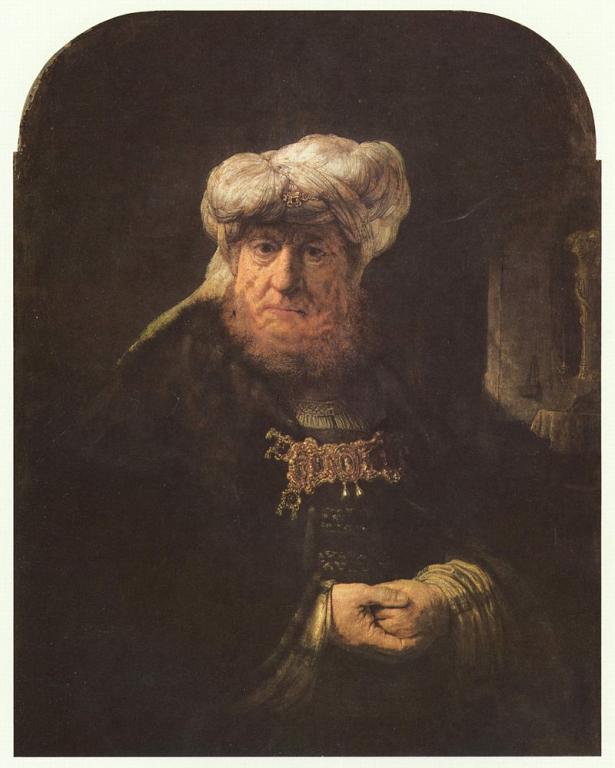
When King Uzziah was strong, he grew proud and it led to his destruction (2 Chron 26:16).
Victory from Defeat
When I was a Little League baseball coach, we were like the Bad News Bears. We could not win a game at all. The teams used to rub it in our face but we learned more during our defeats than we could have ever learned from winning so we came up with a plan. We decided to practice a little longer and harder. We worked on the basic skills more, we examined the fundamentals more, and we also learned how to be good sports in losing. It’s easy to be a good sport when you are winning but the true test is how to be one when you lose…time and again. In short, we learned how to accept defeat even though it was difficult, but here’s what happened. We began to practice more than the other teams, we studied the game more intently and we started to improve as a team and individually. Ironically, the teams that were beating us lightened up in their practice times. They didn’t practice as often or as hard as we did, and as a consequence, we slowly began to be more competitive. Near the end of the season, we started winning games. No, we didn’t win the league but we started gaining the benefits from our practices that our defeats compelled us to take. The result was that we turned our season around. If we had been winning at first, we may have never learned some valuable lessons. We learned how to lose graciously and how to work harder and improve. We learned more from our defeats than we ever would have from our victories.
Defeat from Victory
During the zenith of David’s success as king, he had victory after victory but, his heart became full of pride. Then Satan incited David to take a census and count his troops. It was a little like a rich man counting his money. Even though Joab tried to warn, David’s pride blinded him, and it can blind us too. Pride has a way of doing that. Of course, that angered God. David saw the great numbers of troops as being the real power of his kingdom. That meant he had failed to give credit to God for Israel’s great power. When we begin to take credit for blessings, we are robbing God of His due glory. As a result, Israel paid dearly with the death of seventy thousand men (2 Sam 24:15-17).
Israel’s Amnesia
Now, what about ancient Israel’s history? It seems that they followed the same pattern of success, pride, idolatry, and then, a fall. They prospered, forgot God, fell into idolatry, were sent into captivity, then humbled themselves, and God delivered them…again! Even though God had warned them numerous times, they refused to learn the lesson found in Deuteronomy 8:10-20: “When you have eaten and are satisfied, praise the Lord your God for the good land he has given you. Be careful that you do not forget the Lord your God, failing to observe his commands, his laws and his decrees that I am giving you this day. Otherwise, when you eat and are satisfied, when you build fine houses and settle down, and when your herds and flocks grow large and your silver and gold increase and all you have is multiplied, then your heart will become proud and you will forget the Lord your God, who brought you out of Egypt, out of the land of slavery. He led you through the vast and dreadful wilderness, that thirsty and waterless land, with its venomous snakes and scorpions. He brought you water out of hard rock. He gave you manna to eat in the wilderness, something your ancestors had never known, to humble and test you so that in the end it might go well with you. You may say to yourself, ‘My power and the strength of my hands have produced this wealth for me.’”
Lessons from Israel
Instead of saying, “How could Israel be like that,” I say, “How am I like that,” so there are several important things that God mentions that we should take to heart in Deuteronomy 8. When things are going well, we better not forget the Lord. When our goods increase and our wealth (or success) is multiplied, don’t let our hearts become proud. When we are delivered out of our own trials and tribulations, let us remember that it is God Who delivered us. When things go well we are tempted to think, “My power and the strength of my hands have done this,” but that’s the thin-ice of presumptuousness. Success makes us look in the mirror…struggles make us look to God. Isaiah writes, He is “the LORD” and “I will not give my glory to another nor my praise to graven images.” Sometimes that “graven image” (42:8) is our success.
Conclusion
When we are filled with pride we are just like Satan. When we are lifted up, we are exalting ourselves, but when we are boasting, we are headed for a fall. If we remain humble and give credit to God for our successes, God will continue to bless us, but if we act like it’s our doing, God will resist us every step of the way (James 4:6). If you have failed to repent, confess your sins, and trust in Christ, you have the wrath of God abiding on you right now (John 3:36b). Humble yourself today and know that God will give you grace. He wants us to prosper in all things (Rom 10:17), but He also wants us to acknowledge where that prosperity comes from. The moon has a dark side. As a matter of fact, it’s all dark. Without the sun shining on it, it would remain dark. The moon cannot support life. It is dead, decayed, and pock-marked by asteroids and meteorites. The moon is a waste land, but when the sun shines on it, it is beautiful. It reflects the sunlight and gives light to our nights. Likewise, I am dark, dead, and decaying and have no source of light except the Son of God Who shined His light on me. Only then was I able to reflect that light to a dark, sinful world. Even a tiny match can light up a large, dark cave, however, just as the moon has no right to boast, neither can I boast in my own good works (light). I must give glory to the Son of God Who illuminates the darkness and is the light of men (John 1). God will not resist me if I give the credit and glory to Whom it is due, and it’s “Not to us, O LORD, not to us, but to your name give glory, for the sake of your steadfast love and your faithfulness” (Psalm 115:1)!
Article by Jack Wellman
Jack Wellman is Pastor of the Mulvane Brethren Church in Mulvane Kansas. Jack is a writer at Christian Quotes and also the Senior Writer at What Christians Want To Know whose mission is to equip, encourage, and energize Christians and to address questions about the believer’s daily walk with God and the Bible. You can follow Jack on Google Plus or check out his book Teaching Children the Gospel available on Amazon.
Previous Post

May 25, 2018
What The Bible Says About Mercy
Next Post
May 30, 2018 How Did the Early Church Differ from the Church Today?
Browse Our Archives
Select a Category Bible Answers Bible Definitions Bible Story Bible Study Bible Verses Christian Books Christian Entertainment Christian Fathers Christian Mothers Christian Quotes Devotional Famous Christians Music News Parables Prayers Quotes Sunday School Lesson Uncategorized Youth Sermons
Select a Month October 2019 September 2019 August 2019 July 2019 June 2019 May 2019 April 2019 March 2019 February 2019 January 2019 December 2018 November 2018 October 2018 September 2018 August 2018 July 2018 June 2018 May 2018 April 2018 March 2018 February 2018 January 2018 December 2017 November 2017 October 2017 September 2017 August 2017 July 2017 June 2017 May 2017 April 2017 March 2017 February 2017 January 2017 December 2016 November 2016 October 2016 September 2016 August 2016 July 2016 June 2016 May 2016 March 2016 February 2016 January 2016 December 2015 November 2015 October 2015 September 2015 August 2015 July 2015 June 2015 May 2015 April 2015 March 2015 February 2015 January 2015 December 2014 November 2014 October 2014 September 2014 August 2014 July 2014 June 2014 May 2014 April 2014 March 2014 February 2014 January 2014 December 2013 November 2013 October 2013 September 2013 August 2013 July 2013 June 2013 May 2013 April 2013 March 2013
Follow Us!
TAKE THE
Religious Wisdom Quiz
What is the longest chapter in the Bible?
Select your answer to see how you score.
Psalm 23 Isaiah 53 Psalm 119 Genesis 1
Related posts from Christian Crier

What Does The Bible Say About Our Thoughts?

Top 13 Bible Verses About Virtue

Do Colors Have Special Meaning In The Bible?

The Greatest Father In History
TRENDING AT PATHEOS Evangelical

How the author of the world's best hymn...
I've been working with John Newton for a while now. This makes...

Long before this Lectio Divina, Psalm 130 - the song - started...

What About the Trees? Another Living Parable
After I finished writing the last article about falling leaves as a...

Why Classical Education Is a Conversation, Not a...
Come and Read: Joy in Classical Education When I was a little...

Falling Leaves: A Living Parable on Letting Go
I’ve spent the vast majority of my life in the southeast corner...

Cornell University has received a great deal of negative publicity and intense...
view all Evangelical blogs
Ad-Free & Subscriber Log-In Subscription Support
- About Us
- 2026 Calendar
- Videos
- Podcasts
- Library of World Religions
- Faith In Media Tracker
- Advertise With Us
- Write for Us
- Privacy Policy
- Terms of Service
- Do Not Sell My Data
- Contact Us
- Radiant Digital
- Manage Newsletter Subscriptions
- Unsubscribe From Notifications
- Sitemap
Copyright 2008-2026, Patheos. All rights reserved.
Subscription Support Ad-Free & Subscriber Log-In
Follow Patheos