
BuddhistCatholicContemplativeEvangelicalGeneral ChristianHinduJewishLatter-day SaintMuslimNew VisionsProgressive Christian
Beliefs
- Buddhist
- Catholic
- Contemplative
- Evangelical
- General Christian
- Hindu
- Jewish
- Latter-day Saint
- More Voices
- Muslim
- New Visions
- Pagan
- Progressive Christian
Topics
- Religion News
- Food and Religion
- Sports and Religion
- Religious Art
- Religious Music and Entertainment
- Religious Events
- History and Religion
- Style and Religion
- Politics and Religion
- Women in Religion
- Recreation Outdoors and Religion
- Business Finance and Religion
- Careers Workplace and Religion
- Education and Religion
- Family Parenting and Religion
- Health Fitness and Religion
- Home and Religion
- Relationships and Religion
- Technology and Religion
- Travel and Religion
Columnists
- Buddhist Columnists
- Business Finance and Religion Columnists
- Careers Workplace and Religion Columnists
- Catholic Columnists
- Contemplative Columnists
- Education and Religion Columnists
- Evangelists Columnists
- Family Parenting and Religion Columnists
- General Christian Columnists
- Health Fitness and Religion Columnists
- Hindu Columnists
- History and Religion Columnists
- Home and Religion Columnists
- Jewish Columnists
- More Voices Columnists
- Latter Day Columnists
- Muslim Columnists
- New Visions Columnists
- Nonreligious Columnists
- Pagan Columnists
- Politics and Religion Columnists
- Progressive Columnists
- Recreation Outdoors and Religion Columnists
- Relationships and Religion Columnists
- Religion News Columnists
- Religious Art Columnists
- Religious Events Columnists
- Religious Music and Entertainment Columnists
- Sports and Religion Columnists
- Style and Religion Columnists
- Technology and Religion Columnists
- Travel and Religion Columnists
- Women in Religion Columnists
Resource Library
- 2026 Calendar
- Library of World Religions
- The 100 Most Holy Places on Earth
- Patheos Answers
- Podcasts
- Videos
- Faith Leaders Database
- Anglican Episcopalian
- Bahai
- Baptist
- Buddhism
- Christianity
- Confucianism
- Eastern Orthodoxy
- Hinduism
- Holiness and Pentecostal
- ISKCON
- Islam
- Judaism
- Lutheran
- Methodist
- The Church of Jesus Christ of Latter-day Saints
- New Age
- Paganism
- Presbytarian and Reformed
- Protestantism
- Religion Behind the Scenes
- Roman Catholic
- Scientology
- Shia Islam
- Sikhism
- Sufism
- Sunni Islam
- Taoism
- Zen
- See all religions
Research Tools
 Ad-Free & Subscriber Log-In Subscription Support
Ad-Free & Subscriber Log-In Subscription Support
Follow Patheos 

- Trending:
- Forgiveness
- |
- Marriage
- |
- Consciousness
- |
- Death Penalty
- |
- Election
- |
- Halloween
 Christian Crier
- Home
- Evangelical
- How I Came To Believe In Jesus’ Resurrection
How I Came To Believe In Jesus’ Resurrection
Last updated on: May 18, 2018 at 5:00 am by Jack Wellman
How I Came To Believe In Jesus’ Resurrection 2018-05-12T20:37:50-05:00 Jack Wellman
Patheos Explore the world's faith through different perspectives on religion and spirituality! Patheos has the views of the prevalent religions and spiritualities of the world.
Resurrection Sunday changed history forever but people are still asking is there any proof of the resurrection?
The Historical Jesus
We know that Resurrection Sunday was part of history, but this epic event also changed history, but people still ask, “Is there any real proof of the resurrection of Jesus Christ?” Could you prove it to anyone that asks you about it? You can talk to people about evidence for the resurrection, but many still won’t believe because they choose not to believe. They don’t even think about it, but it’s not a matter of physical or historical evidence that makes a person believe. It’s a matter of the heart. Jesus told His disciples, “For flesh and blood has not revealed this to you, but my Father who is in heaven” (Matt 16:17), and concerning what is to come, the Apostle Paul writes, “God has revealed to us through the Spirit. For the Spirit searches everything, even the depths of God” (1 Cor 2:9), so Jesus won’t be known by empirical evidence, because “The natural person does not accept the things of the Spirit of God, for they are folly to him, and he is not able to understand them because they are spiritually discerned” (1 Cor 2:14). Only God can change the human heart (Prov 21:1), but He may use us as a means to do so, especially when it comes to loving others (John 13:34-35). Christians already know that their hope in Christ is not a hope-so faith, but a know-so faith. God has shown it to them.
The Innocent
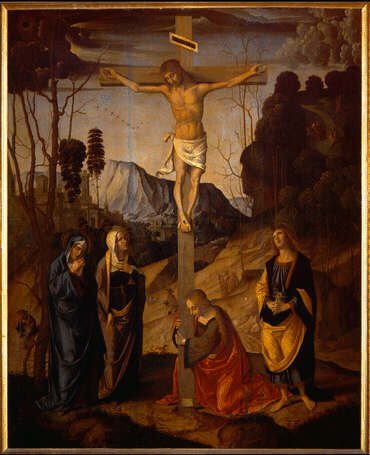
The great lineage of Jesus Christ is recorded at the beginning of Luke. The names of all these men are historical facts. Even the census that Joseph and Mary had to travel to Bethlehem for was registered in the king’s census (Luke 2:1-5), and besides that, thousands upon thousands of witnesses not only knew Jesus by sight, but they acknowledged that He was the Messiah and related to King David’s lineage (Luke 1:1-10, 18:35-43). He was referred to as the Son of David (Matt 15:22, 20:30), and not once in the gospels did the chief priests, the scribes, the Pharisees or the Sadducees ever catch Jesus in a sin or every proved that He ever had sinned or broken the law. Pontius Pilate declared, “I find no guilt in him” (John 19:4), and tragically, many of these religious rulers knew that Jesus was from God, but for fear of losing their authority and positions, or getting put out of the synagogue, most denied Him in the end. The religious leaders all conspired to kill Him, despite the fact that He had not sinned nor broken Jewish or Roman law (Luke 20:20-26, 19:28-40, 20:20-26), and He was hated without cause (Psalm 69:4; John 15:26).
Eye Witnesses
In any court of law, eye witnesses are an invaluable source of finding the truth. In the whole of Judea and Samaria, there were several hundred eye witnesses who saw Jesus before, and more importantly, after His crucifixion, death, and resurrection (Luke 24:15-24, Act 1:3-4, 2:31-32, 9:3, 17, I Cor 15:4-8, 9:1, II Pet 1:16-21, John 3:2, 15:27, I John 1:1-3, 14). Hundreds others saw the empty tomb of Joseph of Arimathea, which Joseph had given for Jesus’ burial site and Jesus public execution was most certainly known by all, as the Roman’s had a custom of crucifying criminals near major roadways. They did this as a “warning sign” for all who entered or lived under Roman dominion, so the knowledge of Jesus’ crucifixion, death, burial and resurrection was known even into the Roman Empire, and later, beyond.
The Apostle’s Creed
The resurrection was so important to the early church because it is the essence of the gospel. Paul calls the gospel “of first importance what I also received: that Christ died for our sins in accordance with the Scriptures, that he was buried, that he was raised on the third day in accordance with the Scriptures, and that he appeared to Cephas, then to the twelve. Then he appeared to more than five hundred brothers at one time, most of whom are still alive, though some have fallen asleep” (1 Cor 15:3-6). This was so important that within three to eight years after His death, Apostle’s Creed was created with the intent of protecting these eye witness’s accounts and codifying their testimonies accurately, both for present and future generations. Jude wrote “I found it necessary to write appealing to you to contend for the faith that was once for all delivered to the saints” (Jude 1: 3), so even in the church’s infancy, they were already contending for the original gospel (1 Cor 15:3-6). Paul told Timothy he must “Fight the good fight of the faith” (1st Tim 6:12), because so many were preaching another gospel and not the one Jesus delivered.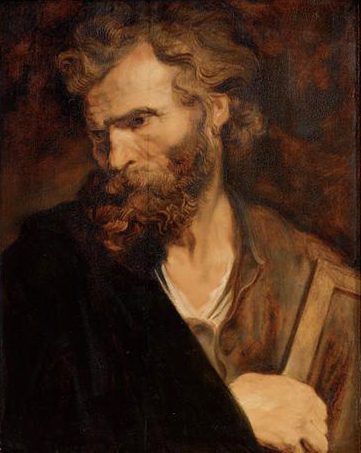
Gnosticism
Within a few years, some churches had already been infiltrated with the Gnostics who felt it was only through knowledge that one could be saved, and it was only for a select few, however the Creed announces to everyone publicly that the only way we can be saved is through Jesus Christ (John 6:44) and the free gift of eternal life (Eph 2:8-9). The Creed has grown in the last two thousand years, but its basic tenets have not changed much. If it has grown, it has only grown to resist the plethora of unsound doctrines floating around out there. It should act as a hedge against heresy and other (false) gospels. The Creed was not written from a blind-faith perspective or formulated by suppositions. It was created by eye witnesses who had seen Jesus before His death and after His resurrection. Today, He sits at the right hand of the Father directing His church as its Head. The old saying holds true; most people would live for a lie, but few would die for one. Especially one that they knew was not true.
Conclusion
I have faith in God, but I did not come to believe on my own. I was dead in my sins and needed quickening by God’s Spirt, so I came believe, but only because God wanted me to believe. I have faith, but what is this faith I have? God defines faith as “the assurance of things hoped for, the conviction of things not seen” (Heb 11:1). The Greek word used for “assurance” is hypostasis, and means “a setting, a place,” or “that which has a foundation,” and the Greek word (elegchos) used for conviction means, “a proof, that by which something is proven or a tested conviction.” Webster’s definition of faith seems perfectly fitting: Having an allegiance to duty or a person… loyalty, belief and trust in God, confidence in something or someone, so faith involves an act of the will. It is not blind faith, but faith that has assurance, is foundational, has inward and outward evidence, and has been proven by the person having such faith. For those things not seen (God), we have a foundational belief and overwhelming conviction of its truthfulness, so it’s not a hope-so faith, but a know-so faith…but that’s something only you can prove to be true.
Article by Jack Wellman
Jack Wellman is Pastor of the Mulvane Brethren Church in Mulvane Kansas. Jack is a writer at Christian Quotes and also the Senior Writer at What Christians Want To Know whose mission is to equip, encourage, and energize Christians and to address questions about the believer’s daily walk with God and the Bible. You can follow Jack on Google Plus or check out his book Teaching Children the Gospel available on Amazon.
Previous Post

May 16, 2018
How Our Possessions Can Possess Us
Next Post
May 21, 2018 Five Things I Notice In Godly People
Browse Our Archives
Select a Category Bible Answers Bible Definitions Bible Story Bible Study Bible Verses Christian Books Christian Entertainment Christian Fathers Christian Mothers Christian Quotes Devotional Famous Christians Music News Parables Prayers Quotes Sunday School Lesson Uncategorized Youth Sermons
Select a Month October 2019 September 2019 August 2019 July 2019 June 2019 May 2019 April 2019 March 2019 February 2019 January 2019 December 2018 November 2018 October 2018 September 2018 August 2018 July 2018 June 2018 May 2018 April 2018 March 2018 February 2018 January 2018 December 2017 November 2017 October 2017 September 2017 August 2017 July 2017 June 2017 May 2017 April 2017 March 2017 February 2017 January 2017 December 2016 November 2016 October 2016 September 2016 August 2016 July 2016 June 2016 May 2016 March 2016 February 2016 January 2016 December 2015 November 2015 October 2015 September 2015 August 2015 July 2015 June 2015 May 2015 April 2015 March 2015 February 2015 January 2015 December 2014 November 2014 October 2014 September 2014 August 2014 July 2014 June 2014 May 2014 April 2014 March 2014 February 2014 January 2014 December 2013 November 2013 October 2013 September 2013 August 2013 July 2013 June 2013 May 2013 April 2013 March 2013
Follow Us!
TAKE THE
Religious Wisdom Quiz
Which Old Testament book is entirely written as a dialogue between God and a prophet?
Select your answer to see how you score.
Malachi Amos Habakkuk Zechariah
Related posts from Christian Crier

What Does The Bible Say About Our Thoughts?

Top 13 Bible Verses About Virtue

Do Colors Have Special Meaning In The Bible?

The Greatest Father In History
TRENDING AT PATHEOS Evangelical

The REST of Your Life: A Creative Wrestles...
This week I had a conversation with a good friend from church....

How the author of the world's best hymn...
I've been working with John Newton for a while now. This makes...

Long before this Lectio Divina, Psalm 130 - the song - started...

What About the Trees? Another Living Parable
After I finished writing the last article about falling leaves as a...

Why Classical Education Is a Conversation, Not a...
Come and Read: Joy in Classical Education When I was a little...

Cornell University has received a great deal of negative publicity and intense...
view all Evangelical blogs
Ad-Free & Subscriber Log-In Subscription Support
- About Us
- 2026 Calendar
- Videos
- Podcasts
- Library of World Religions
- Faith In Media Tracker
- Advertise With Us
- Write for Us
- Privacy Policy
- Terms of Service
- Do Not Sell My Data
- Contact Us
- Radiant Digital
- Manage Newsletter Subscriptions
- Unsubscribe From Notifications
- Sitemap
Copyright 2008-2026, Patheos. All rights reserved.
Subscription Support Ad-Free & Subscriber Log-In
Follow Patheos