
BuddhistCatholicContemplativeEvangelicalGeneral ChristianHinduJewishLatter-day SaintMuslimNew VisionsProgressive Christian
Beliefs
- Buddhist
- Catholic
- Contemplative
- Evangelical
- General Christian
- Hindu
- Jewish
- Latter-day Saint
- More Voices
- Muslim
- New Visions
- Pagan
- Progressive Christian
Topics
- Religion News
- Food and Religion
- Sports and Religion
- Religious Art
- Religious Music and Entertainment
- Religious Events
- History and Religion
- Style and Religion
- Politics and Religion
- Women in Religion
- Recreation Outdoors and Religion
- Business Finance and Religion
- Careers Workplace and Religion
- Education and Religion
- Family Parenting and Religion
- Health Fitness and Religion
- Home and Religion
- Relationships and Religion
- Technology and Religion
- Travel and Religion
Columnists
- Buddhist Columnists
- Business Finance and Religion Columnists
- Careers Workplace and Religion Columnists
- Catholic Columnists
- Contemplative Columnists
- Education and Religion Columnists
- Evangelists Columnists
- Family Parenting and Religion Columnists
- General Christian Columnists
- Health Fitness and Religion Columnists
- Hindu Columnists
- History and Religion Columnists
- Home and Religion Columnists
- Jewish Columnists
- More Voices Columnists
- Latter Day Columnists
- Muslim Columnists
- New Visions Columnists
- Nonreligious Columnists
- Pagan Columnists
- Politics and Religion Columnists
- Progressive Columnists
- Recreation Outdoors and Religion Columnists
- Relationships and Religion Columnists
- Religion News Columnists
- Religious Art Columnists
- Religious Events Columnists
- Religious Music and Entertainment Columnists
- Sports and Religion Columnists
- Style and Religion Columnists
- Technology and Religion Columnists
- Travel and Religion Columnists
- Women in Religion Columnists
Resource Library
- 2026 Calendar
- Library of World Religions
- The 100 Most Holy Places on Earth
- Patheos Answers
- Podcasts
- Videos
- Faith Leaders Database
- Anglican Episcopalian
- Bahai
- Baptist
- Buddhism
- Christianity
- Confucianism
- Eastern Orthodoxy
- Hinduism
- Holiness and Pentecostal
- ISKCON
- Islam
- Judaism
- Lutheran
- Methodist
- The Church of Jesus Christ of Latter-day Saints
- New Age
- Paganism
- Presbytarian and Reformed
- Protestantism
- Religion Behind the Scenes
- Roman Catholic
- Scientology
- Shia Islam
- Sikhism
- Sufism
- Sunni Islam
- Taoism
- Zen
- See all religions
Research Tools
 Ad-Free & Subscriber Log-In Subscription Support
Ad-Free & Subscriber Log-In Subscription Support
Follow Patheos 

- Trending:
- Forgiveness
- |
- Marriage
- |
- Consciousness
- |
- Death Penalty
- |
- Election
- |
- Halloween
 Christian Crier
- Home
- Evangelical
- Cities Of Refuge
Cities Of Refuge
Last updated on: November 3, 2017 at 9:00 am by Jack Wellman
Cities Of Refuge 2017-11-02T12:33:18-05:00 Jack Wellman
Patheos Explore the world's faith through different perspectives on religion and spirituality! Patheos has the views of the prevalent religions and spiritualities of the world.
Why does God set up cities of refuge for the nation of Israel? Are these cities symbolic of something or someone else?
Cities of Refuge
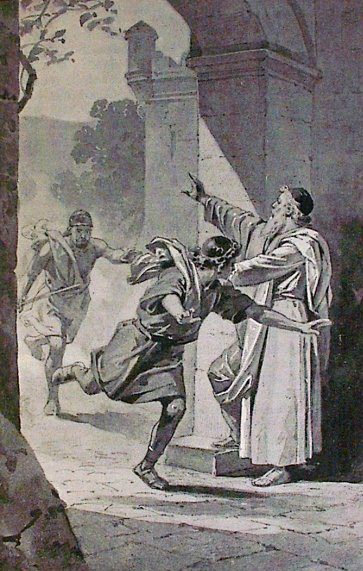
There were accidental deaths in ancient Israel just as there are accidental deaths today in which a person is not responsible or guilty of killing the person, so God, in His divine wisdom, established cities of refuge where those who are involved in such incidents can flee to while the legal process takes place and they are heard before the elders to establish guilt or innocence, so these cities of refuge were established where the person could go and avoid retaliation or revenge from a family member or friend of the one that was killed (not murdered). Moses records the establishment of these cities of refuge in Numbers 35:25 where He wrote, “And the congregation shall rescue the manslayer from the hand of the avenger of blood, and the congregation shall restore him to his city of refuge to which he had fled, and he shall live in it until the death of the high priest who was anointed with the holy oil,” however, “if the manslayer shall at any time go beyond the boundaries of his city of refuge to which he fled, and the avenger of blood finds him outside the boundaries of his city of refuge, and the avenger of blood kills the manslayer, he shall not be guilty of blood” (Num 35:26-27). This means that the person who accidentally killed someone “must remain in his city of refuge until the death of the high priest, but after the death of the high priest the manslayer may return to the land of his possession” (Num 35:28). As long as they were there, they were safe.
Their Purpose
Cities of refuge were established to keep people from seeking revenge from a family member or friend of the person accidentally killed. There was no room for retaliation in such cases, so when Israel settled into the Promised Land, it was “to the descendants of Aaron the priest they gave Hebron, the city of refuge for the manslayer, with its pasturelands, Libnah with its pasturelands” (Joshua 21:13), but there were several cities of refuge placed around the land so that someone wouldn’t have to travel too far when they needed to escape. The Kohathites gave land to the Levites, but also “the cities allotted to them were out of the tribe of Ephraim. To them were given Shechem, the city of refuge for the manslayer, with its pasturelands in the hill country of Ephraim, Gezer with its pasturelands, Kibzaim with its pasturelands, Beth-horon with its pasturelands—four cities” (Joshua 21:20b-22). These cities were strategically located and provided a place of safety where they could live without the fear of retaliation from the victim’s family members or friends. Even though the person may been involved in the killing, if the killing was not intentional, the person would not have to die since there was no premeditation to the killing. The same thing could apply to someone trying to defend themselves from being killed. In short, these cities provided a shelter from someone seeking revenge, even though they were not responsible for the person’s death. If that person was killed by a family member or friend, then the person they killed could come after someone else in the other family, and it could easily escalate into a family feud where dozens of others could die in the cross fire.
Christ, our Refuge
In the Old Testament, Abner died at the gates of Hebron, a city of refuge, but he may have been responsible. The Bible says Joab killed Abner “on account of the blood of Asahel his brother” (2nd Sam 3:27), thus Joab was acting as an avenger, but the problem is, Asahel was killed during the battle. This means that his death was not technically a murder. Also, Abner took great pains to show that he did not want to kill Asahel and tried to avoid it…even riding away from him and telling him he didn’t want to kill him, so apparently Abner acted solely in self-defense. In other words, Abner killed without premeditation and should have been safe in Hebron, but the problem was, he came just outside of the gates of Hebron, a city of refuge, and was murdered right there at the gate…a place where the elders came together to make decisions on the fate of accused slayers, so “when Abner returned to Hebron, Joab took him aside into the midst of the gate to speak with him privately, and there he struck him in the stomach, so that he died, for the blood of Asahel his brother” (2nd Sam 3:27), thus Abner was killed at the gate of Hebron, “in the midst of the gate,” meaning he wasn’t inside the city or inside the gate. Abner should have stayed inside the gates of the city until the changing of the high priest and he would be free to go with no fear of retribution, but Abner, perhaps trying to justify his actions rather than depend on the process of the city of refuge and the elders of Hebron to decide his case, went just outside the gates, and there, fell by the hand of Joab.
Conclusion
For everyone who’s trusted in Christ, Jesus is that city of refuge. To Him they ran and escaped the wrath of God. If you have never trusted in Jesus Christ, you are not in a city of refuge, and you will need a refuge when the God of glory appears to judge the world in righteousness. Jesus Christ will appear a second time, but this time not as the meek and mild Lamb of God Who gave His life as a ransom for many (Mark 10:45), but as the Lion of the Tribe of Judah, bringing judgment on all who have rejected Him. They will be judged by their earthly works, and since their works cannot save them, they will be condemned at the Great White Throne Judgment, where even Satan and his demons are judged (Rev 20:11-15). The cities of refuge were a picture of the Lord Jesus Christ. He is our refuged because we’re all guilty of sin, and not one of us is good (Rom 3:10). All of humanity falls infinitely short of His glory (Rom 3:23), so we need to repent of our sins, confess them to God, and put our trust in Christ. That’s when the judgment is over for us; at least our being judged for our sins. That’s because the judgment that was due us, was placed on Christ at the cross. He took upon Himself our sins, but if you reject the only name by which you can be saved (Acts 4:12), you will die with God’s wrath upon you (John 3:36b), and that is not God’s desire (2nd Pet 3:9), anymore that it is mine, so I pray you put your trust in Christ today…while we can still call it “today” (2nd Cor 6:2).
Article by Jack Wellman
Jack Wellman is Pastor of the Mulvane Brethren Church in Mulvane Kansas. Jack is a writer at Christian Quotes and also the Senior Writer at What Christians Want To Know whose mission is to equip, encourage, and energize Christians and to address questions about the believer’s daily walk with God and the Bible. You can follow Jack on Google Plus or check out his book Teaching Children the Gospel available on Amazon.
Previous Post

November 1, 2017
God The Evangelist
Next Post
November 6, 2017 Whatever Happened To The Gospel Of Jesus Christ?
Browse Our Archives
Select a Category Bible Answers Bible Definitions Bible Story Bible Study Bible Verses Christian Books Christian Entertainment Christian Fathers Christian Mothers Christian Quotes Devotional Famous Christians Music News Parables Prayers Quotes Sunday School Lesson Uncategorized Youth Sermons
Select a Month October 2019 September 2019 August 2019 July 2019 June 2019 May 2019 April 2019 March 2019 February 2019 January 2019 December 2018 November 2018 October 2018 September 2018 August 2018 July 2018 June 2018 May 2018 April 2018 March 2018 February 2018 January 2018 December 2017 November 2017 October 2017 September 2017 August 2017 July 2017 June 2017 May 2017 April 2017 March 2017 February 2017 January 2017 December 2016 November 2016 October 2016 September 2016 August 2016 July 2016 June 2016 May 2016 March 2016 February 2016 January 2016 December 2015 November 2015 October 2015 September 2015 August 2015 July 2015 June 2015 May 2015 April 2015 March 2015 February 2015 January 2015 December 2014 November 2014 October 2014 September 2014 August 2014 July 2014 June 2014 May 2014 April 2014 March 2014 February 2014 January 2014 December 2013 November 2013 October 2013 September 2013 August 2013 July 2013 June 2013 May 2013 April 2013 March 2013
Follow Us!
TAKE THE
Religious Wisdom Quiz
What was stored inside the Ark of the Covenant?
Select your answer to see how you score.
Sand Stone tablets, manna, Aaron's rod The golden calf Incense
Related posts from Christian Crier

What Does The Bible Say About Our Thoughts?

Top 13 Bible Verses About Virtue

Do Colors Have Special Meaning In The Bible?

The Greatest Father In History
TRENDING AT PATHEOS Evangelical

The REST of Your Life: A Creative Wrestles...
This week I had a conversation with a good friend from church....

How the author of the world's best hymn...
I've been working with John Newton for a while now. This makes...

Long before this Lectio Divina, Psalm 130 - the song - started...

What About the Trees? Another Living Parable
After I finished writing the last article about falling leaves as a...

Why Classical Education Is a Conversation, Not a...
Come and Read: Joy in Classical Education When I was a little...

Cornell University has received a great deal of negative publicity and intense...
view all Evangelical blogs
Ad-Free & Subscriber Log-In Subscription Support
- About Us
- 2026 Calendar
- Videos
- Podcasts
- Library of World Religions
- Faith In Media Tracker
- Advertise With Us
- Write for Us
- Privacy Policy
- Terms of Service
- Do Not Sell My Data
- Contact Us
- Radiant Digital
- Manage Newsletter Subscriptions
- Unsubscribe From Notifications
- Sitemap
Copyright 2008-2026, Patheos. All rights reserved.
Subscription Support Ad-Free & Subscriber Log-In
Follow Patheos