
BuddhistCatholicContemplativeEvangelicalGeneral ChristianHinduJewishLatter-day SaintMuslimNew VisionsProgressive Christian
Beliefs
- Buddhist
- Catholic
- Contemplative
- Evangelical
- General Christian
- Hindu
- Jewish
- Latter-day Saint
- More Voices
- Muslim
- New Visions
- Pagan
- Progressive Christian
Topics
- Religion News
- Food and Religion
- Sports and Religion
- Religious Art
- Religious Music and Entertainment
- Religious Events
- History and Religion
- Style and Religion
- Politics and Religion
- Women in Religion
- Recreation Outdoors and Religion
- Business Finance and Religion
- Careers Workplace and Religion
- Education and Religion
- Family Parenting and Religion
- Health Fitness and Religion
- Home and Religion
- Relationships and Religion
- Technology and Religion
- Travel and Religion
Columnists
- Buddhist Columnists
- Business Finance and Religion Columnists
- Careers Workplace and Religion Columnists
- Catholic Columnists
- Contemplative Columnists
- Education and Religion Columnists
- Evangelists Columnists
- Family Parenting and Religion Columnists
- General Christian Columnists
- Health Fitness and Religion Columnists
- Hindu Columnists
- History and Religion Columnists
- Home and Religion Columnists
- Jewish Columnists
- More Voices Columnists
- Latter Day Columnists
- Muslim Columnists
- New Visions Columnists
- Nonreligious Columnists
- Pagan Columnists
- Politics and Religion Columnists
- Progressive Columnists
- Recreation Outdoors and Religion Columnists
- Relationships and Religion Columnists
- Religion News Columnists
- Religious Art Columnists
- Religious Events Columnists
- Religious Music and Entertainment Columnists
- Sports and Religion Columnists
- Style and Religion Columnists
- Technology and Religion Columnists
- Travel and Religion Columnists
- Women in Religion Columnists
Resource Library
- 2026 Calendar
- Library of World Religions
- The 100 Most Holy Places on Earth
- Patheos Answers
- Podcasts
- Videos
- Faith Leaders Database
- Anglican Episcopalian
- Bahai
- Baptist
- Buddhism
- Christianity
- Confucianism
- Eastern Orthodoxy
- Hinduism
- Holiness and Pentecostal
- ISKCON
- Islam
- Judaism
- Lutheran
- Methodist
- The Church of Jesus Christ of Latter-day Saints
- New Age
- Paganism
- Presbytarian and Reformed
- Protestantism
- Religion Behind the Scenes
- Roman Catholic
- Scientology
- Shia Islam
- Sikhism
- Sufism
- Sunni Islam
- Taoism
- Zen
- See all religions
Research Tools
 Ad-Free & Subscriber Log-In Subscription Support
Ad-Free & Subscriber Log-In Subscription Support
Follow Patheos 

- Trending:
- Forgiveness
- |
- Marriage
- |
- Consciousness
- |
- Death Penalty
- |
- Election
- |
- Halloween
 Christian Crier
- Home
- Evangelical
- What The Bible Teaches About Tolerance
What The Bible Teaches About Tolerance
Last updated on: June 14, 2017 at 9:00 am by Jack Wellman
What The Bible Teaches About Tolerance 2017-06-10T15:25:05-05:00 Jack Wellman
Patheos Explore the world's faith through different perspectives on religion and spirituality! Patheos has the views of the prevalent religions and spiritualities of the world.
Today it is politically correct to teach tolerance about everything, so what does the Bible teach about tolerance and how does it differ from the world’s version of tolerance?
Toleration
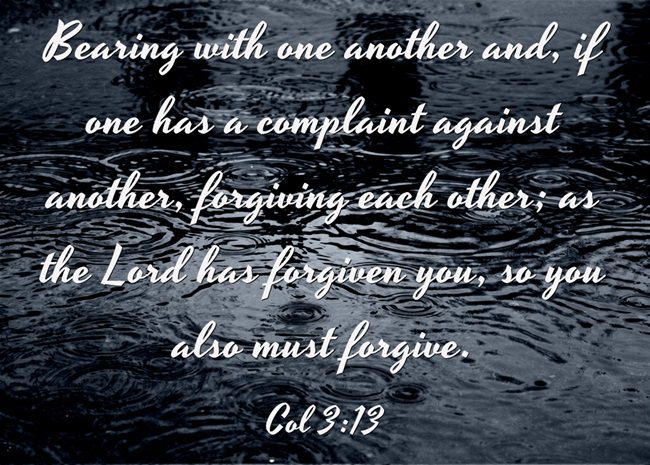
Tolerance has been defined as having sympathy for a cause, person, or belief, even if it’s against one’s own personal preferences or beliefs. We can disagree with someone or something but still not be disagreeable. Tolerating is possible, even when it’s contrary to the person’s beliefs or practices, however tolerance of something or someone doesn’t mean you condone it. Tolerance can be in regards to pain, people, or things. The Apostle Paul wrote that we are to be “Bearing with one another and, if one has a complaint against another, forgiving each other; as the Lord has forgiven you, so you also must forgive” (Col 3:13). If we are not exhibiting tolerance toward those around us, then how can we expect to receive the tolerance of others when they disagree with us over something we do or believe, however there are somethings we cannot tolerate, like child abuse, violence, and abuse or neglect of the elderly, but that’s not what this article is about. It is about trying to understand what tolerance is so that we can be tolerant of others and their own way of life. It’s about opening a dialog of mutual respect and living peaceably despite any disagreements. It is accepting who others for who they are, even if it’s totally opposite of what we are like. Tolerance is not permissiveness, especially if it has legal consequences, so we are not speaking of tolerance for criminal acts, but people who have differing opinions and beliefs than we do.
Drop the Stone
It’s almost like walking on egg shells today because whatever you say can be taken the wrong way. It seems we can tolerate just about anything except those who we disagree with, but again, tolerance is not condoning something. It is simply acknowledging someone’s right to believe differently than we do, or hold to certain beliefs or practices that we may not agree with, and by the way, having every right to do so. Of course Christians recognize that many of the things they see people do are sin, but those same believers should also recognize that they also sin (Rom 7; 1st John 1:8, 10), so casting stones is not our business. The Apostle John writes about a time when, one by one, they dropped the stone. This, after the woman caught in adultery was brought before Jesus, but Jesus would not condemn her, and neither did the Jews because they were not without sin. Jesus did tell the woman, “Go and sin no more” (John 8:11), but my question is, “Where was the man? Why wasn’t he brought before Jesus? Isn’t that a double standard?” What the Jews were doing was to try and trap Jesus. If He said to stone her, the Jews would have turned Him into the Roman authorities because “It [was] not lawful for [them] to put anyone to death” (John 18:31), however if Jesus had dismissed the stoning, the Jewish religious leaders would have accused Him of breaking the Mosaic Law, however Jesus came to fulfill the law…and the New Covenant, is a Covenant of Grace. The Old Testament laws were fulfilled in Christ and He is the end of the law (Gal 3). When we are asked what does the Bible says about something, we don’t offer our personal opinion, but we offer the Word of God, but Jesus never forced Himself on anyone, nor did He cram religion down anyone’s throat, so anyone that does that is not being biblical, and in fact, they’re doing more harm than good because this an drive them away. It is the Word of God that has effectual power to save (Rom 1:16; 1st Cor 1:18), and we certainly do not. Anything we can talk someone into, someone else can talk them out of.
Expectations
The Apostle Paul’s very last letter before he was martyred contained commands for Timothy to not hold anything back in the Word of God, writing, “I charge you in the presence of God and of Christ Jesus, who is to judge the living and the dead, and by his appearing and his kingdom: preach the word; be ready in season and out of season; reprove, rebuke, and exhort, with complete patience and teaching” (2nd Tim 4:1-2). The word “charge” is an imperative command, and in the same tone as Paul who told the Corinthians, “I am writing to you not to associate with anyone who bears the name of brother if he is guilty of sexual immorality or greed, or is an idolater, reviler, drunkard, or swindler—not even to eat with such a one” (1st Cor 5:11), but doesn’t mean we don’t respect people. We must treat them with respect when we’re talking to them or talking about them, because some of such were we (1st Cor 6:11). We make a poor imitation of the Holy Spirit in trying to convict people of their sins…and besides, the Holy Spirit’s more interested in the sins we commit than those of others! Of course, it’s good and right to make sure the Body of Christ remains as pure and possible. What church would want a practicing thief to be the church treasurer? Who would want an adulterous man giving an engaged couple premarital counseling? The church has clear admonitions to instruct, correct, rebuke, and teach where and when it is necessary. God will hold church leaders responsible for their negligence of church discipline (Matt 18:15-20), however church discipline stops at the curb. Jesus never told the disciples to go out and “reform the world” but to make disciples of all people (Matt 28:18-20), but even that is not a “forced conversion,” but a calling by God (John 6:44). It’s not an external reformation of society but an inward conversion that shows external evidence. It is being salt and light, but holding the light in someone’s face that hurts, and too much salt ruins just about anything.
Conclusion
Christianity is not a set of rules, regulations, or laws. It’s not so much a religion as it is having a personal, saving relationship with Jesus Christ, and it’s not intolerant but truthful to say that Jesus is the one and only way (John 14:6). I rejoice that there is at least one way (Acts 4:12). Jesus says whoever comes to Him will not be turned away (John 6:37-39), and whoever believes in Him will be saved (John 3:16; Rom 10:9-13), but the gospel includes repentance and faith, which is exactly how Jesus described the gospel (Mark 1:14-15), and there is no other way to enter the kingdom than through Jesus Christ (John 6:44; Acts 4:12, 16:30-31).
Article by Jack Wellman
Jack Wellman is Pastor of the Mulvane Brethren Church in Mulvane Kansas. Jack is host of Spiritual Fitness and also the Senior Writer at What Christians Want To Know whose mission is to equip, encourage, and energize Christians and to address questions about the believer’s daily walk with God and the Bible. You can follow Jack on Google Plus or check out his book Teaching Children the Gospel available on Amazon.
Previous Post

June 12, 2017
How Not To Present The Gospel
Next Post
June 16, 2017 Who Is Torben Sondergaard And What Is The Last Reformation?
Browse Our Archives
Select a Category Bible Answers Bible Definitions Bible Story Bible Study Bible Verses Christian Books Christian Entertainment Christian Fathers Christian Mothers Christian Quotes Devotional Famous Christians Music News Parables Prayers Quotes Sunday School Lesson Uncategorized Youth Sermons
Select a Month October 2019 September 2019 August 2019 July 2019 June 2019 May 2019 April 2019 March 2019 February 2019 January 2019 December 2018 November 2018 October 2018 September 2018 August 2018 July 2018 June 2018 May 2018 April 2018 March 2018 February 2018 January 2018 December 2017 November 2017 October 2017 September 2017 August 2017 July 2017 June 2017 May 2017 April 2017 March 2017 February 2017 January 2017 December 2016 November 2016 October 2016 September 2016 August 2016 July 2016 June 2016 May 2016 March 2016 February 2016 January 2016 December 2015 November 2015 October 2015 September 2015 August 2015 July 2015 June 2015 May 2015 April 2015 March 2015 February 2015 January 2015 December 2014 November 2014 October 2014 September 2014 August 2014 July 2014 June 2014 May 2014 April 2014 March 2014 February 2014 January 2014 December 2013 November 2013 October 2013 September 2013 August 2013 July 2013 June 2013 May 2013 April 2013 March 2013
Follow Us!
TAKE THE
Religious Wisdom Quiz
Which king was killed at the Battle of Megiddo?
Select your answer to see how you score.
Josiah Amaziah Asa Jehoash
Related posts from Christian Crier

What Does The Bible Say About Our Thoughts?

Do Colors Have Special Meaning In The Bible?

The Glass – Half Empty Or Half Full?

TRENDING AT PATHEOS Evangelical

How the author of the world's best hymn...
I've been working with John Newton for a while now. This makes...

Long before this Lectio Divina, Psalm 130 - the song - started...

What About the Trees? Another Living Parable
After I finished writing the last article about falling leaves as a...

Why Classical Education Is a Conversation, Not a...
Come and Read: Joy in Classical Education When I was a little...

Falling Leaves: A Living Parable on Letting Go
I’ve spent the vast majority of my life in the southeast corner...

Cornell University has received a great deal of negative publicity and intense...
view all Evangelical blogs
Ad-Free & Subscriber Log-In Subscription Support
- About Us
- 2026 Calendar
- Videos
- Podcasts
- Library of World Religions
- Faith In Media Tracker
- Advertise With Us
- Write for Us
- Privacy Policy
- Terms of Service
- Do Not Sell My Data
- Contact Us
- Radiant Digital
- Manage Newsletter Subscriptions
- Unsubscribe From Notifications
- Sitemap
Copyright 2008-2026, Patheos. All rights reserved.
Subscription Support Ad-Free & Subscriber Log-In
Follow Patheos