
BuddhistCatholicContemplativeEvangelicalGeneral ChristianHinduJewishLatter-day SaintMuslimNew VisionsProgressive Christian
Beliefs
- Buddhist
- Catholic
- Contemplative
- Evangelical
- General Christian
- Hindu
- Jewish
- Latter-day Saint
- More Voices
- Muslim
- New Visions
- Pagan
- Progressive Christian
Topics
- Religion News
- Food and Religion
- Sports and Religion
- Religious Art
- Religious Music and Entertainment
- Religious Events
- History and Religion
- Style and Religion
- Politics and Religion
- Women in Religion
- Recreation Outdoors and Religion
- Business Finance and Religion
- Careers Workplace and Religion
- Education and Religion
- Family Parenting and Religion
- Health Fitness and Religion
- Home and Religion
- Relationships and Religion
- Technology and Religion
- Travel and Religion
Columnists
- Buddhist Columnists
- Business Finance and Religion Columnists
- Careers Workplace and Religion Columnists
- Catholic Columnists
- Contemplative Columnists
- Education and Religion Columnists
- Evangelists Columnists
- Family Parenting and Religion Columnists
- General Christian Columnists
- Health Fitness and Religion Columnists
- Hindu Columnists
- History and Religion Columnists
- Home and Religion Columnists
- Jewish Columnists
- More Voices Columnists
- Latter Day Columnists
- Muslim Columnists
- New Visions Columnists
- Nonreligious Columnists
- Pagan Columnists
- Politics and Religion Columnists
- Progressive Columnists
- Recreation Outdoors and Religion Columnists
- Relationships and Religion Columnists
- Religion News Columnists
- Religious Art Columnists
- Religious Events Columnists
- Religious Music and Entertainment Columnists
- Sports and Religion Columnists
- Style and Religion Columnists
- Technology and Religion Columnists
- Travel and Religion Columnists
- Women in Religion Columnists
Resource Library
- 2026 Calendar
- Library of World Religions
- The 100 Most Holy Places on Earth
- Patheos Answers
- Podcasts
- Videos
- Faith Leaders Database
- Anglican Episcopalian
- Bahai
- Baptist
- Buddhism
- Christianity
- Confucianism
- Eastern Orthodoxy
- Hinduism
- Holiness and Pentecostal
- ISKCON
- Islam
- Judaism
- Lutheran
- Methodist
- The Church of Jesus Christ of Latter-day Saints
- New Age
- Paganism
- Presbytarian and Reformed
- Protestantism
- Religion Behind the Scenes
- Roman Catholic
- Scientology
- Shia Islam
- Sikhism
- Sufism
- Sunni Islam
- Taoism
- Zen
- See all religions
Research Tools
 Ad-Free & Subscriber Log-In Subscription Support
Ad-Free & Subscriber Log-In Subscription Support
Follow Patheos 

- Trending:
- Forgiveness
- |
- Marriage
- |
- Consciousness
- |
- Death Penalty
- |
- Election
- |
- Halloween
 Christian Crier
- Home
- Evangelical
- Is Praying In Jesus’ Blood Biblical?
Is Praying In Jesus’ Blood Biblical?
Last updated on: June 2, 2017 at 8:00 am by Jack Wellman
Is Praying In Jesus’ Blood Biblical? 2017-05-30T19:43:25-05:00 Jack Wellman
Patheos Explore the world's faith through different perspectives on religion and spirituality! Patheos has the views of the prevalent religions and spiritualities of the world.
Does praying in the name of Jesus’ blood match what Scripture says what we ought to pray?
In Jesus’ Name
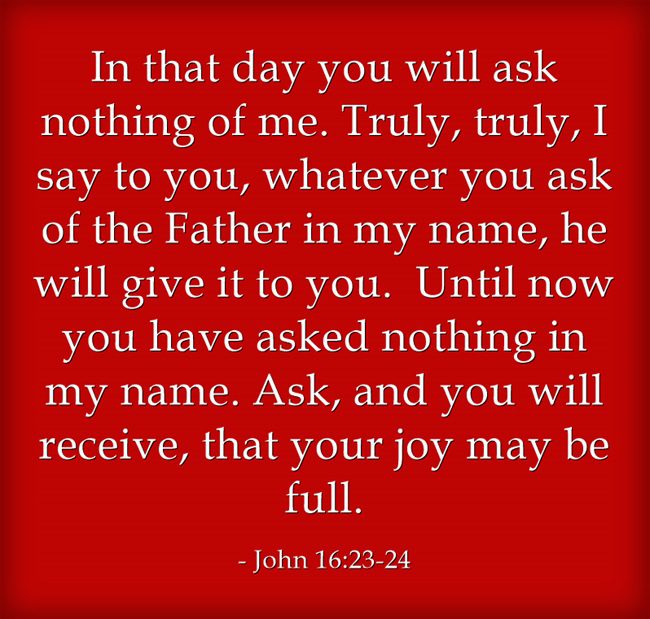
I take a lot of prayer requests at our church and our church loves to pray for others. It doesn’t matter if they’re from our church or not, but to know how to pray is important, and we must be biblical when we pray, and to learn how to pray in the way Jesus taught His disciples. One way to learn from Jesus was when He “was praying in a certain place, and when he finished, one of his disciples said to him, “Lord, teach us to pray, as John taught his disciples” (Luke 11:1), so Jesus’ disciples say Him pray and pray intently, and often, and with such intimacy, that they wanted to know how to pray like that. They had seen Jesus numerous times displaying the power of God through His intimate relationship with the Father, so Jesus told them to pray first of all, to the Father, hallowing or revering His holy name, praying for His kingdom to come as well as His will to be done (Luke 11:3), and asking for our daily bread (Luke 11:4), and the forgiveness of sins, avoidance of temptation, and asking for forgiveness of our sins as we forgive others who have sinned against us (Luke 11:4). That’s the model of how we ought to pray. The Apostle John records Jesus speaking of a time that is coming, and now has come, when prayer is done through or in His name. Jesus said, “In that day you will ask nothing of me. Truly, truly, I say to you, whatever you ask of the Father in my name, he will give it to you. Until now you have asked nothing in my name. Ask, and you will receive, that your joy may be full” (John 16:23-24), so we are told to pray to the Father but to pray in Jesus’ name. That’s what He told us. There are no other ways in which to pray He gives, and never does He tell us to pray through or in the name of anything else other than His own name. Not even one time.
By His Blood
The Pharisee who prayed that he was thankful that he was not like the tax collector didn’t understand that the tax collector, by confessing his sins before God, went home justified, while the Pharisee went home dignified, but being justified is infinitely more valuable than being dignified (Luke 18:14). The Pharisee trusted in his own righteousness (not safe), while the tax collector trusted in God’s mercy. Since we know that God shows no partiality, but in fact will resist the proud (James 4:6), we know how to pray and why we need to pray, but why do people, it seems all of a sudden, want to pray in “Jesus’ blood?” or “in the blood!” Why? Aren’t we told to pray in Jesus’ name? How is praying in His blood biblical, besides, why would we not want to use Jesus’ name? He is our High Priest and Mediator before God. Blood is blood and cannot mediate or go before the Father to ask something. Jesus can! And, Jesus does, but never does the Bible teach us to pray in “In the blood” or “in Jesus’ blood.” Praying to God is not the purpose for the blood; the blood’s purpose is to cleanse us from all unrighteousness. It’s the shed blood of Christ that reconciles us back to God, not communicate for us to God, nor does the blood have special powers when we pray in the blood’s name. Only Jesus’ name has power. We should be thankful for the shed blood of Christ, but not pray in the blood of Christ. We should not be praying in the name of something that is not personal, like Jesus Christ, by whose name we are told to pray. By now, you’ve probably heard someone pray for something using Jesus’ blood as having power. Yes, it does have power…the power to cleanse which means it has the power to save, but it was Jesus’ Who shed His blood and Jesus’ name has power, so it is in Jesus’ name we must pray…not in the name of or by the power of His blood.
The Purpose of the Blood
We have already read the purpose for the blood of the Lamb of God, and it wasn’t to make our prayers more effectual or powerful, so what is the true purpose of the shed blood of Christ? The Apostle Peter wrote “that you were ransomed from the futile ways inherited from your forefathers, not with perishable things such as silver or gold, but with the precious blood of Christ, like that of a lamb without blemish or spot” (1st Pet 1:18-19), because “the blood of Jesus His Son cleanses us from all sin” (1st John 1:7). Since animal blood could never take away sins, it was necessary for Jesus to have “entered once for all into the holy places, not by means of the blood of goats and calves but by means of his own blood, thus securing an eternal redemption” (Heb 9:12), since “without the shedding of blood there is no forgiveness of sins” (Heb 9:22). That’s what the shed blood of Christ is all about. That’s it! Nothing more.
Conclusion
The Bible records that “Jesus also suffered outside the gate in order to sanctify the people through his own blood” (Heb 13:12), not in order that they might be able to pray in it. Praying in Jesus’ blood or “in the blood I pray,” which is frequently said, is not biblical and it detracts from the reason we are to pray in Jesus’ name; so that His name may be glorified. When we receive answered prayer after praying in Jesus’ name, we rejoice and praise God, and Jesus’ name is glorified. That’s why Jesus’ name is used, so to use His blood as a power in prayer is to place a higher value on His blood than on Him, and that would be a tragic mistake.
Article by Jack Wellman
Jack Wellman is Pastor of the Mulvane Brethren Church in Mulvane Kansas. Jack is host of Spiritual Fitness and also the Senior Writer at What Christians Want To Know whose mission is to equip, encourage, and energize Christians and to address questions about the believer’s daily walk with God and the Bible. You can follow Jack on Google Plus or check out his book Teaching Children the Gospel available on Amazon.
Previous Post

May 31, 2017
Jesus’ Seven I Am Statements
Next Post
June 5, 2017 What is Discipleship? A Bible Study
Browse Our Archives
Select a Category Bible Answers Bible Definitions Bible Story Bible Study Bible Verses Christian Books Christian Entertainment Christian Fathers Christian Mothers Christian Quotes Devotional Famous Christians Music News Parables Prayers Quotes Sunday School Lesson Uncategorized Youth Sermons
Select a Month October 2019 September 2019 August 2019 July 2019 June 2019 May 2019 April 2019 March 2019 February 2019 January 2019 December 2018 November 2018 October 2018 September 2018 August 2018 July 2018 June 2018 May 2018 April 2018 March 2018 February 2018 January 2018 December 2017 November 2017 October 2017 September 2017 August 2017 July 2017 June 2017 May 2017 April 2017 March 2017 February 2017 January 2017 December 2016 November 2016 October 2016 September 2016 August 2016 July 2016 June 2016 May 2016 March 2016 February 2016 January 2016 December 2015 November 2015 October 2015 September 2015 August 2015 July 2015 June 2015 May 2015 April 2015 March 2015 February 2015 January 2015 December 2014 November 2014 October 2014 September 2014 August 2014 July 2014 June 2014 May 2014 April 2014 March 2014 February 2014 January 2014 December 2013 November 2013 October 2013 September 2013 August 2013 July 2013 June 2013 May 2013 April 2013 March 2013
Follow Us!
TAKE THE
Religious Wisdom Quiz
What does "Eden" mean in Hebrew?
Select your answer to see how you score.
Delight Peace Gift Paradise
Related posts from Christian Crier

What Does The Bible Say About Our Thoughts?

Do Colors Have Special Meaning In The Bible?

The Glass – Half Empty Or Half Full?

TRENDING AT PATHEOS Evangelical

The REST of Your Life: A Creative Wrestles...
This week I had a conversation with a good friend from church....

How the author of the world's best hymn...
I've been working with John Newton for a while now. This makes...

Long before this Lectio Divina, Psalm 130 - the song - started...

What About the Trees? Another Living Parable
After I finished writing the last article about falling leaves as a...

Why Classical Education Is a Conversation, Not a...
Come and Read: Joy in Classical Education When I was a little...

Cornell University has received a great deal of negative publicity and intense...
view all Evangelical blogs
Ad-Free & Subscriber Log-In Subscription Support
- About Us
- 2026 Calendar
- Videos
- Podcasts
- Library of World Religions
- Faith In Media Tracker
- Advertise With Us
- Write for Us
- Privacy Policy
- Terms of Service
- Do Not Sell My Data
- Contact Us
- Radiant Digital
- Manage Newsletter Subscriptions
- Unsubscribe From Notifications
- Sitemap
Copyright 2008-2026, Patheos. All rights reserved.
Subscription Support Ad-Free & Subscriber Log-In
Follow Patheos