
BuddhistCatholicContemplativeEvangelicalGeneral ChristianHinduJewishLatter-day SaintMuslimNew VisionsProgressive Christian
Beliefs
- Buddhist
- Catholic
- Contemplative
- Evangelical
- General Christian
- Hindu
- Jewish
- Latter-day Saint
- More Voices
- Muslim
- New Visions
- Pagan
- Progressive Christian
Topics
- Religion News
- Food and Religion
- Sports and Religion
- Religious Art
- Religious Music and Entertainment
- Religious Events
- History and Religion
- Style and Religion
- Politics and Religion
- Women in Religion
- Recreation Outdoors and Religion
- Business Finance and Religion
- Careers Workplace and Religion
- Education and Religion
- Family Parenting and Religion
- Health Fitness and Religion
- Home and Religion
- Relationships and Religion
- Technology and Religion
- Travel and Religion
Columnists
- Buddhist Columnists
- Business Finance and Religion Columnists
- Careers Workplace and Religion Columnists
- Catholic Columnists
- Contemplative Columnists
- Education and Religion Columnists
- Evangelists Columnists
- Family Parenting and Religion Columnists
- General Christian Columnists
- Health Fitness and Religion Columnists
- Hindu Columnists
- History and Religion Columnists
- Home and Religion Columnists
- Jewish Columnists
- More Voices Columnists
- Latter Day Columnists
- Muslim Columnists
- New Visions Columnists
- Nonreligious Columnists
- Pagan Columnists
- Politics and Religion Columnists
- Progressive Columnists
- Recreation Outdoors and Religion Columnists
- Relationships and Religion Columnists
- Religion News Columnists
- Religious Art Columnists
- Religious Events Columnists
- Religious Music and Entertainment Columnists
- Sports and Religion Columnists
- Style and Religion Columnists
- Technology and Religion Columnists
- Travel and Religion Columnists
- Women in Religion Columnists
Resource Library
- 2026 Calendar
- Library of World Religions
- The 100 Most Holy Places on Earth
- Patheos Answers
- Podcasts
- Videos
- Faith Leaders Database
- Anglican Episcopalian
- Bahai
- Baptist
- Buddhism
- Christianity
- Confucianism
- Eastern Orthodoxy
- Hinduism
- Holiness and Pentecostal
- ISKCON
- Islam
- Judaism
- Lutheran
- Methodist
- The Church of Jesus Christ of Latter-day Saints
- New Age
- Paganism
- Presbytarian and Reformed
- Protestantism
- Religion Behind the Scenes
- Roman Catholic
- Scientology
- Shia Islam
- Sikhism
- Sufism
- Sunni Islam
- Taoism
- Zen
- See all religions
Research Tools
 Ad-Free & Subscriber Log-In Subscription Support
Ad-Free & Subscriber Log-In Subscription Support
Follow Patheos 

- Trending:
- Forgiveness
- |
- Marriage
- |
- Consciousness
- |
- Death Penalty
- |
- Election
- |
- Halloween
 Christian Crier
- Home
- Evangelical
- Who Translated The King James Bible?
Who Translated The King James Bible?
Last updated on: December 27, 2016 at 9:22 am by Jack Wellman
Who Translated The King James Bible? 2016-12-27T09:22:38-06:00 Jack Wellman
Patheos Explore the world's faith through different perspectives on religion and spirituality! Patheos has the views of the prevalent religions and spiritualities of the world.
Who translated the King James Bible and why?
Authors of the Bible
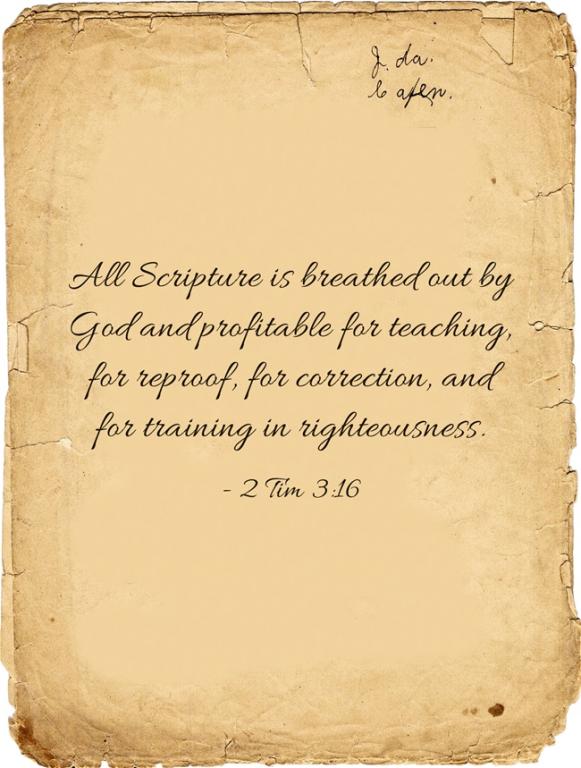
The true Author of the Bible is not man. It is as the Apostle Paul said; “All Scripture is breathed out by God and profitable for teaching, for reproof, for correction, and for training in righteousness” (2nd Tim 3:16). This is so that the woman and “the man of God may be complete, equipped for every good work” (2nd Tim 3:17). The Apostle Peter, speaking for the other apostles, wrote “we did not follow cleverly devised myths when we made known to you the power and coming of our Lord Jesus Christ, but we were eyewitnesses of his majesty” (2nd Pet 1:16), so “no prophecy of Scripture comes from someone’s own interpretation” (2nd Pet 1:20), and “no prophecy was ever produced by the will of man, but men spoke from God as they were carried along by the Holy Spirit” (2nd Pet 1:21). That’s like imagining my keyboard taking credit for what I am writing. The authors of the Bible still retained their personal distinctions, experiences, and literary style, yet “they were carried along by the Holy Spirit” and not writing what God thought they should write. It was what the Holy Spirit “breathed out” to them to record.
The King James Bible
Why was there even a need for King James to produce a Bible? King James I of England authorized that a new translation of the Bible into English and it was finished in 1611, just 85 years after the first translation of the New Testament into English appeared by William Tyndale, in 1526. That, and the fact that King James I did not like the Puritans very much or their Geneva Bible. It may well have been because of jealousy that King James I ordered a new translation of the Bible; a revised version; the King James Version. So it was ordered in 1604. Part of the reason may have been the copies of Scripture that they had may have been corrupt as some were obviously poor translations. That answers the “why” the King James Bible came to be, by who translated it? Does it compare with other translations of today?
The Translators
To be honest, we don’t know very much about the men who translated the King James Bible. We do know from their writings about this project that they were completely dedicated to this in a way that nothing else in their life mattered, and “out of many good ones, one principal good one” by using the Textus Receptus line. King James I appointed fifty of the nation’s finest language scholars and approved rules for carefully checking the results. They would have to check each other and be very diligent. The King insisted on Rule # 6 which stated, “No Marginal Notes at all to be affixed, but only for the explanation of the Hebrew or Greek Words.” The King James Bible I have contains the Hebrew, Greek, and the little bit of Aramaic in the margins so I can easily see what the original word was. Other great features of the King James Bible that I have (and many do) are the words in italics. The words that are italicized are words that are not in the original manuscripts, and I am glad to know that. Wouldn’t you want to know when the translators inserted a word? I would.
The Charge Given Translators
King James I was the one who oversaw that the new translation would be as accurate as possible, and so part of his edict was that a “uniform translation, which should be done by the best learned men in both Universities, then reviewed by the Bishops, presented to the Privy Council, lastly ratified by the Royal authority,” so that there would be no errors to be found. That is why the king had the very best of English scholarship available and poured in tremendous resources to ensure they got it right. Can you imagine having all 50 scholars agree on one translation for every word by using other sources, including the Textus Receptus? Any dissension or division would have quickly throttled the project but to see it done is less than a decade is remarkable. The product was greater than they had imagined. Indeed, it was as the king who opened with the words, “To be read in the whole Church.” With that charge and the king’s rigorous rules, it is amazing that a masterpiece of such magnitude was created.
Conclusion
Of course, no translation is perfect but the main things are the plain things and that is the requirement of repentance and faith, just as Jesus said (Mark 1:15), and even though the translators got a few things wrong, the main body of work is solid. One example is the stigma of slavery, and so the translators inserted the word “servant” where the Greek said it should be “doulos” which is slave. That is a major difference because a servant worked for wages while a slave belonged solely to the master. For us, we are said to be slaves of Christ as the Apostle Paul writes, “he who was called in the Lord while a slave, is the Lord’s freedman; likewise he who was called while free, is Christ’s slave” (1st Cor 7:22, NASB), so the NASB seems to be better at translating the Greek and the Hebrew. Other than the mistranslation of servant, most of the King James Bible is solid and what we have is reliable.
Article by Jack Wellman
Jack Wellman is Pastor of the Mulvane Brethren Church in Mulvane Kansas. Jack is also the Senior Writer at What Christians Want To Know whose mission is to equip, encourage, and energize Christians and to address questions about the believer’s daily walk with God and the Bible. You can follow Jack on Google Plus or check out his book Teaching Children the Gospel available on Amazon.
Previous Post

December 26, 2016
How Did Christianity Become The Official Religion Of Rome?
Next Post
December 27, 2016 Did Jesus Teach Pacifism?
Browse Our Archives
Select a Category Bible Answers Bible Definitions Bible Story Bible Study Bible Verses Christian Books Christian Entertainment Christian Fathers Christian Mothers Christian Quotes Devotional Famous Christians Music News Parables Prayers Quotes Sunday School Lesson Uncategorized Youth Sermons
Select a Month October 2019 September 2019 August 2019 July 2019 June 2019 May 2019 April 2019 March 2019 February 2019 January 2019 December 2018 November 2018 October 2018 September 2018 August 2018 July 2018 June 2018 May 2018 April 2018 March 2018 February 2018 January 2018 December 2017 November 2017 October 2017 September 2017 August 2017 July 2017 June 2017 May 2017 April 2017 March 2017 February 2017 January 2017 December 2016 November 2016 October 2016 September 2016 August 2016 July 2016 June 2016 May 2016 March 2016 February 2016 January 2016 December 2015 November 2015 October 2015 September 2015 August 2015 July 2015 June 2015 May 2015 April 2015 March 2015 February 2015 January 2015 December 2014 November 2014 October 2014 September 2014 August 2014 July 2014 June 2014 May 2014 April 2014 March 2014 February 2014 January 2014 December 2013 November 2013 October 2013 September 2013 August 2013 July 2013 June 2013 May 2013 April 2013 March 2013
Follow Us!
TAKE THE
Religious Wisdom Quiz
What part of the body does the Breastplate of Righteousness protect?
Select your answer to see how you score.
The back The heart The stomach The head
Related posts from Christian Crier

What Does The Bible Say About Our Thoughts?

Do Colors Have Special Meaning In The Bible?

The Glass – Half Empty Or Half Full?

TRENDING AT PATHEOS Evangelical

The REST of Your Life: A Creative Wrestles...
This week I had a conversation with a good friend from church....

How the author of the world's best hymn...
I've been working with John Newton for a while now. This makes...

Long before this Lectio Divina, Psalm 130 - the song - started...

What About the Trees? Another Living Parable
After I finished writing the last article about falling leaves as a...

Why Classical Education Is a Conversation, Not a...
Come and Read: Joy in Classical Education When I was a little...

Cornell University has received a great deal of negative publicity and intense...
view all Evangelical blogs
Ad-Free & Subscriber Log-In Subscription Support
- About Us
- 2026 Calendar
- Videos
- Podcasts
- Library of World Religions
- Faith In Media Tracker
- Advertise With Us
- Write for Us
- Privacy Policy
- Terms of Service
- Do Not Sell My Data
- Contact Us
- Radiant Digital
- Manage Newsletter Subscriptions
- Unsubscribe From Notifications
- Sitemap
Copyright 2008-2026, Patheos. All rights reserved.
Subscription Support Ad-Free & Subscriber Log-In
Follow Patheos