
BuddhistCatholicContemplativeEvangelicalGeneral ChristianHinduJewishLatter-day SaintMuslimNew VisionsProgressive Christian
Beliefs
- Buddhist
- Catholic
- Contemplative
- Evangelical
- General Christian
- Hindu
- Jewish
- Latter-day Saint
- More Voices
- Muslim
- New Visions
- Pagan
- Progressive Christian
Topics
- Religion News
- Food and Religion
- Sports and Religion
- Religious Art
- Religious Music and Entertainment
- Religious Events
- History and Religion
- Style and Religion
- Politics and Religion
- Women in Religion
- Recreation Outdoors and Religion
- Business Finance and Religion
- Careers Workplace and Religion
- Education and Religion
- Family Parenting and Religion
- Health Fitness and Religion
- Home and Religion
- Relationships and Religion
- Technology and Religion
- Travel and Religion
Columnists
- Buddhist Columnists
- Business Finance and Religion Columnists
- Careers Workplace and Religion Columnists
- Catholic Columnists
- Contemplative Columnists
- Education and Religion Columnists
- Evangelists Columnists
- Family Parenting and Religion Columnists
- General Christian Columnists
- Health Fitness and Religion Columnists
- Hindu Columnists
- History and Religion Columnists
- Home and Religion Columnists
- Jewish Columnists
- More Voices Columnists
- Latter Day Columnists
- Muslim Columnists
- New Visions Columnists
- Nonreligious Columnists
- Pagan Columnists
- Politics and Religion Columnists
- Progressive Columnists
- Recreation Outdoors and Religion Columnists
- Relationships and Religion Columnists
- Religion News Columnists
- Religious Art Columnists
- Religious Events Columnists
- Religious Music and Entertainment Columnists
- Sports and Religion Columnists
- Style and Religion Columnists
- Technology and Religion Columnists
- Travel and Religion Columnists
- Women in Religion Columnists
Resource Library
- 2026 Calendar
- Library of World Religions
- The 100 Most Holy Places on Earth
- Patheos Answers
- Podcasts
- Videos
- Faith Leaders Database
- Anglican Episcopalian
- Bahai
- Baptist
- Buddhism
- Christianity
- Confucianism
- Eastern Orthodoxy
- Hinduism
- Holiness and Pentecostal
- ISKCON
- Islam
- Judaism
- Lutheran
- Methodist
- The Church of Jesus Christ of Latter-day Saints
- New Age
- Paganism
- Presbytarian and Reformed
- Protestantism
- Religion Behind the Scenes
- Roman Catholic
- Scientology
- Shia Islam
- Sikhism
- Sufism
- Sunni Islam
- Taoism
- Zen
- See all religions
Research Tools
 Ad-Free & Subscriber Log-In Subscription Support
Ad-Free & Subscriber Log-In Subscription Support
Follow Patheos 

- Trending:
- Forgiveness
- |
- Marriage
- |
- Consciousness
- |
- Death Penalty
- |
- Election
- |
- Halloween
 Christian Crier
- Home
- Evangelical
- 3 Examples Of Conflict Resolution In The Bible
3 Examples Of Conflict Resolution In The Bible
Last updated on: December 27, 2016 at 3:46 pm by Jack Wellman
3 Examples Of Conflict Resolution In The Bible 2016-12-27T15:46:19-06:00 Jack Wellman
Patheos Explore the world's faith through different perspectives on religion and spirituality! Patheos has the views of the prevalent religions and spiritualities of the world.
Here are three great examples of conflict resolution in the Bible.
Jew and Gentile Christians
There was a great divide within the church between the Jewish Christians and the Gentile Christians. This was perfect timing for such men as Paul and Barnabas, who often played the role of peacemaker. After the church had grown, “some men came down from Judea and were teaching the brothers, “Unless you are circumcised according to the custom of Moses, you cannot be saved” (Acts 15:1), so there were already seeds of contention. When Paul and Barnabas “came to Jerusalem, they were welcomed by the church and the apostles and the elders, and they declared all that God had done with them. But some believers who belonged to the party of the Pharisees rose up and said, “It is necessary to circumcise them and to order them to keep the law of Moses” (Acts 15:4-5), so the apostles and disciples met together to discuss it and came to the conclusion that God “made no distinction between us and them, having cleansed their hearts by faith. Now, therefore, why are you putting God to the test by placing a yoke on the neck of the disciples that neither our fathers nor we have been able to bear” (Acts 15:9-10)? James, one of the leaders of the church at Jerusalem, resolved this conflict. After listening to both sides, he concluded “that we should not trouble those of the Gentiles who turn to God, but should write to them to abstain from the things polluted by idols, and from sexual immorality, and from what has been strangled, and from blood” (Acts 15:19-20), and “it seemed good to the apostles and the elders, with the whole church, to choose men from among them and send them to Antioch with Paul and Barnabas. They sent Judas called Barsabbas, and Silas, leading men among the brothers” (Acts 15:22). Conflict solved.
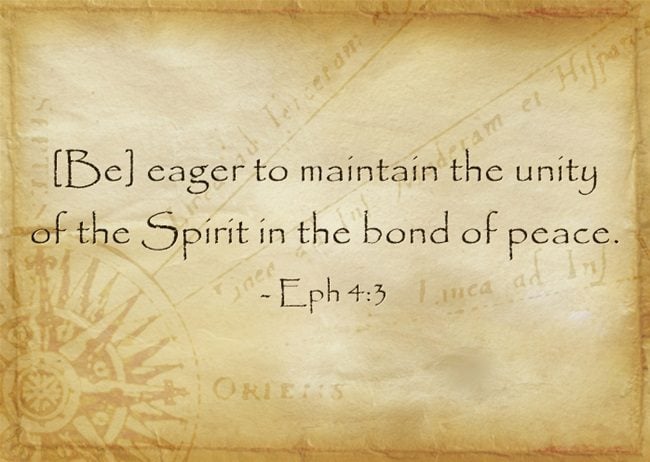
Jacob and Esau
Esau must have felt twice cheated because Jacob, his younger brother, stole both the blessing and the birthright (Gen 25:29-34), and many believe has sparked a war between two peoples or groups of nations that have been in conflict from the very beginning. The Arabic people are descendants of Abraham, just as the Jews are, but that’s where the divide comes. The Arabic nations are descended from Abraham, Ishmael, and Esau while the Israelites are descended from Abraham, Isaac, and Jacob, so the tension between Jacob and Esau already had generation roots that were began between Isaac and Ishmael. North Arabian inscriptions from 9th to 6th century B.C. mention a king Qedar who was king of the Arabs and King of the Ishmaelites.1 When Esau heard that it was time for Isaac to give his spiritual blessings upon them both, Esau quickly went out to find the best wild game he could catch, but Jacob fooled his father Isaac into believing it was Esau and not Jacob, and so he stole the blessing from Esau, which he deserved, being the first born (Gen 27). This is why “Esau hated Jacob because of the blessing with which his father had blessed him, and Esau said to himself, “The days of mourning for my father are approaching; then I will kill my brother Jacob” (Gen 27:41). When Rebekah heard about this, “she sent and called Jacob her younger son and said to him, “Behold, your brother Esau comforts himself about you by planning to kill you. Now therefore, my son, obey my voice. Arise, flee to Laban my brother in Haran and stay with him a while, until your brother’s fury turns away” (Gen 27:-42-44). Rebekah resolved the conflict and later, Jacob and Esau would meet again, much later, but with no hostility at all (Gen 32).
God and Man
It’s not that God has to reconcile Himself back to us. No, it is we that are the problem, because we’re in desperate need of being reconciled back to God but God must act first (John 3:3-7). God does not need us but our need for Him is of supreme importance. When Jesus returns, He will solve every conflict there is because every problem will be resolved. There will finally be world peace. Mankind has never been able to achieve that…at least for more than a few days. History is “his’ story about violence, even from the beginning (Gen 3-6), but the immediate and most alarming issue is the separation between us and God; a separation that has come as a result of our sins. Our sins have cut us off from God (Isaiah 59:2), so we need to be reconciled back to God; back to a proper relationship like that of Adam and Eve with God in the beginning, before the fall. Since nothing unclean can enter heaven (Rev 21:27), we’re all in great need, because all of us fall far short of His glory (Rom 3:23), and there isn’t even one of us that are good (Rom 3:10). We need the same righteousness as Jesus has, but that’s where the free gift of eternal life comes in (Rom 6:23b). All we can do is repent of our sins and put our trust in Christ, but that’s enough, because Jesus says, “Whoever believes in me, though he die, yet shall he live, and everyone who lives and believes in me shall never die” (John 11:25-26). The wages that we have coming to us and is made payable to “Death,” have been paid in full, because it was “For our sake he made him to be sin who knew no sin, so that in him we might become the righteousness of God” (2nd Cor 5:21). That resolves the cosmic conflict between us and God. It is the God-Man, Jesus Christ, Who was born into the flesh (John 1:1-14) and lived a sinless life, and suffered and died on the cross, but rose again on the third day. God is the only One Who can resolve this conflict of ours, and He has in Jesus Christ; but only for those who have trusted in Him.
Conclusion
If you have conflict in your life, welcome to the club. To be alive is to experience conflict. It can be in the home, at work, in your family, in your community, in your church, or in any number of other things. Take every bit of this heavy load and bring it to Jesus as He says, “Come to me, all who labor and are heavy laden, and I will give you rest. Take my yoke upon you, and learn from me, for I am gentle and lowly in heart, and you will find rest for your souls. For my yoke is easy, and my burden is light” (Matt 11:28-30). Now, after you’ve unloaded your burdens, seek to be a peacemaker in resolving conflicts. Even our Lord, Jesus Christ said, “Blessed are the peacemakers, for they shall be called sons (and daughters) of God” (Matt 5:9).
Article by Jack Wellman
Jack Wellman is Pastor of the Mulvane Brethren Church in Mulvane Kansas. Jack is also the Senior Writer at What Christians Want To Know whose mission is to equip, encourage, and energize Christians and to address questions about the believer’s daily walk with God and the Bible. You can follow Jack on Google Plus or check out his book Teaching Children the Gospel available on Amazon.
1. Friedrich Delitzsche (1912). Assyriesche Lesestuche. Leipzig. OCLC 2008786.
Previous Post

December 27, 2016
5 Examples Of Healing In The Bible
Next Post
December 31, 2016 How Do I Know When God’s Trying To Tell Me Something?
Browse Our Archives
Select a Category Bible Answers Bible Definitions Bible Story Bible Study Bible Verses Christian Books Christian Entertainment Christian Fathers Christian Mothers Christian Quotes Devotional Famous Christians Music News Parables Prayers Quotes Sunday School Lesson Uncategorized Youth Sermons
Select a Month October 2019 September 2019 August 2019 July 2019 June 2019 May 2019 April 2019 March 2019 February 2019 January 2019 December 2018 November 2018 October 2018 September 2018 August 2018 July 2018 June 2018 May 2018 April 2018 March 2018 February 2018 January 2018 December 2017 November 2017 October 2017 September 2017 August 2017 July 2017 June 2017 May 2017 April 2017 March 2017 February 2017 January 2017 December 2016 November 2016 October 2016 September 2016 August 2016 July 2016 June 2016 May 2016 March 2016 February 2016 January 2016 December 2015 November 2015 October 2015 September 2015 August 2015 July 2015 June 2015 May 2015 April 2015 March 2015 February 2015 January 2015 December 2014 November 2014 October 2014 September 2014 August 2014 July 2014 June 2014 May 2014 April 2014 March 2014 February 2014 January 2014 December 2013 November 2013 October 2013 September 2013 August 2013 July 2013 June 2013 May 2013 April 2013 March 2013
Follow Us!
TAKE THE
Religious Wisdom Quiz
I asked, 'What must I do to be saved?' after an earthquake freed my prisoners. Who am I?
Select your answer to see how you score.
A Roman centurion Cornelius The Ethiopian eunuch The Philippian jailer
Related posts from Christian Crier

Be Anxious For Nothing, Pray About Everything
Blind Bartimaeus And The Salvation Of The Sinner

The Exodus And Christian Conversion
TRENDING AT PATHEOS Evangelical

How the author of the world's best hymn...
I've been working with John Newton for a while now. This makes...

Long before this Lectio Divina, Psalm 130 - the song - started...

What About the Trees? Another Living Parable
After I finished writing the last article about falling leaves as a...

Why Classical Education Is a Conversation, Not a...
Come and Read: Joy in Classical Education When I was a little...

Falling Leaves: A Living Parable on Letting Go
I’ve spent the vast majority of my life in the southeast corner...

Cornell University has received a great deal of negative publicity and intense...
view all Evangelical blogs
Ad-Free & Subscriber Log-In Subscription Support
- About Us
- 2026 Calendar
- Videos
- Podcasts
- Library of World Religions
- Faith In Media Tracker
- Advertise With Us
- Write for Us
- Privacy Policy
- Terms of Service
- Do Not Sell My Data
- Contact Us
- Radiant Digital
- Manage Newsletter Subscriptions
- Unsubscribe From Notifications
- Sitemap
Copyright 2008-2026, Patheos. All rights reserved.
Subscription Support Ad-Free & Subscriber Log-In
Follow Patheos