
BuddhistCatholicContemplativeEvangelicalGeneral ChristianHinduJewishLatter-day SaintMuslimNew VisionsProgressive Christian
Beliefs
- Buddhist
- Catholic
- Contemplative
- Evangelical
- General Christian
- Hindu
- Jewish
- Latter-day Saint
- More Voices
- Muslim
- New Visions
- Pagan
- Progressive Christian
Topics
- Religion News
- Food and Religion
- Sports and Religion
- Religious Art
- Religious Music and Entertainment
- Religious Events
- History and Religion
- Style and Religion
- Politics and Religion
- Women in Religion
- Recreation Outdoors and Religion
- Business Finance and Religion
- Careers Workplace and Religion
- Education and Religion
- Family Parenting and Religion
- Health Fitness and Religion
- Home and Religion
- Relationships and Religion
- Technology and Religion
- Travel and Religion
Columnists
- Buddhist Columnists
- Business Finance and Religion Columnists
- Careers Workplace and Religion Columnists
- Catholic Columnists
- Contemplative Columnists
- Education and Religion Columnists
- Evangelists Columnists
- Family Parenting and Religion Columnists
- General Christian Columnists
- Health Fitness and Religion Columnists
- Hindu Columnists
- History and Religion Columnists
- Home and Religion Columnists
- Jewish Columnists
- More Voices Columnists
- Latter Day Columnists
- Muslim Columnists
- New Visions Columnists
- Nonreligious Columnists
- Pagan Columnists
- Politics and Religion Columnists
- Progressive Columnists
- Recreation Outdoors and Religion Columnists
- Relationships and Religion Columnists
- Religion News Columnists
- Religious Art Columnists
- Religious Events Columnists
- Religious Music and Entertainment Columnists
- Sports and Religion Columnists
- Style and Religion Columnists
- Technology and Religion Columnists
- Travel and Religion Columnists
- Women in Religion Columnists
Resource Library
- 2026 Calendar
- Library of World Religions
- The 100 Most Holy Places on Earth
- Patheos Answers
- Podcasts
- Videos
- Faith Leaders Database
- Anglican Episcopalian
- Bahai
- Baptist
- Buddhism
- Christianity
- Confucianism
- Eastern Orthodoxy
- Hinduism
- Holiness and Pentecostal
- ISKCON
- Islam
- Judaism
- Lutheran
- Methodist
- The Church of Jesus Christ of Latter-day Saints
- New Age
- Paganism
- Presbytarian and Reformed
- Protestantism
- Religion Behind the Scenes
- Roman Catholic
- Scientology
- Shia Islam
- Sikhism
- Sufism
- Sunni Islam
- Taoism
- Zen
- See all religions
Research Tools
 Ad-Free & Subscriber Log-In Subscription Support
Ad-Free & Subscriber Log-In Subscription Support
Follow Patheos 

- Trending:
- Forgiveness
- |
- Marriage
- |
- Consciousness
- |
- Death Penalty
- |
- Election
- |
- Halloween
 Christian Crier
- Home
- Evangelical
- Should Churches Donate To Political Campaigns?
Should Churches Donate To Political Campaigns?
Last updated on: October 26, 2016 at 12:18 pm by Jack Wellman
Should Churches Donate To Political Campaigns? 2016-10-26T12:18:30-05:00 Jack Wellman
Patheos Explore the world's faith through different perspectives on religion and spirituality! Patheos has the views of the prevalent religions and spiritualities of the world.
Can churches donate to political campaigns or are they not allowed under the current tax laws?
Churches and the Culture
Christianity has always had a positive influence on the community, in the culture, and on the nations. They were always the first to build colleges and hospitals, as well as public schools, orphanages, charities, and convalescence homes. That is crystal clear from history, so why can’t a church play a major role in politics in addressing the moral issues of our day? Based upon Section 501(c)(3) of the Internal Revenue Code, and other publications by the IRS, churches can participate in certain activities related to the political process like sponsoring a “register to vote” campaign, just as long as it’s nonpartisan. Churches cannot support or oppose political candidates as an entity. Church attorneys suggest they can host a forum inviting the political candidates to speak, but churches cannot endorse any one of them. Individual members can participate in the political process, even endorsing candidates, but not as an extension or as representative of the church. You can set up a voter registration table in the church lobby, but you cannot have any political ads for or against any of the candidates or endorse or oppose any of the candidates running for office. It should be clear enough that churches cannot officially endorse or oppose any political candidate. Only individual members can publically declare who they support or oppose, but only as representing themselves as a private citizen or more specific, as a Christian. They just cannot represent the views of the church in their opinions in an official capacity.
IRS Allowances
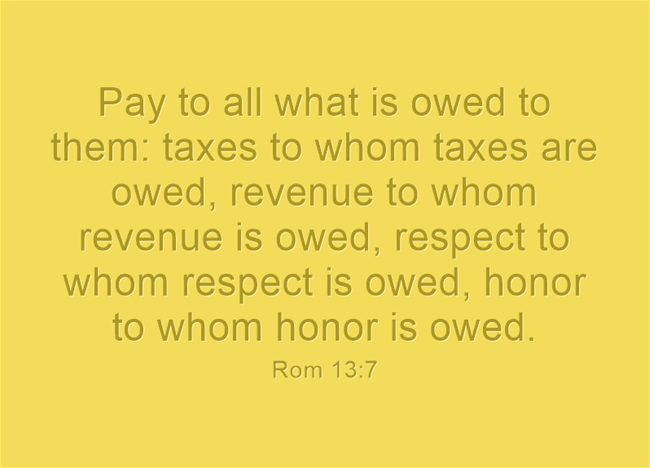
Churches are not the only tax exempt groups that must adhere to federal IRS tax laws, so this law didn’t necessarily single out churches, but includes all tax exempt organizations. These laws are a requirement imposed by Congress for the privilege of being recognized as an organization which is tax exempt from federal income taxes (Section 501(c)(3)). These can include charities like the Salvation Army or a tax exempt educational institution. A church’s hands are not completely tied because they’re allowed to host voter education activities (which can include presenting public forums and publishing voter education guides), but churches must conduct them a non-partisan manner and must not constitute any prohibited political campaign activity. Certainly, churches can encourage people to participate in the voting process, such as voter registration, and get-out-the-vote drives, they just can’t publically endorse or oppose a candidate as a representative of the church. Churches cannot have fundraising drives for a specific political candidate or, as I have said, issue public statements of position (verbal or written) made on behalf of the church in favor of or in opposition to any candidate for public office. This clearly violates the prohibition against political campaign activity by tax exempt organizations, like churches. Violating this prohibition may result in denial or revocation of a church’s tax-exempt status, while imposing certain excise taxes on them.
Endorsing Candidates
A church pastor or minister may mention a candidate or an upcoming future election, but he cannot speak in favor of (or encourage the congregation to vote for or against) a particular candidate. That is strictly forbidden. These restrictions are not just for the pastor but the entire church and use of any of the church resources for the benefit, support, or opposition of a political party or political candidate, is not lawful for a tax exempt organization. This includes the use of telephones, faxes, email, mailing lists, offices, sanctuaries, and meeting rooms, however the law does allow free expression on political matters by individuals speaking for themselves, but that is outside of the scope of the church. Individual church members can speak or write for or donate to a particular candidate, but not in an official capacity, representing the church. They may go to campaign events on their own time and publically support or oppose someone, but they are speaking or writing in an individual capacity, and not for the church. Great care and effort must always be taken in communicating the actions and/or comments by someone that they are personal and are not intended to represent the views or official endorsement of the church.
Final Review
We have read what churches and church members can and cannot do, so let’s summarize what’s permissible and not permissible according to IRS law. Churches cannot publically endorse or oppose any candidates or political party, either verbally or by any written or published venue. This includes endorsing any candidate from behind the pulpit. Churches cannot use their facilities or resources in support of any political candidate or in opposition to one. A tax-exempt church can engage in certain non-partisan, educational activities related to political elections such as candidate debates, voter registration initiatives, or other voter-education activities, but any of these activities must be carefully planned in advance and participants should be informed about what they can and cannot do in these activities. There is a lot at stake.
Conclusion
Should churches donate to political campaigns? No, because there are strict limits in regards to supporting or opposing any political candidate’s campaign. If you have any questions at all, play it on the safe side. There is more specific information available from IRS Publication 1828, pp. 8-9; FS-2006-17 about a church’s prohibitions and allowance. You can find these on the IRS website and in some cases, as downloadable PDF files. I strongly recommend that if your church is going to participate in any of the political process, whatever these activities entail, that each member of the group that will volunteer for such activities should be well versed in IRS laws concerning a church’s political campaign activities and what is allowed and not allowed by law for tax exempt organizations. Incidentally, this information is not intended to provide legal advice, or to address specific situations for you or your church and their activities. Information in this article was based upon the most recent IRS publications. It is strongly recommended that church boards or deacon boards review and approve a church’s activities, especially if it relates to a political campaign, and that these board members, as well as all of the participants, have a good, working knowledge of the tax laws and how such activities can endanger the church’s tax exempt status.
Article by Jack Wellman
Jack Wellman is Pastor of the Mulvane Brethren Church in Mulvane Kansas. Jack is also the Senior Writer at What Christians Want To Know whose mission is to equip, encourage, and energize Christians and to address questions about the believer’s daily walk with God and the Bible. You can follow Jack on Google Plus or check out his book Teaching Children the Gospel available on Amazon.
Previous Post

October 25, 2016
Should Churches Endorse Political Candidates?
Next Post
October 26, 2016 Do Churches Discriminate Based On Race?
Browse Our Archives
Select a Category Bible Answers Bible Definitions Bible Story Bible Study Bible Verses Christian Books Christian Entertainment Christian Fathers Christian Mothers Christian Quotes Devotional Famous Christians Music News Parables Prayers Quotes Sunday School Lesson Uncategorized Youth Sermons
Select a Month October 2019 September 2019 August 2019 July 2019 June 2019 May 2019 April 2019 March 2019 February 2019 January 2019 December 2018 November 2018 October 2018 September 2018 August 2018 July 2018 June 2018 May 2018 April 2018 March 2018 February 2018 January 2018 December 2017 November 2017 October 2017 September 2017 August 2017 July 2017 June 2017 May 2017 April 2017 March 2017 February 2017 January 2017 December 2016 November 2016 October 2016 September 2016 August 2016 July 2016 June 2016 May 2016 March 2016 February 2016 January 2016 December 2015 November 2015 October 2015 September 2015 August 2015 July 2015 June 2015 May 2015 April 2015 March 2015 February 2015 January 2015 December 2014 November 2014 October 2014 September 2014 August 2014 July 2014 June 2014 May 2014 April 2014 March 2014 February 2014 January 2014 December 2013 November 2013 October 2013 September 2013 August 2013 July 2013 June 2013 May 2013 April 2013 March 2013
Follow Us!
TAKE THE
Religious Wisdom Quiz
True or False: Deborah was a prophetess and judge who led Israel to victory over the Canaanites.
Select your answer to see how you score.
TRUE FALSE
Related posts from Christian Crier

What Does The Bible Say About Our Thoughts?

Do Colors Have Special Meaning In The Bible?

The Glass – Half Empty Or Half Full?

TRENDING AT PATHEOS Evangelical

How the author of the world's best hymn...
I've been working with John Newton for a while now. This makes...

Long before this Lectio Divina, Psalm 130 - the song - started...

What About the Trees? Another Living Parable
After I finished writing the last article about falling leaves as a...

Why Classical Education Is a Conversation, Not a...
Come and Read: Joy in Classical Education When I was a little...

Falling Leaves: A Living Parable on Letting Go
I’ve spent the vast majority of my life in the southeast corner...

Cornell University has received a great deal of negative publicity and intense...
view all Evangelical blogs
Ad-Free & Subscriber Log-In Subscription Support
- About Us
- 2026 Calendar
- Videos
- Podcasts
- Library of World Religions
- Faith In Media Tracker
- Advertise With Us
- Write for Us
- Privacy Policy
- Terms of Service
- Do Not Sell My Data
- Contact Us
- Radiant Digital
- Manage Newsletter Subscriptions
- Unsubscribe From Notifications
- Sitemap
Copyright 2008-2026, Patheos. All rights reserved.
Subscription Support Ad-Free & Subscriber Log-In
Follow Patheos