
BuddhistCatholicContemplativeEvangelicalGeneral ChristianHinduJewishLatter-day SaintMuslimNew VisionsProgressive Christian
Beliefs
- Buddhist
- Catholic
- Contemplative
- Evangelical
- General Christian
- Hindu
- Jewish
- Latter-day Saint
- More Voices
- Muslim
- New Visions
- Pagan
- Progressive Christian
Topics
- Religion News
- Food and Religion
- Sports and Religion
- Religious Art
- Religious Music and Entertainment
- Religious Events
- History and Religion
- Style and Religion
- Politics and Religion
- Women in Religion
- Recreation Outdoors and Religion
- Business Finance and Religion
- Careers Workplace and Religion
- Education and Religion
- Family Parenting and Religion
- Health Fitness and Religion
- Home and Religion
- Relationships and Religion
- Technology and Religion
- Travel and Religion
Columnists
- Buddhist Columnists
- Business Finance and Religion Columnists
- Careers Workplace and Religion Columnists
- Catholic Columnists
- Contemplative Columnists
- Education and Religion Columnists
- Evangelists Columnists
- Family Parenting and Religion Columnists
- General Christian Columnists
- Health Fitness and Religion Columnists
- Hindu Columnists
- History and Religion Columnists
- Home and Religion Columnists
- Jewish Columnists
- More Voices Columnists
- Latter Day Columnists
- Muslim Columnists
- New Visions Columnists
- Nonreligious Columnists
- Pagan Columnists
- Politics and Religion Columnists
- Progressive Columnists
- Recreation Outdoors and Religion Columnists
- Relationships and Religion Columnists
- Religion News Columnists
- Religious Art Columnists
- Religious Events Columnists
- Religious Music and Entertainment Columnists
- Sports and Religion Columnists
- Style and Religion Columnists
- Technology and Religion Columnists
- Travel and Religion Columnists
- Women in Religion Columnists
Resource Library
- 2026 Calendar
- Library of World Religions
- The 100 Most Holy Places on Earth
- Patheos Answers
- Podcasts
- Videos
- Faith Leaders Database
- Anglican Episcopalian
- Bahai
- Baptist
- Buddhism
- Christianity
- Confucianism
- Eastern Orthodoxy
- Hinduism
- Holiness and Pentecostal
- ISKCON
- Islam
- Judaism
- Lutheran
- Methodist
- The Church of Jesus Christ of Latter-day Saints
- New Age
- Paganism
- Presbytarian and Reformed
- Protestantism
- Religion Behind the Scenes
- Roman Catholic
- Scientology
- Shia Islam
- Sikhism
- Sufism
- Sunni Islam
- Taoism
- Zen
- See all religions
Research Tools
 Ad-Free & Subscriber Log-In Subscription Support
Ad-Free & Subscriber Log-In Subscription Support
Follow Patheos 

- Trending:
- Forgiveness
- |
- Marriage
- |
- Consciousness
- |
- Death Penalty
- |
- Election
- |
- Halloween
 Christian Crier
- Home
- Evangelical
- How Does The Bible Apply To Me?
How Does The Bible Apply To Me?
Last updated on: September 23, 2016 at 12:14 pm by Jack Wellman
How Does The Bible Apply To Me? 2016-09-23T12:14:20-05:00 Jack Wellman
Patheos Explore the world's faith through different perspectives on religion and spirituality! Patheos has the views of the prevalent religions and spiritualities of the world.
How does the Bible apply to us today? Is it still relevant for our lives in this day and age?
Prescriptive verses Descriptive
Most students of the Bible understanding that there are some Bible verses are prescriptive while others are descriptive. For example, the Mosaic Laws were given only to Israel as a way of identifying them as God’s people and marking them as separate from the pagan nations around them. They were not to practice those things that the pagan nations did, such as having sexual orgies and having child sacrifices, as many of the other nations practiced in that day as part of their “religion.” The animal sacrifices were unique to Israel, and were only observed until the cross, but of course after Calvary, these statutes and ordinances of the sacrificial system were prescriptive for Israel alone. For example, the Apostle Paul wrote, “And you, who were dead in your trespasses and the uncircumcision of your flesh, God made alive together with him, having forgiven us all our trespasses, by canceling the record of debt that stood against us with its legal demands. This he set aside, nailing it to the cross” (Col 2:13-14) (Eph 2:15). So some Bible verses do not apply *“by abolishing in His flesh the law of commandments and decrees. He did this to create in Himself one new man out of the two, thus making peace”*to Christians today because we live in an age of grace, and those churches that teach otherwise don’t understand that Jesus fulfilled the Law. The sacrificial system was prescriptive to ancient Israel (before the cross) and is certainly not for believers today, however there are other Bible verses from the Old Testament that is still relevant today and apply to all of us, as we shall see. Think of prescriptive Bible verses as something the doctor prescribes just for you and not for others. When the doctor describes your illness or disease, he is being descriptive in telling you the symptoms. The doctor wouldn’t prescribe something for everyone anymore that God would give every verse for everyone for all time.
No Expiration Date
The Ten Commandments were given before the Mosaic Law, and these laws are not only for the nation of Israel, they are for all people. For example, the fifth commandment, “You shall not murder” (Ex 20:13) are applicable for everyone because God is the Author of Life (Acts 3:15), so no one could take the life of another in ancient Israel, and neither can we do so today. It’s impossible to see how this law will not be applicable for us today. This law has no expiration day because murder has always been, and will always be wrong. The same principle applies to not lying, not stealing, not committing adultery, and other such Commandments. The fact that the Ten Commandments were written on stone by God Himself shows their permanence. These cannot be said to apply only to a specific people in a designated time. These are universal laws that will always be true, therefore these laws are prescriptive for all mankind, and not just for Israel. Others are descriptive, describing certain events (i.e. Gen 31:54), so we’d all do well to know the difference between prescriptive Bible verses and those that are descriptive (like David and Goliath).
Still Relevant
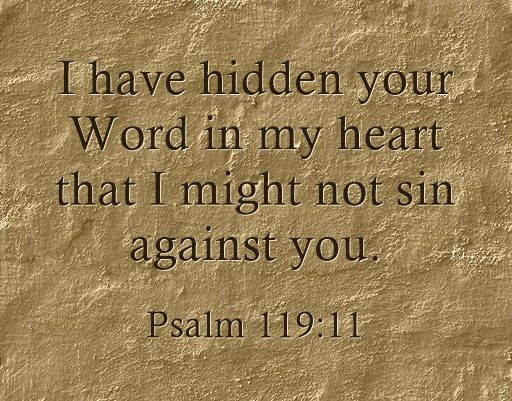
Many of the Psalms are still relevant today too, like Psalm 119:11 where the psalmist says, “I have stored up your word in my heart, that I might not sin against you.” What he is saying is “I have memorized Scripture in order to keep from sinning.” When a person is tempted, they can recall verses from memory that will help them resist temptation and keep them from sinning. When Satan tempted Jesus in the Wilderness, Jesus used Scriptures to rebut Satan, who was taking text of context and creating a false pretext. The Apostle Paul wrote to the church at Philippi; “Whatever you have learned or received or heard from me, or seen in me—put it into practice. And the God of peace will be with you” (Phil 4:9) and believers are still commanded to “grow in the grace and knowledge of our Lord and Savior Jesus Christ” (2nd Pet 3:18a), so there will never be a time when these verses will not be relevant for us. These verses are prescriptive for all of us. Nearly all of the verses in the Book of Proverbs are also prescriptive and are relevant, no matter what age we live in. These godly principles are prescriptive for every one of us, like “The fear of the LORD is the beginning of knowledge; fools despise wisdom and instruction” (Prov 1:7).
His Abiding, Eternal Word
God’s Word never expires, just as Isaiah the Prophet wrote, “The grass withers, the flower fades, but the word of our God will stand forever” (40:8), so “the word of the Lord remains forever” (1st Pet 1:25). Jesus, in speaking of the Word of God, which He clearly refers to as the Bible, said “truly, I say to you, until heaven and earth pass away, not an iota, not a dot, will pass from the Law until all is accomplished” (Matt 5:18), so “Heaven and earth will pass away, but My words will never pass away” (Matt 24:35). In fact, “it is easier for heaven and earth to pass away than for one dot of the Law to become void” (Luke 16:17). The Bible has been banished, burned, and banned, and yet it remains…and will so forever. There will never be a time when the Word of God does not apply to our lives. The author of Hebrews wrote, “the word of God is living and active, sharper than any two-edged sword, piercing to the division of soul and of spirit, of joints and of marrow, and discerning the thoughts and intentions of the heart. And no creature is hidden from his sight, but all are naked and exposed to the eyes of him to whom we must give account” (Heb 4:12-13).
Conclusion
Tragically, some believe that the Bible is an ancient book which no longer has application today, however, how can these critics of the Bible say that the command to not murder is not relevant today? What about this law and many of the other teachings in the Bible not be applicable anymore? When would John 3:16 ever cease to have relevance? Why would Jesus never change what He said about those who receive eternal life, saying that “All that the Father gives me will come to me, and whoever comes to me I will never cast out” (John 6:37). No, God says “I the Lord do not change” (Mal 3:6a), and neither does the Word of God…it shall abide forever, even if heaven and earth should pass away, His words never will.
Article by Jack Wellman
Jack Wellman is Pastor of the Mulvane Brethren Church in Mulvane Kansas. Jack is also the Senior Writer at What Christians Want To Know whose mission is to equip, encourage, and energize Christians and to address questions about the believer’s daily walk with God and the Bible. You can follow Jack on Google Plus or check out his book Teaching Children the Gospel available on Amazon.
Previous Post

September 23, 2016
7 Bible Verses For Judges To Study
Next Post
September 24, 2016 7 Bible Verses For The Pregnant Mother
Browse Our Archives
Select a Category Bible Answers Bible Definitions Bible Story Bible Study Bible Verses Christian Books Christian Entertainment Christian Fathers Christian Mothers Christian Quotes Devotional Famous Christians Music News Parables Prayers Quotes Sunday School Lesson Uncategorized Youth Sermons
Select a Month October 2019 September 2019 August 2019 July 2019 June 2019 May 2019 April 2019 March 2019 February 2019 January 2019 December 2018 November 2018 October 2018 September 2018 August 2018 July 2018 June 2018 May 2018 April 2018 March 2018 February 2018 January 2018 December 2017 November 2017 October 2017 September 2017 August 2017 July 2017 June 2017 May 2017 April 2017 March 2017 February 2017 January 2017 December 2016 November 2016 October 2016 September 2016 August 2016 July 2016 June 2016 May 2016 March 2016 February 2016 January 2016 December 2015 November 2015 October 2015 September 2015 August 2015 July 2015 June 2015 May 2015 April 2015 March 2015 February 2015 January 2015 December 2014 November 2014 October 2014 September 2014 August 2014 July 2014 June 2014 May 2014 April 2014 March 2014 February 2014 January 2014 December 2013 November 2013 October 2013 September 2013 August 2013 July 2013 June 2013 May 2013 April 2013 March 2013
Follow Us!
TAKE THE
Religious Wisdom Quiz
What does James say someone who doubts is like?
Select your answer to see how you score.
A leaf falling from a tree A wave of the sea, blown and tossed by the wind A house built on sand A sheep without a shepherd
Related posts from Christian Crier

What Does The Bible Say About Our Thoughts?

Do Colors Have Special Meaning In The Bible?

The Glass – Half Empty Or Half Full?

TRENDING AT PATHEOS Evangelical

The REST of Your Life: A Creative Wrestles...
This week I had a conversation with a good friend from church....

How the author of the world's best hymn...
I've been working with John Newton for a while now. This makes...

Long before this Lectio Divina, Psalm 130 - the song - started...

What About the Trees? Another Living Parable
After I finished writing the last article about falling leaves as a...

Why Classical Education Is a Conversation, Not a...
Come and Read: Joy in Classical Education When I was a little...

Cornell University has received a great deal of negative publicity and intense...
view all Evangelical blogs
Ad-Free & Subscriber Log-In Subscription Support
- About Us
- 2026 Calendar
- Videos
- Podcasts
- Library of World Religions
- Faith In Media Tracker
- Advertise With Us
- Write for Us
- Privacy Policy
- Terms of Service
- Do Not Sell My Data
- Contact Us
- Radiant Digital
- Manage Newsletter Subscriptions
- Unsubscribe From Notifications
- Sitemap
Copyright 2008-2026, Patheos. All rights reserved.
Subscription Support Ad-Free & Subscriber Log-In
Follow Patheos