
BuddhistCatholicContemplativeEvangelicalGeneral ChristianHinduJewishLatter-day SaintMuslimNew VisionsProgressive Christian
Beliefs
- Buddhist
- Catholic
- Contemplative
- Evangelical
- General Christian
- Hindu
- Jewish
- Latter-day Saint
- More Voices
- Muslim
- New Visions
- Pagan
- Progressive Christian
Topics
- Religion News
- Food and Religion
- Sports and Religion
- Religious Art
- Religious Music and Entertainment
- Religious Events
- History and Religion
- Style and Religion
- Politics and Religion
- Women in Religion
- Recreation Outdoors and Religion
- Business Finance and Religion
- Careers Workplace and Religion
- Education and Religion
- Family Parenting and Religion
- Health Fitness and Religion
- Home and Religion
- Relationships and Religion
- Technology and Religion
- Travel and Religion
Columnists
- Buddhist Columnists
- Business Finance and Religion Columnists
- Careers Workplace and Religion Columnists
- Catholic Columnists
- Contemplative Columnists
- Education and Religion Columnists
- Evangelists Columnists
- Family Parenting and Religion Columnists
- General Christian Columnists
- Health Fitness and Religion Columnists
- Hindu Columnists
- History and Religion Columnists
- Home and Religion Columnists
- Jewish Columnists
- More Voices Columnists
- Latter Day Columnists
- Muslim Columnists
- New Visions Columnists
- Nonreligious Columnists
- Pagan Columnists
- Politics and Religion Columnists
- Progressive Columnists
- Recreation Outdoors and Religion Columnists
- Relationships and Religion Columnists
- Religion News Columnists
- Religious Art Columnists
- Religious Events Columnists
- Religious Music and Entertainment Columnists
- Sports and Religion Columnists
- Style and Religion Columnists
- Technology and Religion Columnists
- Travel and Religion Columnists
- Women in Religion Columnists
Resource Library
- 2026 Calendar
- Library of World Religions
- The 100 Most Holy Places on Earth
- Patheos Answers
- Podcasts
- Videos
- Faith Leaders Database
- Anglican Episcopalian
- Bahai
- Baptist
- Buddhism
- Christianity
- Confucianism
- Eastern Orthodoxy
- Hinduism
- Holiness and Pentecostal
- ISKCON
- Islam
- Judaism
- Lutheran
- Methodist
- The Church of Jesus Christ of Latter-day Saints
- New Age
- Paganism
- Presbytarian and Reformed
- Protestantism
- Religion Behind the Scenes
- Roman Catholic
- Scientology
- Shia Islam
- Sikhism
- Sufism
- Sunni Islam
- Taoism
- Zen
- See all religions
Research Tools
 Ad-Free & Subscriber Log-In Subscription Support
Ad-Free & Subscriber Log-In Subscription Support
Follow Patheos 

- Trending:
- Forgiveness
- |
- Marriage
- |
- Consciousness
- |
- Death Penalty
- |
- Election
- |
- Halloween
 Christian Crier
- Home
- Evangelical
- Can God Create A Rock So Heavy That He Could Not Lift It?
Can God Create A Rock So Heavy That He Could Not Lift It?
Last updated on: September 22, 2016 at 10:34 am by Jack Wellman
Can God Create A Rock So Heavy That He Could Not Lift It? 2016-09-22T10:34:27-05:00 Jack Wellman
Patheos Explore the world's faith through different perspectives on religion and spirituality! Patheos has the views of the prevalent religions and spiritualities of the world.
Have you heard the fallacious, hypothetical question, “Can God create a rock so heavy that He could not lift it?” How do we answer such a question?
The Omnipotent God
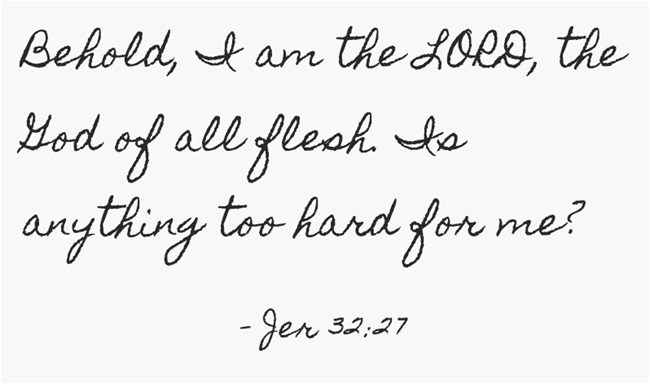
The Bible clearly teaches that God is not limited by space, time, and circumstances, and so God declares in His Word that He is the omnipotent God. Jeremiah the Prophet wrote “Behold, I am the LORD, the God of all flesh. Is anything too hard for me” (Jer 32:27), and Jesus says much the same thing when speaking to a man; “With man this is impossible, but with God all things are possible” (Matt 19:26). Again, Jeremiah writes, “Ah, Lord GOD! It is you who have made the heavens and the earth by your great power and by your outstretched arm! Nothing is too hard for you” (Jer 32:17). Isaiah the Prophet tells us, “Lift up your eyes on high and see: who created these? He who brings out their host by number, calling them all by name; by the greatness of his might and because he is strong in power, not one is missing” (Isaiah 40:26), and “My hand laid the foundation of the earth, and my right hand spread out the heavens; when I call to them, they stand forth together” (Isaiah 48:13). The fact is, there is no limit to God’s power.
The Omnipotence Paradox
The Omnipotent Paradox dates back to the 12th century to Averroës who asked, “Could an omnipotent being create a stone so heavy that even they could not lift it?” This would be like seeking an answer to the question, “What would happen if an irresistible force were to meet an immovable object?” This statement seems to make sense at first, but upon closer examination, we must ask if there is a force that is irresistible, and if there was, then there can be no immovable object. Both cannot be true because if an irresistible force does exist, then there cannot be an immovable object. The point is an object cannot in principle be immovable if a force exists that can in principle move it.
Inherent Problems
One of the problems with this hypothetical question is that even God cannot make a square circle or a two-side triangle. This isn’t possible because God doesn’t have sufficient power to make it be, but rather, it’s a logical contradiction to have a two-sided triangle, so it does not mean that God doesn’t have sufficient power, but rather, God will not do anything that’s possible according to his nature (like God cannot lie). St. Thomas Aquinas sees the problem as a failure to properly understand what omnipotence is. That is, logical impossibilities cannot fall under the definition of omnipotence, like God not being able to make a square in the shape of a circle. It would be like someone telling you that they always lie. How can you believe what they just said then, because if they say they always lie and tell you that, then they have just demolished their statement by telling you the truth?
Paradox Solved
The truth is that physical or material objects are not infinite, but God is both infinite and omnipotent. That makes the “Omnipotent Paradox” a logical fallacy. It’s not so much that there are things that God cannot do, but there are things that God chooses not to do. For example, “God is not man, that he should lie, or a son of man, that he should change his mind. Has he said, and will he not do it? Or has he spoken, and will he not fulfill it” (Num 23:19). This truth is repeated by the author of Hebrews, who wrote that it is “by two unchangeable things, in which it is impossible for God to lie” (Heb 6:18). For the children of God, they have God’s promise and have “hope of eternal life, which God, who never lies, promised before the ages began” (Titus 1:2). It’s not God’s nature to lie as it is the very nature of man. These are the questions that Bible critics or skeptics of God ask in order to prove that God either doesn’t exist or He’s not omnipotent. Impossibility is not based on the amount of power one has, but rather, it is based on what is really possible, so the question itself is based upon a false idea. For example, God cannot deny Himself (Heb6:18)
Conclusion
Tragically, atheists try to use this false argument to disprove God, but thankfully, most atheists steer clear of this type of reasoning to prove that God does not exist. His inability to contradict His divine character does not mean that He isn’t omnipotent. What it does mean is that unbelievers simply suppress the knowledge of God (Rom 1:18), even though “what can be known about God is plain to them” (Rom 1:19) because “his invisible attributes, namely, his eternal power and divine nature, have been clearly perceived, ever since the creation of the world, in the things that have been made. So they are without excuse” (Rom 1:20). Even “The heavens declare the glory of God, and the sky above proclaims his handiwork” (Psalm 19:1), so only a fool would believe that God does not exist (Psalm 14:1).
Article by Jack Wellman
Jack Wellman is Pastor of the Mulvane Brethren Church in Mulvane Kansas. Jack is also the Senior Writer at What Christians Want To Know whose mission is to equip, encourage, and energize Christians and to address questions about the believer’s daily walk with God and the Bible. You can follow Jack on Google Plus or check out his book Teaching Children the Gospel available on Amazon.
1. Savage, C. Wade. “The Paradox of the Stone” Philosophical Review, Vol. 76, No. 1 (Jan., 1967), pp. 74–79 doi:10.2307/2182966.
Previous Post

September 21, 2016
5 Famous Deathbed Conversions
Next Post
September 22, 2016 Is U2 A Christian Band?
Browse Our Archives
Select a Category Bible Answers Bible Definitions Bible Story Bible Study Bible Verses Christian Books Christian Entertainment Christian Fathers Christian Mothers Christian Quotes Devotional Famous Christians Music News Parables Prayers Quotes Sunday School Lesson Uncategorized Youth Sermons
Select a Month October 2019 September 2019 August 2019 July 2019 June 2019 May 2019 April 2019 March 2019 February 2019 January 2019 December 2018 November 2018 October 2018 September 2018 August 2018 July 2018 June 2018 May 2018 April 2018 March 2018 February 2018 January 2018 December 2017 November 2017 October 2017 September 2017 August 2017 July 2017 June 2017 May 2017 April 2017 March 2017 February 2017 January 2017 December 2016 November 2016 October 2016 September 2016 August 2016 July 2016 June 2016 May 2016 March 2016 February 2016 January 2016 December 2015 November 2015 October 2015 September 2015 August 2015 July 2015 June 2015 May 2015 April 2015 March 2015 February 2015 January 2015 December 2014 November 2014 October 2014 September 2014 August 2014 July 2014 June 2014 May 2014 April 2014 March 2014 February 2014 January 2014 December 2013 November 2013 October 2013 September 2013 August 2013 July 2013 June 2013 May 2013 April 2013 March 2013
Follow Us!
TAKE THE
Religious Wisdom Quiz
Who anointed Jesus' feet with expensive perfume and her hair?
Select your answer to see how you score.
Mary Magdalene Anna Mary of Bethany Elizabeth
Related posts from Christian Crier

What Does The Bible Say About Our Thoughts?

Do Colors Have Special Meaning In The Bible?

The Glass – Half Empty Or Half Full?

TRENDING AT PATHEOS Evangelical

The REST of Your Life: A Creative Wrestles...
This week I had a conversation with a good friend from church....

How the author of the world's best hymn...
I've been working with John Newton for a while now. This makes...

Long before this Lectio Divina, Psalm 130 - the song - started...

What About the Trees? Another Living Parable
After I finished writing the last article about falling leaves as a...

Why Classical Education Is a Conversation, Not a...
Come and Read: Joy in Classical Education When I was a little...

Cornell University has received a great deal of negative publicity and intense...
view all Evangelical blogs
Ad-Free & Subscriber Log-In Subscription Support
- About Us
- 2026 Calendar
- Videos
- Podcasts
- Library of World Religions
- Faith In Media Tracker
- Advertise With Us
- Write for Us
- Privacy Policy
- Terms of Service
- Do Not Sell My Data
- Contact Us
- Radiant Digital
- Manage Newsletter Subscriptions
- Unsubscribe From Notifications
- Sitemap
Copyright 2008-2026, Patheos. All rights reserved.
Subscription Support Ad-Free & Subscriber Log-In
Follow Patheos