
BuddhistCatholicContemplativeEvangelicalGeneral ChristianHinduJewishLatter-day SaintMuslimNew VisionsProgressive Christian
Beliefs
- Buddhist
- Catholic
- Contemplative
- Evangelical
- General Christian
- Hindu
- Jewish
- Latter-day Saint
- More Voices
- Muslim
- New Visions
- Pagan
- Progressive Christian
Topics
- Religion News
- Food and Religion
- Sports and Religion
- Religious Art
- Religious Music and Entertainment
- Religious Events
- History and Religion
- Style and Religion
- Politics and Religion
- Women in Religion
- Recreation Outdoors and Religion
- Business Finance and Religion
- Careers Workplace and Religion
- Education and Religion
- Family Parenting and Religion
- Health Fitness and Religion
- Home and Religion
- Relationships and Religion
- Technology and Religion
- Travel and Religion
Columnists
- Buddhist Columnists
- Business Finance and Religion Columnists
- Careers Workplace and Religion Columnists
- Catholic Columnists
- Contemplative Columnists
- Education and Religion Columnists
- Evangelists Columnists
- Family Parenting and Religion Columnists
- General Christian Columnists
- Health Fitness and Religion Columnists
- Hindu Columnists
- History and Religion Columnists
- Home and Religion Columnists
- Jewish Columnists
- More Voices Columnists
- Latter Day Columnists
- Muslim Columnists
- New Visions Columnists
- Nonreligious Columnists
- Pagan Columnists
- Politics and Religion Columnists
- Progressive Columnists
- Recreation Outdoors and Religion Columnists
- Relationships and Religion Columnists
- Religion News Columnists
- Religious Art Columnists
- Religious Events Columnists
- Religious Music and Entertainment Columnists
- Sports and Religion Columnists
- Style and Religion Columnists
- Technology and Religion Columnists
- Travel and Religion Columnists
- Women in Religion Columnists
Resource Library
- 2026 Calendar
- Library of World Religions
- The 100 Most Holy Places on Earth
- Patheos Answers
- Podcasts
- Videos
- Faith Leaders Database
- Anglican Episcopalian
- Bahai
- Baptist
- Buddhism
- Christianity
- Confucianism
- Eastern Orthodoxy
- Hinduism
- Holiness and Pentecostal
- ISKCON
- Islam
- Judaism
- Lutheran
- Methodist
- The Church of Jesus Christ of Latter-day Saints
- New Age
- Paganism
- Presbytarian and Reformed
- Protestantism
- Religion Behind the Scenes
- Roman Catholic
- Scientology
- Shia Islam
- Sikhism
- Sufism
- Sunni Islam
- Taoism
- Zen
- See all religions
Research Tools
 Ad-Free & Subscriber Log-In Subscription Support
Ad-Free & Subscriber Log-In Subscription Support
Follow Patheos 

- Trending:
- Forgiveness
- |
- Marriage
- |
- Consciousness
- |
- Death Penalty
- |
- Election
- |
- Halloween
 Christian Crier
- Home
- Evangelical
- What Is The Difference Between An Arab and A Muslim?
What Is The Difference Between An Arab and A Muslim?
Last updated on: September 21, 2016 at 10:38 pm by Jack Wellman
What Is The Difference Between An Arab and A Muslim? 2016-09-21T22:38:47-05:00 Jack Wellman
Patheos Explore the world's faith through different perspectives on religion and spirituality! Patheos has the views of the prevalent religions and spiritualities of the world.
What is the difference between an Arab and a Muslim?
The Gathering of Nations
Muslims are those who hold to the Islamic faith. The word Muslim means “One who submits” to God, and their Islamic faith acted as a cohesive force upon the ancient peoples in areas like Egypt, Syria, and the Mesopotamian regions. Islam unified the people like nothing else ever had, and even though the Arabic people have a common ancestry, they were located in different parts of the region. From the 11th to the 13th century, there was a rapid expansion of Islam which finally brought all the different regions into commonality, and by doing so, created an enormous empire together, so their faith unified them as a people, much like the Jews were unified in their faith at one time. This created alliances between nations, and these mutually exclusive relationships began to benefit all the Muslim people, scattered among the nations of the Middle-east. Trade routes were opened, their civilization began to prosper, and the Arabic-speaking world grew as never before. As such, they became a formidable force, so while medieval Europe, the people of Spain, and the people of North Africa began to create larger and more cooperative nations among themselves, they absorbed much of the knowledge that the Islamic people had earlier preserved during the Dark Ages. It was after the decline and fall of the Roman Empire that the world entered into the Dark Ages, from the 8th to as late as the 15th century. It was a time of drastic cultural, economic, and social decline.
The Dark Ages
The Dark Ages means that it was a period of “intellectual darkness,” as far as previously acquired human knowledge was concerned; however, the Arabic-speaking people preserved that knowledge that had been acquired during the previous centuries prior to the before the Dark Ages. The Arabic-speaking people never did enter into a dark age like most of the other nations did, which primarily occurred in Europe and the Mediterranean nations, so they didn’t have the drastic decline of their cultural, economic, and social systems as did most of the other nations. They held on to much of the known knowledge that they had acquired over the centuries, so the Arabs were literally, “the keepers of knowledge,” including the important disciples of mathematics, science, astronomy, medicine, architecture, horticulture, agriculture, music, languages, philosophy, geography, and navigation. That is an amazing cache of knowledge that survived, thanks to the Arabic-speaking people. Clearly, their Islamic faith unified them and this served them well in preserving the knowledge that they had gained over the centuries.
Critical Arabic Contributions
We have already read that the Muslims (sometimes spelled Moslem), which are those of the Islamic faith, preserved much of the world’s knowledge, but they also made an important advancements in mathematics, but is it true that the Arab invented algebra, however it is common knowledge that the Alexandrian Greek mathematician Diophantus (3rd century AD) is called “the father of algebra,” and he wrote an important series of books, called Arithmetica, from which we get the word arithmetic, but we have archaeological evidence that the roots of algebra date back to the ancient Babylonians, which was further developed in Egypt and Greece. There are even indications that the Chinese and Indians yet further advanced algebra too and were among the first to write important works on the subject. The Canaanites, and probably the Egyptians at the same time, were among the first to develop the earliest navigational and geographical charts. These proved extremely useful for navigating land and sea, but the Arabs vastly improved this by the development of the magnetic needle, the precursor to the compass, one of the most significant discoveries of mankind. What more can we add except the Arab-speaking people also developed the knowledge and practice of medicine, and architecture, which is evident in their construction of buildings, homes, and Mosques.
Are Arabs and Muslims the Same?
When you speak of someone that’s Arabic, and someone that’s Muslim, are they mutually exclusive or mutually inclusive of one another? Those who are of the Islamic faith can certainly be Arabic, but Muslims are certainly not restricted to the Arabic-speaking nations and peoples. You can have a German whose Muslim, or the French, English, and so on can be Muslim. Not all Arabic people are practicing Muslims, although nearly all of the Arabic nations consist of Muslims, but strictly speaking, Arabs and Muslims are not the same at all; one can be Muslim but not Arabic and one can be Arabic and not Muslim; it’s just that in most cases, if you’re Arabic, you’re most likely a follower of Islam. The parallel is in the first century church, where most of the Christians were Jewish, but not all of them. Today, Christians are found in every nation in the world, almost like Muslims are today.
Conclusion
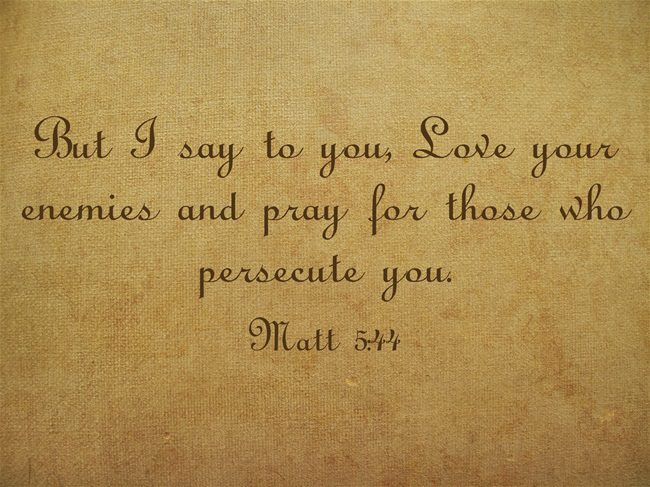
As a Christian, there is no animosity toward Muslims that I hold to. Although I hate to see Christians martyred, God will take care of everything in His own time (Rom 12:17-21). I have no hard feelings for anyone that’s of the Islamic faith. Yes, it is serious when radical Muslims martyr Christians, but this is not how the vast majority of Muslims respond to Christians. They might despise them, ridicule them, and socially shun them, especially in Arabic nations, but the large majority of Muslims don’t respond this way. Given this, we cannot make sweeping statements like “All Muslims are radical” or “Muslims are terrorists.” That is not fair to the Arabic-speaking people who are active in their Islamic faith and it is certainly not far to Muslims. Christians are commanded to not hate anyone, but rather do as Jesus taught: “You shall love your neighbor as yourself” (Mark 12:31), and love means we do no harm to another. Jesus reminds Christians to “Love your enemies and pray for those who persecute you” (Matt 5:44).
Article by Jack Wellman
Jack Wellman is Pastor of the Mulvane Brethren Church in Mulvane Kansas. Jack is also the Senior Writer at What Christians Want To Know whose mission is to equip, encourage, and energize Christians and to address questions about the believer’s daily walk with God and the Bible. You can follow Jack on Google Plus or check out his book Teaching Children the Gospel available on Amazon.
Next Post

September 20, 2016 Where Is Modern Day Babylon? Is This Important To Bible Prophesy?
Browse Our Archives
Select a Category Bible Answers Bible Definitions Bible Story Bible Study Bible Verses Christian Books Christian Entertainment Christian Fathers Christian Mothers Christian Quotes Devotional Famous Christians Music News Parables Prayers Quotes Sunday School Lesson Uncategorized Youth Sermons
Select a Month October 2019 September 2019 August 2019 July 2019 June 2019 May 2019 April 2019 March 2019 February 2019 January 2019 December 2018 November 2018 October 2018 September 2018 August 2018 July 2018 June 2018 May 2018 April 2018 March 2018 February 2018 January 2018 December 2017 November 2017 October 2017 September 2017 August 2017 July 2017 June 2017 May 2017 April 2017 March 2017 February 2017 January 2017 December 2016 November 2016 October 2016 September 2016 August 2016 July 2016 June 2016 May 2016 March 2016 February 2016 January 2016 December 2015 November 2015 October 2015 September 2015 August 2015 July 2015 June 2015 May 2015 April 2015 March 2015 February 2015 January 2015 December 2014 November 2014 October 2014 September 2014 August 2014 July 2014 June 2014 May 2014 April 2014 March 2014 February 2014 January 2014 December 2013 November 2013 October 2013 September 2013 August 2013 July 2013 June 2013 May 2013 April 2013 March 2013
Follow Us!
TAKE THE
Religious Wisdom Quiz
What did the devil tempt Jesus to turn into bread?
Select your answer to see how you score.
Fish Wood Stones Sand
Related posts from Christian Crier

What Does The Bible Say About Our Thoughts?

Do Colors Have Special Meaning In The Bible?

The Glass – Half Empty Or Half Full?

TRENDING AT PATHEOS Evangelical

How the author of the world's best hymn...
I've been working with John Newton for a while now. This makes...

Long before this Lectio Divina, Psalm 130 - the song - started...

What About the Trees? Another Living Parable
After I finished writing the last article about falling leaves as a...

Why Classical Education Is a Conversation, Not a...
Come and Read: Joy in Classical Education When I was a little...

Falling Leaves: A Living Parable on Letting Go
I’ve spent the vast majority of my life in the southeast corner...

Cornell University has received a great deal of negative publicity and intense...
view all Evangelical blogs
Ad-Free & Subscriber Log-In Subscription Support
- About Us
- 2026 Calendar
- Videos
- Podcasts
- Library of World Religions
- Faith In Media Tracker
- Advertise With Us
- Write for Us
- Privacy Policy
- Terms of Service
- Do Not Sell My Data
- Contact Us
- Radiant Digital
- Manage Newsletter Subscriptions
- Unsubscribe From Notifications
- Sitemap
Copyright 2008-2026, Patheos. All rights reserved.
Subscription Support Ad-Free & Subscriber Log-In
Follow Patheos