
BuddhistCatholicContemplativeEvangelicalGeneral ChristianHinduJewishLatter-day SaintMuslimNew VisionsProgressive Christian
Beliefs
- Buddhist
- Catholic
- Contemplative
- Evangelical
- General Christian
- Hindu
- Jewish
- Latter-day Saint
- More Voices
- Muslim
- New Visions
- Pagan
- Progressive Christian
Topics
- Religion News
- Food and Religion
- Sports and Religion
- Religious Art
- Religious Music and Entertainment
- Religious Events
- History and Religion
- Style and Religion
- Politics and Religion
- Women in Religion
- Recreation Outdoors and Religion
- Business Finance and Religion
- Careers Workplace and Religion
- Education and Religion
- Family Parenting and Religion
- Health Fitness and Religion
- Home and Religion
- Relationships and Religion
- Technology and Religion
- Travel and Religion
Columnists
- Buddhist Columnists
- Business Finance and Religion Columnists
- Careers Workplace and Religion Columnists
- Catholic Columnists
- Contemplative Columnists
- Education and Religion Columnists
- Evangelists Columnists
- Family Parenting and Religion Columnists
- General Christian Columnists
- Health Fitness and Religion Columnists
- Hindu Columnists
- History and Religion Columnists
- Home and Religion Columnists
- Jewish Columnists
- More Voices Columnists
- Latter Day Columnists
- Muslim Columnists
- New Visions Columnists
- Nonreligious Columnists
- Pagan Columnists
- Politics and Religion Columnists
- Progressive Columnists
- Recreation Outdoors and Religion Columnists
- Relationships and Religion Columnists
- Religion News Columnists
- Religious Art Columnists
- Religious Events Columnists
- Religious Music and Entertainment Columnists
- Sports and Religion Columnists
- Style and Religion Columnists
- Technology and Religion Columnists
- Travel and Religion Columnists
- Women in Religion Columnists
Resource Library
- 2026 Calendar
- Library of World Religions
- The 100 Most Holy Places on Earth
- Patheos Answers
- Podcasts
- Videos
- Faith Leaders Database
- Anglican Episcopalian
- Bahai
- Baptist
- Buddhism
- Christianity
- Confucianism
- Eastern Orthodoxy
- Hinduism
- Holiness and Pentecostal
- ISKCON
- Islam
- Judaism
- Lutheran
- Methodist
- The Church of Jesus Christ of Latter-day Saints
- New Age
- Paganism
- Presbytarian and Reformed
- Protestantism
- Religion Behind the Scenes
- Roman Catholic
- Scientology
- Shia Islam
- Sikhism
- Sufism
- Sunni Islam
- Taoism
- Zen
- See all religions
Research Tools
 Ad-Free & Subscriber Log-In Subscription Support
Ad-Free & Subscriber Log-In Subscription Support
Follow Patheos 

- Trending:
- Forgiveness
- |
- Marriage
- |
- Consciousness
- |
- Death Penalty
- |
- Election
- |
- Halloween
 Christian Crier
- Home
- Evangelical
- What Is A Bridegroom? A Bible Study
What Is A Bridegroom? A Bible Study
Last updated on: August 26, 2016 at 2:02 pm by Jack Wellman
What Is A Bridegroom? A Bible Study 2016-08-26T14:02:26-05:00 Jack Wellman
Patheos Explore the world's faith through different perspectives on religion and spirituality! Patheos has the views of the prevalent religions and spiritualities of the world.
Why does the Bible mention a Bridegroom? What’s the significance to believers?
Jewish Weddings
Today’s Jewish weddings still retain some of the traditions of old like having two witnesses sign the ketubah, and the groom giving the bride her ring under a wedding canopy, and like many marriages today, the Jews also considered the marriage ceremony as a sacred event as this act is done before God and many witnesses. One thing that differs between a non-Jewish wedding and a Jewish one is that the bride and the groom are not allowed to see one another for seven days, not just the day of the wedding as with traditional marriages. This means the bride and groom will have gone a week without seeing one another, and only then, after the marriage ceremony has begun. On the Saturday before the wedding, the bride would have a bridal party where only female guests were invited. These women included the bride’s loved ones like her family and friends. They were there to provide her with moral and physical support. If she needed anything, they would provide it. This is what the wedding guests (the church) should be doing today; serving the bride as the body of Christ, but also by seeking out others to attend the wedding feast before the doors are closed and the wedding has started (Matt 28:19-20).
Why do the Jews keep the groom and the bridegroom from seeing each other for a week?
Do you see marriage as a sacred event or agreement (or both)?
What traditions do you see that are present in non-Jewish weddings?
The Bridegroom
The Christian recognizes that Jesus is the Bridegroom, and not just from the Book of Revelation. In fact, Jesus revealed the identity of the Bridegroom when John the Baptist’s disciples asked Him why His disciples didn’t fast like they do. Jesus replied, “Can the wedding guests mourn as long as the bridegroom is with them? The days will come when the bridegroom is taken away from them, and then they will fast” (Matt 9:15). Jesus’ point was “Can you make wedding guests fast while the bridegroom is with them” (Luke 5:34), meaning that He was with them right now! After Jesus was taken away at His arrest on false charges, given an illegal trial, suffered an unjust crucifixion and not worthy of death, did they eventually fast. The “bridegroom” was “taken away.” For now, with Jesus there, it’s a time of feasting, not fasting. Right now, the Bridegroom (John 2) is preparing for Himself a bride and the bride of Christ is the church. Even though the church was in embryonic state with the disciples (Matt 18:15-20), they were still part of that “bridal party” who are all waiting for the actual wedding (like some of us are), so the church is the bride of Christ, and Jesus is the Bridegroom. The disciples of John the Baptist would have known that Jesus is the Bridegroom because John knew that “The one who has the bride is the bridegroom. The friend of the bridegroom, who stands and hears him, rejoices greatly at the bridegroom’s voice. Therefore this joy of mine is now complete” (John 3:29). John’s mission was fulfilled. He was beheaded, and right after this, Jesus began His earthly ministry (Mark 1:14-15).
Why do you think the disciples of John the Baptist fasted?
Do you think these verses command fasting?
Who was this “friend of the bridegroom?”
The Invitation
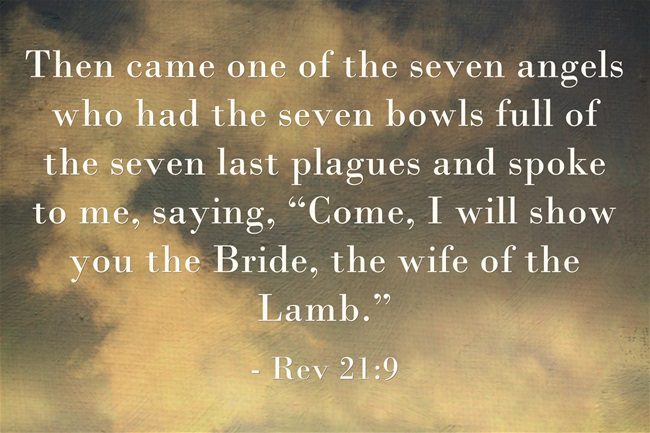
Long before a wedding, there are invitations sent out and whoever is invited may come. In a parable about a wedding feast, Jesus was showing that the “bridal party” must seek out others to bring to the wedding, and in this context, He said, “The kingdom of heaven may be compared to a king who gave a wedding feast for his son, and sent his servants to call those who were invited to the wedding feast, but they would not come. Again he sent other servants, saying, ‘Tell those who are invited, “See, I have prepared my dinner, my oxen and my fat calves have been slaughtered, and everything is ready. Come to the wedding feast” (Matt 22:2-4). Just like today, many “paid no attention” (Matt 22:5), but they still sought out others as “those servants went out into the roads and gathered all whom they found, both bad and good. So the wedding hall was filled with guests” (Matt 22:10). The servants are the children of God, and since Jesus is the Head of the church, He directs the members of His body to go and do what He wills. They (we) serve Him and these servants seek out others to invite them to the wedding feast to receive eternal life. There are limitations however, because “when the king came in to look at the guests, he saw there a man who had no wedding garment. And he said to him, ‘Friend, how did you get in here without a wedding garment?’ And he was speechless. Then the king said to the attendants, ‘Bind him hand and foot and cast him into the outer darkness. In that place there will be weeping and gnashing of teeth.’ For many are called, but few are chosen” (Matt 22:11-14). You either have His righteousness (2nd Cor 5:21) or you have His wrath (John 3:36b; Rom 2:5-6). Jesus invites all to come to Him and believe and receive eternal life (John 3:16; Rom 10:9-13). When God brings a person to repentance, which means a forsaking of sins, and then trusting in Christ, they are already brought into the kingdom (Eph 1; Rom 8), even if not there physically.
Does this invitation show that some won’t be welcome?
What are the conditions on attending this wedding feast?
How often have you invited new “guests” to the wedding feast?
Conclusion
The marriage between Christ and the church really was a marriage made in heaven because it was from the will of God. When Jesus returns for His church and then brings them to Himself, the joyous occasion is the marriage feast of the wedding between the Lamb of God, Jesus Christ, and the church. The Apostle John wrote of this time, writing “Let us rejoice and exult and give him the glory, for the marriage of the Lamb has come, and his Bride has made herself ready” (Rev 19:7). We have a glimpse of the coming kingdom of God in the Book of Isaiah, and in particular where he writes, “For as a young man marries a young woman, so shall your sons marry you, and as the bridegroom rejoices over the bride, so shall your God rejoice over you” (62:5) and God rejoices over all of His children, but to the unsaved, He calls them the “children of wrath” (Eph 2:3). For every child of God, the Apostle Paul writes to “you were dead in your trespasses and sins in which you once walked, following the course of this world, following the prince of the power of the air, the spirit that is now at work in the sons of disobedience—among whom we all once lived in the passions of our flesh, carrying out the desires of the body and the mind, and were by nature children of wrath, like the rest of mankind” (Eph 2:1-3).
Article by Jack Wellman
Jack Wellman is Pastor of the Mulvane Brethren Church in Mulvane Kansas. Jack is also the Senior Writer at What Christians Want To Know whose mission is to equip, encourage, and energize Christians and to address questions about the believer’s daily walk with God and the Bible. You can follow Jack on Google Plus or check out his book Teaching Children the Gospel available on Amazon.
Previous Post

August 17, 2016
What Type Of Society Did Jesus Live In?
Next Post
August 28, 2016 Who Was Baal? A Bible Study
Browse Our Archives
Select a Category Bible Answers Bible Definitions Bible Story Bible Study Bible Verses Christian Books Christian Entertainment Christian Fathers Christian Mothers Christian Quotes Devotional Famous Christians Music News Parables Prayers Quotes Sunday School Lesson Uncategorized Youth Sermons
Select a Month October 2019 September 2019 August 2019 July 2019 June 2019 May 2019 April 2019 March 2019 February 2019 January 2019 December 2018 November 2018 October 2018 September 2018 August 2018 July 2018 June 2018 May 2018 April 2018 March 2018 February 2018 January 2018 December 2017 November 2017 October 2017 September 2017 August 2017 July 2017 June 2017 May 2017 April 2017 March 2017 February 2017 January 2017 December 2016 November 2016 October 2016 September 2016 August 2016 July 2016 June 2016 May 2016 March 2016 February 2016 January 2016 December 2015 November 2015 October 2015 September 2015 August 2015 July 2015 June 2015 May 2015 April 2015 March 2015 February 2015 January 2015 December 2014 November 2014 October 2014 September 2014 August 2014 July 2014 June 2014 May 2014 April 2014 March 2014 February 2014 January 2014 December 2013 November 2013 October 2013 September 2013 August 2013 July 2013 June 2013 May 2013 April 2013 March 2013
Follow Us!
TAKE THE
Religious Wisdom Quiz
In Revelation, how many lampstands does John see?
Select your answer to see how you score.
Ten lampstands Seven golden lampstands Four lampstands Twelve lampstands
Related posts from Christian Crier

What Does The Bible Say About Our Thoughts?

Do Colors Have Special Meaning In The Bible?

The Glass – Half Empty Or Half Full?

TRENDING AT PATHEOS Evangelical

The REST of Your Life: A Creative Wrestles...
This week I had a conversation with a good friend from church....

How the author of the world's best hymn...
I've been working with John Newton for a while now. This makes...

Long before this Lectio Divina, Psalm 130 - the song - started...

What About the Trees? Another Living Parable
After I finished writing the last article about falling leaves as a...

Why Classical Education Is a Conversation, Not a...
Come and Read: Joy in Classical Education When I was a little...

Cornell University has received a great deal of negative publicity and intense...
view all Evangelical blogs
Ad-Free & Subscriber Log-In Subscription Support
- About Us
- 2026 Calendar
- Videos
- Podcasts
- Library of World Religions
- Faith In Media Tracker
- Advertise With Us
- Write for Us
- Privacy Policy
- Terms of Service
- Do Not Sell My Data
- Contact Us
- Radiant Digital
- Manage Newsletter Subscriptions
- Unsubscribe From Notifications
- Sitemap
Copyright 2008-2026, Patheos. All rights reserved.
Subscription Support Ad-Free & Subscriber Log-In
Follow Patheos