
BuddhistCatholicContemplativeEvangelicalGeneral ChristianHinduJewishLatter-day SaintMuslimNew VisionsProgressive Christian
Beliefs
- Buddhist
- Catholic
- Contemplative
- Evangelical
- General Christian
- Hindu
- Jewish
- Latter-day Saint
- More Voices
- Muslim
- New Visions
- Pagan
- Progressive Christian
Topics
- Religion News
- Food and Religion
- Sports and Religion
- Religious Art
- Religious Music and Entertainment
- Religious Events
- History and Religion
- Style and Religion
- Politics and Religion
- Women in Religion
- Recreation Outdoors and Religion
- Business Finance and Religion
- Careers Workplace and Religion
- Education and Religion
- Family Parenting and Religion
- Health Fitness and Religion
- Home and Religion
- Relationships and Religion
- Technology and Religion
- Travel and Religion
Columnists
- Buddhist Columnists
- Business Finance and Religion Columnists
- Careers Workplace and Religion Columnists
- Catholic Columnists
- Contemplative Columnists
- Education and Religion Columnists
- Evangelists Columnists
- Family Parenting and Religion Columnists
- General Christian Columnists
- Health Fitness and Religion Columnists
- Hindu Columnists
- History and Religion Columnists
- Home and Religion Columnists
- Jewish Columnists
- More Voices Columnists
- Latter Day Columnists
- Muslim Columnists
- New Visions Columnists
- Nonreligious Columnists
- Pagan Columnists
- Politics and Religion Columnists
- Progressive Columnists
- Recreation Outdoors and Religion Columnists
- Relationships and Religion Columnists
- Religion News Columnists
- Religious Art Columnists
- Religious Events Columnists
- Religious Music and Entertainment Columnists
- Sports and Religion Columnists
- Style and Religion Columnists
- Technology and Religion Columnists
- Travel and Religion Columnists
- Women in Religion Columnists
Resource Library
- 2026 Calendar
- Library of World Religions
- The 100 Most Holy Places on Earth
- Patheos Answers
- Podcasts
- Videos
- Faith Leaders Database
- Anglican Episcopalian
- Bahai
- Baptist
- Buddhism
- Christianity
- Confucianism
- Eastern Orthodoxy
- Hinduism
- Holiness and Pentecostal
- ISKCON
- Islam
- Judaism
- Lutheran
- Methodist
- The Church of Jesus Christ of Latter-day Saints
- New Age
- Paganism
- Presbytarian and Reformed
- Protestantism
- Religion Behind the Scenes
- Roman Catholic
- Scientology
- Shia Islam
- Sikhism
- Sufism
- Sunni Islam
- Taoism
- Zen
- See all religions
Research Tools
 Ad-Free & Subscriber Log-In Subscription Support
Ad-Free & Subscriber Log-In Subscription Support
Follow Patheos 

- Trending:
- Forgiveness
- |
- Marriage
- |
- Consciousness
- |
- Death Penalty
- |
- Election
- |
- Halloween
 Christian Crier
- Home
- Evangelical
- What Type Of Society Did Jesus Live In?
What Type Of Society Did Jesus Live In?
Last updated on: August 17, 2016 at 10:53 am by Jack Wellman
What Type Of Society Did Jesus Live In? 2016-08-17T10:53:56-05:00 Jack Wellman
Patheos Explore the world's faith through different perspectives on religion and spirituality! Patheos has the views of the prevalent religions and spiritualities of the world.
What was the society that Jesus lived in like? What was life like for Jesus and the disciples?
Born in a Stable
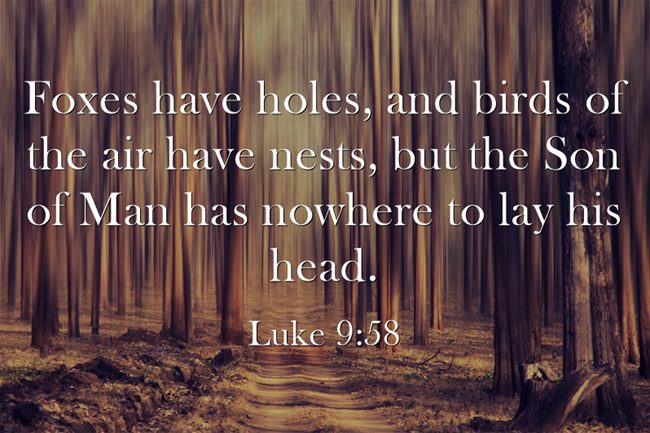
Jesus’ parents were forced to stay in a stable because of the unavailability of housing, but with this, a prophecy was fulfilled by Micah the Prophet, who wrote, “But as for you, Bethlehem Ephrathah, Too little to be among the clans of Judah, From you One will go forth for Me to be ruler in Israel His goings forth are from long ago, From the days of eternity” (5:2). Jesus once said of Himself, “Foxes have holes, and birds of the air have nests, but the Son of Man has nowhere to lay his head” (Luke 9:58), but did this mean Jesus was homeless? We know that Jesus had an earthly ministry and that His mission was to travel about Judea, seeking the lost sheep of Israel, but does this mean He always had to sleep outside? Not necessarily, because this verse (Luke 9:58) was in response to someone who said, “I will follow you wherever you go” (Luke 9:57), so Jesus may have been telling the person that this is not His home…He was looking forward to the coming kingdom of God, but in this world, He doesn’t even have a place to call home.
A Dry Shoot
The Apostle Paul, in referring to Jesus, wrote “The root of Jesse will come, even he who arises to rule the Gentiles; in him will the Gentiles hope” (Rom 15:12), and Isaiah the Prophet wrote of Jesus, “There shall come forth a shoot from the stump of Jesse, and a branch from his roots shall bear fruit” (Isaiah 11:1). Bible scholars agree that this is referring to Jesus Christ. In the “days to come Jacob shall take root, Israel shall blossom and put forth shoots and fill the whole world with fruit” (Isaiah 27:6), but why does it refer to Jesus as a “shoot?” In other places in Scripture, Jesus is referred to as the Branch, as in Isaiah 4:2 where it says of Him, “In that day the branch of the Lord shall be beautiful and glorious, and the fruit of the land shall be the pride and honor of the survivors of Israel.” This “root of Jesse” is from the line of David and this “root” appeared in the parched, dry ground that was in Judea at the time. In other words, Judea was a spiritual wilderness. It was a spiritual desert land where the people had been separated from God because the Jews had been replacing the law of God with their own traditions. Jesus rebuked the Jewish religious leaders at the time and said that their traditions are “making void the word of God by your tradition that you have handed down. And many such things you do” (Mark 7:13).
Roman Historian
Flavius Josephus was a first-century Jewish historian and scholar, who was hired by the Roman government to record the events of the Jew’s history, like “History of the Jewish War” and “Antiquities of the Jews,” both written in the first century, so Josephus can be referred to by what historians call, a primary source, or an eye-witness source of the first century. We’re so far removed from that century today that we must depend on those who experienced life in the first century in Judea, and historians and scholars agree that Flavius Josephus is considered the best non-Christian, near-contemporary source on Jesus that there was, so what Josephus wrote of Christ and the life of the first-century Jews can be regarded as highly accurate.
Under Rome’s Dominion
The Roman Empire allowed most of the people in the areas they conquered to live in the way that they previously lived and allowed them freedom to worship in the ways that they had before, so the Roman’s rarely interfered with the religious practices of those people they ruled over, but life in Jesus’ day was very harsh for those who didn’t have the means (which included most of the population). Of course most people had to travel by foot and it took long hours and days to move from one city or region to the next. Laboring in the agricultural fields or in the fishing trade was exceedingly hard work and even though the Romans were at times harsh dictators, most of the time they allowed the people to live as they had before. Although there was religious tolerance, they still had to remain within the parameters of Roman law, therefore some of the Jews who sought to have Jesus killed could not do so without the authority of the Roman authorities.
Judean Life in the First Century
There were no major forms of travel, so most people traveled by foot. If they had the money, they might use a donkey or camel, but for most, that was beyond their reach and so they depended on walking to go any place they wanted. Most of the jobs were either agricultural, fishing, or tending livestock, mostly sheep but some pigs (for the Gentiles). Since refrigeration was not available, most people had to salt down their foods in order to preserve them and they had to eat what they had almost immediately, so there was no ability to store food over long periods of time. Grain was the exception. The greatest source of income in Judea was agricultural production and the fishing trade. Just as in many cases today, taxation by the Romans was one of the reasons the Jews revolted (along with the desire to break free from the Roman rule), but it always ended in disaster, like in A.D. 70, when Titus’ marched into Jerusalem and destroyed much of the city, including the temple, because of a Jewish revolt or uprising. This was foretold by Jesus (Matt 24), but apparently, few have believed Him. The Jews still had a patriarchal society in which the father was still the head of the home and nothing could be done without his authority, but life centered on the temple because that was the identity of the Jewish people.
Conclusion
The first-century Jews, like the other Gentiles under Rome’s iron fist, could do no more than they were allowed to do and life was certainly harsh. The summers were brutally hot and often dry and the winters were wetter but could grow very cold. The greatest possessions one could have in that day were clothing and a place to live. Most lived day to day, hand-to-mouth, and most weren’t able to store enough food for the coming weeks or months. The labor was hard, the conditions were harsh, and the freedoms restricted, but the first-century church still thrived because the more they persecuted the church, the more the church spread. What they tried to destroy only served to strengthen it. Ironic that evil mankind cannot destroy a movement that started some 2,000 years ago by one Man, and then continued on with twelve men (disciples) who eventually took the gospel to the whole world through the written Word, and today the Word of God continues to spread throughout the world in order that all people might hear the gospel, that some might be saved.
Article by Jack Wellman
Jack Wellman is Pastor of the Mulvane Brethren Church in Mulvane Kansas. Jack is also the Senior Writer at What Christians Want To Know whose mission is to equip, encourage, and energize Christians and to address questions about the believer’s daily walk with God and the Bible. You can follow Jack on Google Plus or check out his book Teaching Children the Gospel available on Amazon.
Previous Post

August 16, 2016
How Were Government Leaders or Kings Elected In The Bible?
Next Post
August 26, 2016 What Is A Bridegroom? A Bible Study
Browse Our Archives
Select a Category Bible Answers Bible Definitions Bible Story Bible Study Bible Verses Christian Books Christian Entertainment Christian Fathers Christian Mothers Christian Quotes Devotional Famous Christians Music News Parables Prayers Quotes Sunday School Lesson Uncategorized Youth Sermons
Select a Month October 2019 September 2019 August 2019 July 2019 June 2019 May 2019 April 2019 March 2019 February 2019 January 2019 December 2018 November 2018 October 2018 September 2018 August 2018 July 2018 June 2018 May 2018 April 2018 March 2018 February 2018 January 2018 December 2017 November 2017 October 2017 September 2017 August 2017 July 2017 June 2017 May 2017 April 2017 March 2017 February 2017 January 2017 December 2016 November 2016 October 2016 September 2016 August 2016 July 2016 June 2016 May 2016 March 2016 February 2016 January 2016 December 2015 November 2015 October 2015 September 2015 August 2015 July 2015 June 2015 May 2015 April 2015 March 2015 February 2015 January 2015 December 2014 November 2014 October 2014 September 2014 August 2014 July 2014 June 2014 May 2014 April 2014 March 2014 February 2014 January 2014 December 2013 November 2013 October 2013 September 2013 August 2013 July 2013 June 2013 May 2013 April 2013 March 2013
Follow Us!
TAKE THE
Religious Wisdom Quiz
True or False: Matthew's Gospel begins with a genealogy tracing Jesus' lineage back to King David.
Select your answer to see how you score.
TRUE FALSE
Related posts from Christian Crier

What Does The Bible Say About Our Thoughts?

Do Colors Have Special Meaning In The Bible?

The Glass – Half Empty Or Half Full?

TRENDING AT PATHEOS Evangelical

The REST of Your Life: A Creative Wrestles...
This week I had a conversation with a good friend from church....

How the author of the world's best hymn...
I've been working with John Newton for a while now. This makes...

Long before this Lectio Divina, Psalm 130 - the song - started...

What About the Trees? Another Living Parable
After I finished writing the last article about falling leaves as a...

Why Classical Education Is a Conversation, Not a...
Come and Read: Joy in Classical Education When I was a little...

Cornell University has received a great deal of negative publicity and intense...
view all Evangelical blogs
Ad-Free & Subscriber Log-In Subscription Support
- About Us
- 2026 Calendar
- Videos
- Podcasts
- Library of World Religions
- Faith In Media Tracker
- Advertise With Us
- Write for Us
- Privacy Policy
- Terms of Service
- Do Not Sell My Data
- Contact Us
- Radiant Digital
- Manage Newsletter Subscriptions
- Unsubscribe From Notifications
- Sitemap
Copyright 2008-2026, Patheos. All rights reserved.
Subscription Support Ad-Free & Subscriber Log-In
Follow Patheos